

Ni-Vanuatu applicants and families face uncertainty after the country was excluded from Australia’s latest Pacific Engagement Visa ballot, which opens for registrations on 1 July.
Photo/Facebook
Pacific Region
Why has Vanuatu been dropped from the Pacific visa scheme?
Ni-Vanuatu are no longer eligible for Australia's Pacific Engagement Visa ballot, with no public explanation from either Canberra or Port Vila.

Christine Rovoi
Published
24 June 2026, 8:14am
Share
Copy Link



Thousands of ni-Vanuatu hoping to apply for permanent residency in Australia next month are seeking answers after Vanuatu was excluded from the latest Pacific Engagement Visa (PEV) ballot.
Australia's Department of Home Affairs has confirmed registrations for the 2026-27 programme will open on 1 July and offers up to 3000 permanent residency places to people from 11 Pacific countries and Timor-Leste.
But Vanuatu, which has been part of the scheme for the past two years, is no longer on the list.
What makes the move unusual is that neither the Australian government nor the Vanuatu government has publicly explained the change.
The lack of an official reason has fuelled speculation in Port Vila particularly as Australia and Vanuatu continue discussions over a proposed long-term security agreement.
Canberra has been seeking support for the proposed Nakamal Agreement, a security and development partnership reportedly linked to a A$500 million (NZ$610.87m) package of assistance.
Vanuatu has maintained discussions with a range of international partners, including China, as it pursues its long-standing non-aligned foreign policy.
While no official connection has been made between the visa decision and the ongoing negotiations, the timing has drawn attention from regional observers.
Australia said it remains committed to finalising the Nakamal Agreement to strengthen its partnership with Vanuatu.
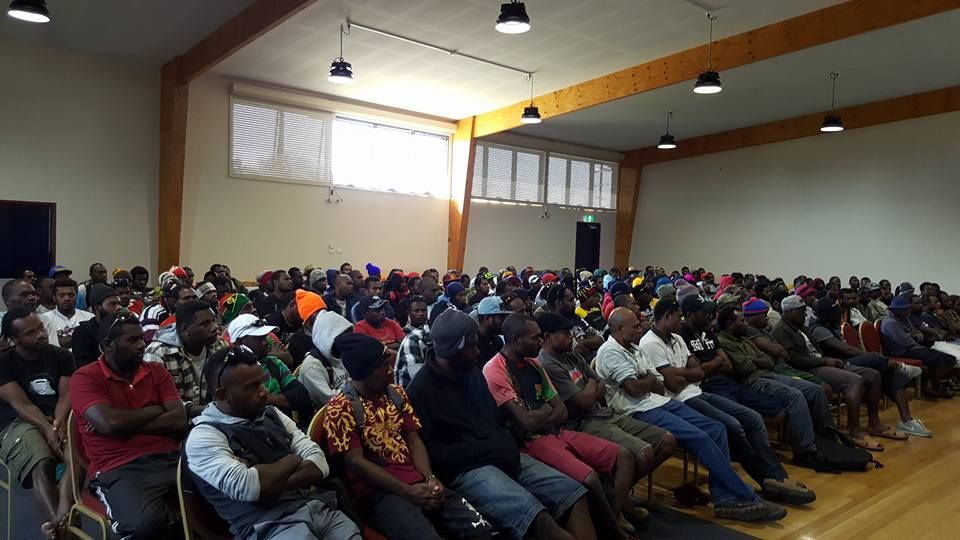
The Pacific Engagement Visa scheme has provided a pathway to permanent residency in Australia for eligible Pacific and Timor-Leste applicants, but Vanuatu’s removal this year has raised questions across the region. Photo/Facebook/Seasonal Workers Australia/file
A spokesperson at the Department of Foreign Affairs and Trade (DFAT) said Australia is approaching the process as equal partners and has been patient and respectful of Vanuatu’s domestic processes.
The spokesperson told PMN News Australia would continue to respond to Vanuatu’s priorities and seek to match its ambition through the Nakamal Agreement, including on mobility arrangements.
The Vanuatu government says it has not been formally informed of the decision.
Director of Foreign Affairs, Ivon Basil, told local media the government had received no notification regarding Vanuatu's exclusion from the scheme.
But Vanuatu government adviser Glen Craig is among those questioning the move.

The Pacific Engagement Visa scheme has provided a pathway to permanent residency in Australia for eligible Pacific and Timor-Leste applicants, but Vanuatu’s removal this year has raised questions across the region. Photo/Facebook/Witnol Benkor Tor
In a public social media post, Craig wrote: "Vanuatu [is] holding firm on the priorities it has stated plainly from the outset - climate and mobility."
"It is difficult to read the removal as anything other than leverage: a signal that access to opportunity for ni-Vanuatu depends on agreement to terms set elsewhere."
Craig also warned the decision could be noticed across the wider Pacific. "The Pacific region reads this clearly."
The Pacific Engagement Visa was introduced by Australia to strengthen people-to-people links with the region by providing a pathway to permanent residency, employment and study opportunities.
For many ni-Vanuatu families, the scheme represented a chance to build long-term futures in Australia.
Regional analysis of Pacific labour mobility programmes has highlighted long-standing concerns among Pacific governments about workforce impacts, and calls for greater transparency and predictability in migration arrangements.
Vanuatu's removal now leaves a significant gap especially for those who had planned to enter the ballot when registrations open next month.
With no official explanation yet provided, attention is likely to remain on both governments in the coming weeks as questions continue over why Vanuatu has been excluded and whether the decision could affect broader relations between Port Vila and Canberra.