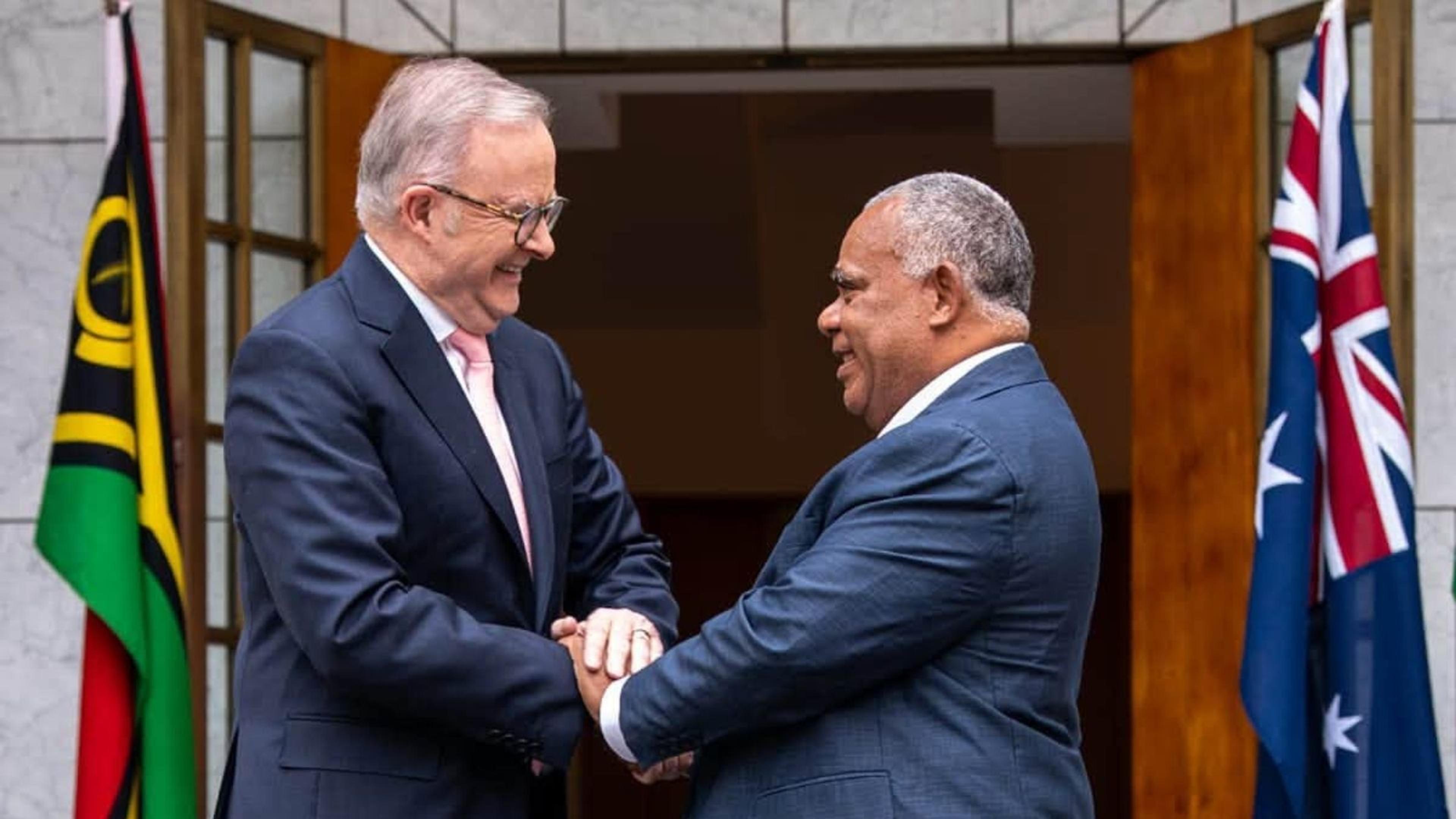
Australian Prime Minister Anthony Albanese and Vanuatu Prime Minister Jotham Napat after signing the Nakamal Agreement in Canberra. The deal is expected to strengthen security, policing and development ties between the two countries.
Photo/Facebook/Australian High Commission, Vanuatu
Pacific Region
Vanuatu signs Australia security pact, visa slots return but questions over balance remain
Prime Ministers Jotham Napat and Anthony Albanese signed a NZ$608.45 million Nakamal Agreement, which restores Vanuatu’s visa ballot access. But the deal falls short of visa-free travel.

Christine Rovoi
Published
30 June 2026, 5:43pm
Share
Copy Link
Top stories

From Ōtara, NZ to Los Angeles: David Liti lifts up the next generation
Elton Lonaratha JnrMon, 19 Oct
Top stories
From Ōtara, NZ to Los Angeles: David Liti lifts up the next generation
Elton Lonaratha JnrMon, 19 Oct
Vanuatu has signed its long-delayed security and development agreement with Australia, which ends months of tense negotiations over one of the Pacific’s most closely watched regional deals.
Vanuatu Prime Minister Jotham Napat and Australian Prime Minister Anthony Albanese signed the Nakamal Agreement at Parliament House in Canberra on Monday, nearly 10 months after Vanuatu pulled back from an earlier signing over sovereignty concerns.
The agreement secures a A$500 million (NZ$608.45 million) partnership package and cements Australia as Vanuatu’s primary policing and disaster response partner in the Pacific.
It also introduces new consultation requirements with Port Vila agreeing to engage Australia on any proposed third-party involvement in critical infrastructure projects.
Under the deal, Vanuatu will also prioritise Pacific Islands Forum partners Australia, New Zealand and France for policing and disaster assistance requests before seeking external support.
In a joint statement, Albanese said the agreement reflected a shared commitment to regional stability.
“Our agreement reflects and confirms Australia’s role as Vanuatu’s largest and most comprehensive economic security and development partner, a responsibility that we take seriously,” he said.
Napat said the agreement marked an important step in strengthening ties between the two countries.
“Today marks a significant step in the Vanuatu-Australia relationship,” he said. “With the signing of the long-awaited Nakamal Agreement, Australia and Vanuatu are close neighbours, trusted partners.”
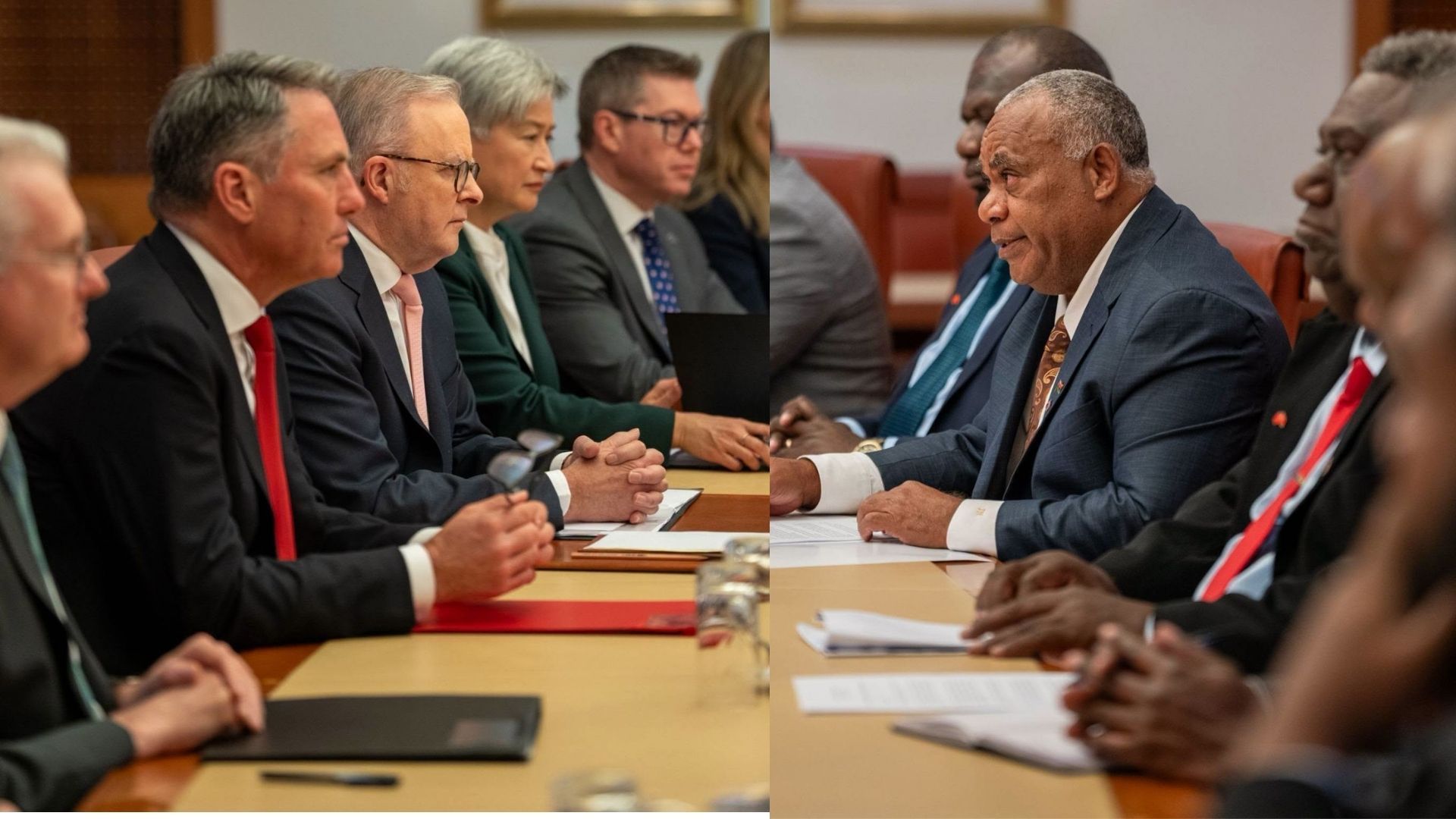
The Nakamal Agreement restores Vanuatu’s place in Australia’s Pacific Engagement Visa ballot with 150 places, while also setting new conditions on infrastructure consultation and regional cooperation. Photo/Ministry of the Prime Minister, Vanuatu
One of the most closely watched elements of the deal is mobility.
While Vanuatu did not secure visa-free travel under the so-called Enhanced Mobility push, Australia has confirmed it will reinstate the country in the Pacific Engagement Visa (PEV) ballot with 150 places.
This restores Vanuatu to its previous level after it was removed from the 2026-27 programme earlier this month. The move prompted concern in Port Vila as other Pacific nations saw expanded allocations.
Ni-Vanuatu applicants will again be eligible for one of 150 permanent residency places through the ballot system. But entry is not guaranteed.
Napat is currently in Canberra for the signing with no indication from his office that his visit will extend into a wider Pacific tour.
That comes as other Pacific leaders have undertaken broader regional travel in recent weeks. Solomon Islands Prime Minister Matthew Wale, who has visited Australia, New Zealand and Papua New Guinea before attending Pacific Islands Forum meetings in Fiji.
Albanese is expected to travel to Fiji and the Solomon Islands in the coming weeks as Canberra moves to finalise further security and cooperation agreements across the region.
China’s growing diplomatic presence in the Pacific remains a backdrop to the Nakamal Agreement with Beijing also pursuing its own proposed security framework with Vanuatu known as the Namele Agreement.
While both Napat and Albanese have described the Nakamal Agreement as a milestone in bilateral relations, questions remain in Vanuatu over the balance of concessions, given that key mobility outcomes fall short of earlier expectations.