
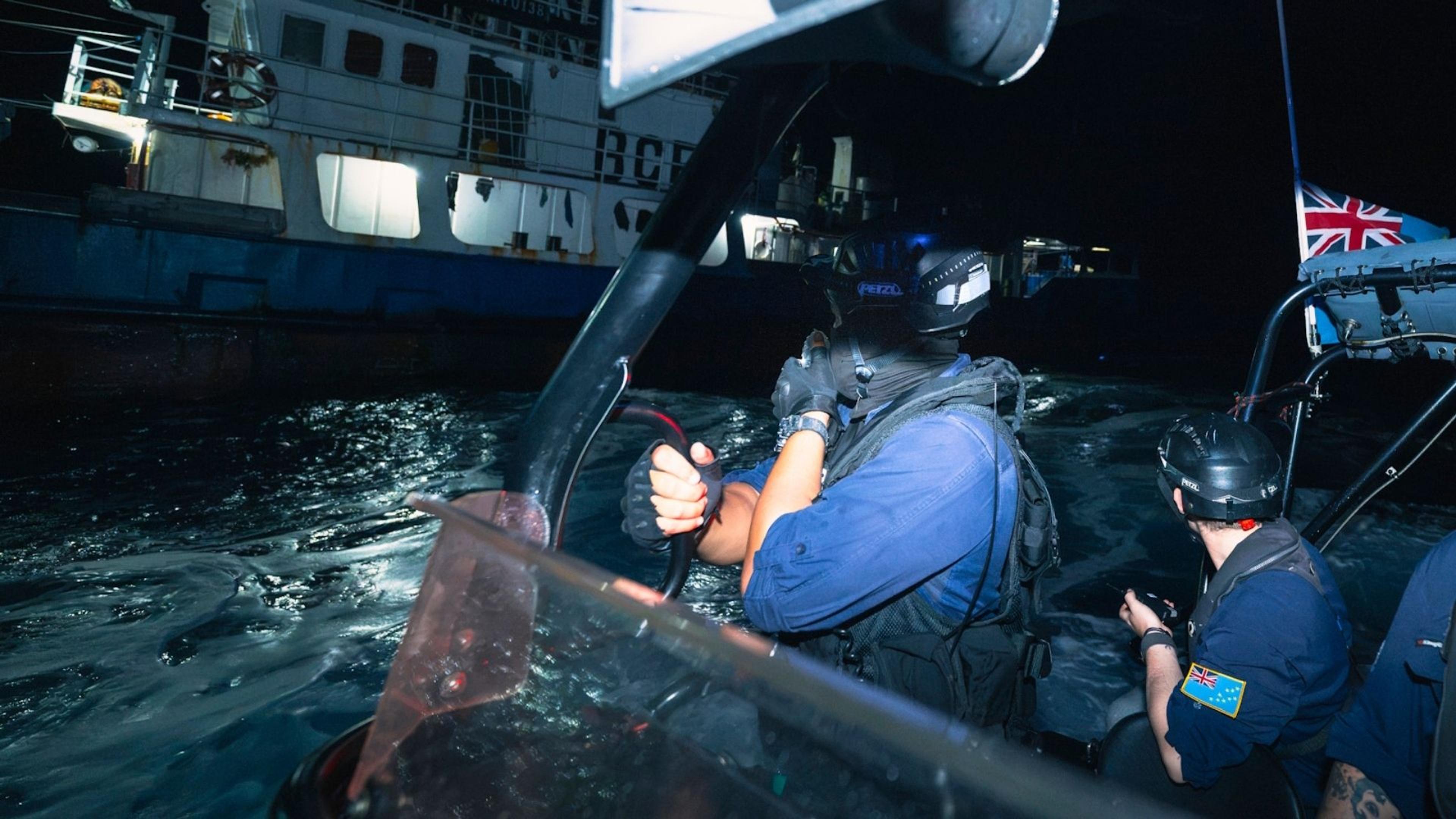
Tuvalu Police and Sea Shepherd offiials carry out a maritime operation that led to the detention of the Chinese-flagged fishing vessel Lu Rong Yuan Yu 138 inside Tuvalu’s Exclusive Economic Zone.
Photo/Sea Shepherd/Youenn Kerdavid
Pacific Region
Tuvalu detains Chinese fishing vessel accused of hiding its location
Police allege it was fishing illegally while broadcasting false location data as Pacific nations face challenges in monitoring their waters.

Christine Rovoi
Published
17 July 2026, 8:28pm
Share
Copy Link
Top stories

PNG Chiefs win first round against New Zealand Rugby
Christine RovoiSat, 17 Oct

Pacific families must work four days to afford basic food: World Vision
Thomas Tarurongo WynneFri, 16 Oct

Sāmoa demolish France in record-breaking 78-4 RL World Cup opener
Christine RovoiFri, 16 Oct
Top stories
PNG Chiefs win first round against New Zealand Rugby
Christine RovoiSat, 17 Oct
Pacific families must work four days to afford basic food: World Vision
Thomas Tarurongo WynneFri, 16 Oct
Sāmoa demolish France in record-breaking 78-4 RL World Cup opener
Christine RovoiFri, 16 Oct
A Chinese vessel has been detained in Tuvalu after authorities say it was caught fishing inside the Pacific island country's waters while allegedly disguising its true location thousands of kilometres away.
The Tuvalu Police Service boarded the longliner Lu Rong Yuan Yu 138 on 9 July while patrolling with Sea Shepherd Global aboard the vessel Allankay. Sea Shepherd is an international direct-action ocean conservation movement.
Police allege the vessel was fishing at night without navigation lights and transmitting Automatic Identification System (AIS) data showing it was near the equator, well outside Tuvalu's Exclusive Economic Zone (EEZ).
Inspectors also found the vessel's Pacific Islands Forum Fisheries Agency (FFA) fishing authorisation had expired, meaning it was not legally allowed to fish in Tuvaluan waters.
During the inspection, police said they also observed sharks being discarded overboard without being recorded in the vessel's official logbook.
The vessel was arrested and escorted to the Port of Funafuti where it remains detained while investigations continue.
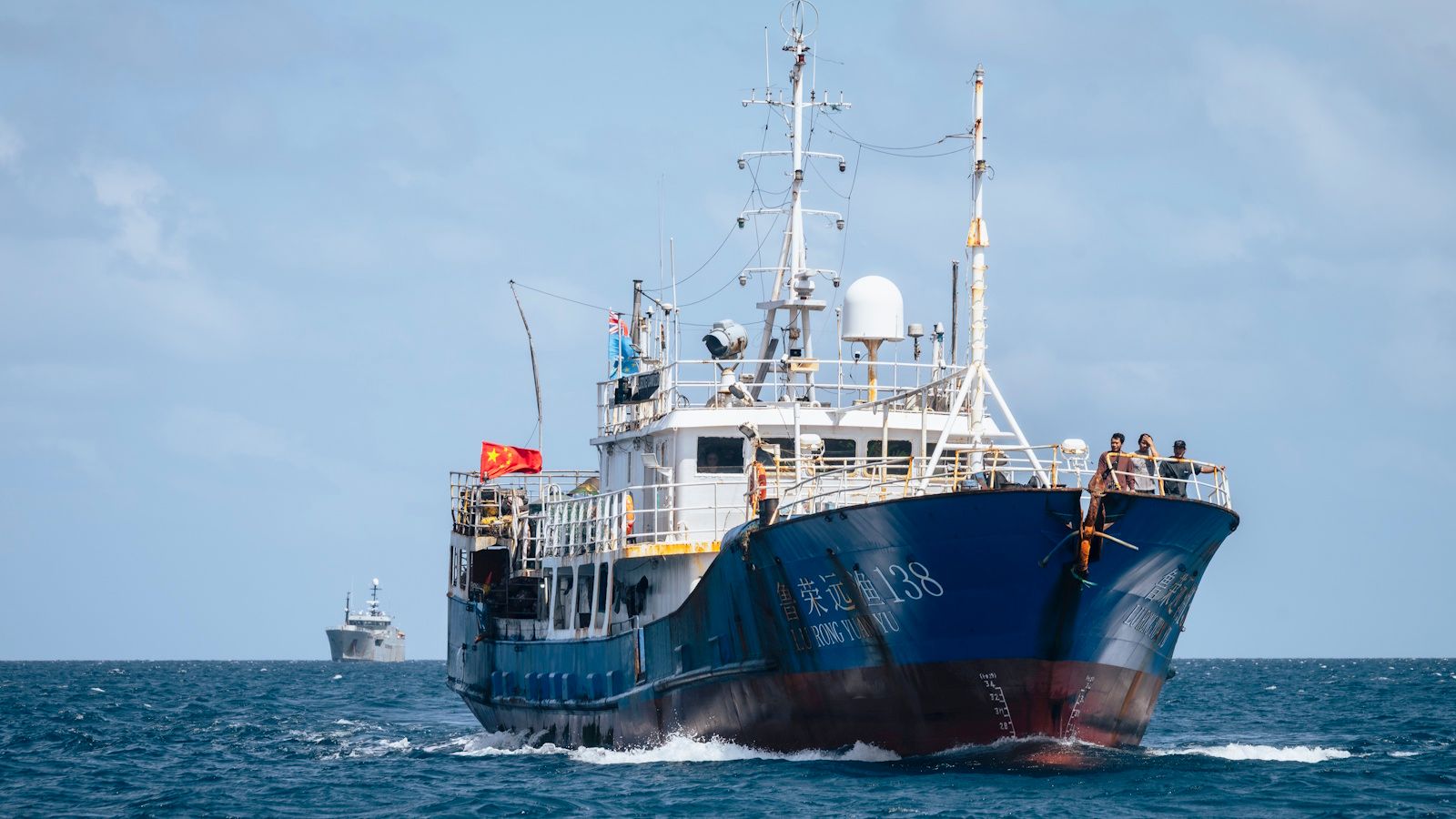
The Chinese-flagged longliner Lu Rong Yuan Yu 138 at sea before it was detained by Tuvalu authorities over alleged illegal fishing activity. Photo/Sea Shepherd/Youenn Kerdavid
The operation comes as Tuvalu's waters face renewed regional attention following a recent Chinese missile test that reportedly landed near the edge of the country's EEZ.
There has been a growing focus on security and activity across Pacific waters in recent weeks.
The ship's arrest has also highlighted the growing problem of AIS spoofing where vessels deliberately broadcast false location data to hide where they are operating.
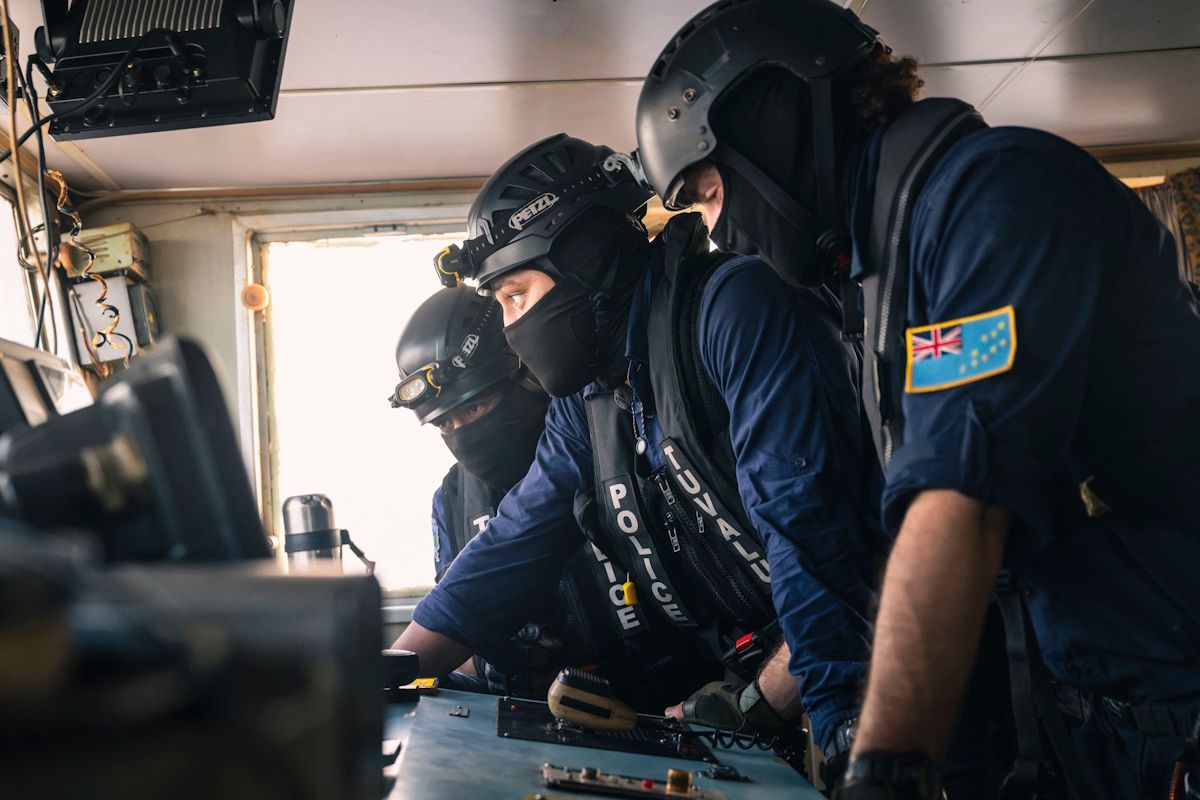
Tuvalu Police officers inspect the bridge of the Lu Rong Yuan Yu 138 after boarding the vessel during a patrol operation in Tuvalu’s waters. Photo/Sea Shepherd/Youenn Kerdavid
AIS is an international safety system that allows ships to broadcast their identity, position, speed and course.
While designed to help prevent collisions at sea, it has also become an important tool for tracking fishing vessels and detecting suspicious activity.
According to Sea Shepherd, broadcasting false AIS data can make it appear a vessel is operating somewhere else, allowing illegal fishing vessels to hide unauthorised activity, avoid enforcement and disguise where fish have been caught.
“This case demonstrates how technology can be used not only to improve transparency at sea, but also to undermine it," Peter Hammarstedt, Sea Shepherd Global Chief Campaigns Officer, said in a statement.
"By combining satellite intelligence with frontline patrols at sea aboard Allankay, the Tuvalu Police Service was able to detect and intercept a vessel that appeared to be concealing its true location.
“Illegal fishing depends on avoiding detection. Every successful enforcement operation makes that strategy less viable.”
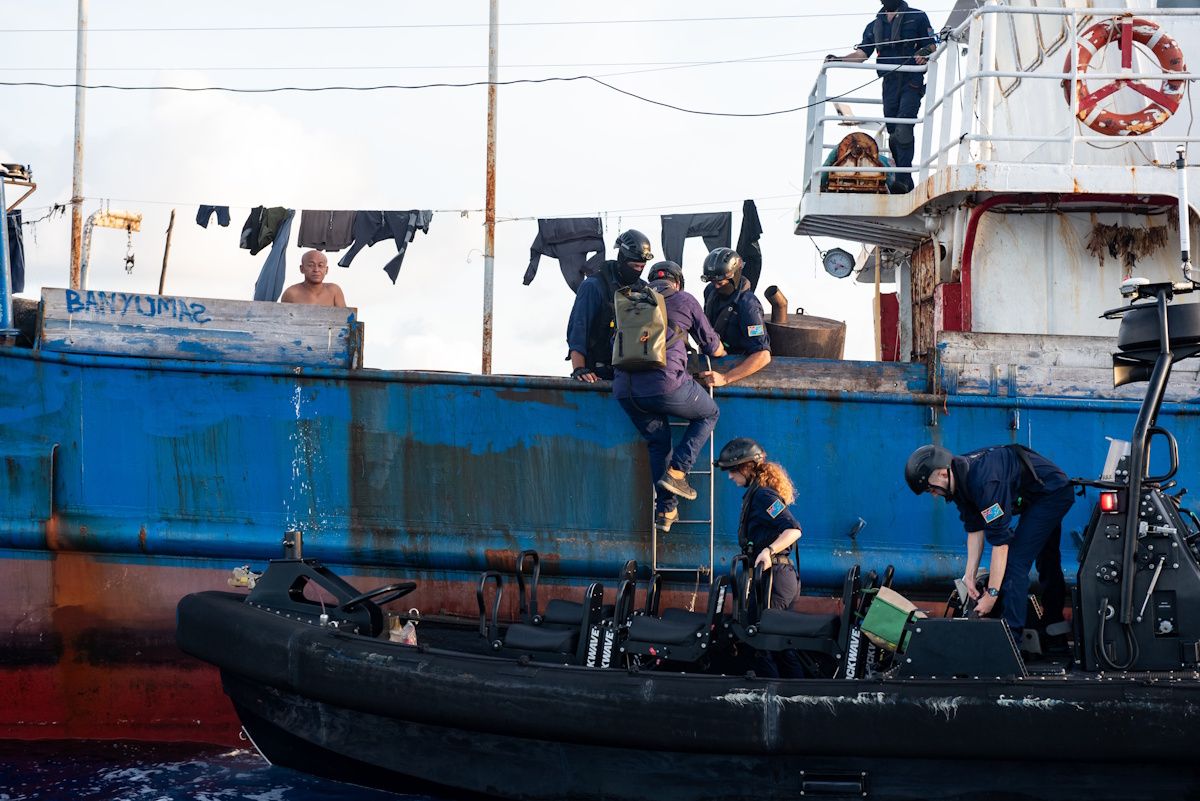
Tuvalu authorities and Sea Shepherd officials board the Chinese-flagged fishing vessel Lu Rong Yuan Yu 138 as part of an investigation into alleged breaches of fishing rules. Photo/Sea Shepherd Global/Holly Knight
Sea Shepherd has worked alongside the Tuvalu Police Service since 2024 to patrol the country's 750,000-square-kilometre EEZ. It also helps investigate suspected illegal fishing and collect evidence for possible prosecutions.
Sea Shepherd's patrols are carried out at the invitation of the Tuvalu government under a Memorandum of Understanding that allows Tuvalu Police officers to enforce the country's fisheries laws from aboard the conservation group's vessel.
The arrangement helps Tuvalu monitor its vast ocean territory despite the limited resources available to many small Pacific island nations.
The FFA has declined to comment on the case, saying it relates to a bilateral operation between the Tuvalu government and Sea Shepherd under a memorandum of understanding. The agency directed further questions to Tuvalu authorities.
The latest arrest follows another operation last year when officers recovered 9.5 kilometres of illegal longline fitted with 171 hooks inside Tuvalu's waters.
The fishing gear had already caught seven yellowfin tuna, one marlin and a juvenile silky shark before it was seized.
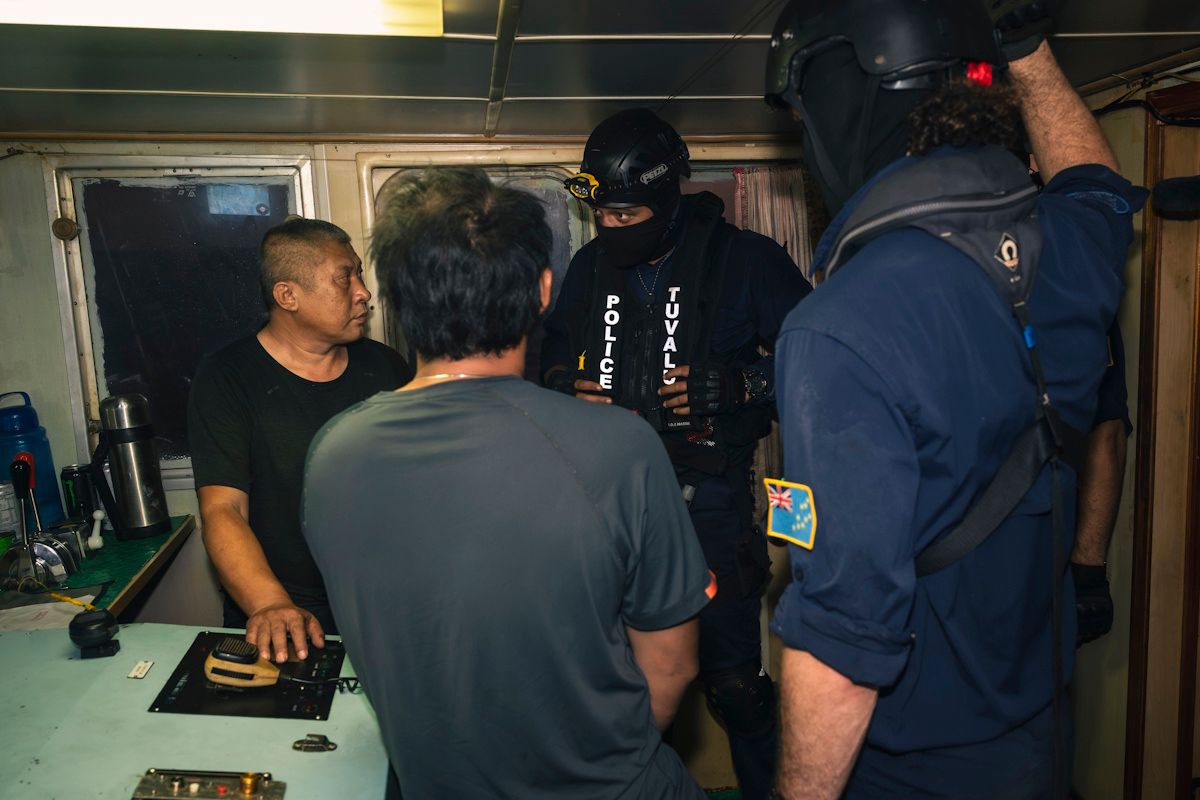
A Tuvalu Police officer presents the inspection report to the captain of the detained vessel as authorities continue their investigation. Photo/Sea Shepherd Global/Youenn Kerdavid
Illegal, unreported and unregulated fishing remains one of the biggest threats to Pacific fisheries and authorities say is costing the region millions of dollars each year.
Officials warn it also puts pressure on fish stocks that many island nations rely on for food security, jobs and government revenue.
Tuvalu's case is not the first time a Pacific island nation has detained foreign fishing vessels over alleged illegal activity in its waters.
In 2021, Vanuatu detained two Chinese-flagged fishing vessels after authorities alleged they were operating illegally in Vanuatu's waters.
The vessels were intercepted by the Vanuatu patrol boat RVS Tukoro and taken to Luganville, Santo, for further investigation.
Palau has also taken action against foreign fishing activity, detaining a Chinese fishing vessel and its 28 crew members in 2020 over allegations of illegal sea cucumber harvesting inside Palau's protected waters.
The cases highlight the challenge Pacific nations face in monitoring some of the world's largest ocean territories and protecting marine resources that are central to food security, culture and local economies.
The arrest of Lu Rong Yuan Yu 138 is now under investigation by Tuvaluan authorities.
PMN News has sought comment from the Tuvalu government on the investigation. No response was received by the time of publication.