
‘Digging into what we know’: Pacific culture offers a clearer path to better mental health
Atutahi Potaka-DewesTue, 13 Oct
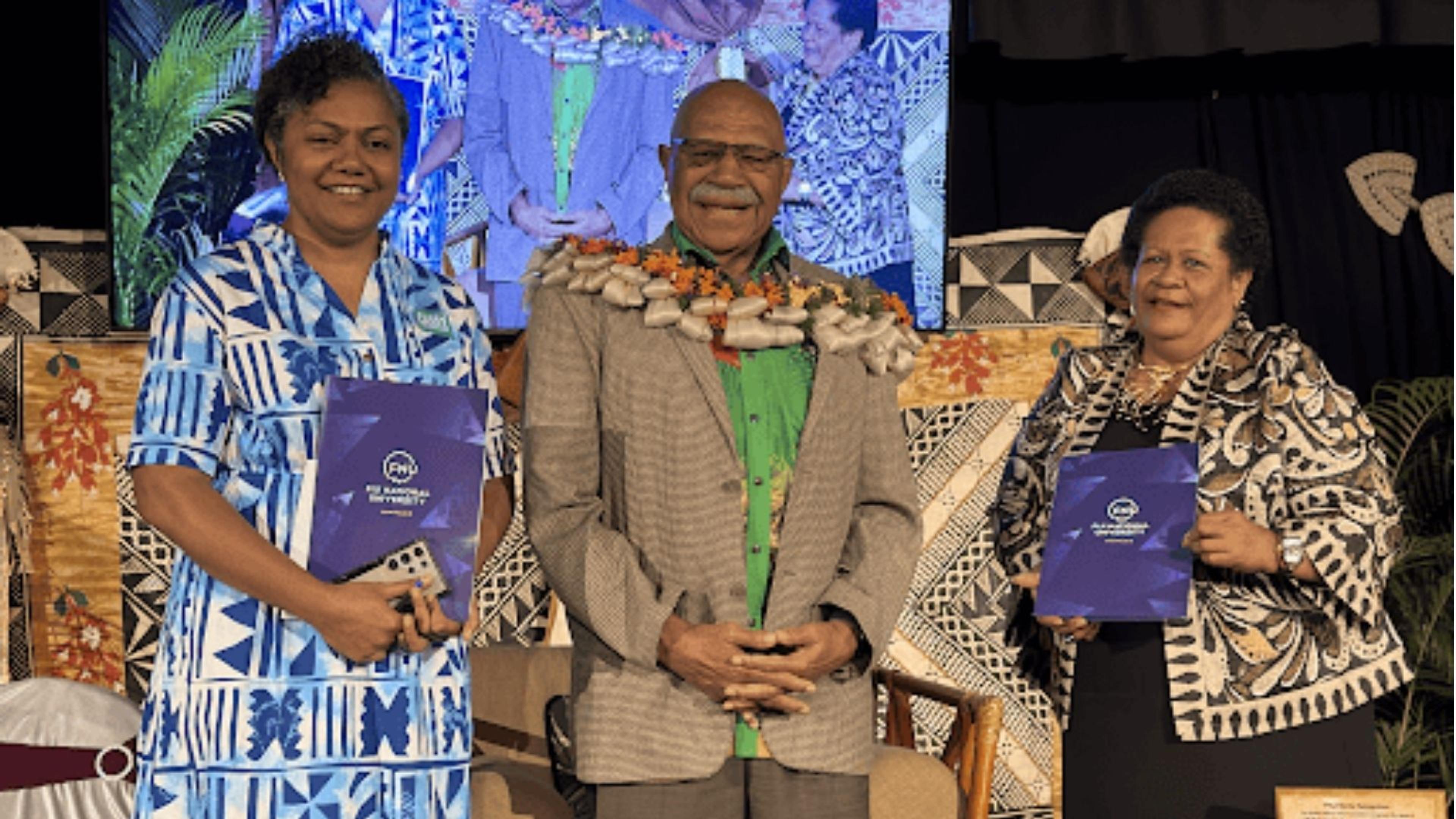
From left: Fijian Media Association president Rosi Tamani-Doviverata, Fiji Prime Minister Sitiveni Rabuka and Fiji National University vice chancellor Professor Unaisi Nabobo-Baba at the launch of the Pacific media centre during the opening of the 8th Pacific Media Summit in Savusavu.
Photo/PMN News/Don Mann
Fiji's Prime Minister says Pacific journalists must reach remote communities, hold power to account and tell the region’s own stories as media leaders push for greater regional cooperation.



Fiji Prime Minister Sitiveni Rabuka has announced the establishment of a new regional centre for journalism and communications, saying the Pacific needs stronger media networks to make sure communities across the region are heard.
Rabuka officially launched the Pacific Centre for Communications and Journalism at Fiji National University as he opened the eighth Pacific Media Summit in Savusavu on Wednesday. He was accompanied by Deputy Prime Minister Manoa Kamikamica.
The centre is a partnership between Fiji National University and the Fijian Media Association and will provide training, research and regional cooperation, including work on digital journalism, media literacy and the responsible use of artificial intelligence.
Rabuka said the centre could help develop the next generation of Pacific media leaders.
“Our objective should be clear. We must and we want and we need a media sector that is independent, professional, credible, and trusted and trustworthy.”
He said the centre should become a regional platform for knowledge, skills and collaboration.
Watch Sitiveni Rabuka's address at the opening of the Pacific media summit in Fiji below.
The launch comes as Pacific media leaders are also questioning whether existing regional structures are reaching communities in some of the most remote parts of the Pacific.
Kalafi Moala, Pacific Islands News Association (PINA) president, said the summit's record turnout showed the value of bringing Pacific media together.
“This is the biggest attendance we have ever had in a PINA conference,” he said.
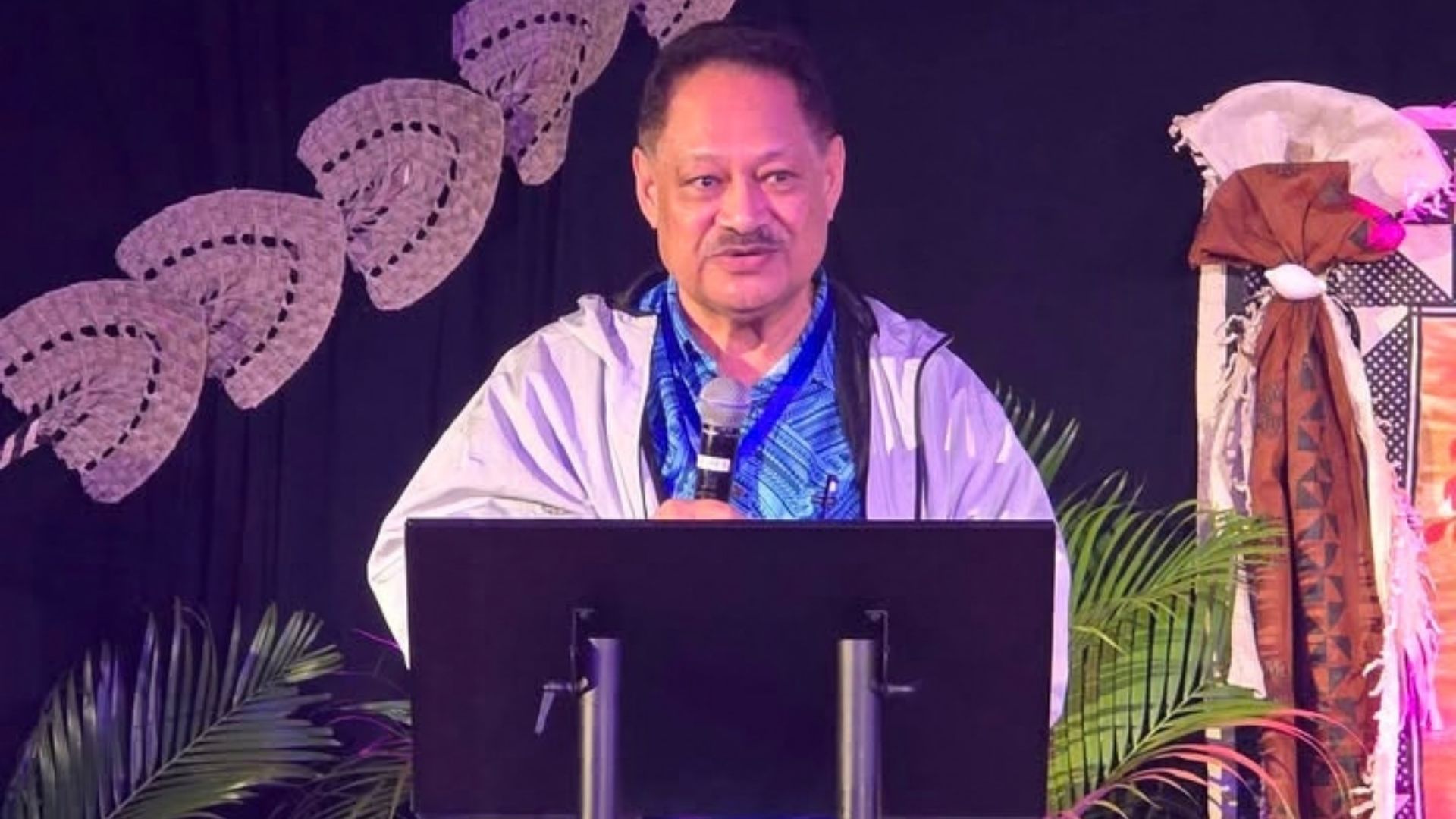
Pacific Islands News Association president Kalafi Moala speaks at the 8th Pacific Media Summit in Savusavu, calling for stronger regional media cooperation and greater reach to remote communities. Photo/PINA
But Moala said the organisation also needed to look closely at its own future and whether it was reaching the whole region.
“I think we need to find out what is our real reason for existence as an organisation. What’s our purpose? What are we there for?” he said.
Earlier, he called for PINA to consider restructuring so it can expand its reach to remote and underrepresented parts of the Pacific.
“I expect that we need to see some changes, changes in the way I think we are structured, so that we can expand and do more outreach, particularly to make the media that’s kind of in remote places a lot more inclusive.
"The people that are affected greatly by climate change, we’re not reaching,” he said.
Moala said French Polynesia, New Caledonia and West Papua were among the areas where PINA could strengthen its engagement. “The Pacific is a big place."
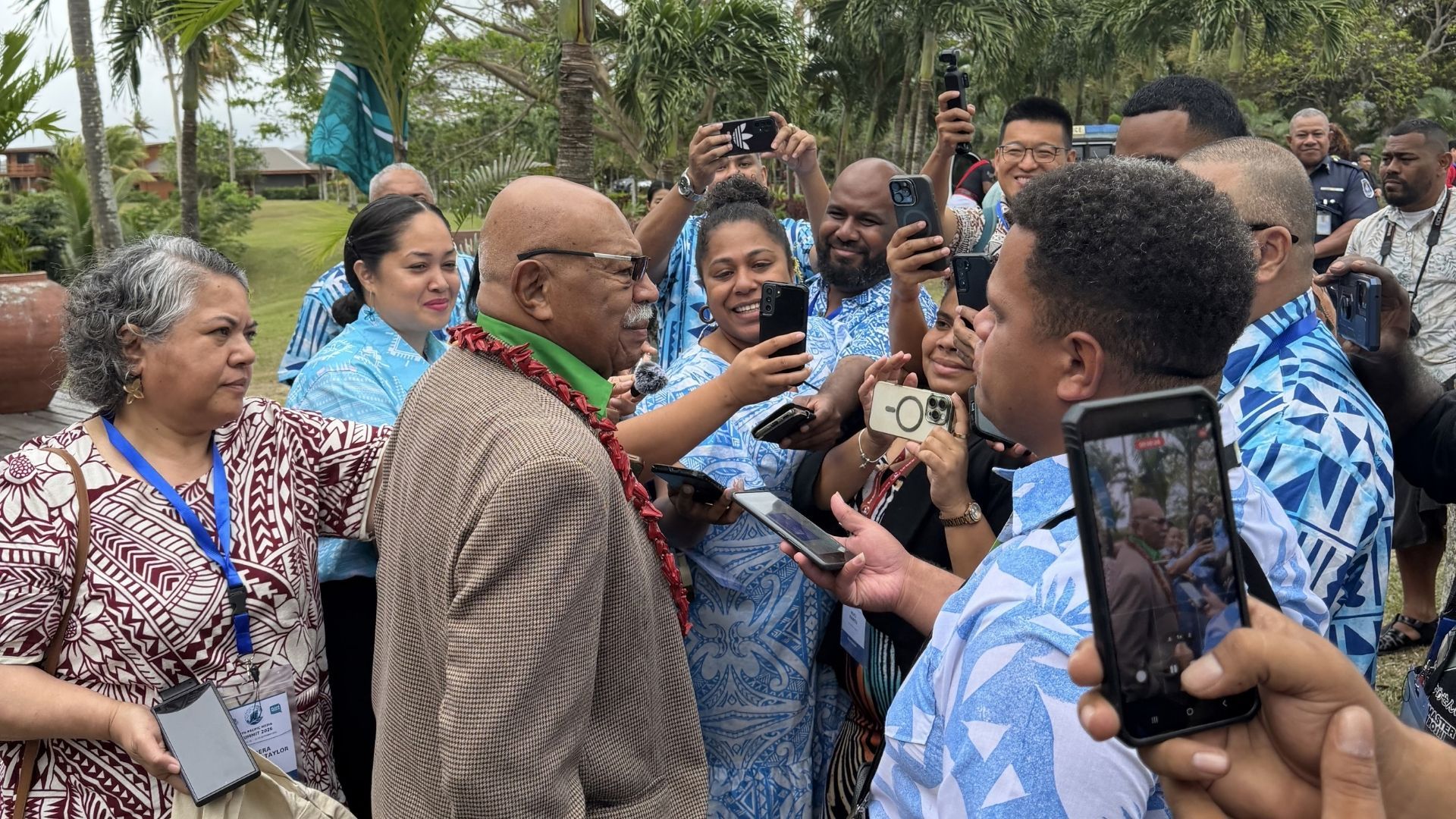
Fiji Prime Minister Sitiveni Rabuka meets Pacific journalists attending the 8th Pacific Media Summit in Savusavu. Photo/PMN News/Don Mann
He said a stronger subregional structure across Polynesia, Melanesia and Micronesia could help PINA reach more communities.
“If need be, we restructure ourselves so that subregionally, from Polynesia, Melanesia and Micronesia, we’ll be able to do more outreach to those places to be inclusive.”
For Moala, the challenge is bigger than new technology, artificial intelligence or misinformation.
“I think we need to find out what is our real reason for existence as an organisation. What’s our purpose? What are we there for?”
He said reaching communities affected by climate change was one of the gaps Pacific media needed to address.
“The people that are affected greatly by climate change, we’re not reaching,” he said.
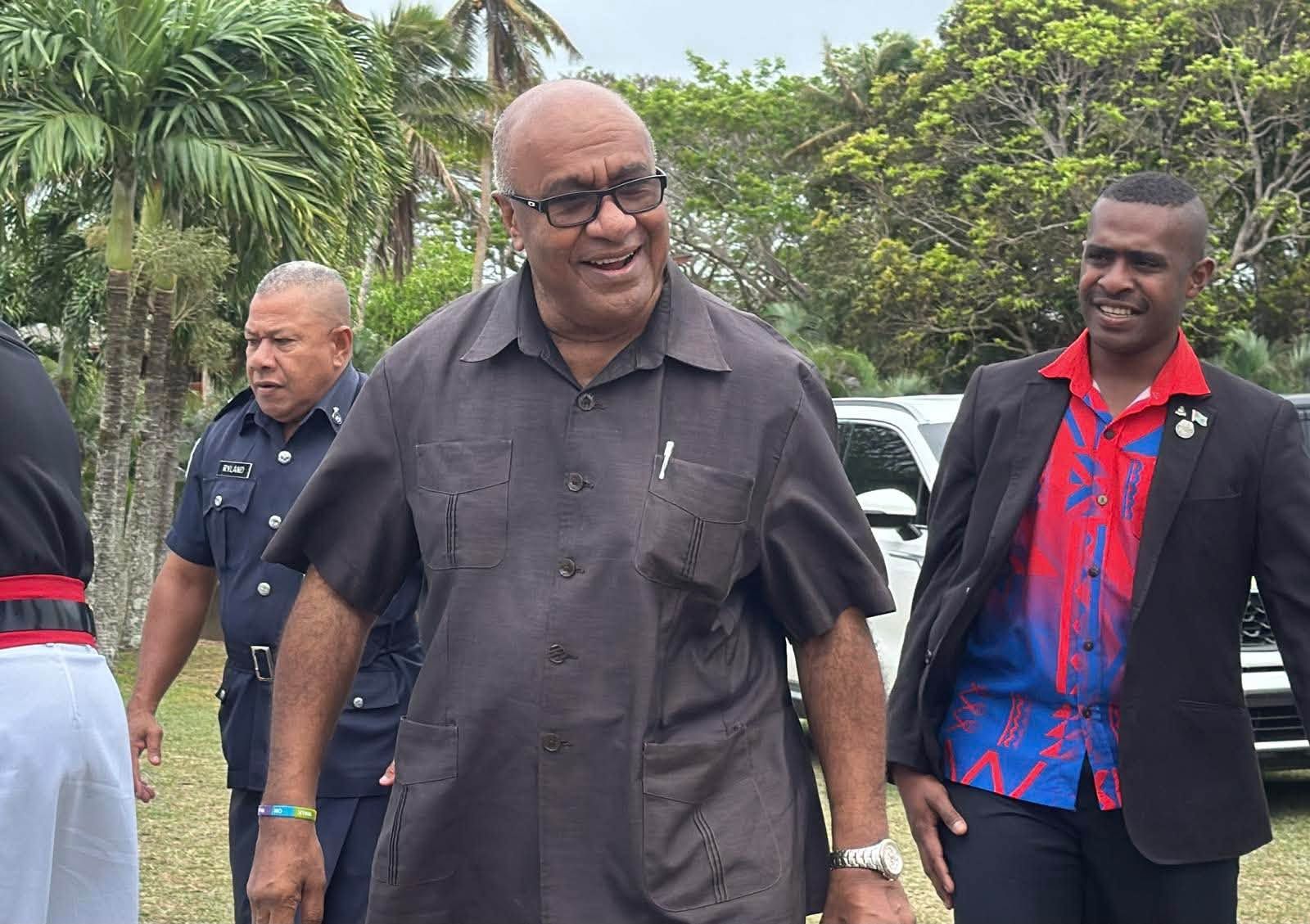
Fiji Deputy Prime Minister Manoa Kamikamica attends the opening of the 8th Pacific Media Summit in Savusavu. Photo/Facebook/Fijian Media Association
That challenge was also reflected in discussions at the summit's pre-opening workshop where the UN Office on Drugs and Crime (UNODC) warned Pacific countries they need stronger cooperation to track the money behind organised crime.
Marie Pegie Cauchois, UNODC Pacific Regional Anti-Corruption Adviser, earler said governments should not focus only on drug seizures but also on the profits generated by criminal networks.
“We don’t have the figures. We don’t know how much drugs are going through. New Zealand doesn’t know, Australia doesn’t know.”
She said Pacific countries need stronger laws to seize criminal proceeds, better information about who owns companies and greater sharing of financial intelligence across borders.
“Who are the real owners behind the companies that are set up in the region, but also in Australia?”
Cauchois said tackling organised crime required cooperation within and beyond the Pacific.

UNODC Pacific Regional Anti-Corruption Adviser Marie Pegie Cauchois spoke to Pacific journalists at a pre-summit workshop on climate change, corruption and transnational organised crime in Savusavu. Photo/Fiji government
“It cannot be done only by the region. It has to be done with groups in other places, like Colombia, Mexico, Southeast Asia, that really need to reduce the attractiveness of this region for organised crime,” she said.
Rabuka told the summit that independent journalism has a central role in dealing with challenges facing Pacific communities.
He said his government had repealed Fiji’s Media Industry Development Act and widened access to the Public Service Broadcasting Grant.
He also urged journalists to keep questioning those in power. “You must ask difficult questions. You must investigate. You must hold institutions to account.
“When the evidence demands it, you must explore and expose if there has been corruption, abuse of power, and failure in public administration. That is not a threat to democracy. It strengthens democracy.”
Rabuka said digital technology could help bridge the vast distances separating Pacific communities, but warned that information could spread before it was checked.
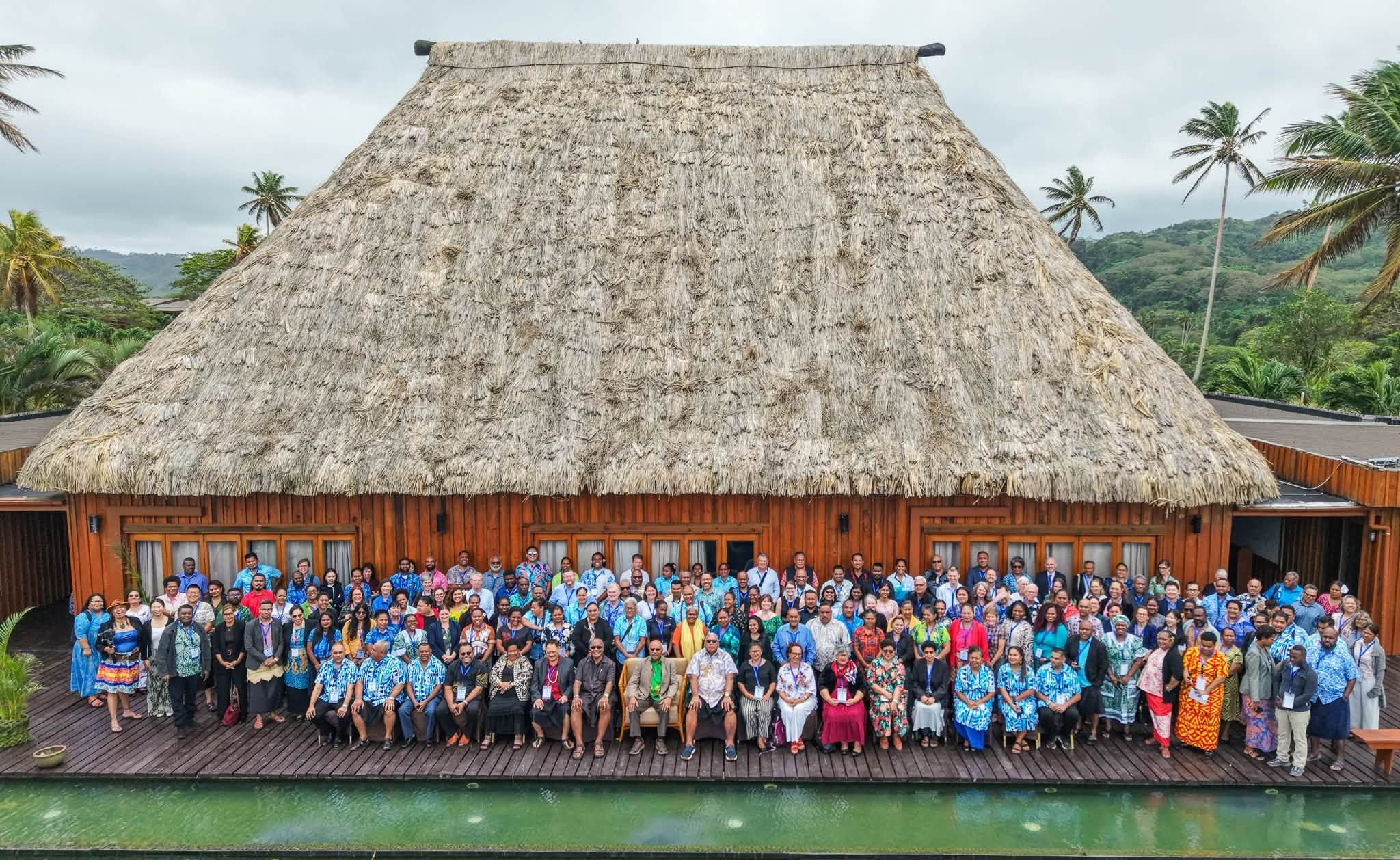
Pacific journalists and media professionals gather in Savusavu for the 8th Pacific Media Summit, focused on reaching remote communities and strengthening connections across the Blue Pacific. Photo/Fijian Media Association
“A headline can reach thousands of people before the facts have been checked and verified. A false claim can spread before the truth has left the newsroom.”
He said journalists needed to maintain professional standards while adapting to artificial intelligence and other emerging technologies.
The summit theme this year is Reaching the Remote: Media and Digital Innovation for a Connected Blue Pacific.
Rabuka said that meant more than improving technology. “It is a development issue. It is an inclusion issue. It is a resilience issue.”
He said reliable information could save lives during cyclones and floods and give isolated communities a voice in national and regional discussions.
Watch the full coverage of the opening ceremony at the Pacific media summit in Savusavu.
“We must tell our own stories. The Pacific should not only be spoken about. The Pacific must also speak for itself.”
The summit is being held in Fiji for the first time in 14 years, bringing together media organisations, journalists, development partners and other stakeholders from across the Blue Pacific.
Rabuka said Pacific media had a role beyond reporting on regional issues. “Pacific media is not simply an observer of the ocean of peace. You are part of building it.”
The 2026 Pacific Islands News Association (PINA) media summit ends on Friday.