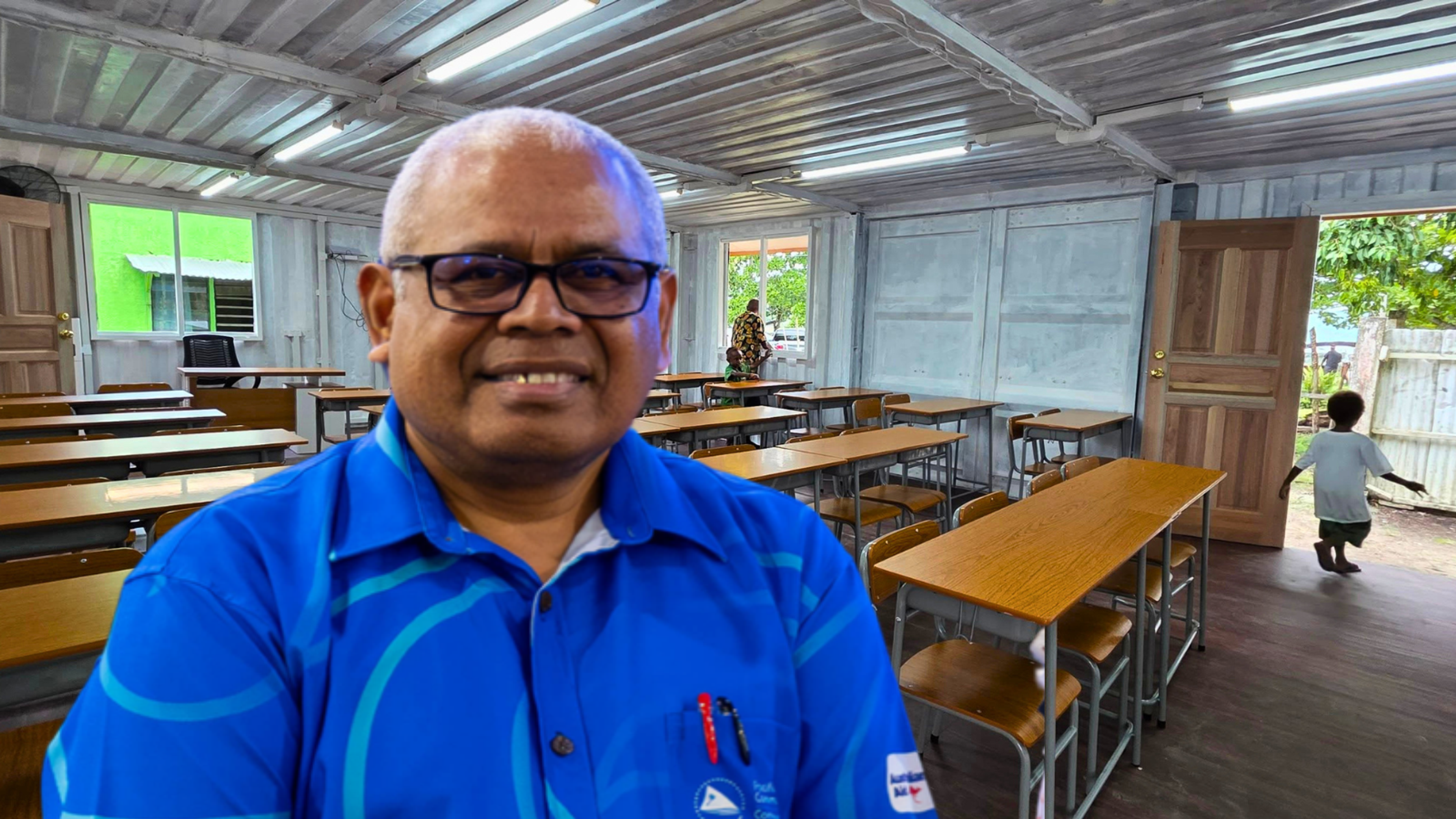
SPC's Seci Waqabaca says the regional education report must be turned into action.
Photo/Composite/Supplied/Ministry of Education and Training, Vanuatu
Pacific Region
Pacific students making gains but reading and critical thinking lag - PILNA report states
More than 41,000 students took part in the regional assessment, which also points to bullying, teacher stress and a lack of Pacific-language learning resources.

Khalia Strong
Published
22 September 2026, 10:54am
Share
Copy Link
Top stories
World Vision warns children will pay for aid cuts beyond the Pacific
Thomas Tarurongo WynneMon, 12 Oct
Top stories
World Vision warns children will pay for aid cuts beyond the Pacific
Thomas Tarurongo WynneMon, 12 Oct
Fewer than half of Year 4 students are reaching the expected level in reading while teachers are dealing with challenges that can make it harder for children to learn.
The findings come from the 2025 Pacific Islands Literacy and Numeracy Assessment (PILNA), which covers more than 41,000 students across 15 Pacific Island countries.
The results show some signs of recovery but progress is uneven.
Only 44 per cent of Year 4 students met or exceeded the minimum expected level in reading, compared with 72 per cent in numeracy and 69 per cent in writing.
Year 4 numeracy improved from 2021 but remains below 2018 levels, while reading has changed a little and is also still below 2018.
Seci Waqabaca, Deputy Director of the Pacific Community (SPC) Educational Quality and Assessment Programme, says the focus now needs to be on what countries do with the findings.
Listen to Seci Waqabaca's full interview below.
“PILNA is not simply about producing a regional report. Its value is in helping countries understand where learners are, what challenges they face, and where education systems can focus their efforts,” he tells PMN News.
The assessment also highlights issues beyond literacy and numeracy.
Around half of students reported experiencing bullying at school while 78 per cent of teachers reported work-related stress.
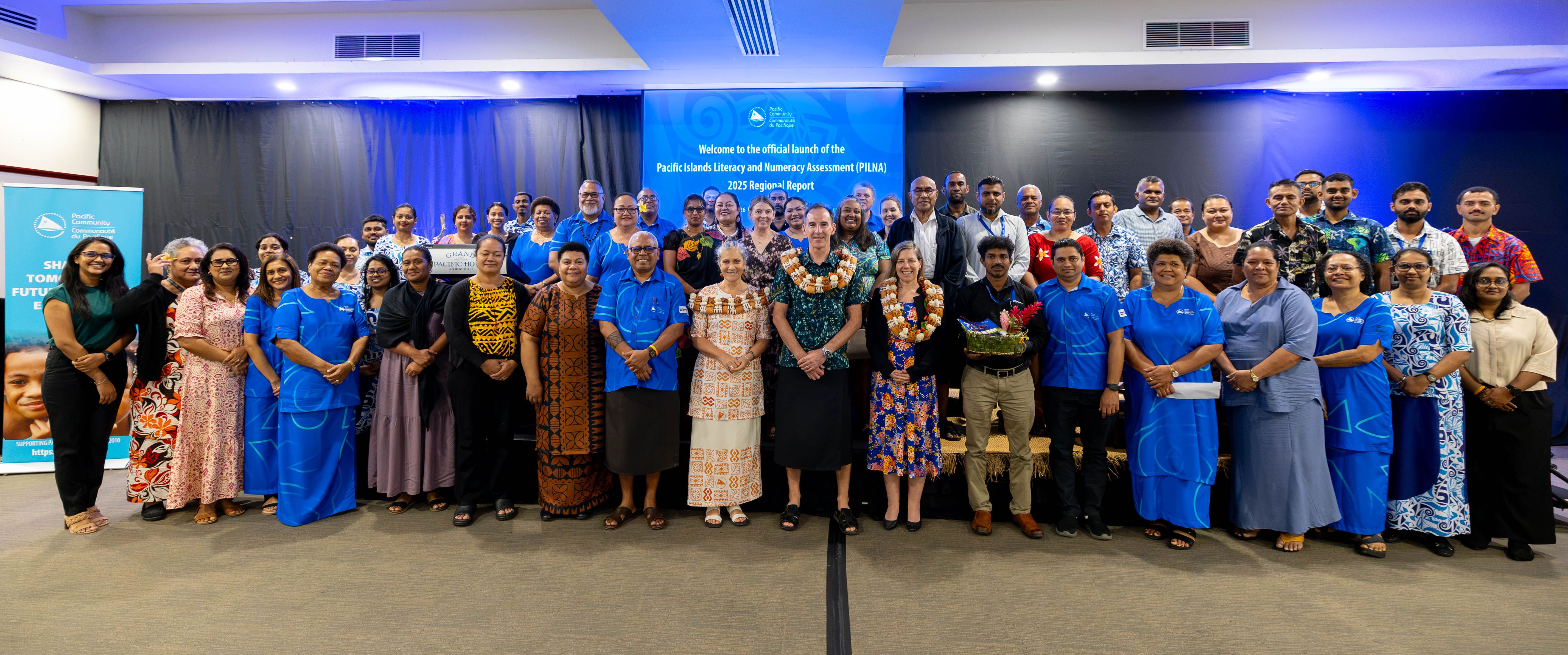
Education leaders at the PILNA 2025 Report launch in September. Photo/Supplied
Luisa Peters-Tongatama, a Cook Islands teacher, says those issues can follow students into the classroom.
Peters-Tongatama works with children dealing with behavioural issues and says teachers can spend valuable teaching time dealing with problems before learning can begin.
“I’m the teacher that people send their children to for discipline,” she tells PMN News.
“You’re trying to do all these other behaviours that are happening in the school. We haven’t even got there yet.”
Asked whether students can be in the right headspace to learn while those problems are happening, she says: “If this is going on, of course not. As adults ourselves, we’re not always giving 110 per cent to our work because there are issues.”
Peters-Tongatama says improving reading also needs support beyond the classroom.
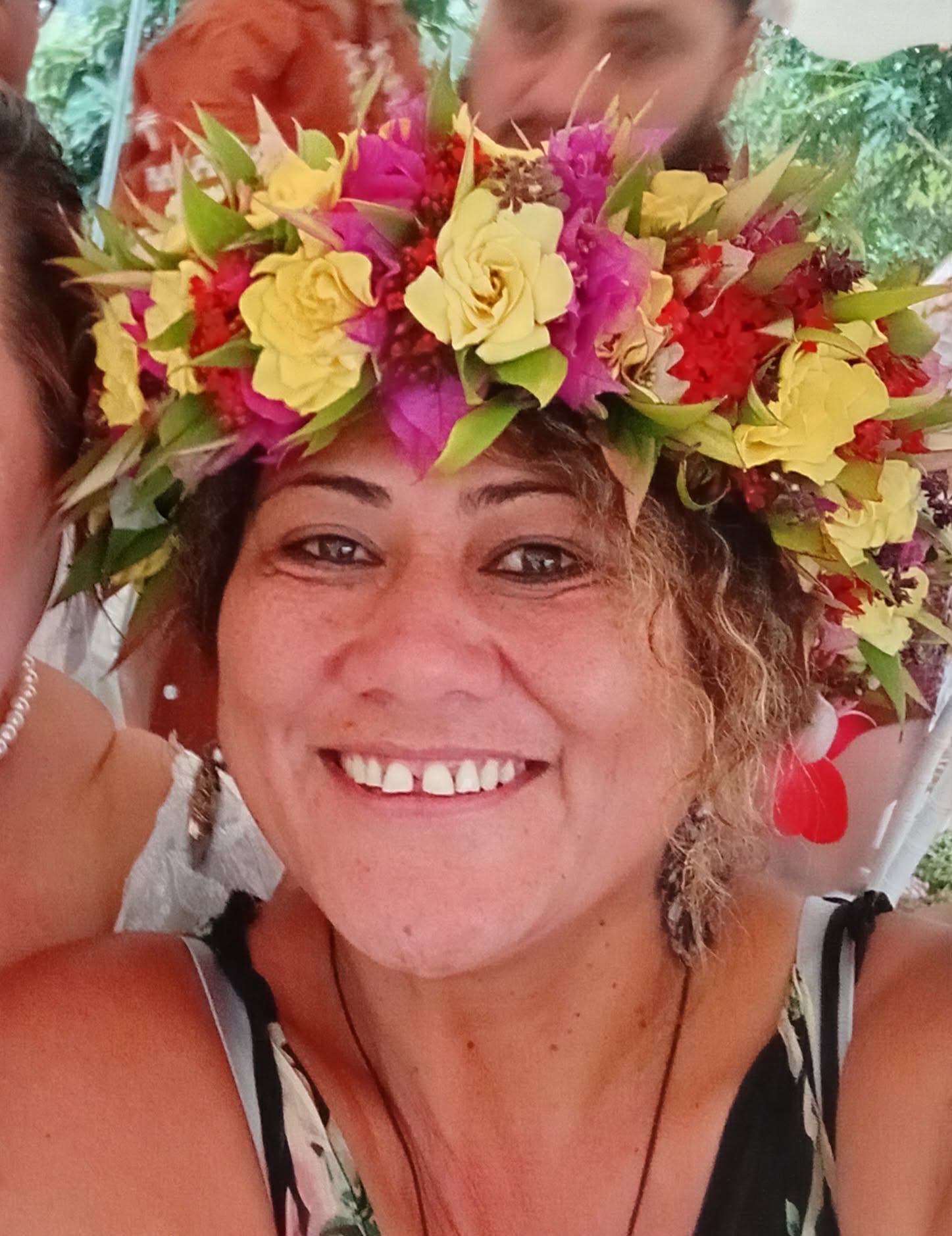
Luisa Peters-Tongatama is a relieving teacher in Rarotonga and Aitutaki. Photo/Supplied
She says reading with children from a young age can help prepare them for school, although work and changing family circumstances can make that support harder for some whānau.
She also points to another challenge for Pacific classrooms: having learning resources that reflect local languages and cultures.
The Cook Islands is moving towards a bilingual curriculum, but Peters-Tongatama says many children do not speak Cook Islands Māori and schools lack resources in the language.
“If we want to be full-immersion schools in Cook Island Māori, we don’t even have the resources. Do you have a maths book that’s in Māori? No, you don’t,” she says.
“Our language has been sort of moved aside for so long that we’re just trying to play catch up.”
Peters-Tongatama says experienced teachers can help newer educators navigate curriculum changes.
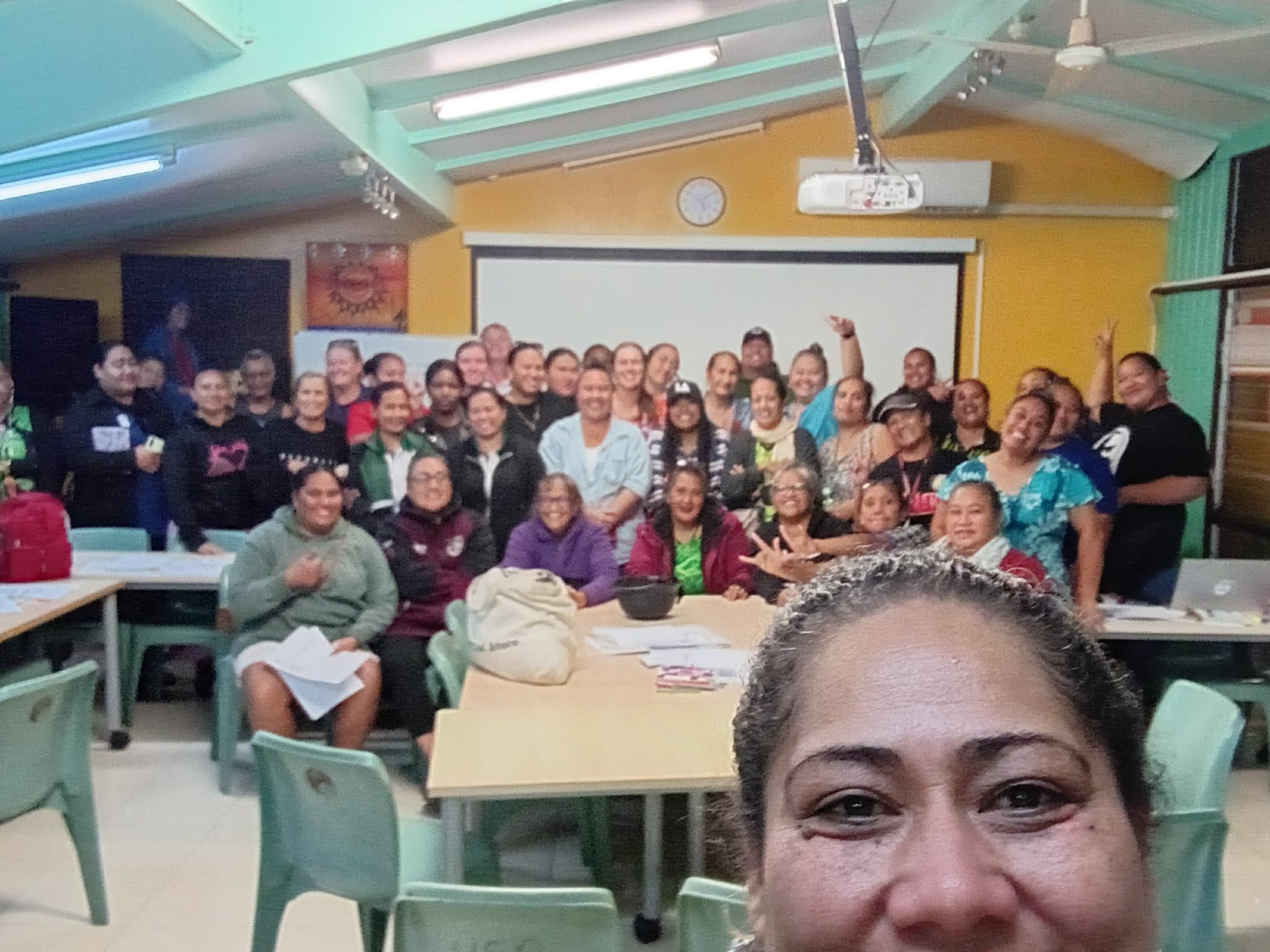
Luisa Peters-Tongatama at a teaching workshop in the Cook Islands. Photo/Supplied
But she says they also need ongoing support when new approaches are introduced.
“If you’re going to implement something new, you have to have manageable planning for the teacher. This week we do this, we focus, practise - that sort of ongoing PD needs to happen.”
PILNA also found students need more support with higher-order thinking, including applying knowledge, reasoning, making connections, and solving unfamiliar problems.
Waqabaca says education needs to prepare students to use what they learn rather than to remember information.
“Education needs to equip young people not only to recall information, but to apply it, reason, make connections, interpret information and solve unfamiliar problems,” he says.
Peters-Tongatama says she encourages her students to explain their views and think beyond simply giving an answer.
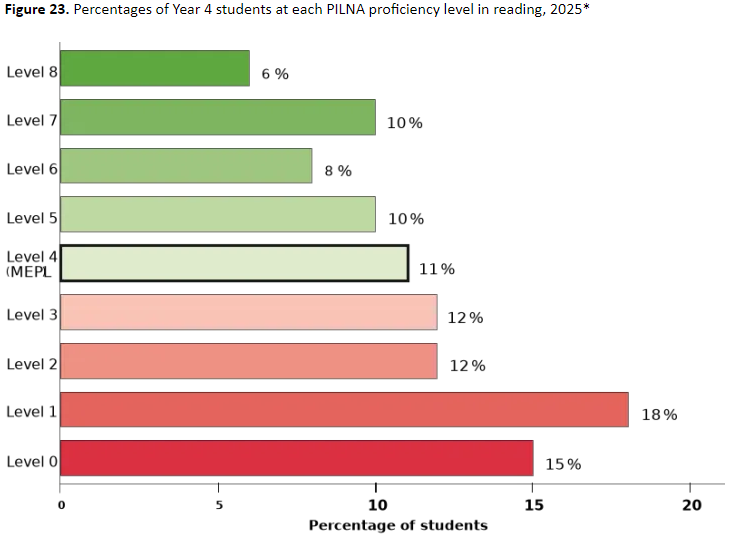
Fewer than half of Year 4 students are reaching the minimum expected proficiency level (MEPL) in reading. Image/PILNA 2025 Report
“I tell my kids, ‘you can have an opinion if you can explain it’. Finish it off and we’ll have a conversation.”
Waqabaca says the regional assessment can also help Pacific countries learn from one another with lessons from one education system shared across the region.
He describes this as “one sea”, with PILNA helping countries identify where resources and support are most needed.