

Senior Pacific academic Sione Tekiteki says Australia and New Zealand’s growing presence in the Pacific is part of a long-standing strategy now becoming more visible through security, sport, and diplomacy.
Photo/Auckland University
Pacific Region
Pacific security shift: Aotearoa and Australia influence grows as Fiji treaty talks advance
A Pacific expert says both nations are deepening their reach in the region through security, sport, and diplomacy while civil groups urge security must reflect everyday needs like climate, health, and livelihoods.

Christine Rovoi
Published
08 May 2026, 3:51pm
Share
Copy Link
Top stories
Tofiga Fepulea’i brings the laughs while taking top honours at Arts Pasifika Awards
Aui'a Vaimaila Leatinu'uFri, 23 Oct

‘It kind of breaks my heart’: Kiwis run riot after Cook Islands’ brave start
Latonya LoleSun, 25 Oct
Top stories
Tofiga Fepulea’i brings the laughs while taking top honours at Arts Pasifika Awards
Aui'a Vaimaila Leatinu'uFri, 23 Oct
‘It kind of breaks my heart’: Kiwis run riot after Cook Islands’ brave start
Latonya LoleSun, 25 Oct
Australia and New Zealand's influence in the Pacific is not new but a long-running strategy that is now becoming more visible through security, economic, and sporting partnerships, according to a senior Pacific legal academic.
Sione Tekiteki says both countries have steadily deepened their engagement across the region over many years particularly through defence cooperation, economic links, and people-to-people ties.
Speaking on Pacific Mornings with William Terite, Tekiteki said recent developments including Australia’s proposed treaty with Fiji, major investment in Papua New Guinea's planned NRL franchise, and ongoing New Zealand involvement in regional diplomacy, all sit within that wider pattern of engagement.
“Well, it's not new,” he said. “Australia's posture in the region, it's something that it's been doing for the last few years ever since the Solomon Islands deal [with China] in 2022.
“Penny Wong has said it many times, so has Pat Conroy, that it wants to engage very closely in the region...in security cooperation. So they haven't really made a secret of the fact that they want to have closer attention with Pacific nations.”
While Australia operates at a larger scale, Tekiteki says New Zealand still plays an important role through relationships and influences than financial power.
Listen to Sione Tekiteki's full interview with William Terite on Pacific Mornings below.
“I do think that New Zealand still has a lot of influence, but not in the context of specific material power,” he said.
New Zealand’s role, he says, is more rooted in relationships and soft power rather than large-scale investment.
The comments come as Australia and Fiji move closer to a new bilateral agreement covering security and economic cooperation, following talks in Suva between Fijian Prime Minister Sitiveni Rabuka and Australia’s Foreign Minister Penny Wong.
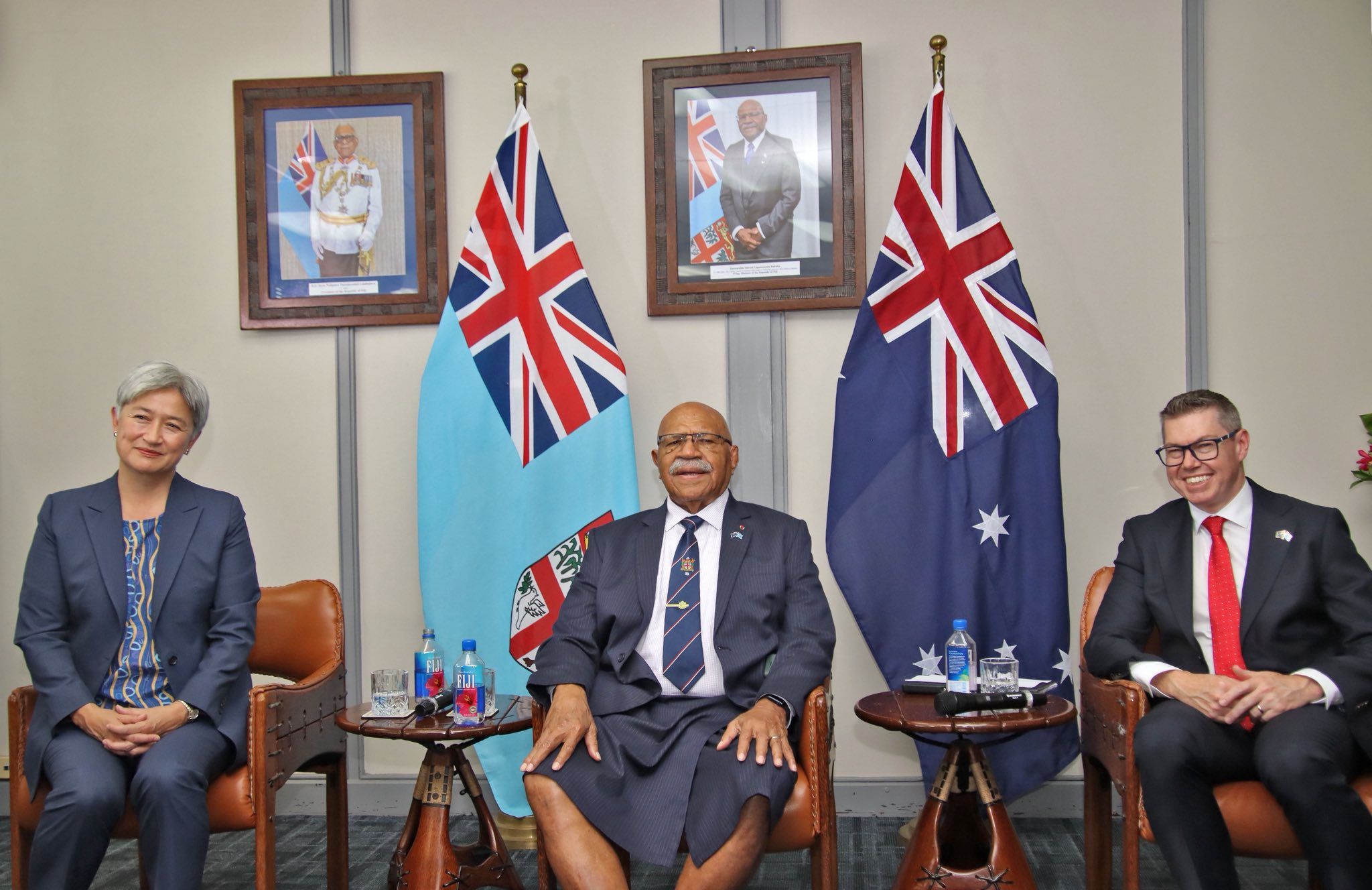
From left: Australian Foreign Minister Penny Wong, Fijian Prime Minister Sitiveni Rabuka, and Australia's Minister for International Development and the Pacific Pat Conroy meet in Suva on a proposed Fiji-Australia security and economic agreement. Photo/Fiji government
Rabuka has said Fiji remains committed to Pacific Islands Forum-led processes in managing regional issues and that both countries are working towards a “stable, secure, and prosperous Blue Pacific".
Civil society groups say the focus on defence and strategic competition is missing what security means for Pacific communities.
The Pacific Islands Association of Non-Governmental Organisations (PIANGO) has previously argued that security should be understood through everyday life like food, health, and climate resilience - not military alliances or geopolitical rivalry.
Emeline Siale Ilolahia, PIANGO Executive Director, has said Pacific security frameworks such as the Biketawa and Boe Declarations already prioritise human security over strategic interests.
As talks continue on the proposed Fiji-Australia arrangement, civil society groups in Fiji have called for greater transparency and public consultation.
The Fiji Council of Social Services (FCOSS) has stressed that agreements framed around regional stability must also protect democratic accountability and national sovereignty especially in areas such as policing and governance.

Pacific civil society groups say “security” in the region must focus on everyday needs like climate change, health, and livelihoods, not just military or geopolitical competition. Photo/thegef.org
Tekiteki says the key issue is how “security” is being defined. “It's all about security but the issue is, when we're talking about security, what exactly do we mean by security?”
He says Australia and New Zealand tend to focus on defence and strategic competition while Pacific nations focus more on climate change, economic resilience, and social wellbeing.
The interview also touched on sport as a growing tool of regional influence, particularly the Papua New Guinea NRL investment.
Australia has announced a A$650 million (close to NZ$700 million) package to support the PNG Chiefs entering the NRL in 2028. The move has been widely seen as strengthening ties in the region.
Tekiteki says sport is now part of how influence is built in the Pacific - through soft power and financial investment.
“This is soft power but there's also a lot of material power because they are investing a lot of money through Rugby League.”
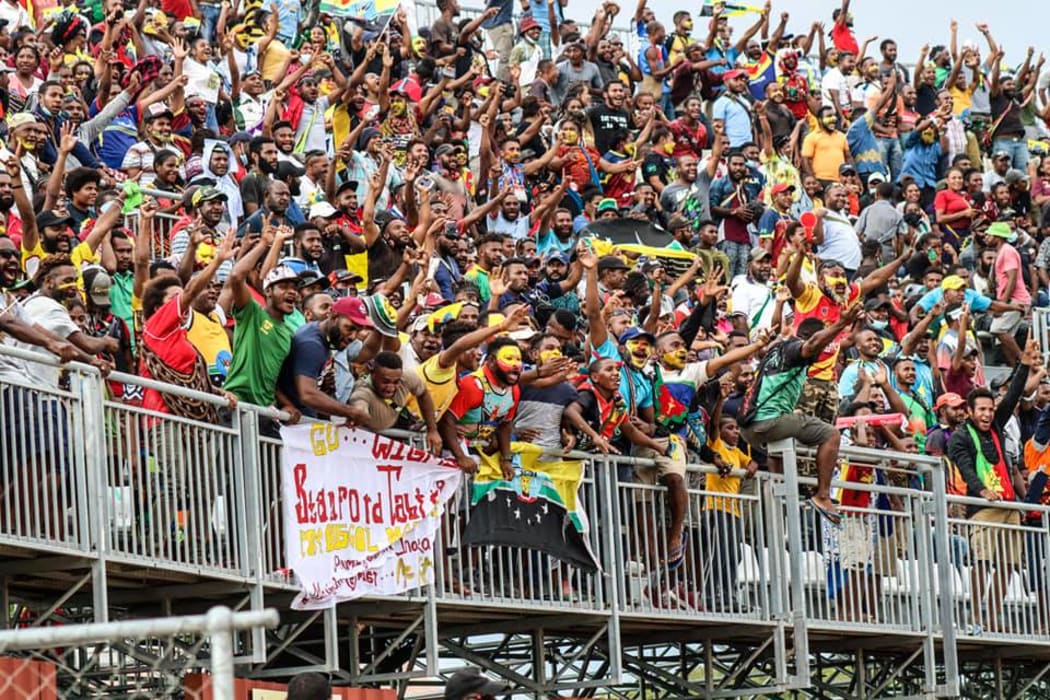
Australia’s $650 million investment in Papua New Guinea’s planned NRL team highlights the growing role of sport in regional strategy and Pacific engagement. Photo/Facebook/PNG National Rugby League
He says while New Zealand has explored similar ideas through Pacific-focused initiatives like Moana Pasifika, the long-term impact depends on deeper policy thinking.
“I think it requires probably a little bit more strategic thinking than purely short-term gains.”
Tekiteki suggests that practical changes such as easier movement between Pacific nations and New Zealand could have a stronger long-term impact than sport investment alone.
The $650m funding package has also raised questions from regional commentators about how soft power is being used in the Pacific.
The Pacific Network on Globalisation (PANG) has previously warned that major sporting and development investments tied to strategic interests can blur the line between support and influence. This raises concerns about sovereignty, it adds.
Critics argue that if Australia can commit hundreds of millions of dollars to sport as part of its regional strategy, similar investment should be directed towards health, infrastructure, and youth unemployment, without geopolitical conditions attached.
For Tekiteki, the shift underway is not sudden but part of a long-standing pattern of engagement in the region.