Seymour targets office karakia as Aupito warns of a ‘culture war’
Thomas Tarurongo WynneFri, 23 Oct
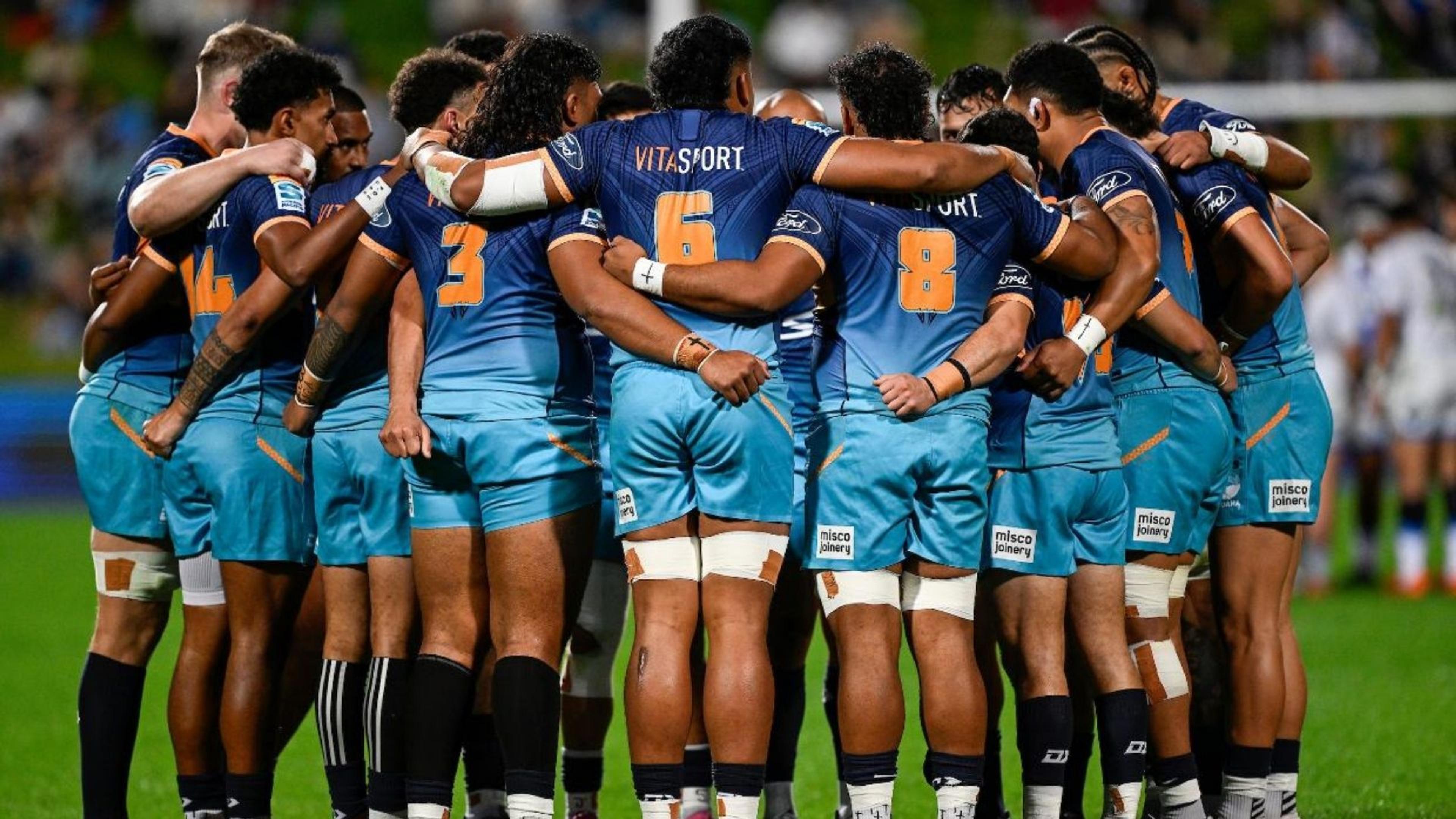
New Zealand Rugby has reported record revenue of $304.2 million at its Annual General Meeting in Wellington, but Pacific leaders say the focus on commercial success is not matching support for Pacific pathways.
Photo/Photosport/Andrew Cornaga
Moana Pasifika’s future still hangs in the balance as rival takeover talks unfold with players left carrying the weight of uncertainty on and off the field.

New Zealand Rugby (NZR) has unveiled a record-shattering $304 million in revenue.
But the celebration is being overshadowed by urgent warnings from Pacific leaders that the professional game is failing our community. They have raised concerns about what this means for Pacific representation in the game, particularly as Moana Pasifika faces ongoing uncertainty.
At Thursday’s Annual General Meeting (AGM) in Wellington, NZ Rugby posted its strongest financial result in history.
Chair David Kirk says the game is in "good health" after cutting net losses to $7.5 million and noted the organisation achieved an operating profit of $700,000 for the year.
But for those watching from the Pacific sidelines, the massive bank balance doesn't hide the "devastating" news that Moana Pasifika is set to disband after the 2026 season.
On 14 April, Moana Pasifika owners announced the club would be exiting the Super Rugby Pacific competition this year because the franchise is no longer financially viable, citing unsustainable costs, low sponsorship interest, and a lack of revenue.
While NZR leaders spent the AGM highlighting sold-out All Blacks Tests and a $40 million investment into grassroots rugby, they offered no new lifeline for the Auckland-based Moana Pasifika franchise.
Speaking after the meeting, Kirk said it would be “sad” to see Moana Pasifika unable to continue however he acknowledged the financial pressures the team is facing.
He said the team has played an important role in the competition below Test level but made clear that money will ultimately decide what happens next.
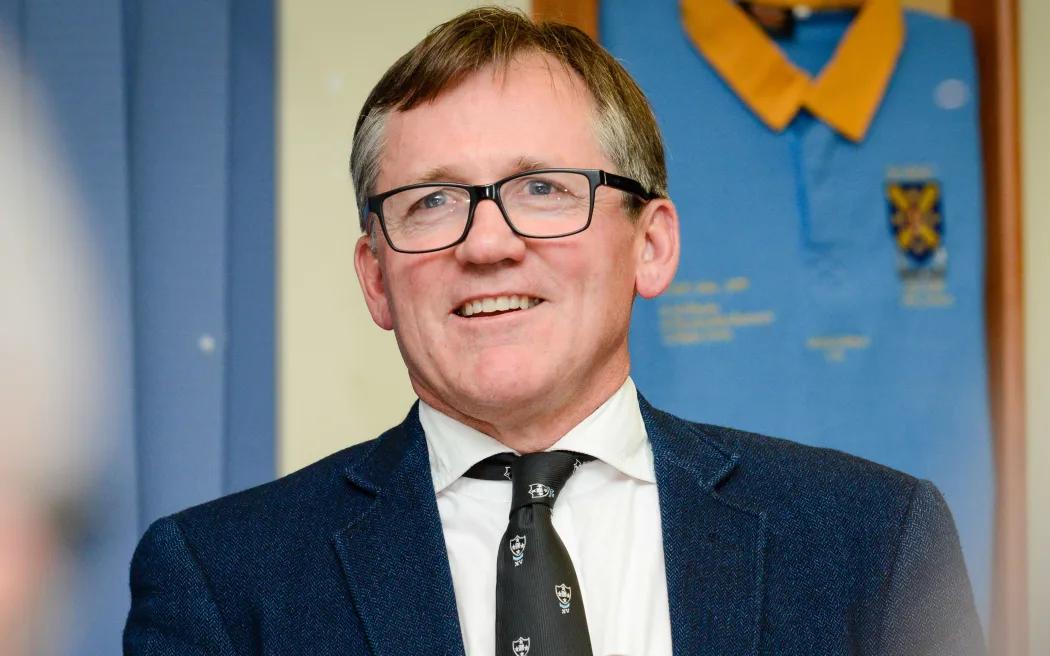
NZ Rugby chair David Kirk says the game is in “good health” after reporting record revenue and reduced losses at the organisation’s Annual General Meeting in Wellington. Photo/Photosport
"We need a powerful one step below All Black level competition. Moana Pasifika have made a really meaningful contribution to that but you can't fight reality if they are financially unable to continue.
"We have to work with them to have a managed off-ramp. And it is what it is."
Kirk added that NZ Rugby has already spoken with several interested groups who may be willing to step in and help keep the franchise alive. But he said nothing solid has been put forward yet.
"We have had interactions with a range of groups and we are very encouraging of them pulling together something that will work for the competition, that is the role we find ourselves in.
"We are just maintaining the support for all the Super Rugby teams including Moana Pasifika," Kirk said. "We have supported them and that will be there for someone else if they think they can put together a team, but its not our job to do that."
Watch Kanaloa Rugby's full interview with William Terite on Pacific Mornings below.
The future of Moana Pasifika has been playing out in public over the past few weeks with different groups putting forward competing ideas to take control of the franchise.
A consortium called Kanaloa Rugby, made up of former players and rugby administrators, has been pushing a proposed takeover. The group says politics are getting in the way of saving the club and has pointed criticism at the Pasifika Medical Association (PMA), which currently owns Moana Pasifika.
But the PMA has reportedly said that it is NZ Rugby, as the licence holder, that is managing the process.
The comments underline the uncertainty around Moana Pasifika’s future, even as their role in bringing Pacific identity and talent into top-level rugby continues to be widely recognised.
Kirk's comments come just days after community advocate Jerome Mika raised the alarm about the lack of genuine support for Pacific pathways.
Listen to Jerome Mika's full interview below.
Jerome Mika says professional rugby is at a critical “crossroads”, with growing tension between commercial success and the long-term sustainability of Pacific representation in the game.
He says there is a widening gap between the financial strength of the sport and the development of Pacific pathways.
Mika says Moana Pasifika highlights both opportunities and challenges for Pacific representation in professional rugby. He says the team reflects strong community expectations, but also operates within a system shaped by commercial pressures.
Mika says it is not yet clear whether current models of support will ensure the team’s long-term sustainability. He says sustainability remains a key concern for Pacific-focused teams in professional rugby.
Mika also raises concerns about the representation of Pacific people in rugby’s governance and decision-making structures, saying stronger inclusion is needed to reflect the communities that contribute to the game.
Watch Moana Pasifika chief executive Debbie Sorensen's full interview on PMN Tonga below.
Mika says the issues facing Moana Pasifika are part of wider structural challenges in professional rugby, and that the future of Pacific participation depends on balancing commercial growth with community outcomes.
Pacific legal expert Sione Tekiteki has also weighed in on the shifting landscape. He was responding to a hypothetical question about whether the New Zealand Government should fund Moana Pasifika as a way of increasing influence in the Pacific, using Australia’s investment in Papua New Guinea’s NRL bid as a reference point.
Tekiteki told Terite the proposed investment approach into Moana Pasifika raises both "positives and negatives".
He said in the short term, investment in initiatives like Moana Pasifika could provide influence, particularly in relation to Sāmoa, Tonga, and Fiji.
But he said it is not clear whether that influence would extend more widely across the Pacific. “Whether that translates to broader influence in the Pacific region for all the island nations, that remains to be seen.”
Tekiteki said Moana Pasifika is focused on a limited group of rugby-playing nations "because Moana Pacific, for one, is quite focused in terms of the countries that play rugby.”
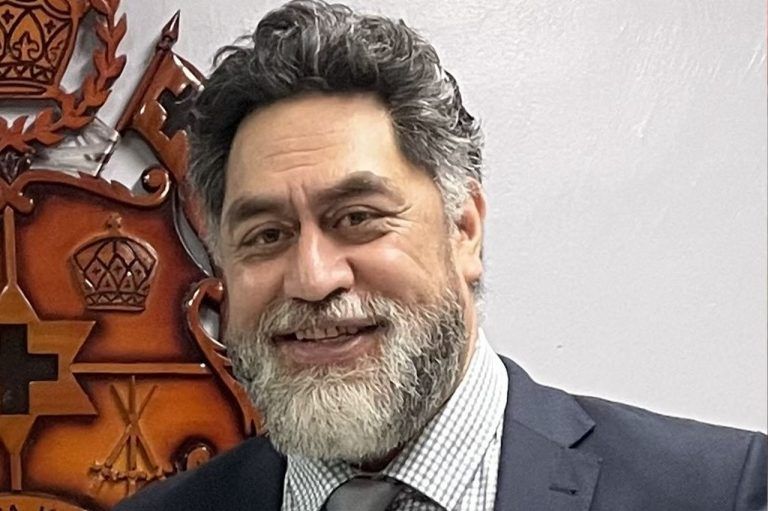
Pacific expert Sione Tekiteki says there is growing uncertainty for Pacific teams and pathways, despite NZ Rugby’s focus on efficiency and long-term growth. Photo/University of Auckland
NZR CEO Steve Lancaster remained upbeat at the AGM, pointing to match-day revenue and new global partners like Toyota.
“We believe the game is in really good health,” Lancaster says. “Last year, we made a significant investment in the community game... seven All Blacks matches were sold out and we saw match attendance for Super Rugby Pacific increase.”
But for Pacific fans, these numbers feel "bittersweet". The AGM confirmed that NZR is focusing its energy on big-money events like the 2029 British and Irish Lions tour, leaving the immediate future of a professional Pacific pathway in Auckland unresolved.
As talks continue and uncertainty grows, the impact is being felt most strongly inside the team. Players and staff are having to deal with ongoing rumours about what comes next, and what it could mean for their futures.
Augustine Pulu, Moana Pasifika halfback and Tongan international, told the media the situation is already taking a real emotional toll, especially on younger players who fear they may lose out on key opportunities.
"That's what really breaks my heart, seeing the young guys breaking down into tears because these are the opportunities that we're not going to get anywhere else," Pulu said. "We've got to provide for our families. God willing, that there's another opportunity to carry on."
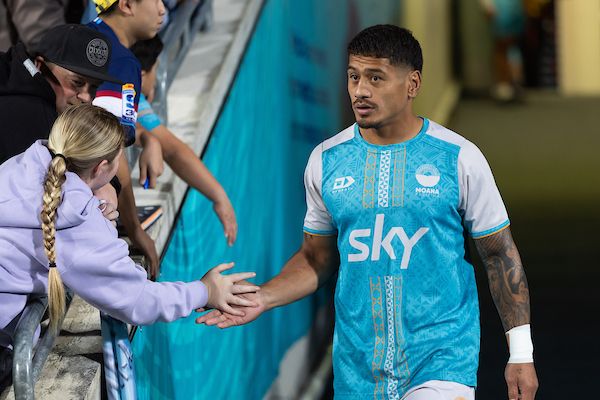
Built on heart, family, and Pacific resilience: Augustine Pulu keeps leading through uncertainty with pride and purpose. Photo/Photosport/Brett Phibbs
Despite the pressure off the field, he says the strong cultural bond within the Moana Pasifika squad is helping the team stay focused and keep showing up for each other.
"They're still fighting for it. If this was any other franchise, I don't know if they could come out and carry on performing the way the boys have been going. This is something that we're used to as our people. We're resilient in what we do and we're going to carry on giving back as much as we can," Pulu said.
Tekiteki also raised concerns about sustainability. “Long-term, there are still issues around sustainability, which is where Moana Pacific is now and what's currently happening.”
He said the approach would require more strategic thinking than short-term gains. He suggested that there may be other ways to build influence in the Pacific, including changes to immigration settings.
“For example, looking at ease of entry into New Zealand, particularly by Pacific island countries, I would actually argue they would probably garner more influence than Moana Pacific,” Tekiteki said.
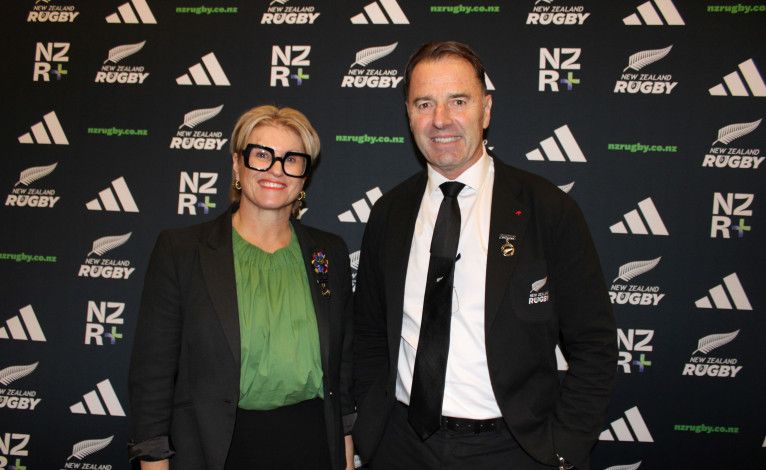
Former NZ rugby internationals Erin Rush and Matthew Cooper have been confirmed as New Zealand Rugby’s Vice President and President. Photo/NZR
Among the corporate updates, the AGM celebrated a historic milestone: former Black Fern Erin Rush was confirmed as NZ Rugby’s first female Vice President. Former All Black Matthew Cooper was elected President.
The Pasifika Rugby Council was also formally welcomed as a new member, a move Kirk says reflects a more "collaborative and accountable" organisation.
But as the NZ Rugby AGM meeting wrapped up, the message from the community remained clear: A $300 million record is an empty victory if the Pacific heart of the game is allowed to stop beating.
At the time of publication, New Zealand Rugby has not responded to specific questions from PMN News regarding the future of Moana Pasifika or how it intends to address the financial concerns raised by the franchise.
This story has been updated to correct comments attributed to Sione Tekiteki. We regret the error.