
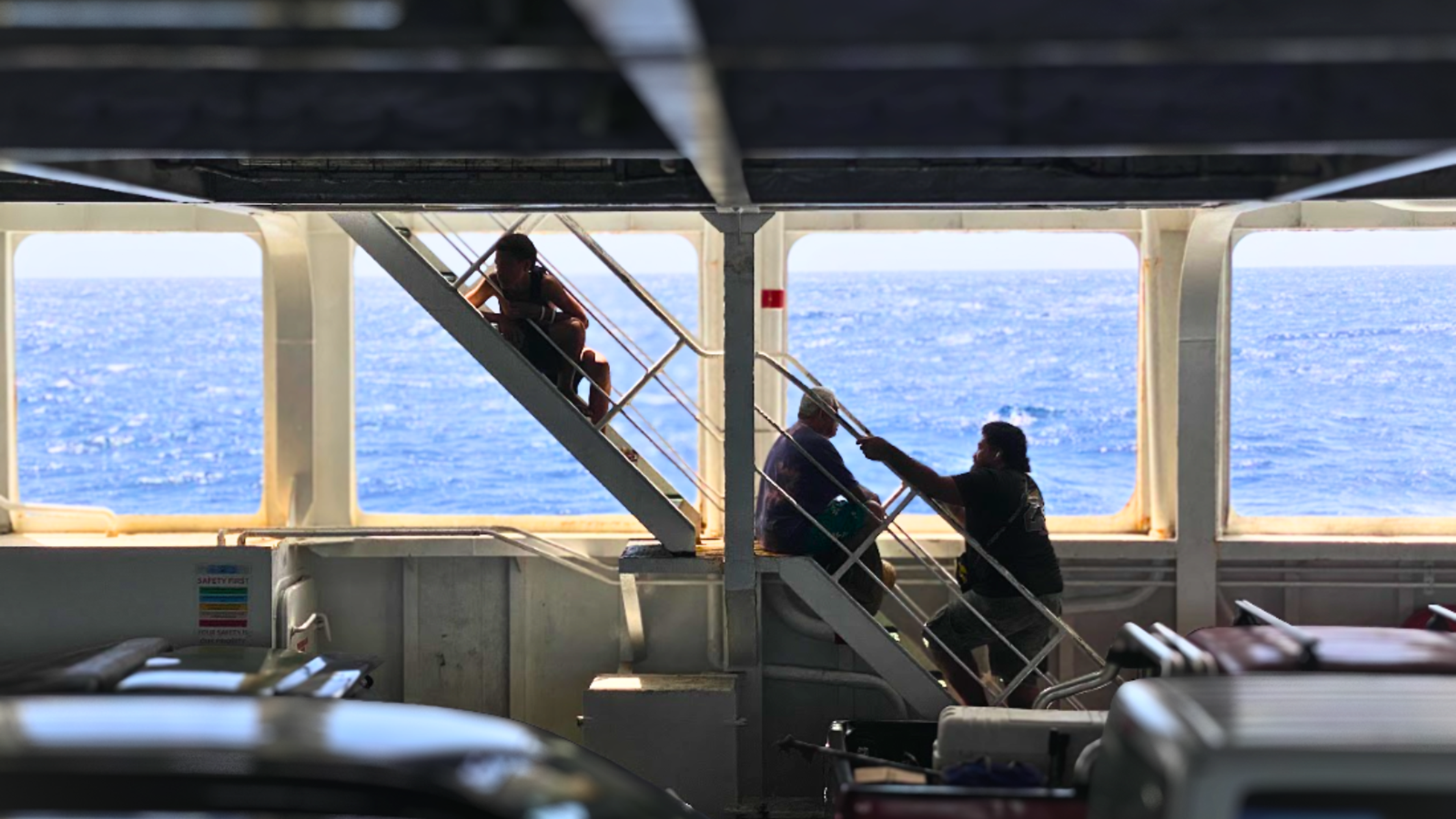
The impact of global conflicts, especially in the Middle East, is already showing across Pacific countries where many rely heavily on imported fuel and goods. Pictured is the inter-island ferry in Sāmoa, transporting cargo, vehicles and passengers between Savaii and Upolu.
Photo/Anetone Sagaga
Pacific Region
Pacific families hit hardest as fuel surge drives up cost of living
New analysis shows households across the region are being hit up to six times harder than New Zealand as global tensions raise fuel and food prices.
Renate Rivers
Published
08 April 2026, 3:48pm
Share
Copy Link
Top stories
'Don't count yourself out': Porirua by-election candidate’s push for voter participation
Taelegalolo'u Mary AfemataFri, 09 Oct
Top stories
'Don't count yourself out': Porirua by-election candidate’s push for voter participation
Taelegalolo'u Mary AfemataFri, 09 Oct
Pacific families are feeling the full force of rising global fuel prices, with new analysis showing the impact is hitting the region far harder than in New Zealand.
ChildFund New Zealand says households across the Pacific region are being hit up to six times harder as higher fuel costs quickly drive up the price of food, transport, and basic goods.
The organisation estimates rising fuel prices are cutting household purchasing power by between 2.5 and 12 per cent across the Pacific, compared to around one to two per cent in Aotearoa.
Josie Pagani, ChildFund NZ’s chief executive, says the impact goes well beyond filling up the car.
“Fuel is a base cost. When it rises, everything rises with it,” she said in a statement. “In New Zealand, families feel it at the pump. In the Pacific, families feel it on the table.”
She says families across the region are being forced to make tough choices as everyday essentials become harder to afford.
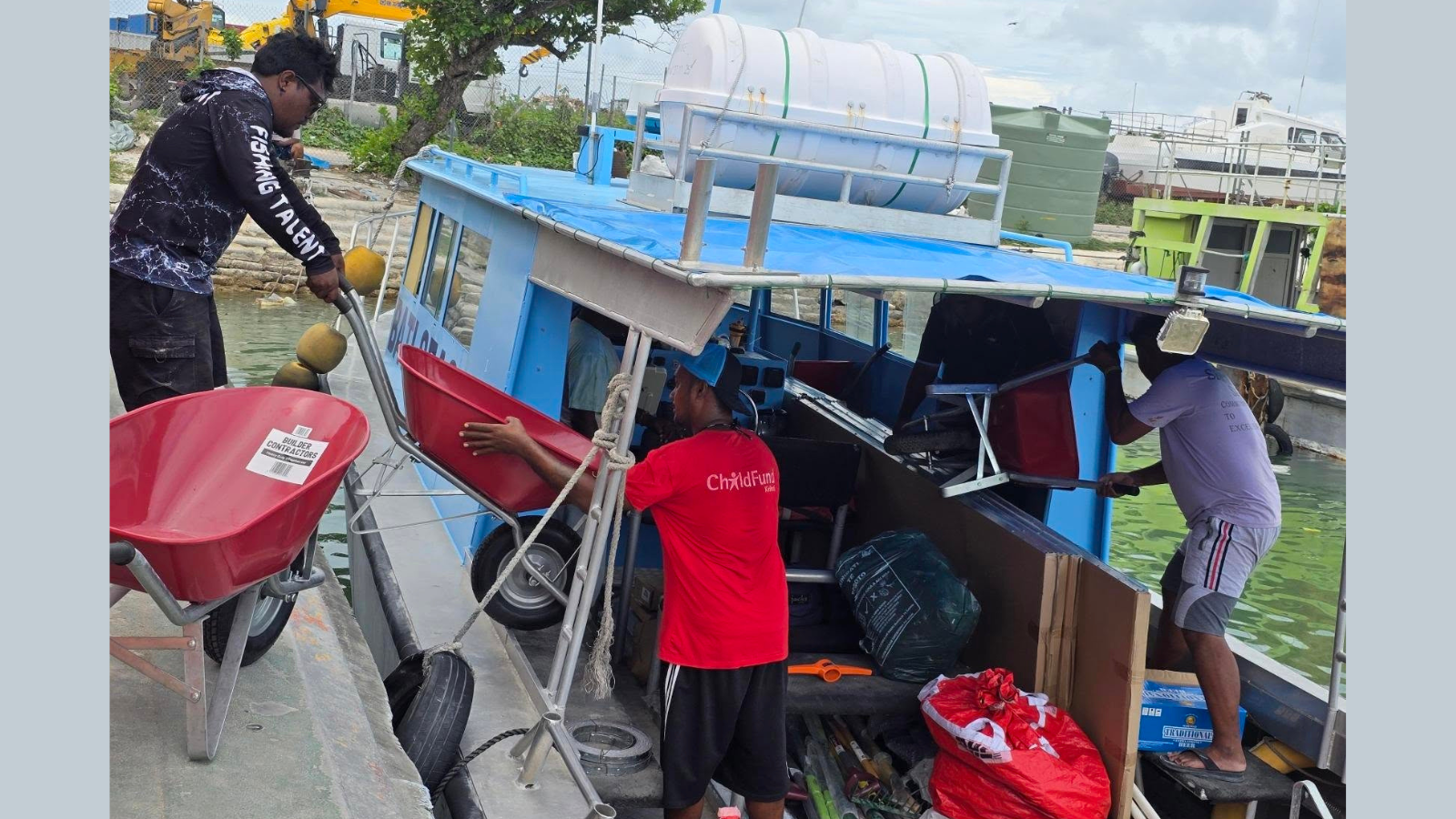
ChildFund New Zealand says households across the Pacific region are being hit up to six times harder as higher fuel costs quickly drive up the price of food, transport, and basic goods. Photo/ChildFund New Zealand
Experts warn the situation could get worse. Al Gillespie, an international law expert, says the effects of global tensions are being felt more strongly across the Pacific.
“I think the fuel struggles are bad here, but in the Pacific they’re much worse, and I think there’s a likelihood that it will get more extreme before it gets better,” he told Pacific Mornings. “What we’re seeing in New Zealand is just a small part of a very large global problem.”
The impact is already showing across Pacific countries where many rely heavily on imported fuel and goods.
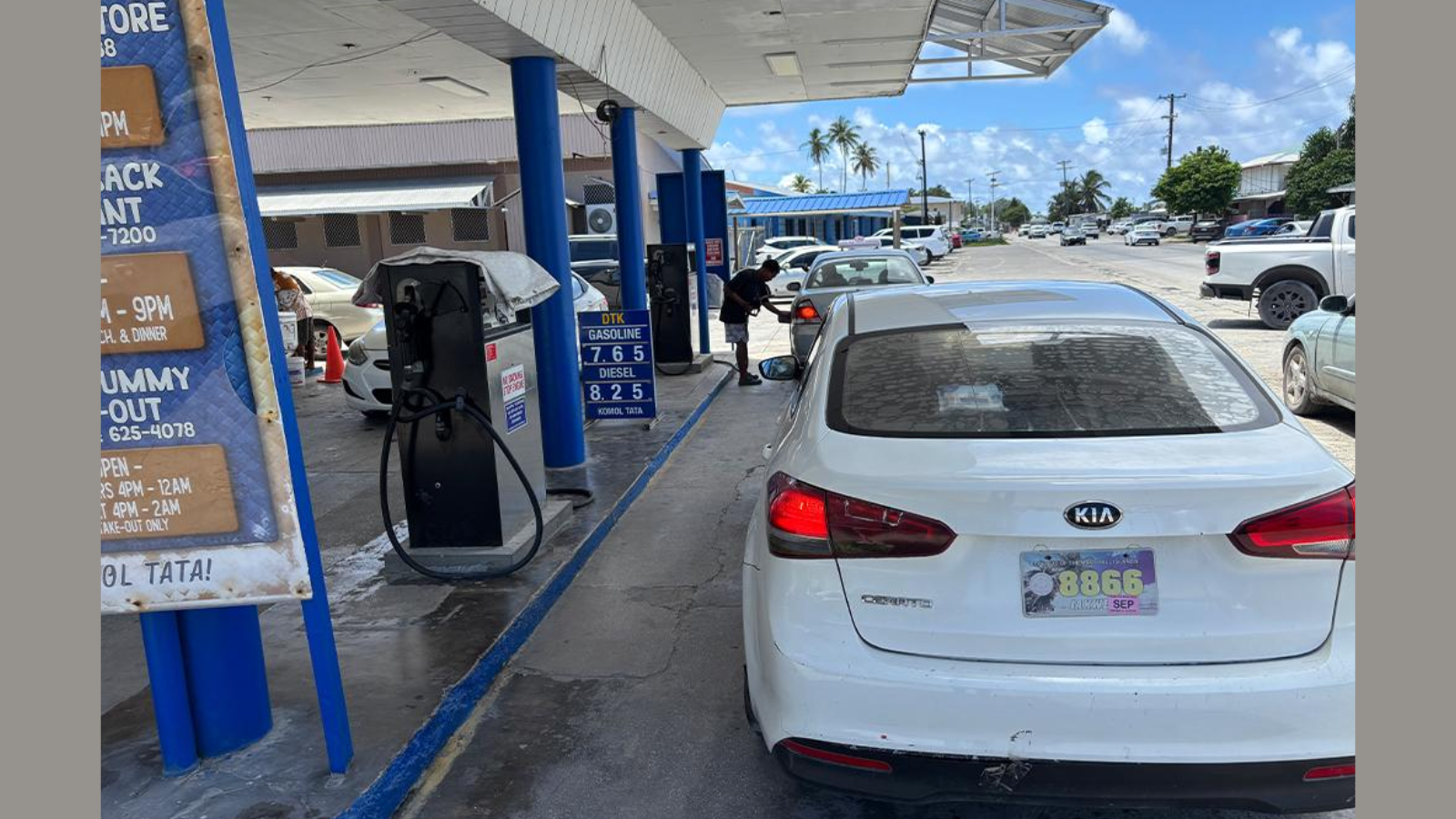
In the Marshall Islands, public transport fares have already increased by 40 to 50 per cent. Communities use share-taxis for public transport as there are no buses. Photo/Marianas Business Journal
In the Marshall Islands, the government declared a state of economic emergency on 26 March as fuel and shipping costs surged, warning the situation is likely to worsen.
The Marianas Business Journal reports that over 90 per cent of food is imported, with communities bracing for sharp price rises. Public transport fares have already increased by 40 to 50 per cent.
The Marshallese government has introduced tax exemptions starting at the end of April, boosting yearly take-home pay by about US$600 (NZ$1000).
Across the region, rising fuel costs are pushing up the price of transport, power, and basic goods.
In Tonga, petrol is already expensive on the outer islands, costing TOP$4.55 (NZ$3.34) per litre, and diesel is over TOP$5.30 (NZ$3.89) in some areas.
In Sāmoa, fuel prices have already gone up for April, with further increases likely as global tensions continue, especially in the Middle East.
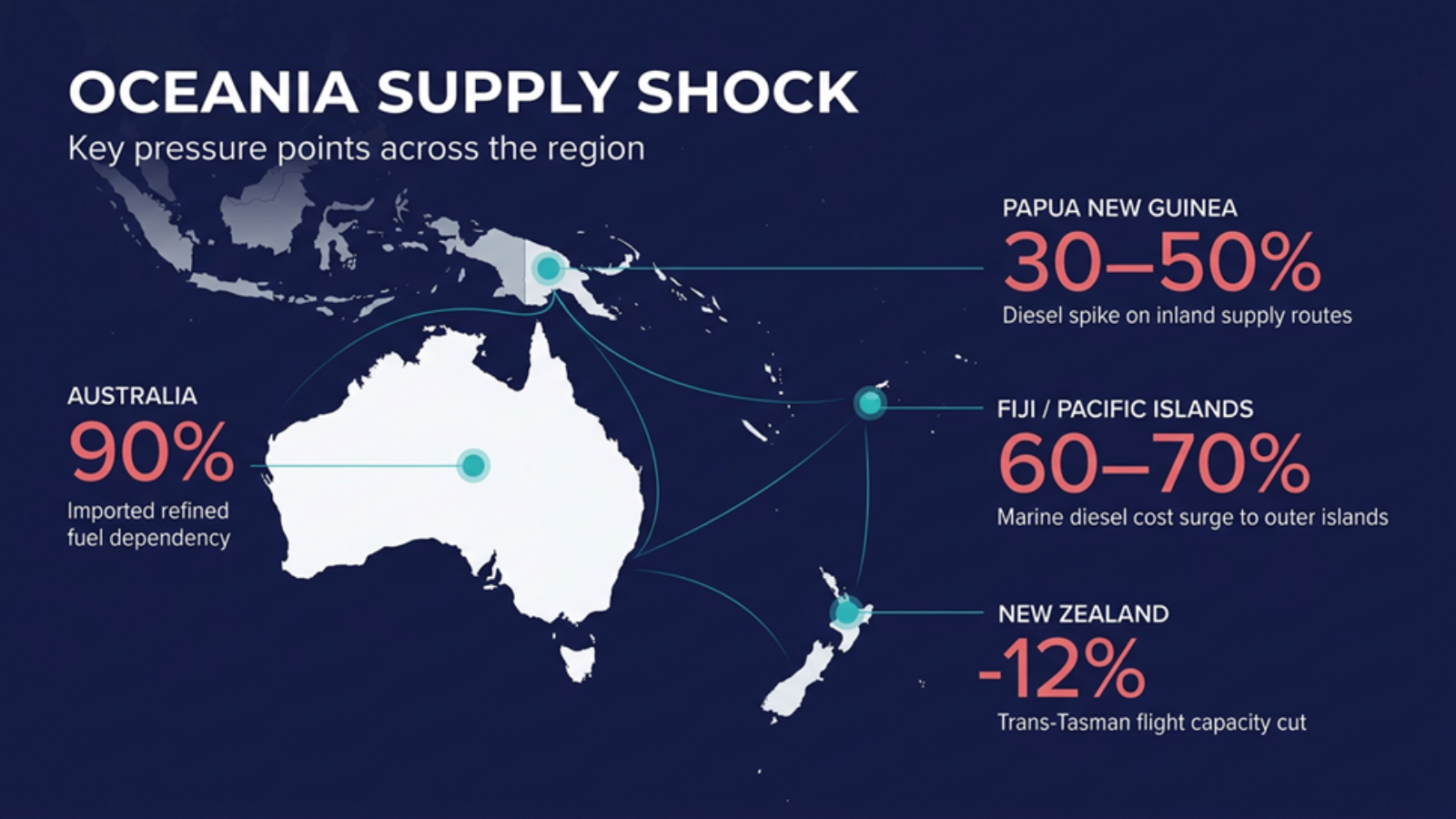
Kalgin Global Logistics graph on fuel supply in Oceania. Photo/Kalgin Global Logistics
Analysis from Kalgin Global Logistics shows Pacific countries are especially exposed because they rely on imports, meaning global shipping shocks are felt quickly and fully.
The impact is worse on remote islands, where transport costs are already high.
The growing pressure comes as New Zealand Foreign Minister Vaovasamanaia Winston Peters met US Secretary of State Marco Rubio in Washington on Wednesday (NZT), with talks focused on stability and long-term cooperation.
Speaking on RNZ’s Morning Report, Peters said he made clear how serious the situation is for Pacific countries.
“Making sure the US understands the cost to us, the Pacific, the cost to our economy, to fuel supplies - not just New Zealand’s economy but also the Pacific economies we are responsible for,” he says.
Peters said discussions included ways to improve fuel supply across the region.
“We had a serious discussion... how we might get some ancillary tankers ready and get them to New Zealand to spread it around the Pacific as fast as we possibly can,” he says.
The talks come as global concern focuses on the Strait of Hormuz, a key route for much of the world's oil.
Ongoing tensions in the Middle East continue to drive uncertainty in fuel markets.
Even with signs of a possible pause in conflict, the outlook remains uncertain and for many Pacific families, the pressure is already being felt every day.