Online vault aims to return Pacific research to the community
Aui'a Vaimaila Leatinu'uWed, 21 Oct
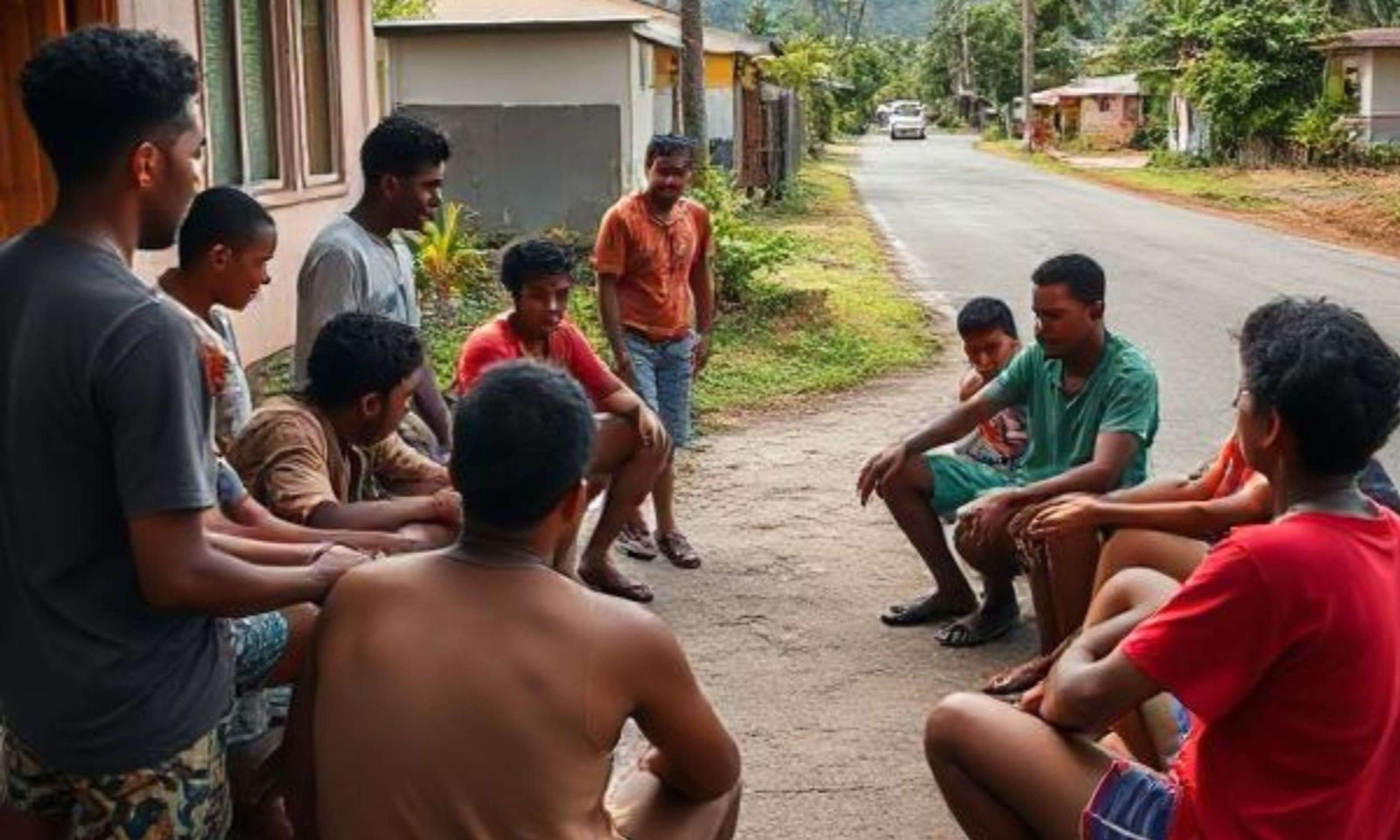
In Fiji, the growing drug crisis is severely impacting communities, especially the youth.
Photo/Facebook
A drug detection expert warns the region is being used as a trafficking route, with families and youth paying the price.




The Pacific is facing a growing drug crisis and experts say silence is making it worse.
As international cartels use the region as a "superhighway" to move drugs to New Zealand and Australia, communities across the islands are seeing the impact, especially among young people.
Associate Minister for Police, Casey Costello, says the social harm caused by this illicit trade is estimated to cost New Zealand around NZ$1.5 billion.
Speaking with William Terite on Pacific Mornings, Glenn Dobson, the Chief Executive of the Drug Detection Agency (TDDA), believes the first step to protecting families is simple: start talking.
“It's really safe, important and healthy to be talking about the risks of drugs in the community, families, [and] workplaces,” he said.
“That's how we can combat it from a demand side and being open to talk about it and not being a taboo subject.”
Watch Glenn Dobson’s full interview below.
Dobson says the criminal groups behind the trade are highly organised and opportunistic.
He says they are “ruthless business” entities that target any weak points in the system to move drugs through the Pacific.
He warns drug trends are shifting fast, with new substances entering the region.

Glenn Dobson encourages more talanoa around drugs in the community, to help safeguard each other. Photo/Unsplash
“One of the things that we've seen recently, about those drug trends, is that a high instance of cocaine is starting to come into the country. Much higher than what we've ever seen before,” Dobson says.
The impact is already being felt.
In early 2024, Fiji Police confiscated 4.2 tons of methamphetamine. Between May 2024 and May 2025, there were 2446 drug-related cases including 50 cases involving children.
In a UNICEF Pacific focus group discussion, students and teachers reported drug use had become visible across many schools. Some children turned to drugs to cope with “difficult home situations”.
Communities called for more support, especially in high risk areas where youth were struggling with drugs, poor mental health, and family violence.
Mohammed Ajaz, Customs Enforcement Advisor for the Oceania Customs Organisation, wrote in an opinion piece that drugs corrode community trust.
“Drug addiction doesn’t respect the boundaries of Pacific family structures - it exploits them. One user can drag down entire extended families,” Ajaz says.

Mohammed Ajaz says drug addiction does not respect the boundaries of Pacific family structures. Photo/Unsplash
“Kinship obligations become burdens. The social fabric that has held island nations together for centuries starts to tear.”
In mid-March FBC News reported that Prime Minister of Fiji, Sitiveni Rabuka encouraged community involvement in the fight against illegal drugs.
On top of strengthening police deployment and technological advancements, Rabuka says communities, families, schools and religious institutions can contribute to the “whole-of-society” approach.

Prime Minister Rabuka called for a holistic approach, including government and community efforts, to combat the ongoing drug crisis. Photo/Fiji govt
New Zealand Prime Minister Christopher Luxon recently met with Sāmoa Prime Minister La'aulialemalietoa Leuatea Schmidt for a bilateral meeting to discuss various geopolitical topics, including transnational crime.
Around the same time, Marshall Islands President Hilda Heine called for more action on halting the spread of illegal drugs.
Data from the latest TDDA Imperans Q4 Report shows a staggering 148 per cent surge in cocaine detections in New Zealand, with the Bay of Plenty seeing positive tests jump to nine per cent.
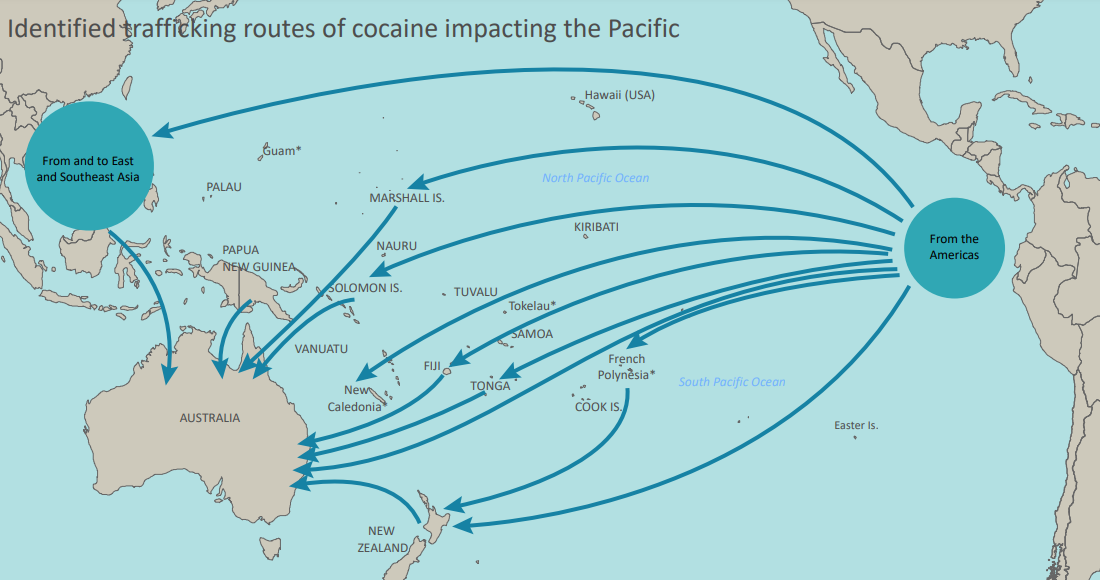
Identified trafficking routes of cocaine impacting the Pacific. Photo/UNODC
While cannabis remains the most prevalent substance at 67.5 per cent, there is an increasing regional divergence in the use of methamphetamine and other amphetamine-type substances, which appeared in 24.5 per cent of positive tests.
“There's no silver bullet that's going to stop this. We need to look at the enforcement side of things to stop the supply coming in,” Dobson says.
“We need to look at testing and education from a demand perspective to try and quash the demand in the communities.
“And we need to be educating our children, our young people coming through to make the right choices, safe choices, so they can grow up to be fit, strong, healthy people as well.”