
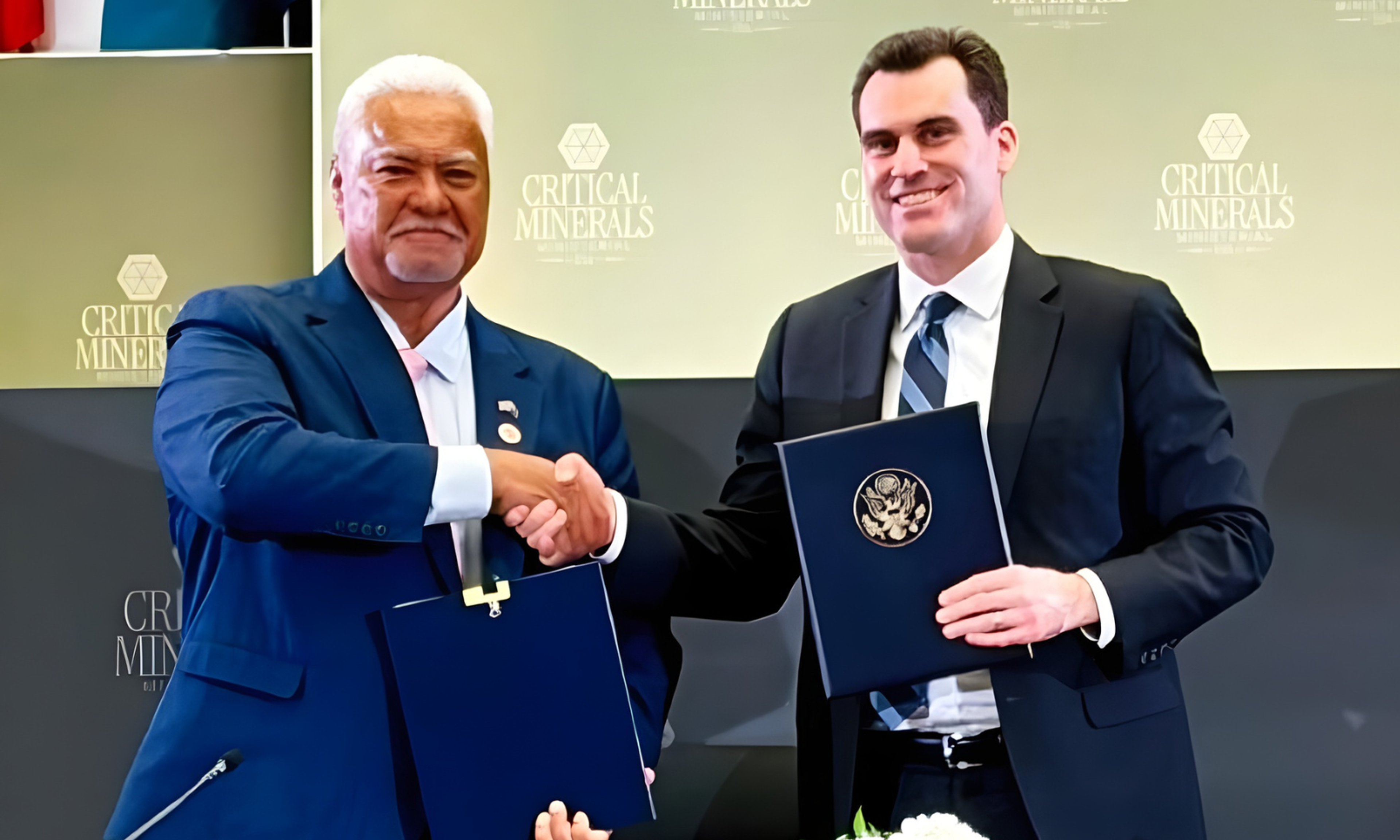
Sonny Williams, Assistant to the Minister Responsible for the Prime Minister, with his United States counterpart after agreeing a non-binding Framework for Engagement and Cooperation to strengthen supply chains for critical minerals and rare earths, including cooperation relating to deep-sea minerals.
Photo/Cook Islands News
Pacific Region
Cook Islands and US forge strategic alliance on critical minerals
Officials say the agreement does not licence mining, guarantee investment, alter environmental laws, or commit Rarotonga to extraction activity, timelines.
Cook Islands News
Published
07 February 2026, 5:16am
Share
Copy Link
Top stories
Niue’s Fuel Shock: The government warns of 150 per cent price surge
PMN NewsSun, 03 May

The chief in the corner: David Tua legacy grows with another Hall of Fame induction in US
Christine RovoiSat, 02 May

Top stories
Niue’s Fuel Shock: The government warns of 150 per cent price surge
PMN NewsSun, 03 May
The chief in the corner: David Tua legacy grows with another Hall of Fame induction in US
Christine RovoiSat, 02 May
Cook Islands and the United States have agreed a non-binding Framework for Engagement and Cooperation to strengthen supply chains for critical minerals and rare earths, including cooperation relating to deep-sea minerals.
The announcement followed a Critical Minerals Ministerial at the State Department in Washington DC on 4 February, where the Cook Islands participated alongside representatives from 53 countries and the European Commission.
In a statement, the Cook Islands Seabed Minerals Authority (SBMA) said the Framework establishes a structured basis for collaboration across research, exploration, investment facilitation, processing and supply chain development.
It recognises the Cook Islands’ leadership in ocean governance and regulatory practice, while reaffirming the country’s full sovereign control over its seabed minerals and decision-making, SBMA said.
Prime Minister Mark Brown, who is also the Minister for Seabed Minerals, said this Framework “gives the Cook Islands options”.
“It establishes a platform for genuine collaboration, strengthens our strategic relationships, and ensures that any development occurs on our terms, under our laws, and in a way that delivers long-term value for our people and our partners,” Brown said.
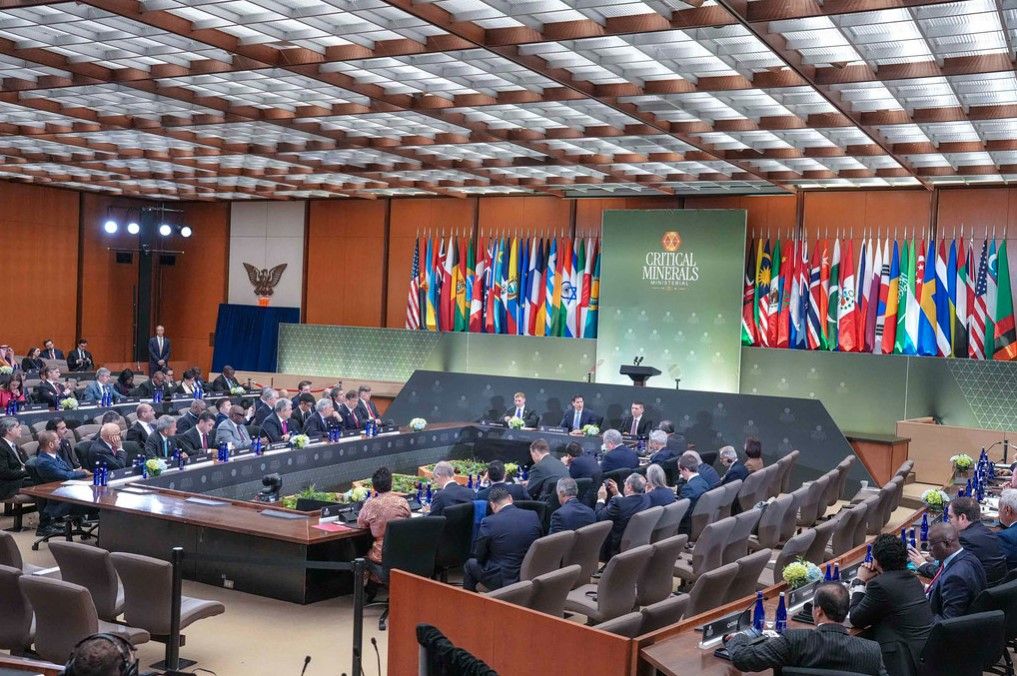
Critical Minerals Ministerial at the State Department in Washington, where the Cook Islands participated alongside representatives from 53 countries and the European Commission. Photo/Supplied
According to SBMA, the Framework reflects a shared interest in building resilient and responsible critical minerals supply chains that are essential to modern technologies.
“It brings together complementary strengths, the Cook Islands’ robust regulatory expertise, environmental stewardship and resource endowment, alongside the United States’ market depth, technical capability and investment capacity, to support high-standard outcomes.”
The Framework sets out a cooperative approach to:
Establish a U.S.–Cook Islands Working Group to coordinate engagement, share expertise and identify areas of mutual strategic interest
Promote joint research, geological mapping and information sharing, drawing on the strengths of both countries
Encourage responsible investment aligned with high environmental, social and governance standards
Support the development of secure, diversified and resilient critical minerals supply chains
Facilitate early-stage engagement between governments, investors and operators in both jurisdictions
Enable cooperation on downstream opportunities, including processing, recycling and market access.
Watch US Secretary of State Marco Rubio speaking to the media at the critical minerals meeting in Washington DC.
The Framework also provides a platform for dialogue on fair pricing mechanisms that reflect the real costs of responsible extraction and processing, supporting transparent, high-standard markets.
“Importantly, all cooperation under the Framework is undertaken in accordance with each country’s domestic laws and regulatory processes. For the Cook Islands, this includes strict environmental assessment and permitting requirements.”
For the Cook Islands, the Framework delivers several strategic benefits, according to SBMA:
Investment certainty and credibility: A formal framework with the United States reinforces international confidence in the Cook Islands’ robust regulatory regime and long-term policy direction.
Stronger market connectivity: The Framework supports structured engagement with U.S. public and private sector partners across finance, technology, and downstream markets, without pre-committing the Cook Islands to any specific project.
Capability and knowledge exchange: Two-way cooperation on science, geoscience and regulatory practice supports domestic capability while contributing Cook Islands expertise to international best practice.
High-standards leadership: The Cook Islands is positioned as a partner of choice for jurisdictions seeking responsible, transparent and environmentally robust approaches to critical minerals development.
Strategic diversification: The Framework supports long-term economic resilience by creating options and partnerships, rather than short-term commitments.
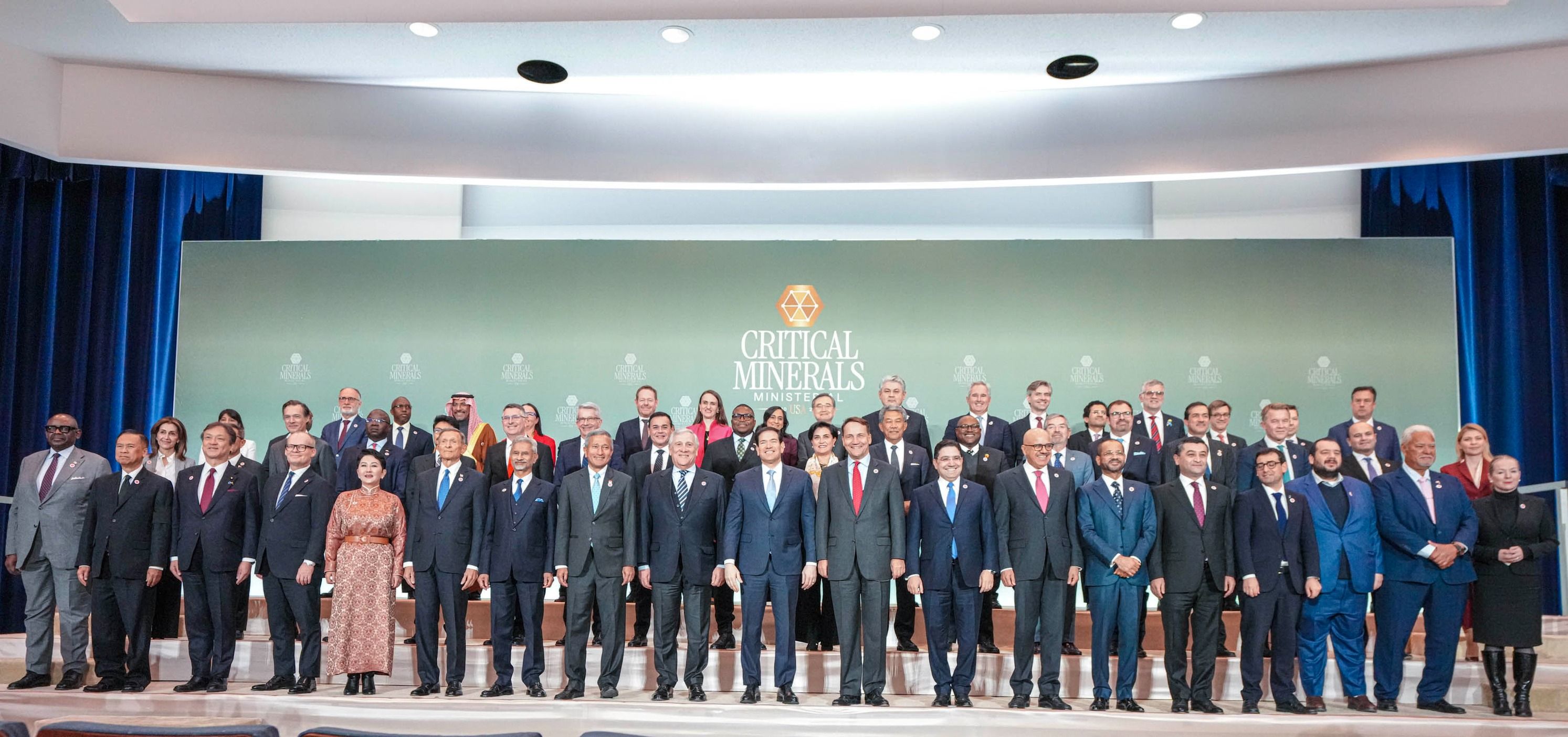
Participants at Critical Minerals Ministerial at the State Department in Washington. Photo/Supplied.
The Cook Islands government emphasised that this Framework:
is not a mining licence, approval, or authorisation for any activity
does not guarantee funding, investment, or offtake
does not override or weaken the Cook Islands environmental, permitting or regulatory laws
does not commit the Cook Islands to extraction, production, or timelines
is not legally binding and creates no enforceable obligations under domestic or international law.
“Any future exploration or mining activity within the Cook Islands EEZ would remain subject to existing legislation, strict environmental assessment, and independent regulatory decision-making.”
Editor's note: The US has signed memoranda of understanding or framework agreements with a number of countries including Argentina, the Cook Islands, Ecuador, Guinea, Morocco, Paraguay, Peru, the Philippines, the UAE, Uzbekistan, Australia, Japan, South Korea, Saudi Arabia, Thailand, and Malaysia.
This article was first published by the Cook Islands News and has been lightly edited for clarity and style.