
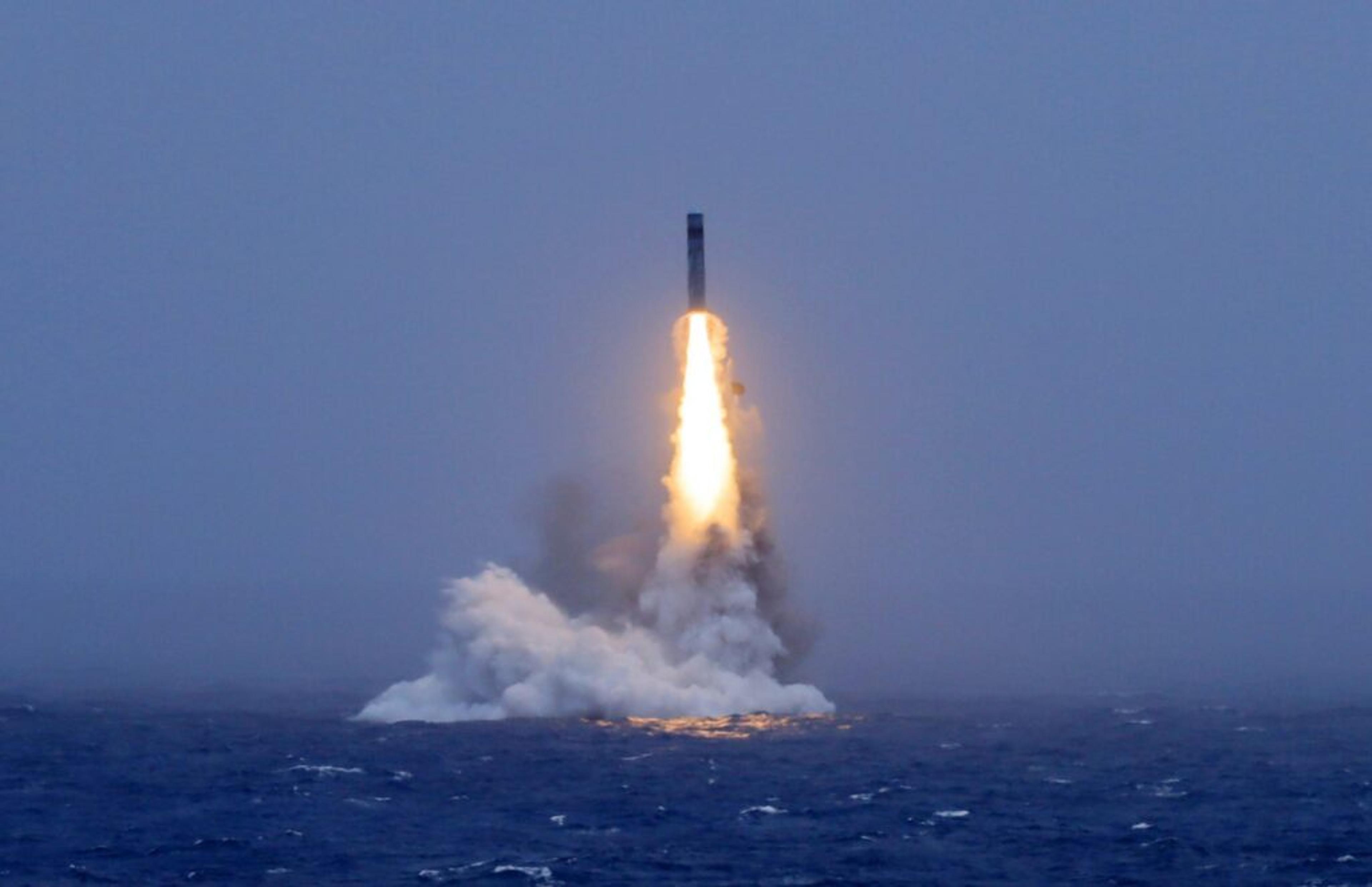
China's long-range missile test across the Pacific has intensified regional security concerns, with Pacific leaders warning the region should not become a stage for major power rivalry.
Photo/Instagram
Pacific Region
China missile test gives fresh momentum to Pacific security alliance
Beijing's move has had the opposite effect as Pacific leaders react and Australia and NZ move fast to strengthen regional security partnerships.

PMN News
Published
14 July 2026, 10:07am
Share
Copy Link
Top stories
Tonga community partnership wins global environmental award
Khalia StrongFri, 09 Oct

From cleaning a home to the Kiwis: Laban’s World Cup call-up
Christine RovoiSat, 10 Oct
NZ's billionaires and beneficiaries: Bashing a path to the ballot box?
Thomas Tarurongo WynneFri, 09 Oct
Top stories
Tonga community partnership wins global environmental award
Khalia StrongFri, 09 Oct
From cleaning a home to the Kiwis: Laban’s World Cup call-up
Christine RovoiSat, 10 Oct
NZ's billionaires and beneficiaries: Bashing a path to the ballot box?
Thomas Tarurongo WynneFri, 09 Oct
China's long-range missile test across the Pacific is giving Australia and its regional partners fresh momentum to deepen security ties with Pacific nations as leaders across the region continue to voice concern over Beijing's military show of force.
The shift comes just days after Australia and Fiji signed the Ocean of Peace Alliance in Suva, with New Zealand now confirming it is in talks to explore membership of the new security arrangement.
The timing has not gone unnoticed.
While Australian Prime Minister Anthony Albanese was in Fiji signing the landmark agreement with Prime Minister Sitiveni Rabuka, the Chinese naval tracking ship, Yuan Wang 5, was docked in Suva.
Hours later, China's Navy launched a long-range ballistic missile from a submarine into international waters, with the missile crossing part of the Pacific before landing near Tuvalu and Nauru.
China described the launch as a "routine arrangement" carried out in line with international law.
But the reaction from Pacific leaders has been unusually strong.
Solomon Islands Prime Minister Matthew Wale said: "China is a good friend of Solomon Islands but this is not something a friend does."
Wale, who chairs the Pacific Islands Forum, has since renewed calls for closer regional cooperation on security.
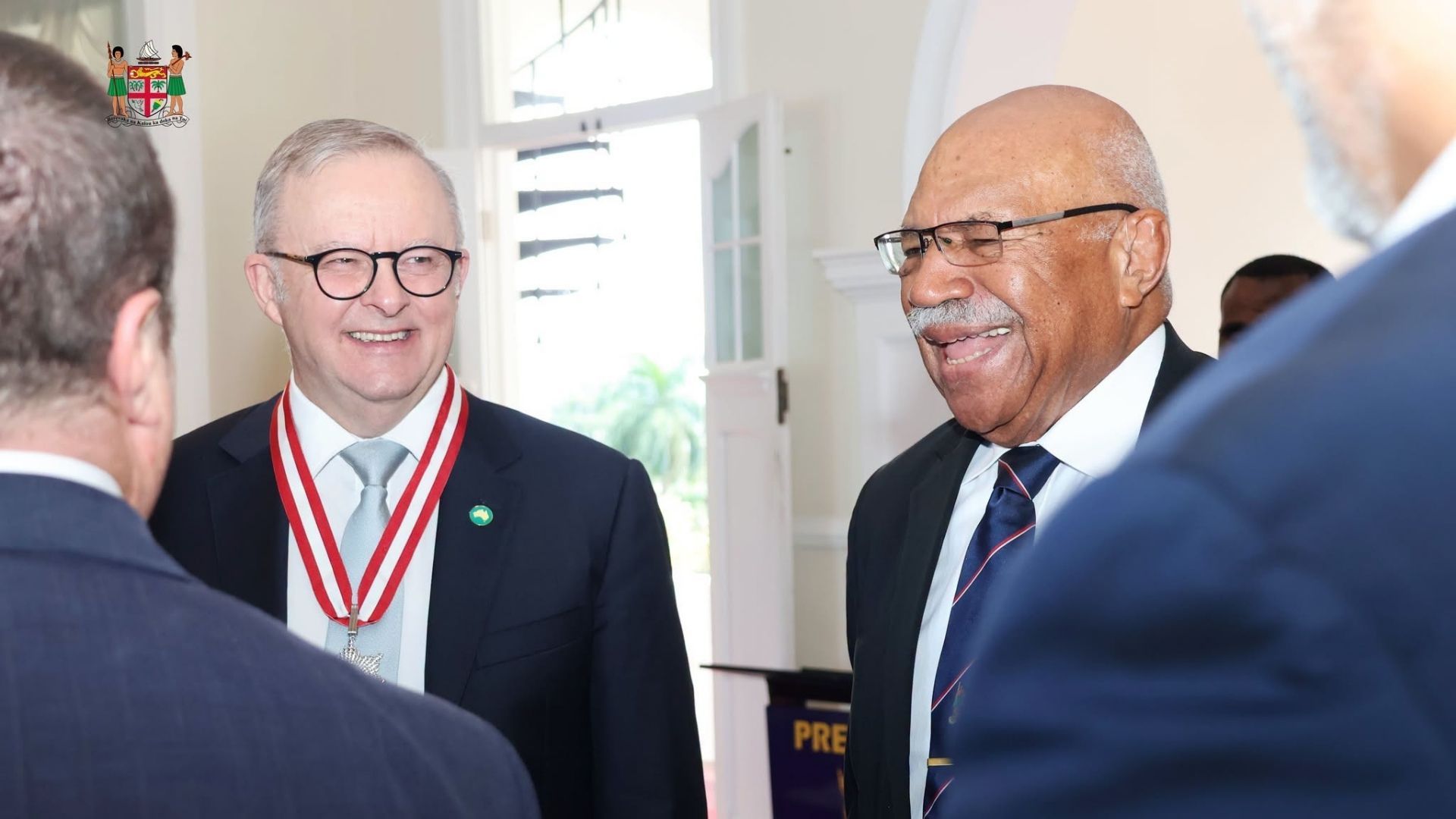
Australian Prime Minister Anthony Albanese and Fiji Prime Minister Sitiveni Rabuka following the signing of the Ocean of Peace Alliance in Suva last week. Photo/Fiji govt
His comments reflect the growing concern over military activity in a region that still carries the legacy of decades of nuclear testing.
Tuvalu Prime Minister Feleti Teo expressed "grave and serious concern" while Palau President Surangel Whipps Jr said he was "shocked" by the launch.
He warned that firing a nuclear-capable missile across the Pacific risked increasing tensions instead of building trust.
Australia sees the response from Pacific leaders has strengthened the case for expanding regional security partnerships.
New Zealand Foreign Affairs Minister Winston Peters has confirmed Wellington is in discussions with Australia and Fiji about the Ocean of Peace Alliance.
"Our neighbourhood is not an empty void, and it is certainly not a testing gallery for outside superpowers," Peters said.
Listen to international law expert Professor Al Gillespie's full interview with William Terite on Pacific Mornings below.
"China does what China does if it gets away with it. We would hope that we can get to that position [joining the alliance], and we should not be fazed by their performance."
The alliance, announced during Albanese's visit to Fiji, commits Australia and Fiji to closer defence cooperation and includes provisions to support each other if either country comes under attack.
Officials say discussions are continuing with other Pacific nations as Australia seeks to strengthen regional security partnerships.
But for many Pacific leaders, the issue goes beyond military strategy.
The region has repeatedly called for the Pacific to remain an "Ocean of Peace", with governments arguing that major powers should respect the region's priorities including climate change, stability and Pacific sovereignty.
China's missile test has instead reinforced concerns about growing strategic competition in the region and may ultimately accelerate the closer security cooperation that many Pacific governments had been approaching more cautiously.