
PNG Chiefs win first round against New Zealand Rugby
Christine RovoiSat, 17 Oct
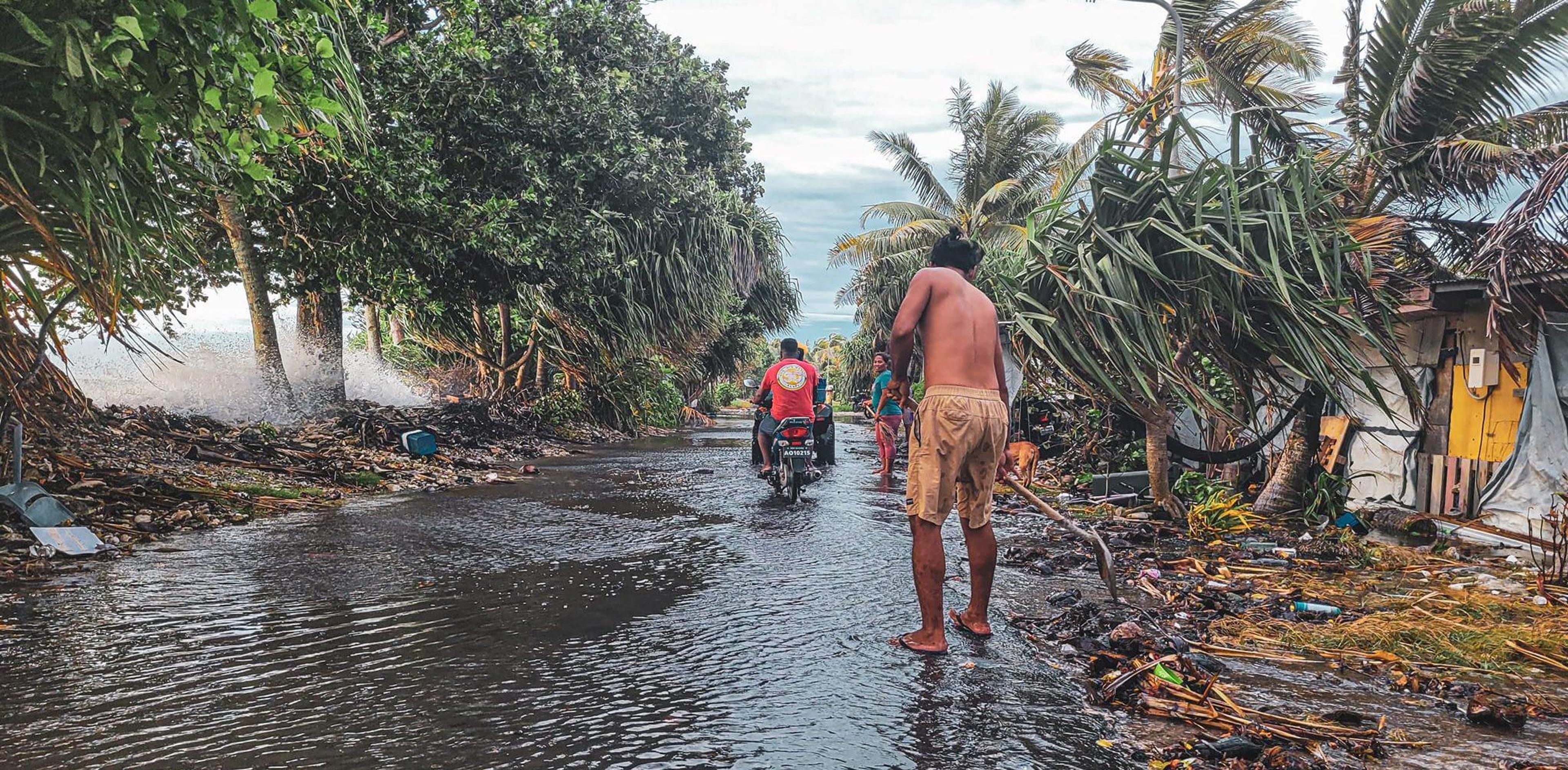
Residents clear the main road towards Lofeagai in Funafuti, Tuvalu, as the low-lying island nation faces growing risks from rising seas and climate change.
Photo/Facebook/Wahasi
Leaders say climate overshoot is no longer an abstract target as new data shows the cost could be in lost tuna, fewer meals and more frequent flooding while they push for faster access to climate finance.

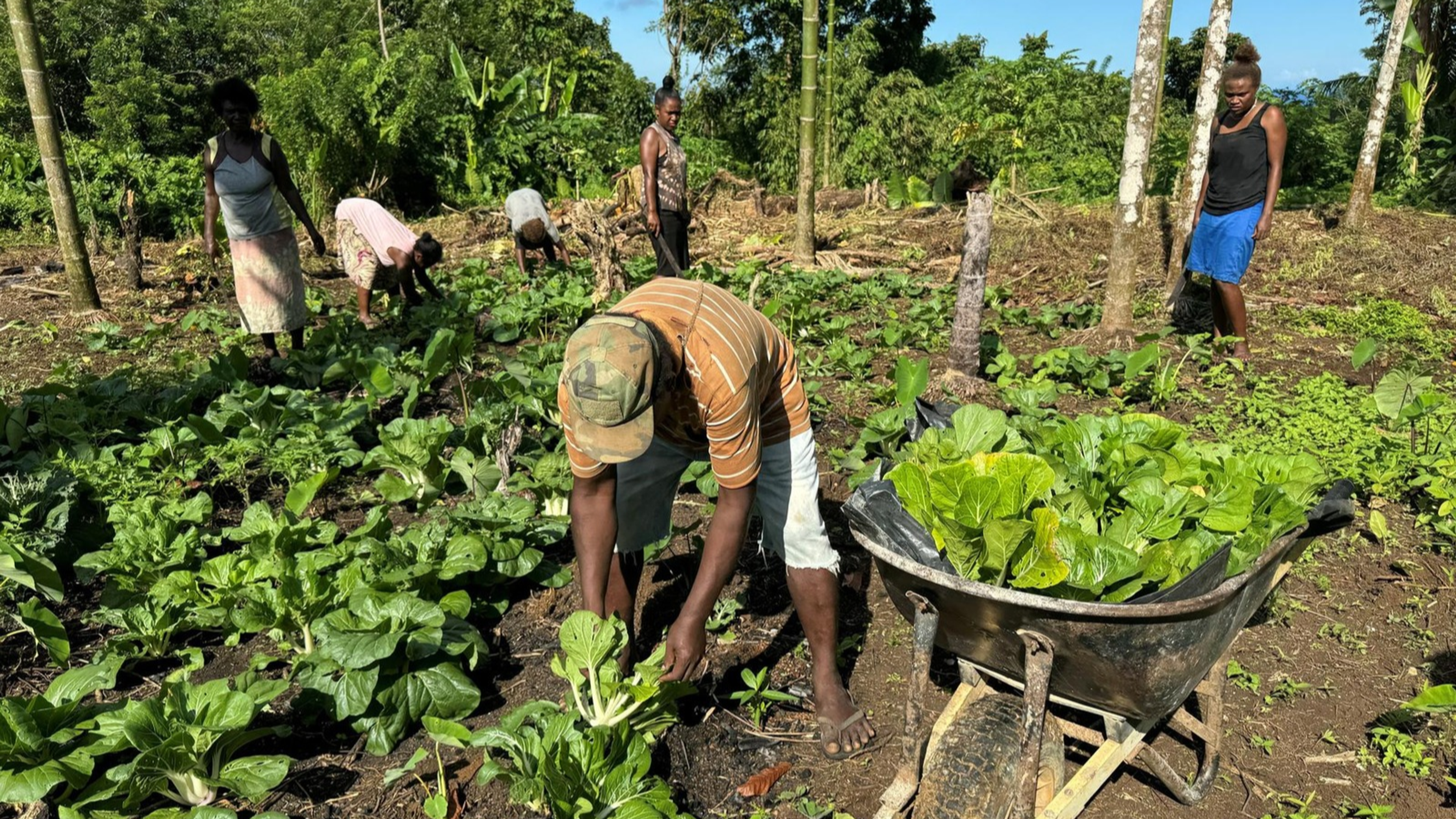


For Pacific nations, the warning that the world is heading beyond 1.5°C is no longer about a number on a graph.
It is about what ends up on the dinner table, what governments earn from tuna, and how often homes and communities are hit by flooding.
New modelling presented to Pacific leaders at Forum week in Palau shows the region could lose up to US$90 million (NZ$153.62 million) a year in tuna access fees as fish stocks move east, while coastal fisheries could lose as much as 65 percent of their catch.
Andrew Jones, Deputy Director-General of the Pacific Community (SPC), says that could mean 29kg less fish per person each year, roughly two meals per family each week.
“That’s about two meals per family per week that is not on the plate - of clean, free healthy protein that will need to be replaced,” he said at a joint press conference in Koror.
The Pacific's exclusive economic zones (EEZs) account for about 30 per cent of the world's tuna catch. It makes the shift a direct threat to government income as well as food security.
Watch highlights from the Pacific forum week in Palau below.
Jones says Tuvalu is also facing a sharp rise in flooding risk, with what is now a one-in-100-year event expected to become a one-in-10-year event by 2050.
“The key point about sea level rise is that it won't come back,” he said. “We really need to mitigate, need to adapt to give us more time to put the sort of adaptation measures in place.”
Tuvalu Climate Change and Environment Minister, Dr Maina Talia, says the impacts are already being felt.
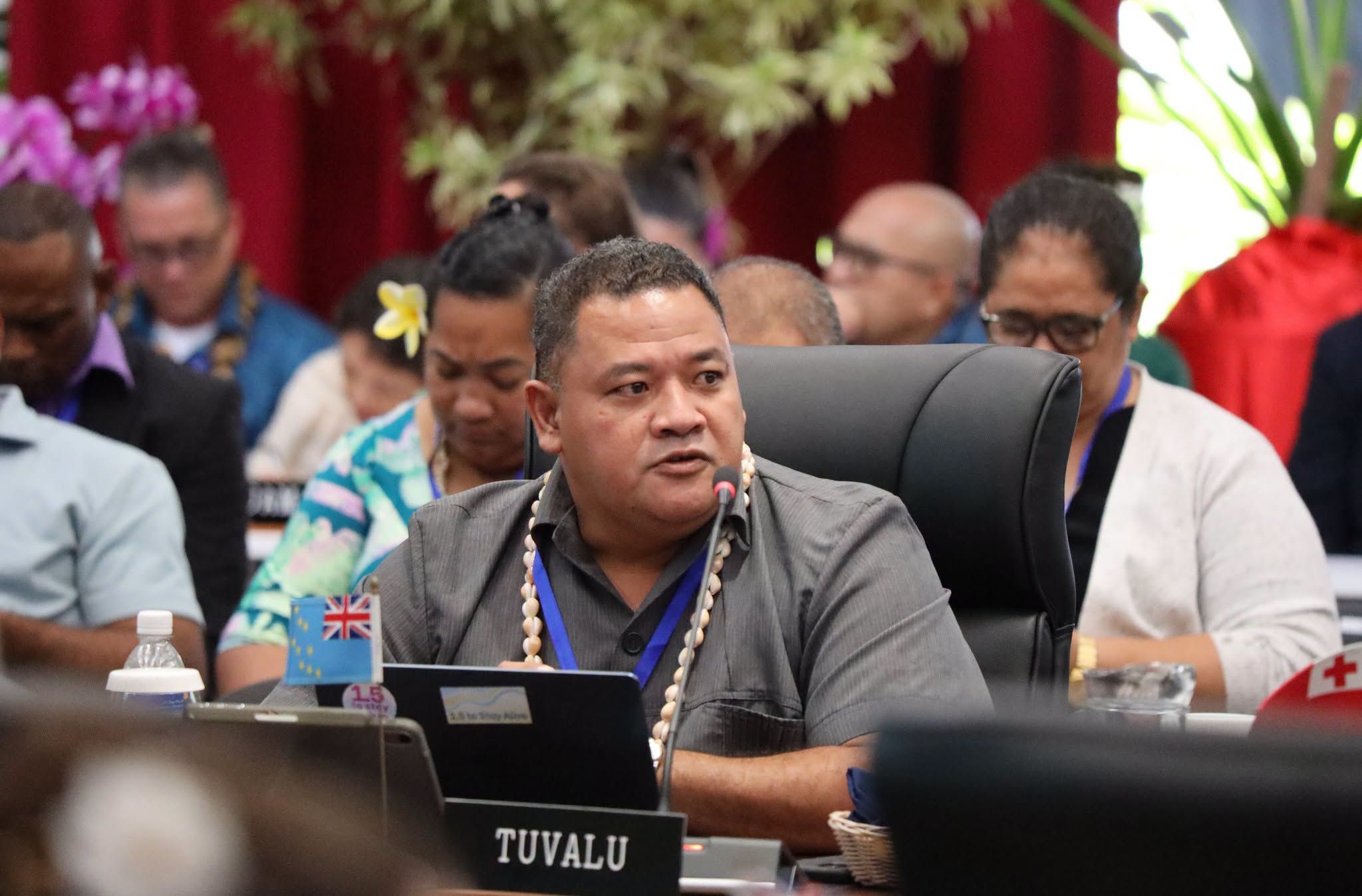
Tuvalu Climate Change and Environment Minister Dr Maina Talia says the impacts of climate change are no longer a distant threat for Pacific communities, but a reality being felt now. Photo/Pacific Islands Forum
“It’s no longer a distant threat for the Pacific,” he said. “It’s real now. It’s here now.”
The figures have added urgency to calls from Pacific leaders for major fossil fuel-producing countries to cut emissions faster.
Vanuatu Climate Change Minister Ralph Regenvanu singled out Australia at the roundtable, saying it must stop expanding fossil fuel production.
“Australia is not doing enough. Australia is a major producer of fossil fuels, we all know. Fossil fuels are the primary driver of the climate crisis,” he said.
“The very least a country like Australia should be doing is stopping future expansion, and it's not doing that.”
But Fiji Foreign Minister Sakiasi Ditoka pushed back, saying Australia had done more for the region than Regenvanu's comments suggested.
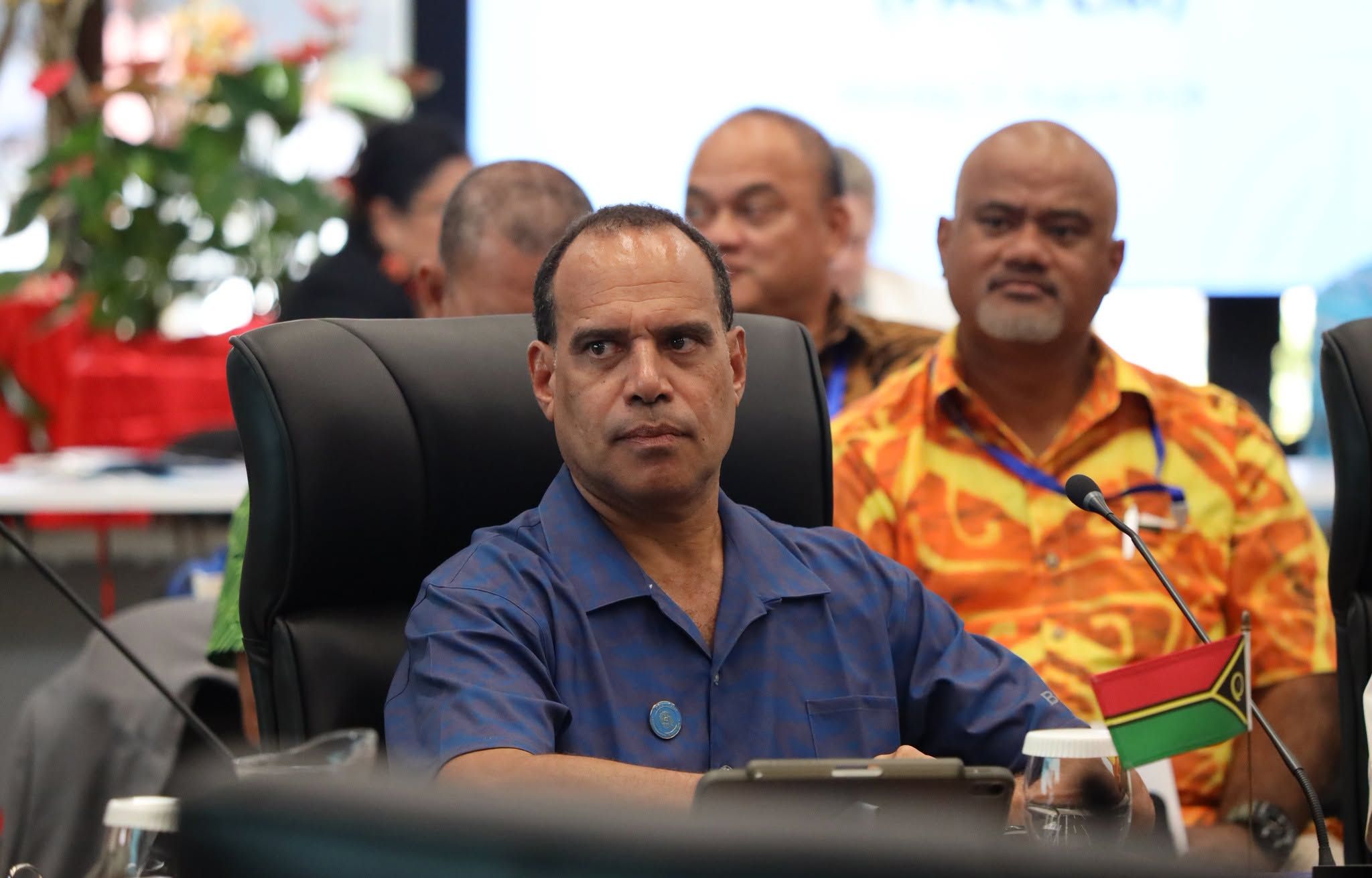
Vanuatu Climate Change Minister Ralph Regenvanu has called on Australia to stop expanding fossil fuel production, saying more urgent action is needed to tackle the climate crisis. Photo/Pacific Islands Forum
“I'd say that Australia has actually done quite a lot for the region,” Ditoka said. “We believe that Australia has, I think, bent over backwards in many cases to help us improve the region, and we are very grateful for that.”
The disagreement comes as Pacific countries face another longstanding problem: getting the money needed to respond to the climate crisis.
Mafalda Duarte, the Green Climate Fund executive director, says reforms are now aimed at cutting project approval times to nine months - from more than two years - while accreditation that once took more than four years is also being reduced to a nine-month target.
“That was so we can really come to the countries and engage more holistically and in a more integrated way across all of the services and instruments we have to support the countries,” Duarte told Pacnews.
Marshall Islands climate envoy Tina Stege says faster finance is critical, particularly for communities already dealing with climate disasters.
“We need urgent and concrete progress on climate finance, from filling the loss and damage funds so we're ready to respond to climate disasters,” she said. “And I think we should all be very frank, that fund is an empty bucket.”
Watch PMN News Political Reporter Thomas Tarurongo Wynne's update from Palau below.
For Pacific leaders, the message is that an overshoot of 1.5°C does not mean the fight is over but every fraction of a degree matters.
Stege said: “1.5 to stay alive is not a slogan, it's a lifeline.”
And with Tuvalu preparing to host global leaders for a climate event in October, Pacific countries are pushing to make sure the next phase of the climate debate is not just about targets but what those targets mean for people living on the frontline.
The 55th Pacific Islands Forum Leaders Meeting ends on Friday.