
David Seymour wants tougher welfare rule as Labour targets hidden costs in 2026 election
Thomas Tarurongo WynneFri, 09 Oct

Amelia Earhart disappeared with her navigator, Fred Noonan, in July 1937 while attempting to fly around the world. Nearly 90 years later, researchers are investigating an unusual underwater shape near Nikumaroro in Kiribati to determine whether it could be linked to her missing aircraft.
Photo/Library of Congress/Wiki Commons
A 17-member international team is investigating a submerged object that could offer new clues to the aviator’s disappearance nearly 90 years ago.




A remote atoll in Kiribati is at the centre of a fresh search for Amelia Earhart’s missing aircraft, as researchers prepare to investigate an unusual shape in the lagoon that they believe could be the wreckage of her plane.
The team behind the Taraia Object Expedition is expected to reach Nikumaroro on Tuesday, 13 October after sailing about 830 nautical miles from Kiribati’s capital, Tarawa.
It plans to spend five days examining the object, which was first spotted in satellite images in 2020.
The 17-member team brings together researchers from the United States and representatives from Kiribati, working with Purdue University, the Purdue Research Foundation and the Archaeological Legacy Institute.
Their mission is to find out whether the object could be part of the Lockheed Electra 10-E flown by Earhart, who disappeared with her navigator, Fred Noonan, during an attempt to fly around the world in 1937.
“Finding Amelia Earhart's Electra aircraft would be the discovery of a lifetime,” expedition leader Richard Pettigrew said in a statement.
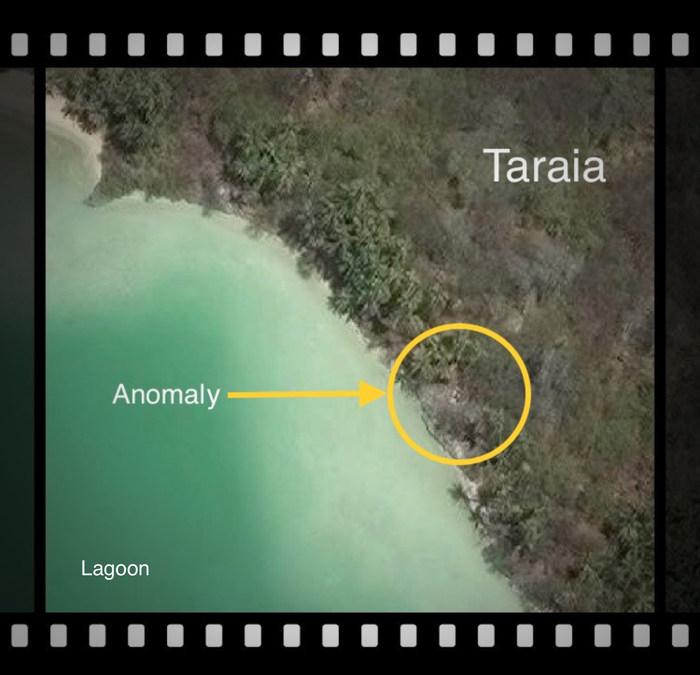
The Taraia Object Expedition team is investigating an unusual shape beneath the lagoon at Nikumaroro, Kiribati. Researchers hope surveys using drones, sonar and other specialist equipment will help establish whether it could be part of Amelia Earhart’s missing aircraft. Photo/satellite image
The object appears in satellite images as a shape with several branches, which researchers say resembles an aircraft’s body and wings.
They say it can also be seen in aerial photographs dating back to 1938, a year after Earhart and Noonan vanished.
The expedition will first use drones to survey the island, followed by specialist equipment, including sonar and magnetometers, to examine what lies beneath the water.

Purdue representatives Marc Hagle, Sirisha Bandla and Steve Schultz are part of the Taraia Object expedition. Photo/Purdue University/Steve Schultz
Researchers plan to use a hydraulic dredge to uncover the object after the initial surveys.
But the theory remains unproven and one experienced Earhart investigator believes the team is looking at something much more ordinary.
Ric Gillespie, who has led numerous searches around Nikumaroro, says the shape is a fallen pandanus tree washed into the lagoon.
“You can see the root ball. You can see the branches,” Gillespie told Reuters. “It's a tree. People see what they want to see.”
Gillespie supports the wider theory that Earhart may have reached Nikumaroro and died there as a castaway but believes the aircraft was eventually swept into the sea and broken apart.
Earhart was last seen taking off from Lae, Papua New Guinea, on 2 July 1937, heading towards Howland Island for fuel during her round-the-world flight.
The plane never arrived. The official explanation is that it ran out of fuel and crashed into the ocean, but the lack of confirmed wreckage has kept other theories alive.
Nikumaroro, formerly known as Gardner Island, lies about 400 miles south-east of Howland Island.
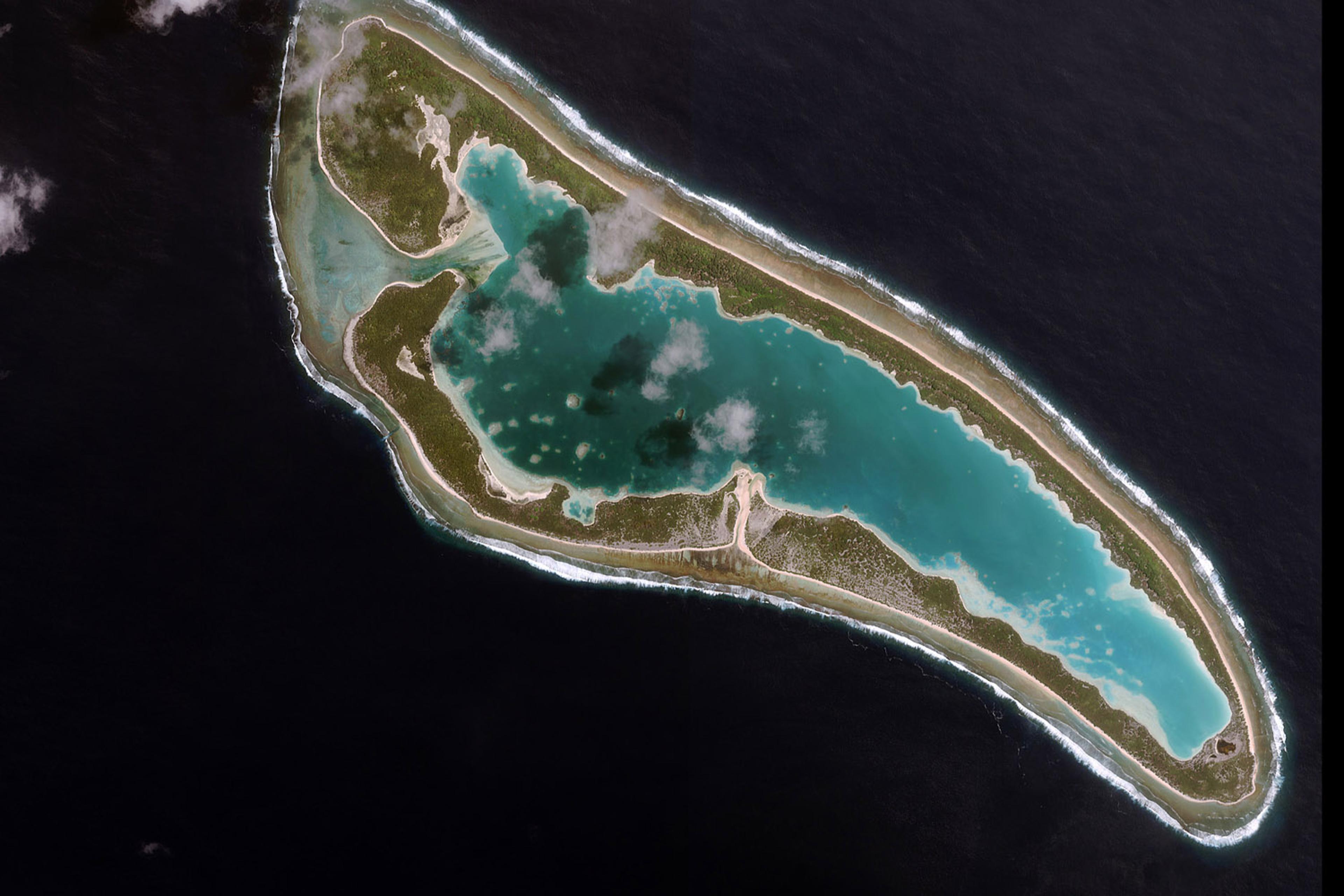
Nikumaroro, formerly known as Gardner Island, lies about 400 miles south-east of Howland Island. The remote Kiribati atoll has attracted decades of searches based on theories that Amelia Earhart and Fred Noonan may have reached the island after disappearing during their 1937 flight. Photo/NASA
Stories passed down by people connected to Nikumaroro have also added to interest in the atoll.
In 2019, Kiribati government worker Kaono Koura told ABC Pacific that older people who had lived on the island had shared accounts of shoes and what was believed to be an aircraft’s landing gear on the reef.
Tiiroa Roneti of the Phoenix Islands Protection Area also told the ABC the country was part of the story despite Earhart not being from Kiribati.
“We are excited that we are also part of that mystery. Even though Amelia Earhart is not from Kiribati, somehow Nikumaroro is named as one of the potential sites,” Roneti said.
Kiribati is also represented in the current expedition. The team includes Meere Kenana, curator of the Kiribati Culture and Museum, and two representatives from the country’s Ministry of Line and Phoenix Islands Development.
It has long been a focus of searches based on the possibility that Earhart and Noonan landed there after failing to reach their intended destination.

A Lockheed Vega 5B: Amelia Earhart disappeared with her navigator, Fred Noonan, on 2 July 1937 while attempting to fly around the world. Nearly 90 years later, researchers are investigating an underwater object near Nikumaroro in Kiribati to determine whether it could be linked to her missing aircraft. Photo/Simthsonian Institute, CC0/Wikimedia Commons
Previous expeditions have failed to find the aircraft. In 2019, a search led by marine archaeologist Robert Ballard, known for discovering the Titanic wreck, also came up empty.
The latest mission is expected to cost US$900,000 (NZ$1.6 million).
Any recovery of aircraft parts would require further permission from the Kiribati Government.
For now, the Taraia Object remains an unexplained shape in a remote Pacific lagoon.
The team’s investigation may provide new evidence, but it will need to establish what the object is before it can link it to Earhart’s final flight.
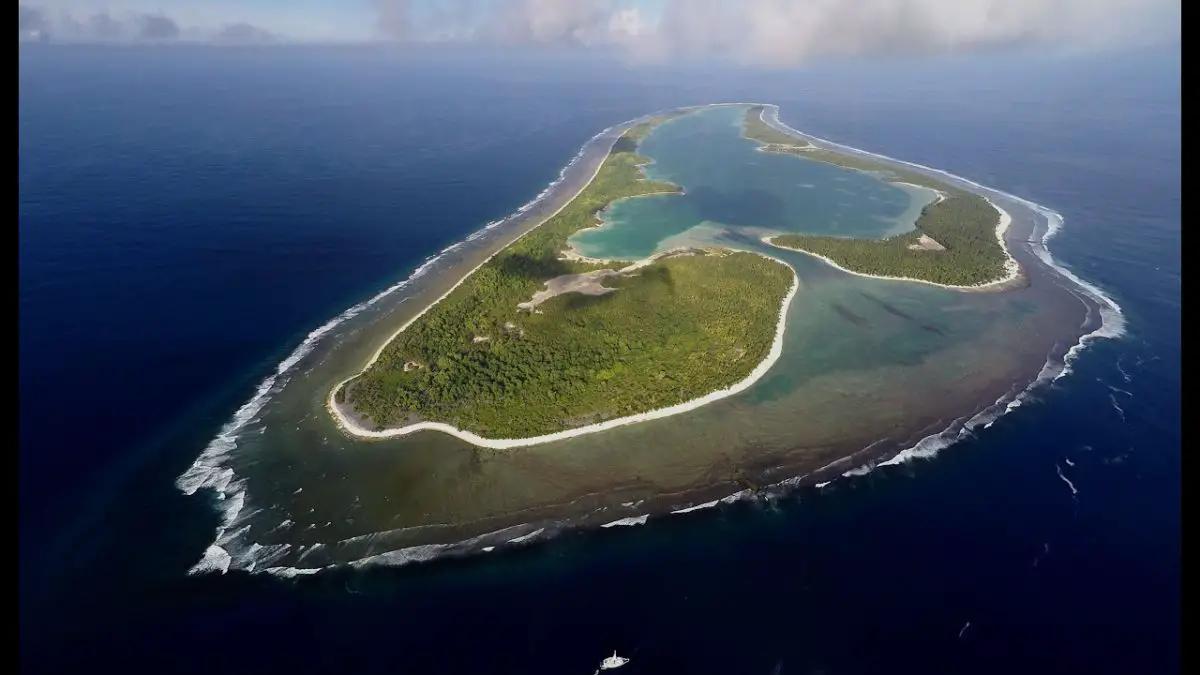
An aerial view of the Phoenix Islands Protected Area in Kiribati, the remote atoll at the centre of a new search for clues to Amelia Earhart’s disappearance in 1937. Photo/UNESCO/Ron Van Oers