Fiji, New Zealand reset Duavata Partnership with focus on stronger trade and investment
Christine RovoiMon, 27 Jul
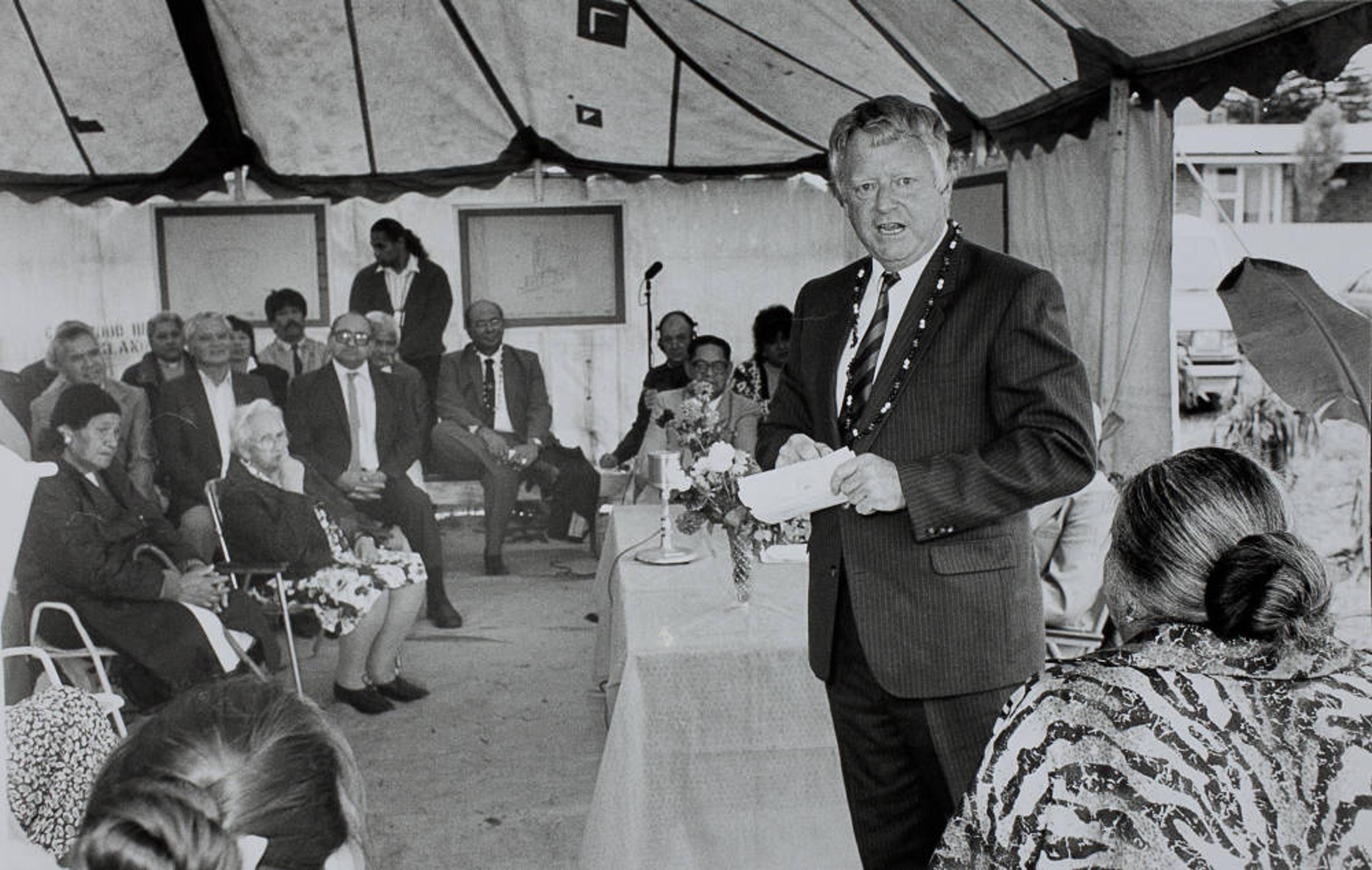
Manukau City mayor Sir Barry Curtis addresses members of the Takitimu Cultural and Arts Society during a ceremony to bless the site of a planned Cook Islands marae on Tanners Road, Māngere.
Photo/Auckland Libraries Heritage Collections Footprints 03495
Leaders say the former Manukau mayor’s legacy lives on in South Auckland where his focus on unity, culture, and community still shapes lives today.

Former Manukau City mayor Sir Barry Curtis is being remembered as a leader who brought people together and helped shape modern South Auckland.
Curtis’ passing was announced at an Auckland Council governing body meeting on Tuesday, where the mayor, councillors, staff, and members of the public observed a moment of silence in his honour. He was 87.
Councillor Alf Filipaina, who worked alongside Curtis, described him as a leader who earned trust and respect across all communities.
“He was a leader with mana and someone you trusted because he had the respect of the whole community, not only in Manukau and Tāmaki Makaurau but also across Aotearoa,” Filipaina said.
“He united people across all the ethnic divides… he loved that we were a multicultural society in Manukau.”
Filipaina said his relationship with Curtis goes back decades. He first met Curtis while working as a police officer in 1978 before later serving together on the council.

Manukau ward councillor Alf Filipaina, who served alongside Sir Barry Curtis and described him as a friend and mentor. Photo/Auckland Council
“My history with Sir Barry goes back many years…I came to know him even more closely when I was elected to the Manukau City Council in 2003,” he said.
“One of the first jobs he gave me in 2004 was the chair of the Transport Committee. That man meant so much to me. He brought Manukau City Council and our community together.”
Filipaina said Curtis’ leadership was grounded in respect, especially for Māori and Pacific communities.
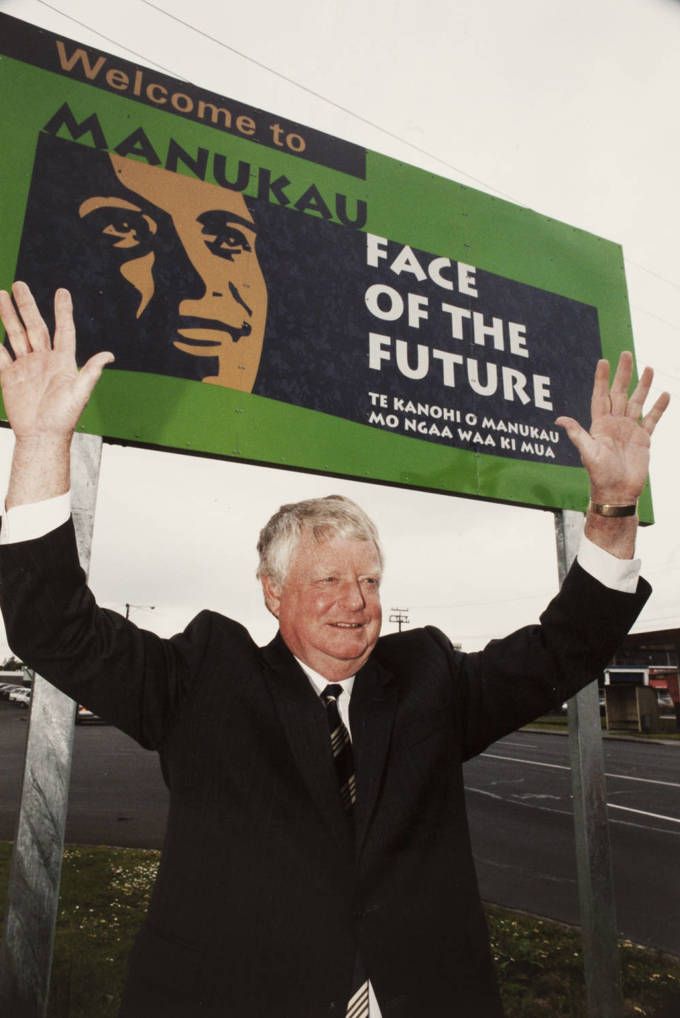
Former Manukau City Council Mayor Sir Barry Curtis. Photo/Auckland Libraries Heritage Collections Footprints 03887
“He always spoke about respecting Māori, mana whenua, iwi… Te Tiriti o Waitangi needed to be respected,” he said.
Filipaina said Curtis was widely respected within Pacific communities, where he was honoured with a Sāmoan matai title.
“Obviously, our Pacific community really loved him… that’s where he got the Samoan title,” he said.
Curtis was knighted in 1992 for his services to local government and awarded the Sāmoan chiefly title, Seiuli, in 1994 by His Highness Malietoa Tanumafili II, recognising his contributions to Manukau’s Sāmoan and Pacific communities.
Curtis served eight consecutive terms as mayor from 1983 to 2007, becoming the country’s longest-serving mayor at the time of his retirement.
During that time, he oversaw the development across Manukau, including libraries, leisure centres, parks, and long-term urban planning that helped shape the region’s growth.
Barry Curtis Park in Flat Bush, now Auckland’s largest urban park, developed in over a century, stands as one of the most visible examples of his legacy.
Filipaina said Curtis also played a key role in the early vision for what is now the Due Drop Event Centre. “He brought Manukau City Council and our community together,” he said.
Auckland Mayor Wayne Brown said Curtis helped lay the foundation of what became Manukau City, “and his impact is visible with the growth that followed in Manukau, community facilities and parks”.
Phil Wilson, Auckland Council Chief Executive, said Curtis’ leadership created lasting opportunities for future generations.
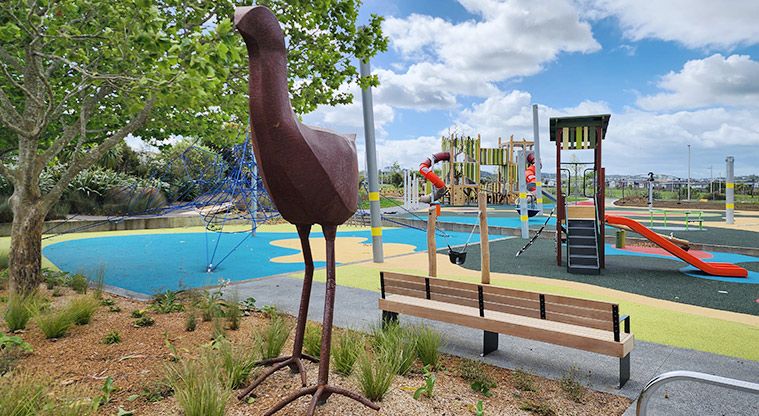
Barry Curtis Park in Flat Bush, a major public space in South Auckland named after former Manukau City mayor Sir Barry Curtis. Photo/Auckland Council
“His leadership fostered a sense of belonging and pride across generations, with a particular focus on creating pathways and opportunities for young people to thrive.
“I will particularly remember him for his very astute political leadership; his acerbic wit; and his very deep commitment to Manukau and its diverse communities,” Wilson said.
Apulu Reece Autagavaia, an elected member of the Ōtara-Papatoetoe Local Board and former chair, said the impact of Curtis’ work is still felt across South Auckland today.
“As Mayor of the former Manukau City Council for many terms, he laid the foundations for what many South Auckland Local Boards benefit from today…it is the groundwork that he has laid on which we continue to build on, a future for our people here in South Auckland, the heart of the Super City.”
Filipaina said Curtis’s approach to leadership, often called the “Manukau Way”, focused on balancing growth with community wellbeing and building partnerships across cultures.
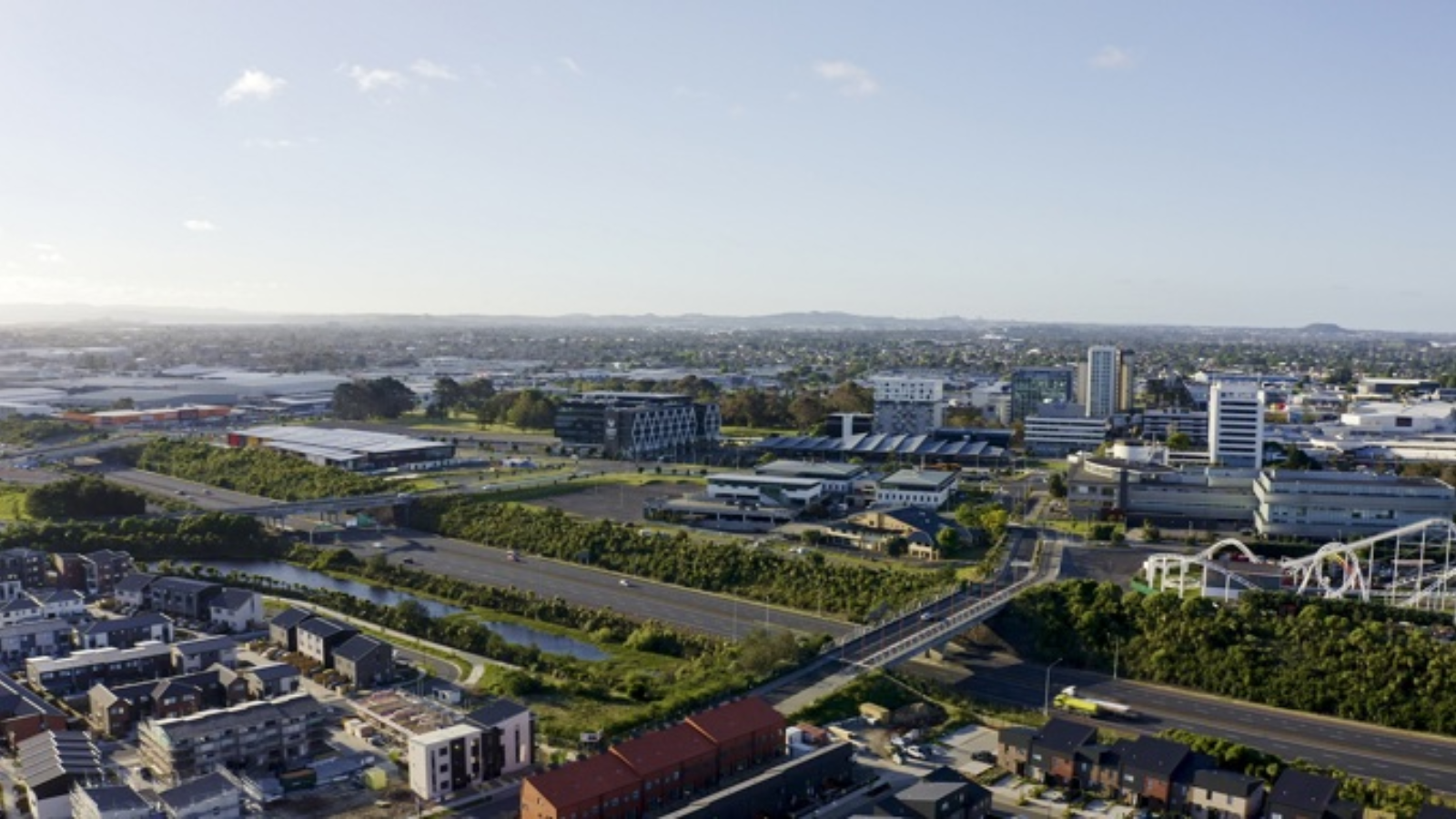
An aerial view of Manukau, where Sir Barry Curtis served as mayor from 1983 to 2007. Photo/Auckland Council
Asked what younger generations should take from his legacy, Filipaina pointed to one key message: “For our rangatahi… to do things for our community, you need to unite them. He definitely did that,” he said.
For many in South Auckland, especially within Pacific communities, Sir Barry Curtis leaves behind more than buildings and infrastructure.
His legacy is seen in the diversity of the region, the strength of its communities, and the idea that bringing people together can shape a better future.
LDR is local body journalism co-funded by RNZ and NZ On Air.