
The Fiji Military Forces Band and the New Zealand Defence Force Band perform during a ceremonial event in Suva, reflecting the long-standing partnership between the two countries as Fiji and New Zealand deepen cooperation under the renewed Duavata Partnership.
Photo/Ministry of Foreign Affairs & Trade, NZ
Business
Fiji, New Zealand reset Duavata Partnership with focus on stronger trade and investment
Fiji says its renewed partnership with Aotearoa is about more than reaching a $2 billion trade target as both countries aim to build a stronger, more resilient economic relationship over the next five years.

Christine Rovoi
Published
27 July 2026, 3:28pm
Share
Copy Link
Top stories

From Ōtara, NZ to Los Angeles: David Liti lifts up the next generation
Elton Lonaratha JnrMon, 19 Oct
Washington warnings mount as four Pacific nations risk loss of US aid
Christine RovoiTue, 20 Oct

'Watch out': Silver Ferns issue clear warning to Diamonds ahead of Christchurch clash
Brooke FonotiMon, 19 Oct
Top stories
From Ōtara, NZ to Los Angeles: David Liti lifts up the next generation
Elton Lonaratha JnrMon, 19 Oct
Washington warnings mount as four Pacific nations risk loss of US aid
Christine RovoiTue, 20 Oct
'Watch out': Silver Ferns issue clear warning to Diamonds ahead of Christchurch clash
Brooke FonotiMon, 19 Oct
Fiji and New Zealand have launched a renewed five-year partnership aimed at strengthening trade, investment and regional cooperation.
Leaders from both countries say the focus is on building a stronger economic relationship rather than simply increasing trade.
Signed last week in Auckland by Fiji's Minister for Foreign Affairs and External Trade, Sakiasi Ditoka, and New Zealand Foreign Minister Winston Peters, the renewed Duavata Partnership will guide relations between the two countries from 2026 to 2030.
Named after the Fijian concept of "working together", the agreement sets out cooperation across five key areas: economic resilience, democracy and good governance, peace and security, social wellbeing, and climate and disaster resilience.
While New Zealand works with several Pacific countries through the regional PACER Plus trade agreement, Fiji's relationship with Aotearoa is guided through the bilateral Duavata Partnership.
The agreement focuses on trade, investment and wider cooperation between the two countries.
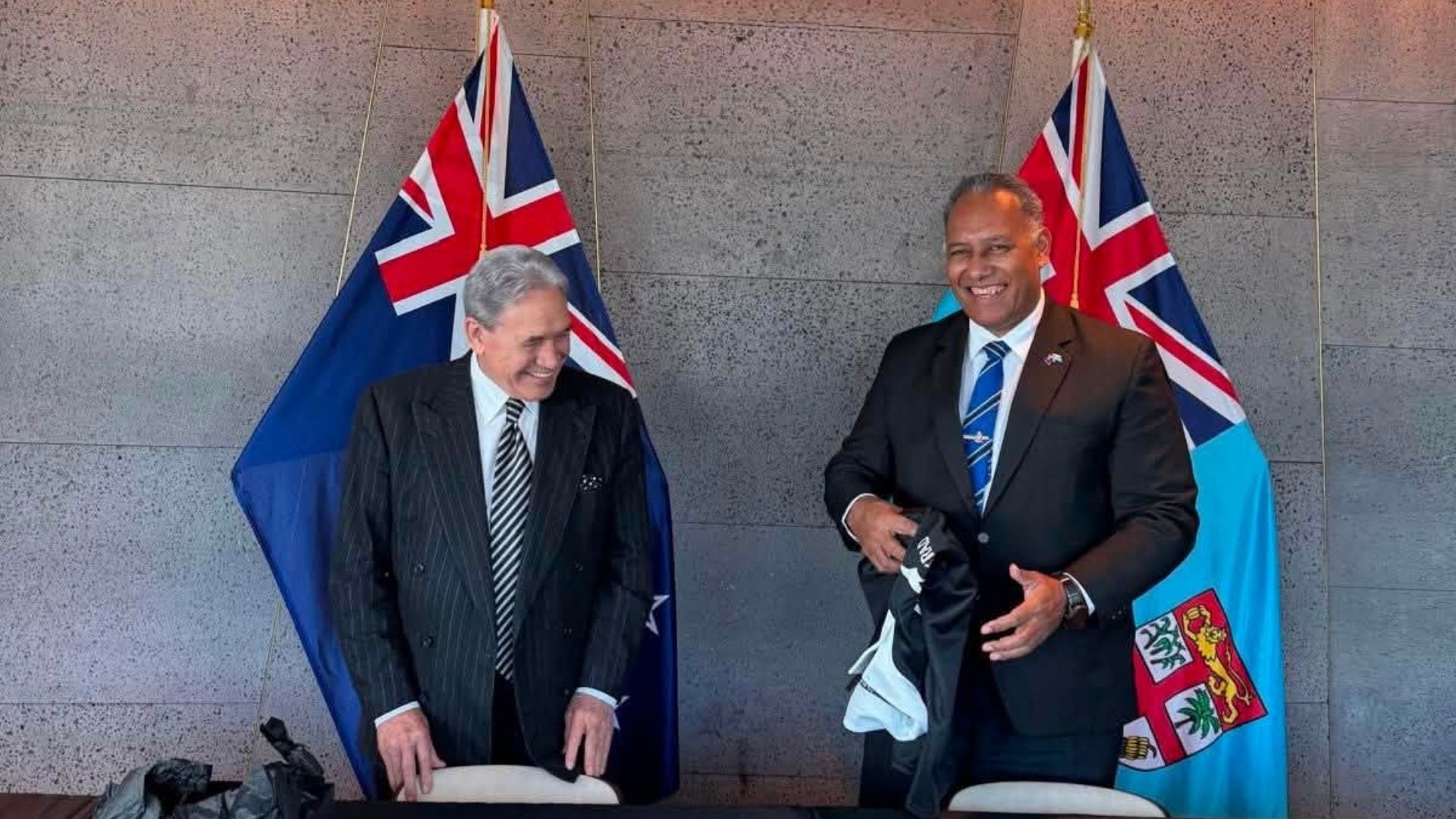
New Zealand Foreign Minister Winston Peters, left, and Fiji's Minister for Foreign Affairs and External Trade, Sakiasi Ditoka, have renewed the Duavata Partnership in Suva. The five-year agreement aims to strengthen cooperation on trade, investment, security, governance, climate resilience and social wellbeing.
Speaking at the New Zealand-Fiji Business Council Mission in Suva and the Fiji-New Zealand Business Joint Conference, Ditoka said the shared goal of lifting two-way trade to NZ$2 billion should be about creating a stronger partnership that benefits both countries.
"The journey towards achieving NZD$2 billion in trade and investment between Fiji and New Zealand... must focus on building a stronger and more resilient partnership, rather than simply increasing trade volumes."
He said the goal was to create a trading relationship that could adapt to global challenges while opening new opportunities for businesses.

New Zealand and Fiji officials meet in Auckland last week. Photo/Fiji Ministry of Foreign Affairs
"The real objective was not simply to increase the volume of trade between Fiji and New Zealand, but to create a trade relationship that is broader, deeper, more innovative and more resilient."
Ditoka said that approach was becoming even more important as businesses faced growing uncertainty around the world.
"In a rapidly changing and uncertain global economic environment, stronger partnerships are critical..."
He also said Fiji was making it easier for businesses to invest and expand.
"Fiji is undertaking significant reforms to reduce friction in doing business and trading across borders, making it easier for NZ businesses to operate while expanding production capacity for export growth..."
New Zealand High Commissioner to Fiji, Greg Andrews, said the renewed partnership provides the framework for both governments and businesses to work towards the NZ$2 billion trade goal.
Watch Charlotte Darlow highlight key initiatives NZ supports Fiji below.
"We've got our trade goal. Our Prime Minister set us a goal to reach $2 billion in trade," his statement read.
"At the moment, we're at $1.4 billion. So, we've got a little bit of work to do, but really working very closely with New Zealand and Fiji businesses on that."
Andrews said the strong relationship between Fiji and Aotearoa, together with close business and people-to-people links, would help unlock further trade and investment opportunities.
For Fiji, the renewed agreement is about more than reaching a $2 billion trade target.
Both governments say the next five years will focus on building stronger businesses, attracting investment and creating a more resilient partnership that can withstand global economic uncertainty.