
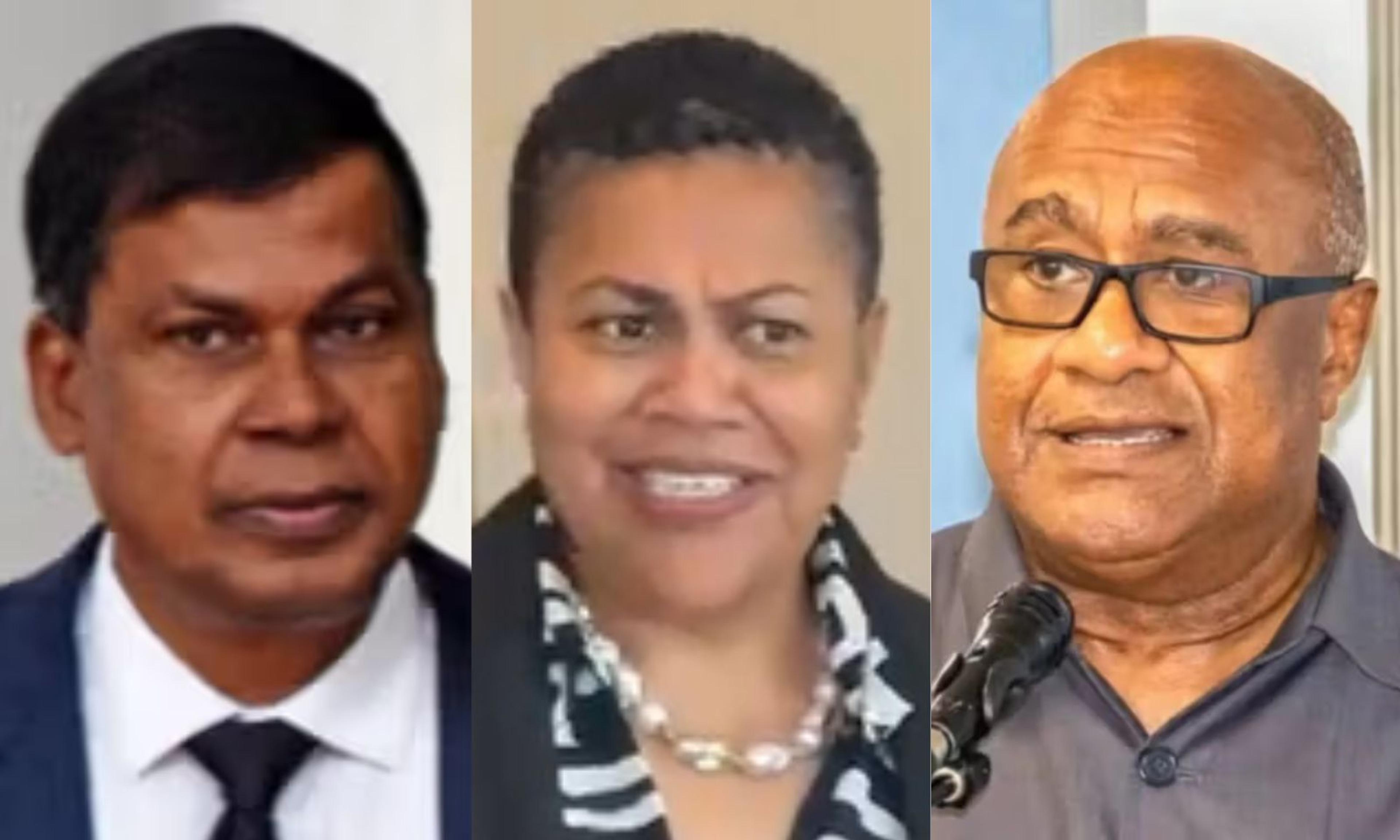
Three high-profile cases in Fiji are now focused on a single question: whether the anti-corruption body had the authority to bring charges against former deputy prime ministers Professor Biman Prasad, left, and Manoa Kamikamica, right, and Suva lawyer Tanya Waqanika..
Photo/The Fiji TImes, file/Facebook
Law & Order
Fiji anti-corruption cases turn on one question: Who has the power to prosecute?
Three high-profile cases involving senior political and legal figures are now tied to a single legal fight: the authority of Fiji’s anti-corruption body, raising wider questions about trust, timing, and power.

Christine Rovoi
Published
23 March 2026, 9:44am
Share
Copy Link
Top stories
Fiji's army chief warns the gun must never overrule the ballot
Christine RovoiMon, 12 Oct


Three separate court cases in Fiji involving two former deputy prime ministers and a Suva lawyer are now converging on one main issue: whether the country’s anti-corruption watchdog has the legal authority to bring charges at all.
At the centre of each case is a challenge to the appointment of Lavi Rokoika as Acting Commissioner of the Fiji Independent Commission Against Corruption (FICAC).
If that appointment is found to be invalid, it could undermine the cases themselves.
Last week, former deputy prime ministers Manoa Kamikamica and Professor Biman Prasad both applied for a permanent stay of proceedings, seeking to halt the criminal charges against them.
Suva lawyer Tanya Waqanika also made a similar application in a separate case.
While the charges differ, the legal strategy is the same: question the legitimacy of the office behind the prosecutions.

A ruling on the appointment of Acting FICAC Commissioner Lavi Rokoika could have wider implications for corruption cases across Fiji. Photo/FICAC
In the High Court in Suva, the hearing into the applications exposed how central that issue has become.
Rokoika objected to defence witnesses, arguing their evidence was not relevant and warning it could “create a trial within a trial”. She added: “This is nothing but an act to embarrass the Acting Commissioner," Fijivillage reported.
But King’s Counsel Martin Daubney, representing Kamikamica and Prasad, pushed back, arguing that FICAC itself had made the issue relevant, according to media reports.

Former Fiji deputy prime ministers Professor Biman Prasad and Manoa Kamikamica are both seeking to halt proceedings, challenging the legality of FICAC’s leadership. Photo/ISPI/mcttt.gov.fj
He said the commission could not rely on the “defacto officer doctrine”, a legal principle used to validate the actions of someone in office, if there were doubts about whether the appointment was lawful.
Justice Siainiu Fa’alogo Bull has allowed the evidence, signalling the court is prepared to examine the question closely.
The defence has pointed to interviews and recordings they say show how the appointment was made, including claims that it followed difficulties in securing agreement from the Judicial Services Commission.
Outside the courtroom, the cases are drawing attention because of who is involved and the questions raised by the defence about when the charges were brought.
Prasad is charged with offences linked to a 2015 declaration of assets, with FICAC alleging he failed to disclose a directorship. His legal team has argued there was a 10-year delay in bringing the charges.
Kamikamica is charged with perjury over statements made under oath, as well as an alternative charge of providing false information.

Suva lawyer Tanya Waqanika is also seeking to halt her case, joining a wider legal challenge over the authority of Fiji’s anti-corruption body. Photo/TikTok
Waqanika is charged with breaching political neutrality rules for public officials, with FICAC alleging the offence relates to comments posted on Facebook last year.
All three deny any wrongdoing and are seeking to have their cases stopped before trial.
The rulings, expected over the coming months (Kamikamica on 24 April, Prasad on 1 May, and Waqanika on 6 May), could have consequences well beyond the individuals involved.
If the court finds problems with Rokoika's appointment, it may raise bigger questions about past and current prosecutions by FICAC.
From a Pacific perspective, the cases also touch on concerns about governance and public trust. Anti-corruption bodies are meant to stand above politics. But when their authority is challenged in court, it can raise questions about public confidence in the system.
The spotlight now remains firmly on the courts. What started as three separate cases has become one test of legal power and where it comes from.