
Bledisloe Masterclass: Pacific powerhouses lead All Blacks’ blitz against the Wallabies
Christine RovoiSat, 17 Oct
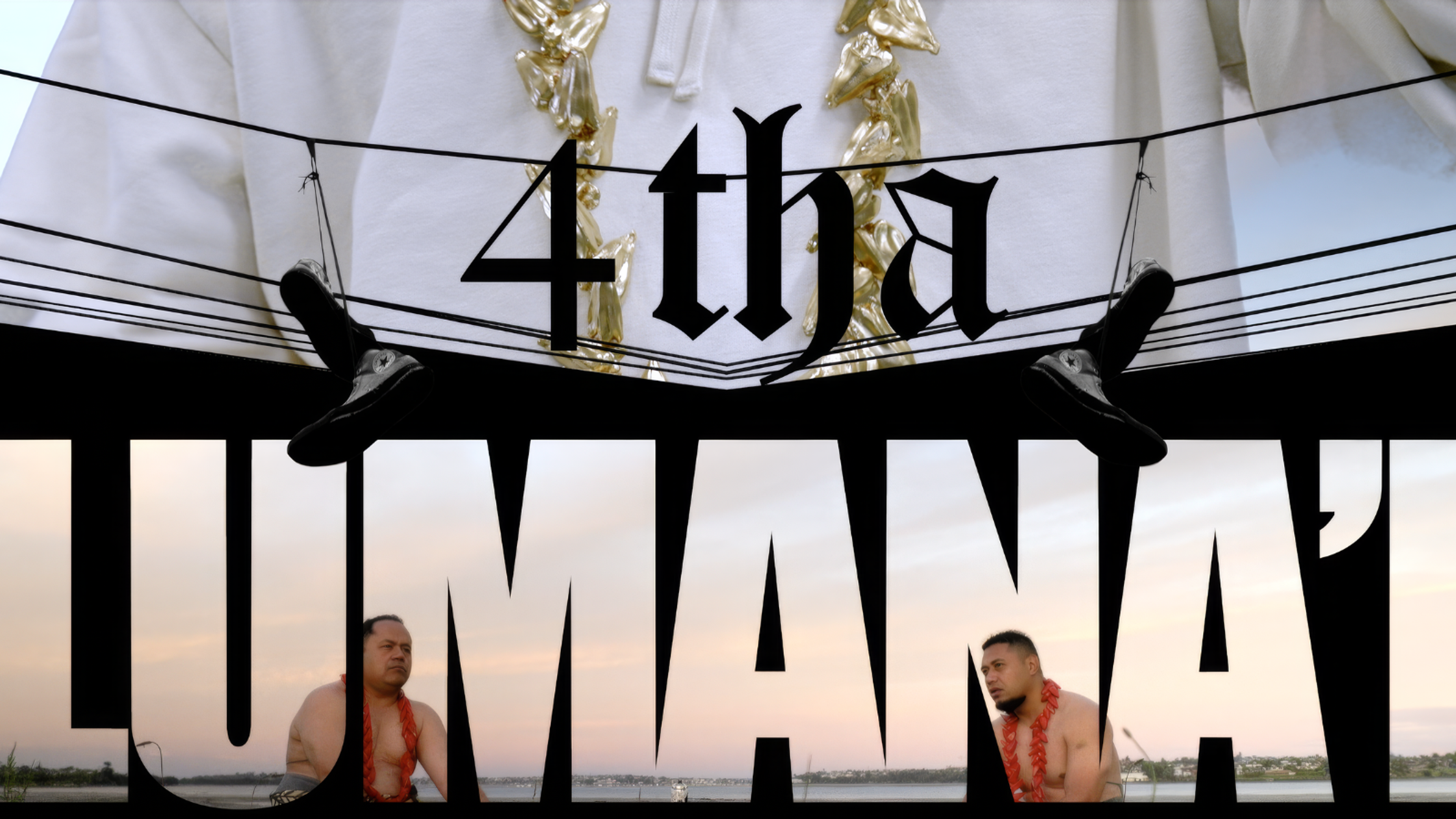
4 Tha Lumana'i.
Photo/Anonymouz
Award-winning music producer Anonymouz brings lāuga and hip hop together in a new short film asking how Sāmoan culture can survive the shift from remixing to generative AI.


Sāmoan oratory (lāuga) and battle rap may come from different worlds, but award-winning artist Anonymouz sees the same power in both: words can shape culture.
His new short film, 4 Tha Lumana’i, brings traditional Sāmoan orators face-to-face with battle rappers in a creative clash over language, identity and what happens to culture in the age of AI.
The three-part film is produced by South Auckland Sāmoan artist Faiumu Matthew Salapu, known as Anonymouz, and features respected orators Musuiaiga “Musu” Neil Tapu Sitagata and Lemoa Henry Sevesi Fesulua'i alongside New Zealand battle rap legend “Skolar” Tapua’i Milo Fuli and bilingual rapper Snare.
Anonymouz told PMN Sāmoa that the idea came from growing up around his father, a tulāfale (chief/orator), and later being immersed in hip hop in South Auckland.
“Growing up as a kid and hearing my dad practising his lāuga through the walls of my bedroom,” he says.
“I can hear him practising all week and then come the weekend, he's standing there with his village or the church behind him. Performing what he has memorised and he's freestyling as he goes.
"Then in South Auckland, you get exposed to hip-hop culture, battle rappers do the same thing, they've prepared their bars and they freestyle. Instead of the village behind them, they've got their crew.”
Anonymouz says that connection between the two forms is at the heart of 4 Tha Lumana’i , which explores the tension between traditional Sāmoan knowledge and modern youth culture.
“In Fa‘a Sāmoa, we use words to lift up, and in battle rap, we use words to dismantle. Artistically, that was an interesting thing to explore."
The project has been more than a decade in the making. Between 2014 and 2018, Anonymouz travelled across 13 Sāmoan diaspora cities, documenting cultural practices and experiences through experimental film and editing.
That work eventually became an acclaimed 2018 Auckland Arts Festival stage production and has now evolved into the new film. But Anonymouz says the project is also about a much newer challenge: what happens to language and culture as AI changes how information is created and shared?
He says with global attention on high-profile battle-rap feuds such as the Kendrick Lamar and Drake beef, 4 Tha Lumana’i uses hip hop’s popularity as a creative "Trojan horse" to deliver Sāmoan language and heritage to youth.
Speaking to the short film’s title, Anonymouz says, “[It is] representative of how culture is wielded, and the nature of language is so fascinating these days because we’re in an age of AI.
“This project is based around language - Sāmoan language, hip hop language - and we’re now going from the remix generation into the generative generation.
“So how do we preserve our culture, not only from being remixed, but from being generated? How do we protect and preserve our language and culture in this day and age?”
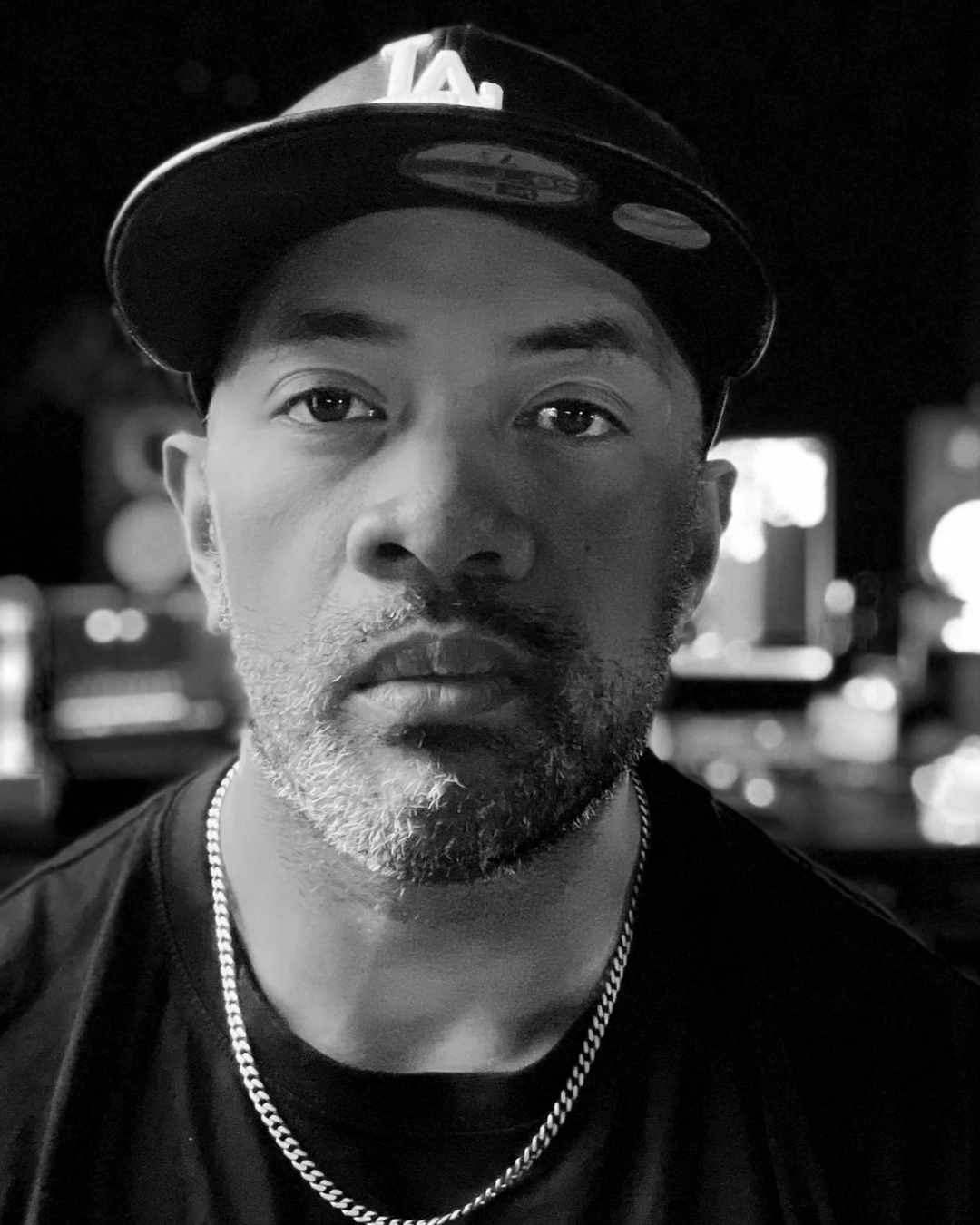
Faiumu Matthew Salapu aka Anonymouz. Photo/Anonymouz
That question has already struck a chord with audiences: 4 Tha Lumana’i premiered last month with teaser clips attracting more than 1.5 million views across TikTok and Instagram before its release.
Anonymouz says the online response opened discussions around faith, family, colonisation, religion, expectations, and modern Sāmoan identity.
The film is divided into three parts: Fa‘a Sāmoa ceremonial contests, hip hop battle traditions, and a final movement where the two meet and search for a way forward.
For Anonymouz, that meeting is ultimately about more than a battle.
It is about what happens when generations, cultures and forms of language collide and whether they can find a way to move forward together.
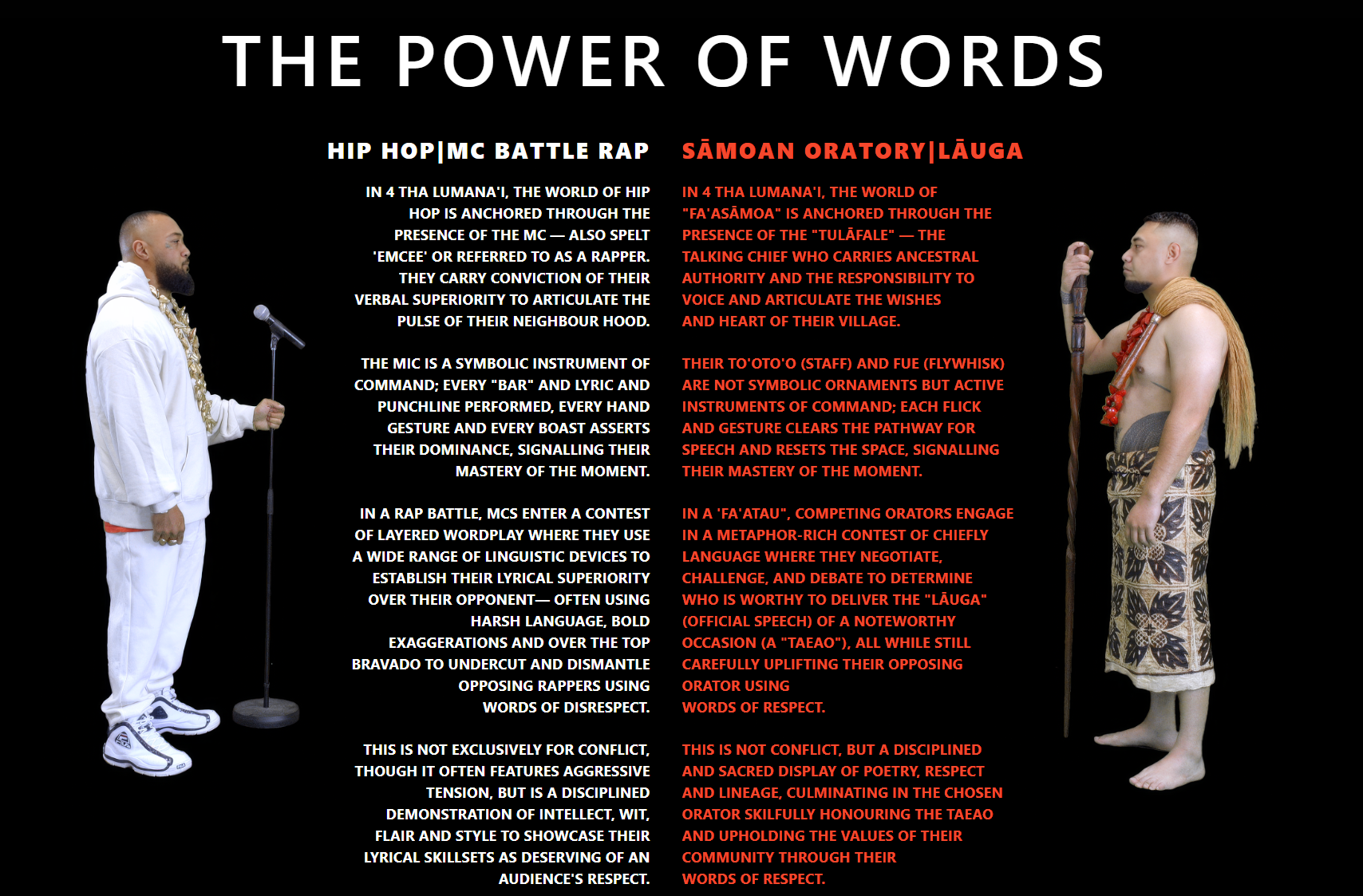
The Power of Words. Photo/4 Tha Lumana'i/Anonymouz
His father was among those who immediately understood what the project could mean for young Sāmoans.
"My dad was like, 'I can see this will be transformative for every young Sāmoan growing up’," Anonymouz recalls.
"Our parents grew up in an analogue world, our generation grew up in the remix world, and our kids are digital natives. We are the guardians guiding information and culture from the physical into the digital."
4 Tha Lumana’i is supported by the PMN Moana Reo Fund and is set for release this year.