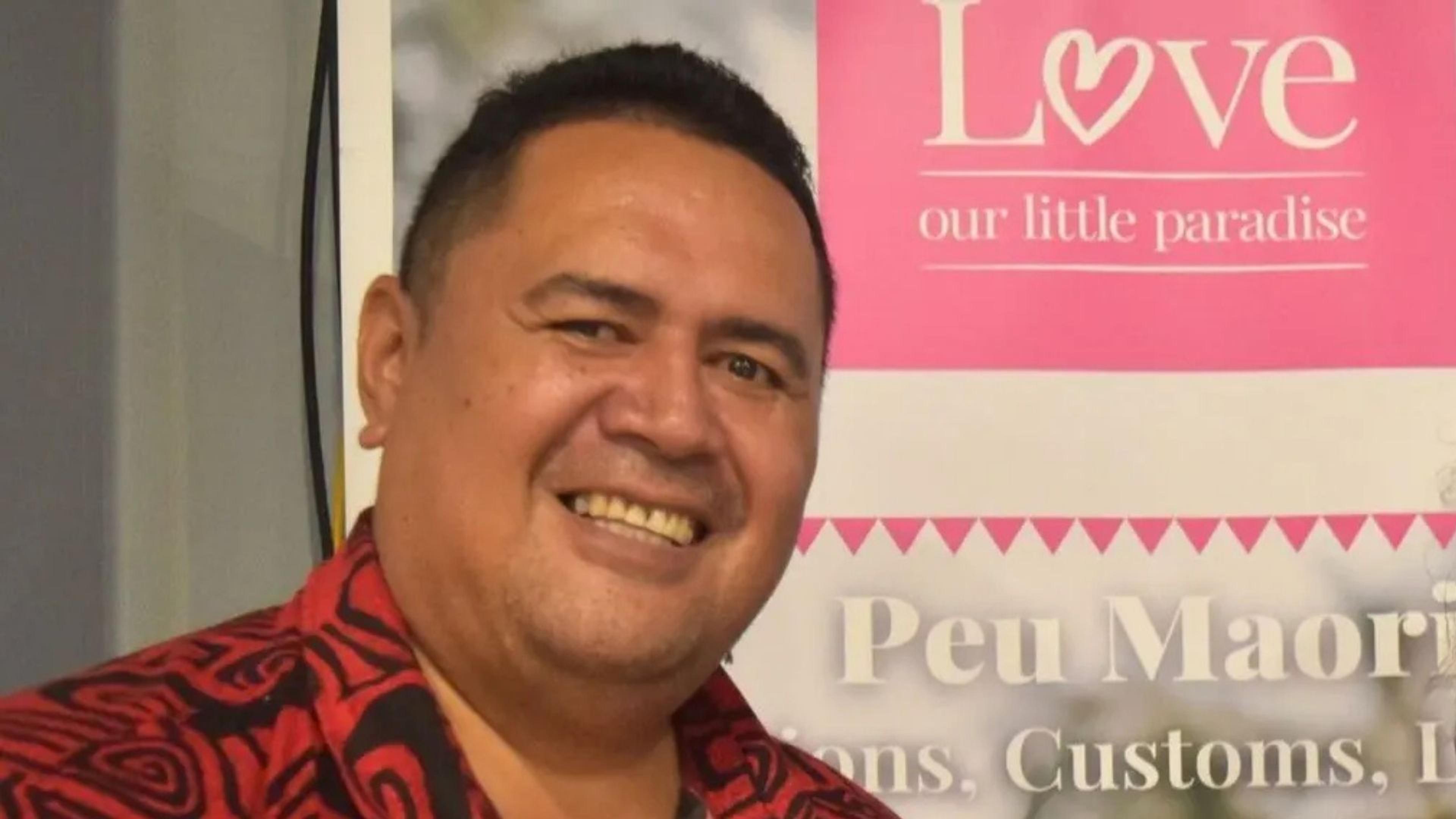
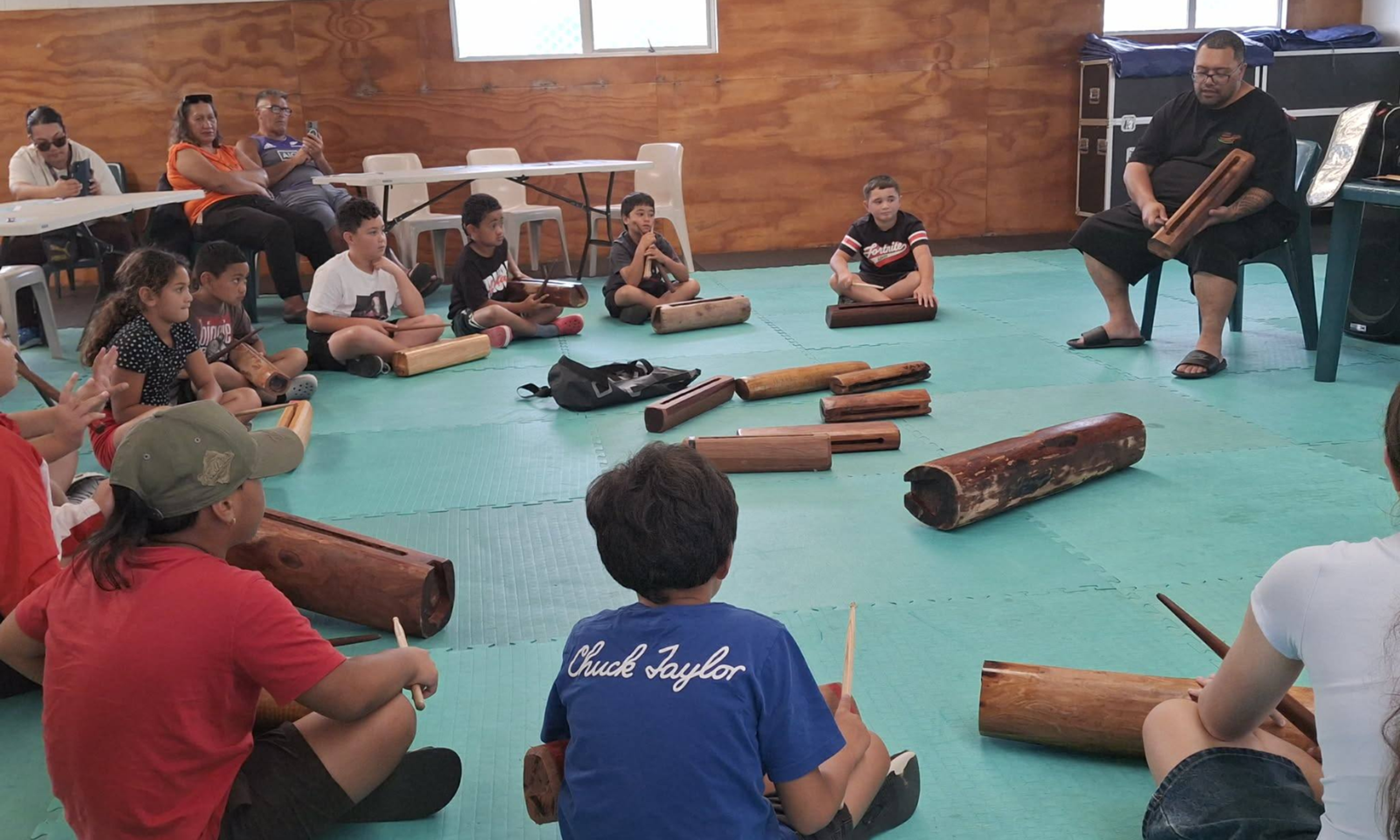
Duggie Freshy with students from his Fresh Cook Islands Drumming Class.
Photo/Facebook
Language & Culture
From ‘get out’ to belonging: Porirua youth reclaim Cook Islands drumming
After being pushed aside in traditional drumming groups, young Cook Islanders in Porirua are finding their place in a new, judgement-free space and helping keep their culture alive.

Atutahi Potaka-Dewes
Published
21 April 2026, 3:33pm
Share
Copy Link
Top stories

Auckland teen turns a trip to Fiji into a mission to fight period poverty
Elenoa TuragaiviuThu, 15 Oct
Top stories
Auckland teen turns a trip to Fiji into a mission to fight period poverty
Elenoa TuragaiviuThu, 15 Oct
For many Cook Islands youth in Porirua, drumming wasn’t something you joined - it was something you watched.
If you couldn’t keep up, you were out.
“They tell me, ‘Uncle, it’s boring. When I go to drumming practice, they kick me off’,” Duggie Freshy tells PMN Cook Islands.
That quiet frustration is what pushed the local youth worker and cultural leader to do something different.
In late 2025, he launched Fresh Cook Islands Drumming Classes (FCDC), a space where young people don’t get pushed aside but brought in.
“Just seeing them create a safe judgemental-free environment for each other.”
Freshy, a Cook Islander from Porirua, says the traditional way of learning is tough: more “keep up or get out of the way” than teaching.
While that works for some, many young people fall through the cracks early, missing out on drumming and connection to their culture.
And that loss matters.
In Porirua, 3930 people identify as Cook Islands Māor (2023 Census), making them the second-largest Pacific group in the city. But the language itself is endangered (UNESCO) especially among younger generations.
Freshy says drumming is just the starting point.
“Drumming is the easy part, it's in our toto (blood),” he says. “The challenge is to create a safe and fun space where tamariki are comfortable to engage, building their confidence to give things a go, filled with aro’a (love) and passion for our culture.”
The six-week programme runs on Wednesdays at the Rakahanga Manihiki Fare for children aged seven to 14.
Since starting with 21 students, demand has continued to grow in 2026.
Freshy says students learn about the different drum types such as pātē and tokere (slit drums) and pa’u (bass), construction, and how to play various sounds and beats in a judgement-free space.
“The most exciting part is watching them give it a go,” he says. “Just seeing them create a safe judgemental-free environment for each other.”
Parents, like Tiraa Apolo and Karaneta Erupi, are in the comment section of Freshy’s posts saying the impact of FCDC is immediate.
“Not only do they learn their culture and their identity, they are having fun, making connections,” Apollo writes.
Erupi added that her son Lameko “always gets excited about coming to class and learning how to drum and about the culture, which we love. He enjoys it and being able to do it together with old and new friends”.
Watch Duggie Freshy's full interview below.
More than music
Freshy delivers the classes with the support of his partner Tai Nootai and each block of lessons costs $50 to join. However, Freshy says he often gives free lessons because, “Knowledge not shared is not knowledge”.
For him, this is bigger than one class.
“A long-term goal of mine is to actually deliver this into schools. And I'm [wanting to] work alongside the Ministry of Education to get this accredited.”
FCDC's first 2026 intake finished in March with another level to go before a community showcase later this year.
Term 2 registrations are closed, but Freshy encourages contacting him to "work something out."