

The study, published in the New Zealand Medical Journal, shows Pacific people currently have the highest stomach cancer rates in the country at 14.4 cases per 100,000 people, compared to 4.6 per 100,000 for European and other populations.
Photo/Supplied/Unsplash/Sasun Bughdaryan
Health
Pacific stomach cancer cases set to rise as urgent action called on childhood infection
A major new study warns stomach cancer cases among Pasifika could almost double by 2045, with researchers pointing to common childhood infection as a key, preventable driver of the disease.

'Alakihihifo Vailala
Published
11 May 2026, 12:31pm
Share
Copy Link
Top stories


'Don't count yourself out': Porirua by-election candidate’s push for voter participation
Taelegalolo'u Mary AfemataFri, 09 Oct

Top stories
'Don't count yourself out': Porirua by-election candidate’s push for voter participation
Taelegalolo'u Mary AfemataFri, 09 Oct
A new study is raising the alarm for Pacific communities, warning that stomach cancer cases could rise sharply over the next two decades unless urgent action is taken to tackle a common childhood infection.
Researchers say Pacific people are expected to be among the hardest-hit, with cases projected to rise from 45 annually to 87 by 2045, a rise of 93 per cent.
Speaking with William Terite on Pacific Mornings, health expert Dr Nina Bevin says the findings point to a widening gap if nothing changes.
She says the research was done to understand what could happen in the future and what can be done now to prevent it.
“We know that Māori and Pacific people are likely to have their stomach cancer diagnosed at a younger age and generally have worse outcomes than other New Zealanders,” Bevin says.
“So we wanted to do this research so we could estimate how this problem might grow if we do nothing, and to start thinking about what action we can take to address the problem.
Watch Dr Bevin's full interview below.
“What we found is that stomach cancer cases in Aotearoa are likely to rise nearly 50 per cent by 2045, from around 500 a year to about 700 cases but for Māori and Pacific people, our cases are going to double over that time.”
The study, published in the New Zealand Medical Journal, shows Pacific people currently have the highest stomach cancer rates in the country at 14.4 cases per 100,000 people, compared to 4.6 per 100,000 for European and other populations.
Researchers used cancer data, census information, and population projections to model what could happen if no major changes are made.
The New Zealand Medical Journal is a peer-reviewed medical journal. It is owned by the Pasifika Medical Association Group and was formerly the official journal of the New Zealand Medical Association. Photo/Supplied
A key driver behind the risk is a bacteria called Helicobacter pylori, which is strongly linked to stomach cancer.
Bevin says it is often picked up in childhood and can sit quietly in the body for years.
“What we also know is that Māori and particularly Pacific peoples have the highest rates of infection by a bacteria called Halicobacter pylori, which is one of the leading causes of stomach cancer.”
She says the infection is usually caught during childhood years and can remain dormant in the stomach for years but causes inflammation which damages cells and therefore turn into cancers.
“That's more common when you live in crowded households, big whānau, because it's spread from person to person, and we know that Maori and Pacific people are more likely to be living in crowded houses.
“The infection is strongly associated with strong socioeconomic disadvantage, and we know for many reasons that Maori and Pacific families are more likely to experience this disadvantage.”
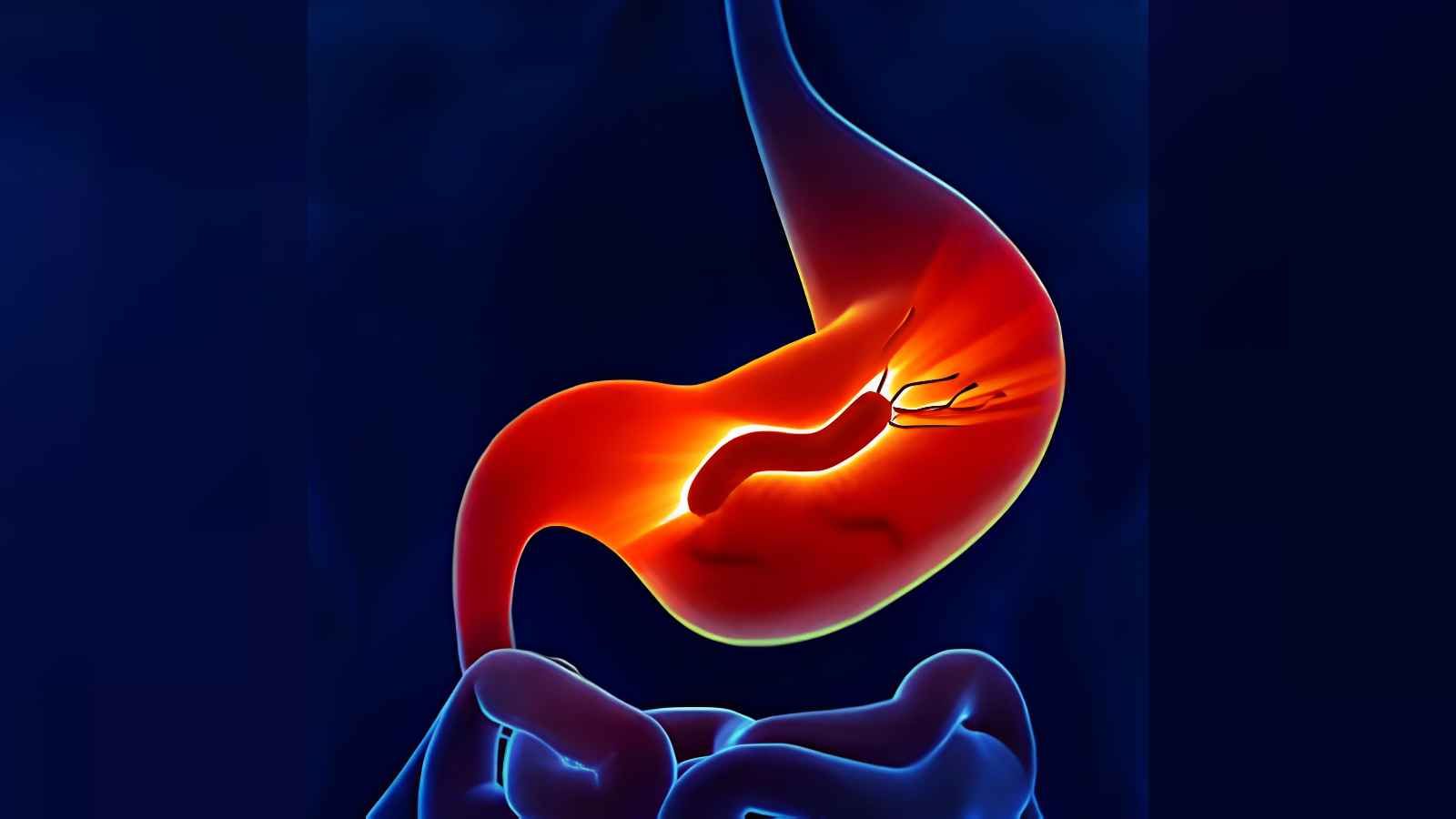
A Helicobacter pylori infection is a common stomach infection. It's caused by a germ called Helicobacter pylori, a bacteria also known as H. pylori. Photo/Supplied
Despite the concerning projections, Bevin says many future cases could be prevented if the infection is found and treated earlier.
International evidence suggests between 40 and 60 per cent of stomach cancer cases could be avoided through testing and treatment programmes targeting H. pylori.
However, the study also highlights a gap in access, with Māori and Pacific communities facing lower rates of H. pylori testing and treatment despite having higher infection levels.
“We’ve got to make sure that equity is at the centre of anything that we develop.
“So we want to work with Māori and Pacific providers, communities, and whānau to make sure that whatever we design is something that works for us and that people want to do, understand, and they can just get on, get tested, and get on with their lives.”
Health officials say work is already underway to explore how screening could be expanded.

Dr Karen Bartholomew is a Public Health Physician and researcher, and is the Director of Health Equity in Service Innovation and Improvement, Te Whatu Ora. Photo/TWO
Director of Health Gain Development, Dr Karen Bartholomew, says several trials are being prepared to test different approaches including whether screening could be added to existing programmes in future.
Bartholomew says the goal is to build evidence for a possible national programme in line with the New Zealand Cancer Action Plan.
“If people have gastric symptoms, they can see their primary care provider and may be tested for H. pylori if indicated,” Bartholomew says.
H. pylori infections often show no symptoms, meaning many people are unaware they carry the bacteria.
Left untreated, H. pylori can lead to long-term stomach damage and is considered the strongest preventable risk factor for stomach cancer.
Pacific people experience H. pylori infection rates of around 38 per cent, compared to 23 per cent for Māori, and 13 per cent for European New Zealanders - a gap researchers say is driving unequal cancer outcomes.

Cancer is the leading cause of death in New Zealand. Each year, around 23,000 people are diagnosed with cancer and 10,000 die from cancer. Photo/Supplied
For now, experts say the focus is on early detection, better access to testing, and ensuring Pacific families are not left behind as new prevention programmes are developed.
New Zealand’s Cancer Action Plan 2019-2029 recommends test-and-treat programmes which are already being adopted internationally.