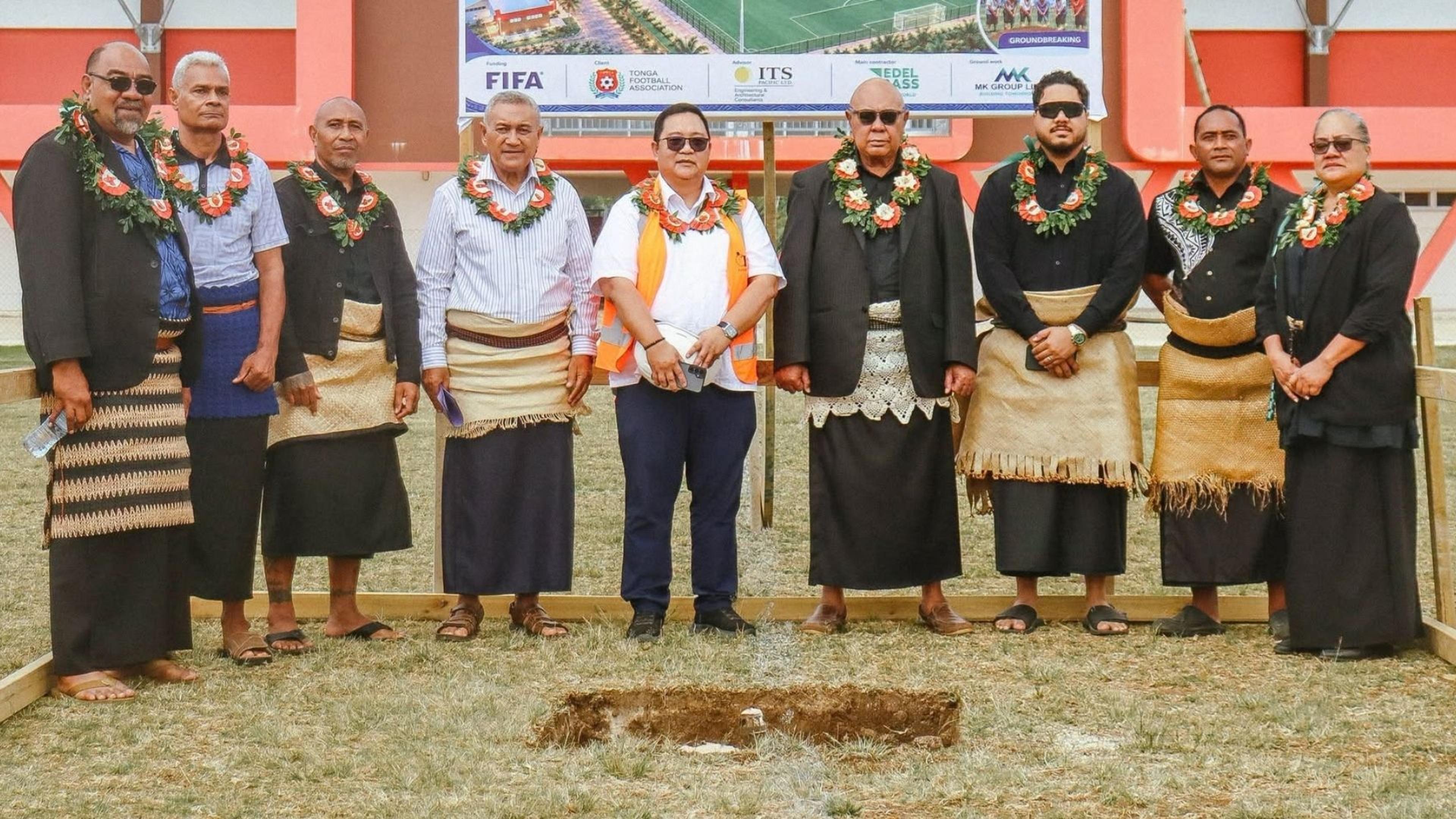
Tongan workers in line for jobs as FIFA-backed soccer turf takes shape
Elton Lonaratha JnrThu, 08 Oct
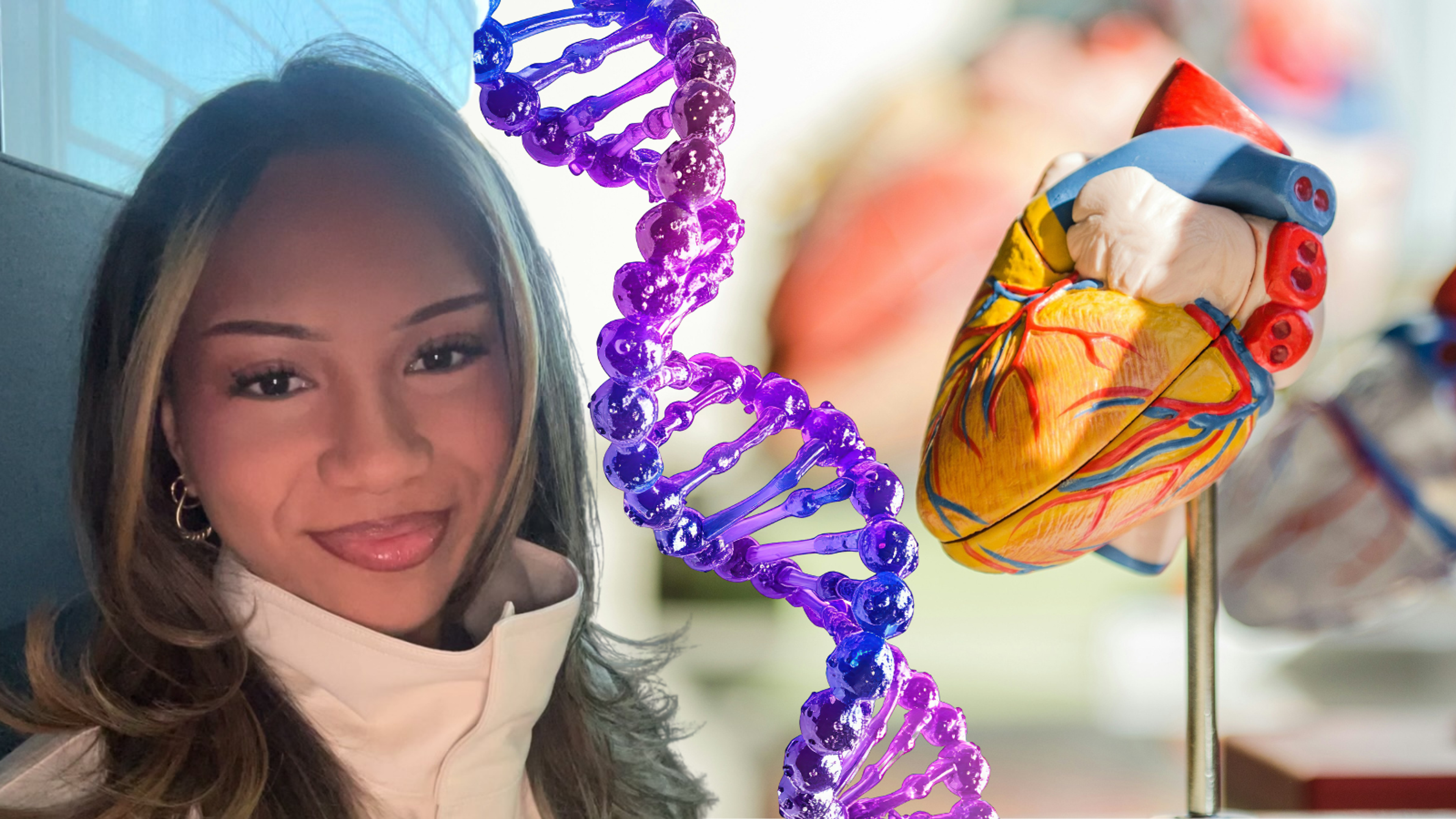
Photo/Composite/Supplied/Canva/Unsplash
Auroiana Etelei says she is on track to becoming NZ’s first Pacific and Sāmoan genetic counsellor but adds she does not want to be the first and only.


For Sāmoan researcher Auroiana Etelei, becoming Aotearoa New Zealand’s first Pacific and Sāmoan genetic counsellor is more than a qualification.
She wants Pacific families to have a say in how genetic healthcare is delivered, with their culture, relationships and ways of communicating understood and respected.
Etelei is completing a Master of Genetic Counselling at the University of Technology Sydney and is due to graduate later this year.
Speaking with William Terite on Pacific Mornings, she says her research looks at how Pacific families approach genetic testing for inherited heart conditions.
“Genetic testing can sometimes help us understand whether someone has one of these conditions and whether other family members might also be at risk,” she says.
“So what I was interested in is how we can talk about this information in a way that makes sense and feels culturally appropriate for Pacific families.”
The research comes as Pacific communities continue to face a heavy burden of heart disease.
More than 17,000 Pacific people in New Zealand live with heart disease, while cardiovascular disease accounted for 27 per cent of Pasifika deaths in 2022, according to the Heart Foundation.
Sixty per cent of those deaths were considered premature, occurring before the age of 75.
Watch Auroiana Etelei's full interview below.
Dr Josh Agnew, a paediatrician and member of the Māori and Pasifika-led Te Whare Tukutuku cardiology network, says culturally connected healthcare can help build trust between patients and health professionals.
“The importance of culturally concordant care, of someone who understands your value system, understands where you are and understands what you need better, it just helps put everyone at ease both as a practitioner and a patient,” he says in an earlier interview.
Agnew is part of the organising committee for Te Whare Tukutuku, which connects indigenous workers in cardiology.
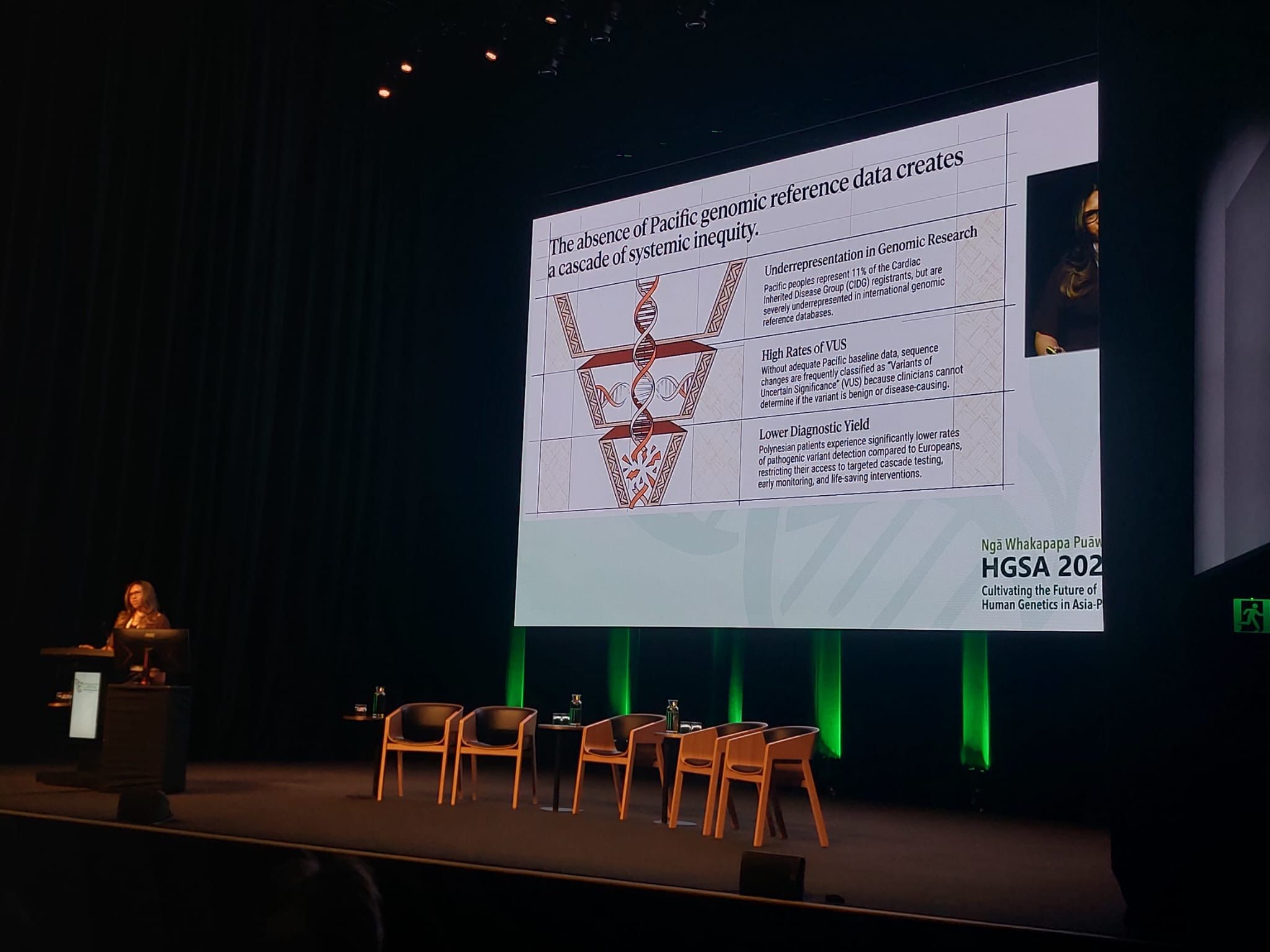
Auroiana Etelei presenting her research at the Human Genetics Society of Australasia Conference in Christchurch, where she received the Best Student Presentation award. Photo/Supplied
He says they are often the “lone Māori or Pasifika voice in a wider group”.
Etelei’s research, supported by a University of Auckland supervisory team through the Our Heart, Our Genes, Our Stories project, found Pacific families preferred face-to-face conversations where trust and relationships could develop.
She says genetic information can affect an entire family, making it important for people to have time and space to ask questions and make decisions.
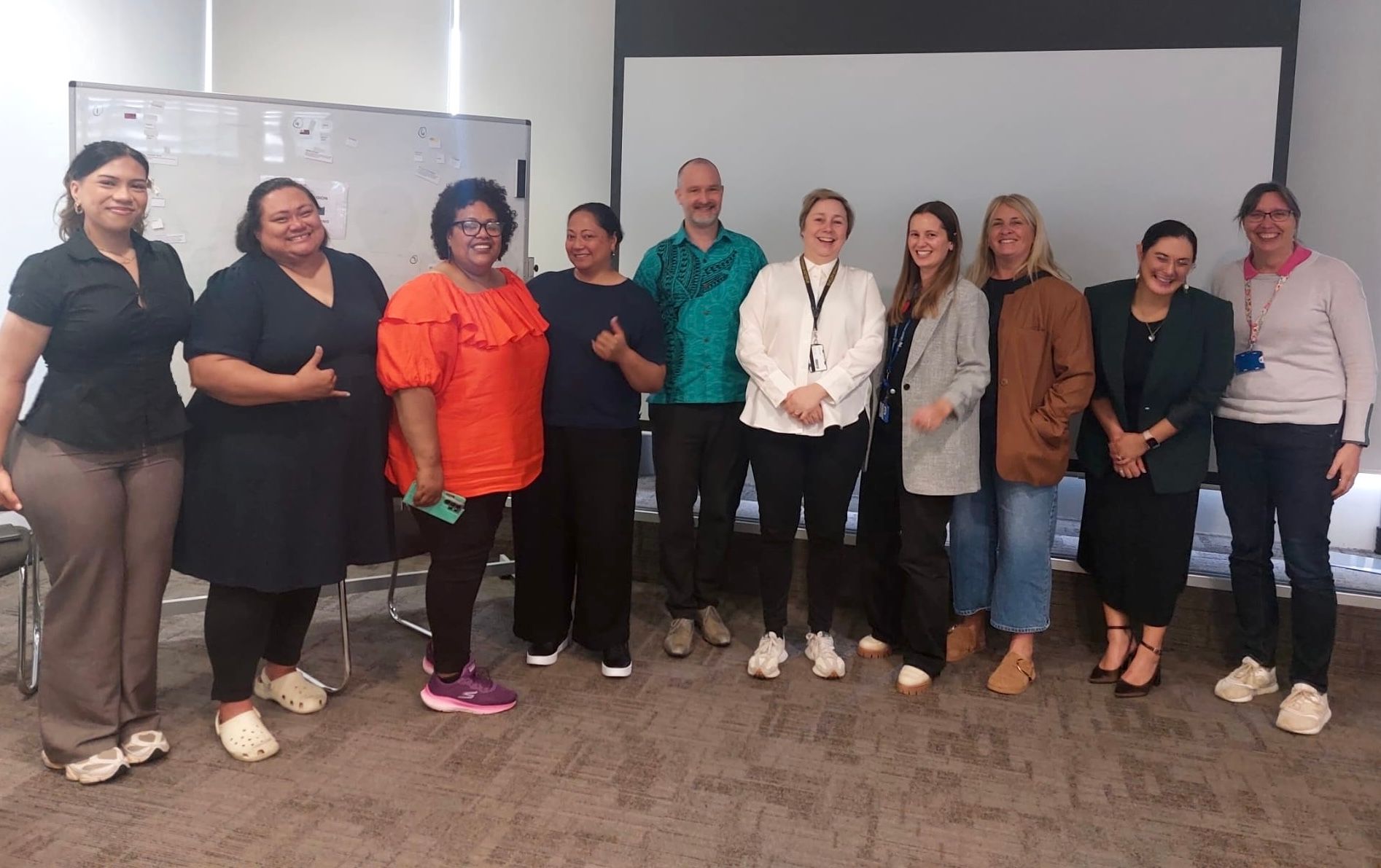
Auroiana Etelei (left) with University's supervisory team. Photo/Supplied
“Talanoa just allows for a more relational and conversational approach which aligns more closely with Pacific ways of connecting and sharing knowledge,” she tells Terite.
“It always comes back to the idea of cultural safety. It isn't simply about learning a few Pacific words or understanding cultural protocols. It's about being willing to examine our own position and our own authority.”
Etelei was introduced to genetic counselling while completing her honours degree at the University of Waikato and later received a scholarship from Pūtahi Manawa, a Centre of Research Excellence focused on heart health equity.
She says she is on track to become the first Pacific and Sāmoan genetic counsellor in Aotearoa New Zealand when she graduates.
For Etelei, that milestone comes with both privilege and responsibility.
“I'm bringing my Pacific perspectives and my values and ways of relating into a space where our voices have been severely underrepresented,” she says.
Genetic testing can show the presence of hereditary conditions. Photo/Unsplash
“I also don't want to be the first and the only. I want younger Pacific students to see genetic counselling as something that they can do and to know that they don't have to leave their culture at the door to belong in science or healthcare.”
New Zealand does not currently offer a Master’s in Genetic Counselling, meaning students must study overseas.
Etelei says her ultimate goal is to help Pacific families feel understood and supported when navigating genetic healthcare.
“I want Pacific families to know there's someone who understands their culture and their experiences. Representation matters, and I hope this is just the beginning.”
As Pacific families continue to face significant heart health inequities, Etelei’s research highlights the need for Pacific voices to help shape genetic healthcare that is culturally appropriate and accessible.