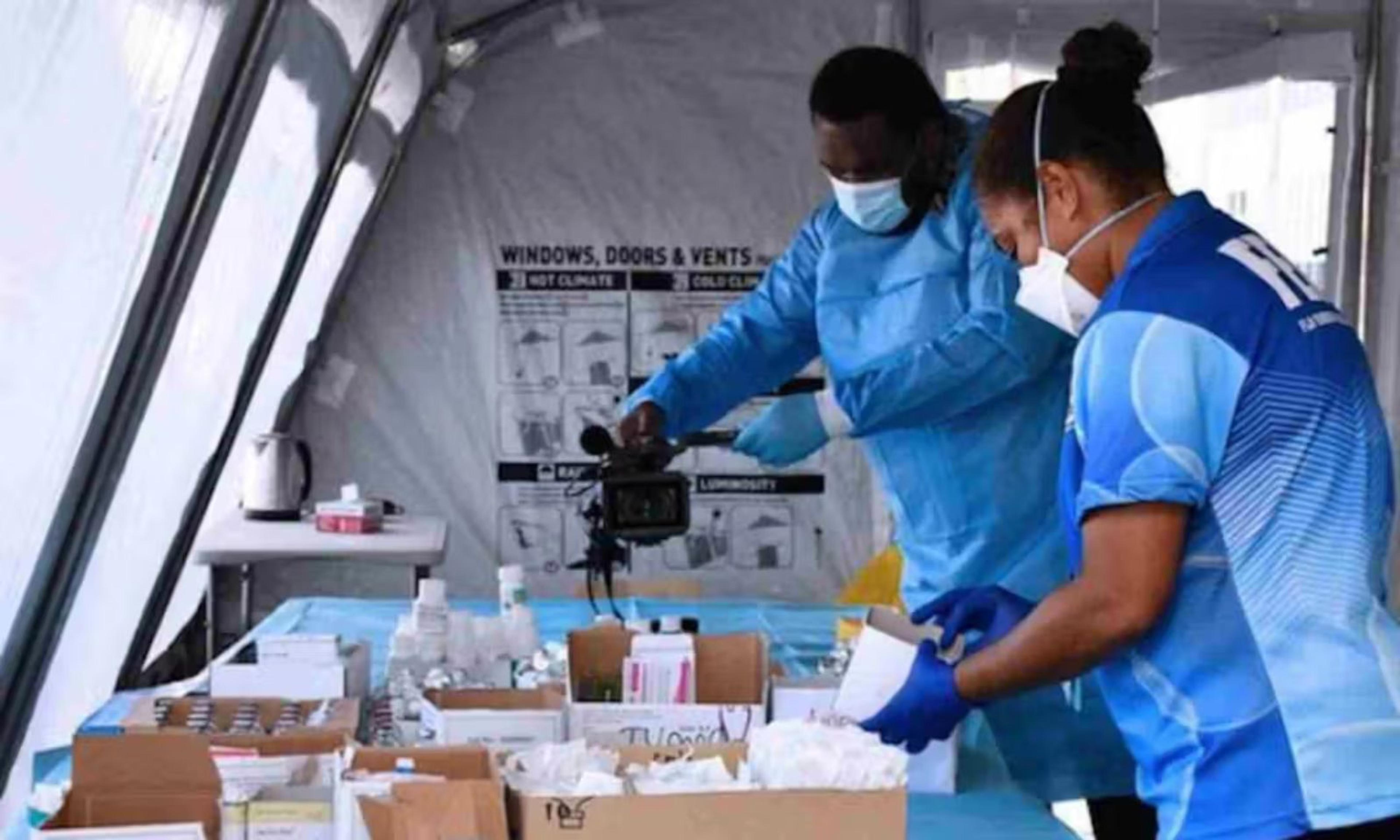
Health authorities in Fiji are racing to contain a sharp rise in HIV cases, with over 1500 new infections recorded in 2024 and more than 1200 cases reported in the first half of 2025.
Photo/Fiji Ministry of Health and Medical Services
Health
Fiji fast-tracks needle programme as new study shows HIV cases surging at record pace
With 1583 new cases in 2024 and infections still climbing, Fiji is rolling out harm reduction measures as experts warn the wider Pacific cannot afford to delay.

Christine Rovoi
Published
17 February 2026, 12:17pm
Share
Copy Link
Top stories



Auckland teen turns a trip to Fiji into a mission to fight period poverty
Elenoa TuragaiviuThu, 15 Oct
Top stories
Auckland teen turns a trip to Fiji into a mission to fight period poverty
Elenoa TuragaiviuThu, 15 Oct
Fiji is moving to introduce needle and syringe programmes as it confronts what experts say is the fastest-growing human immunodeficiency virus (HIV) epidemic in the world.
Fiji recorded 1583 new HIV cases in 2024. In just the first six months of 2025, a further 1226 cases were reported - a sign that health authorities warn the outbreak is still accelerating.
This comes as HIV numbers across most Pacific Island countries have historically been low compared with other regions.
Experts say several island nations report only small case numbers each year. But Fiji’s sharp rise, they add, marks a major shift in the region’s HIV landscape.
A joint rapid assessment commissioned by the World Health Organization (WHO) and the United Nations Development Programme (UNDP) found that 48 per cent of people who began HIV treatment in Fiji in 2024 were people who inject drugs.
The joint report, published last week, links the surge in infections to unsafe injecting practices, syringe shortages and fear of stigma when seeking health care.
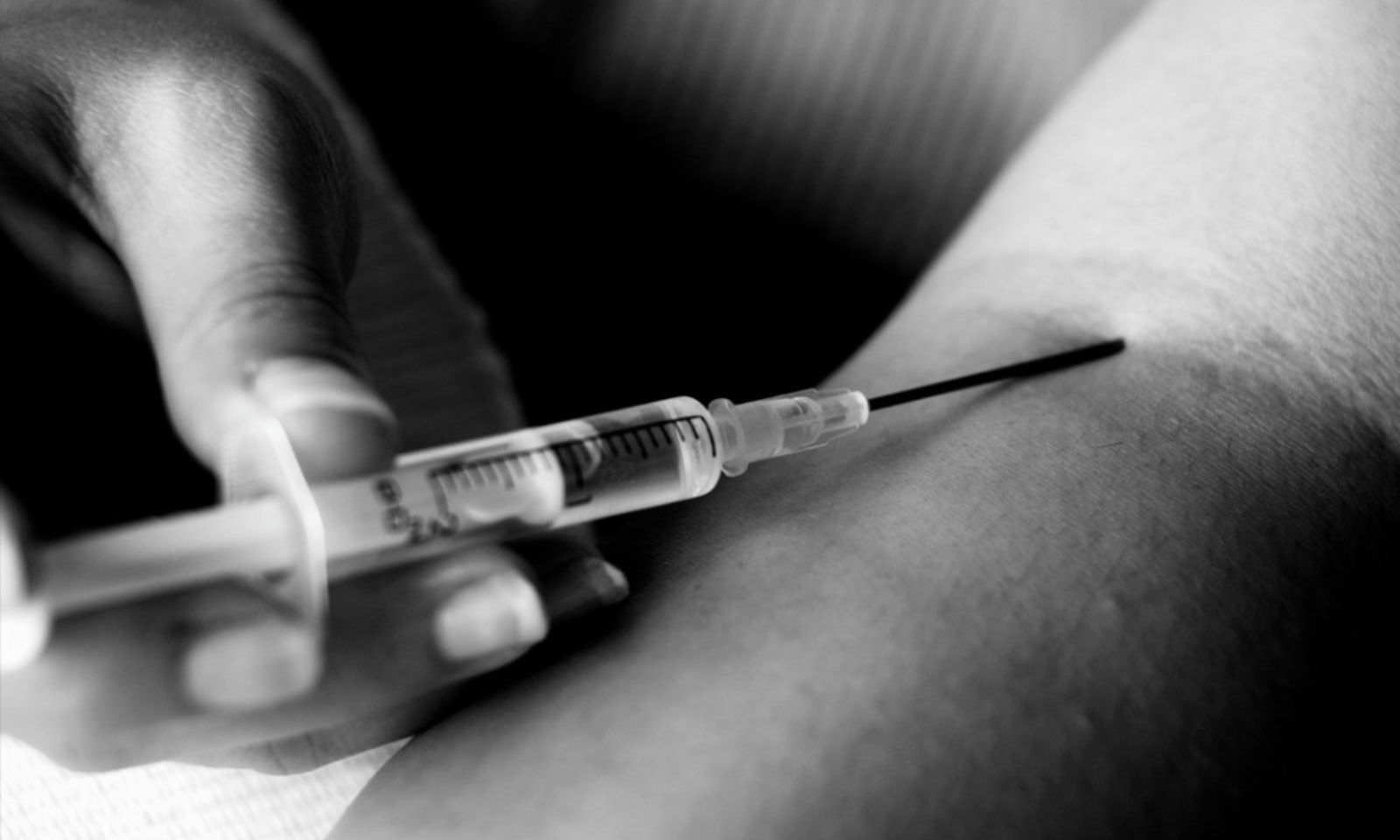
Fiji government officials, health workers, and community representatives met in Suva to discuss introducing needle and syringe programmes as part of the country's HIV response, supported by the World Health Organization (WHO) and partners. Photo/unodc.org/file
The assessment, carried out at the request of Fiji’s Ministry of Health and Medical Services, says needle and syringe programmes (NSPs) are urgently needed as part of a broader public health response.
At a national workshop in Suva on applying new WHO guidance to Fiji, Dr Jason Mitchell, Chairperson for the National HIV Outbreak and Cluster Response Taskforce at the Ministry of Health and Medical Services, said: “This process helped shift the focus from whether harm reduction is needed to how it can be implemented rapidly and effectively in Fiji.”
Dr Mark Jacobs, WHO Director of Pacific Technical Support and WHO Representative to the South Pacific, said: “In the context of Fiji’s HIV situation, introducing NSP is essential to reducing transmission, protecting communities and linking people to health services that are safe, confidential and stigma-free.”
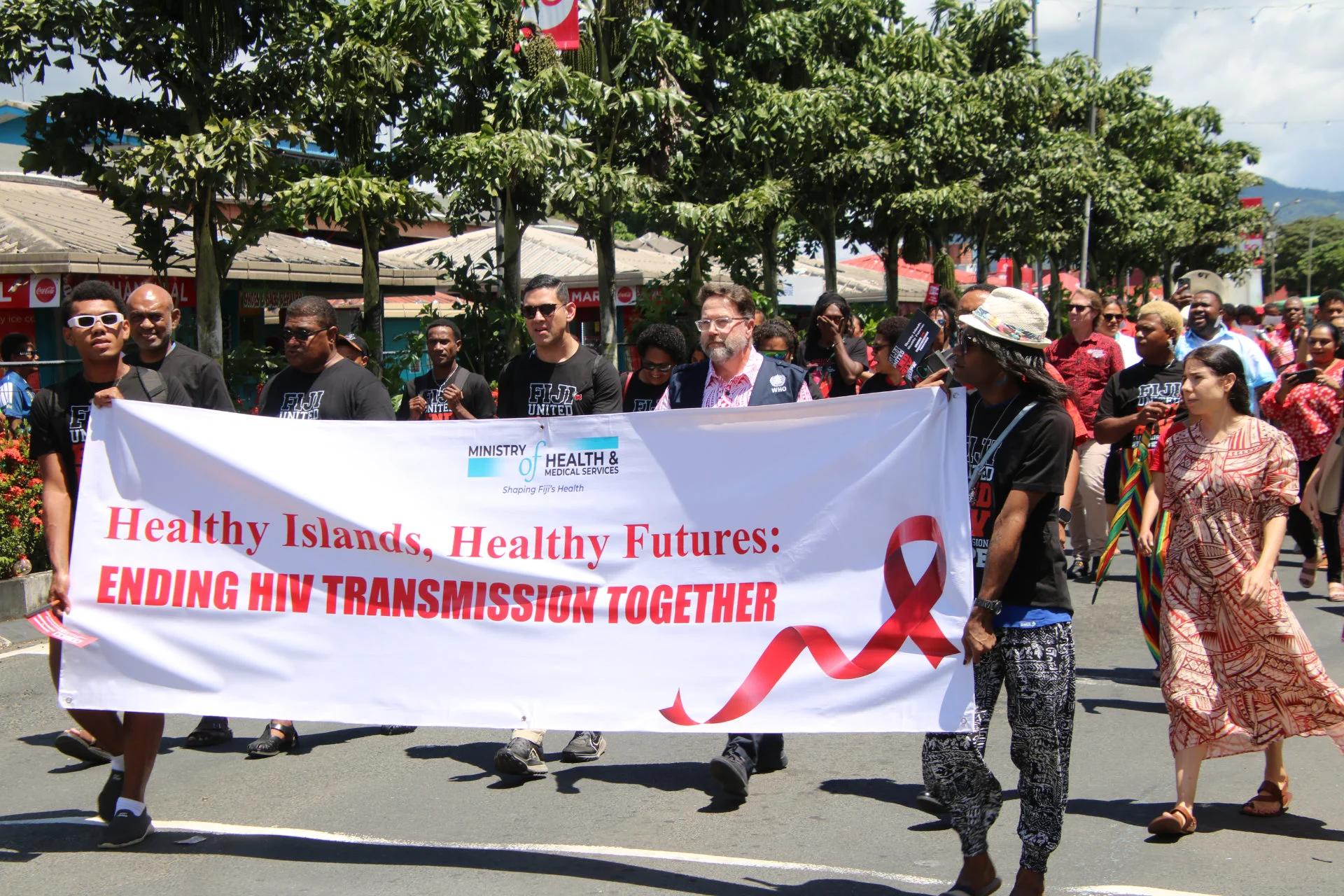
Health experts including Dr Mark Jacobs of the UN (pictured during a World Aids Day march) say expanding access to HIV testing, treatment, and sterile injecting equipment is critical to slowing transmission, ensuring no one is left behind, and preventing further spread across the Pacific.
The workshop brought together government officials, police, church leaders, health workers and community groups.
Plans discussed include expanding access to sterile needles through health services, pharmacies and outreach teams, and linking drug users to HIV testing and treatment.
Concern about Fiji’s outbreak is also being raised beyond the country.
In an analysis published on 13 February 2026 by the Lowy Institute, researcher Connor Graham wrote that Fiji now has “the world’s fastest-growing HIV epidemic” and he warned that other Pacific Island nations risk similar outbreaks if they do not act early.
According to the article, Fiji’s new HIV cases rose by 1219 per cent between 2019 and 2024, in contrast to a long-term global decline.
It also notes that only about one-third of people living with HIV in Fiji know their status, and roughly a quarter are receiving treatment.
Injectable drug use, especially methamphetamine, is identified as a major driver of transmission, with around half of new infections linked to contaminated needles.
Because Fiji is a regional hub for labour mobility and education, the report warns the crisis could become a wider Pacific health security issue if prevention and harm reduction efforts are delayed.
Both the WHO-backed assessment and the Lowy Institute analysis point to the same priorities: expand access to sterile needles, strengthen public education about HIV transmission, and reduce stigma so people feel safe to seek testing and treatment.
Health leaders say the window for early action may be closing, not just for Fiji but for the wider Pacific.