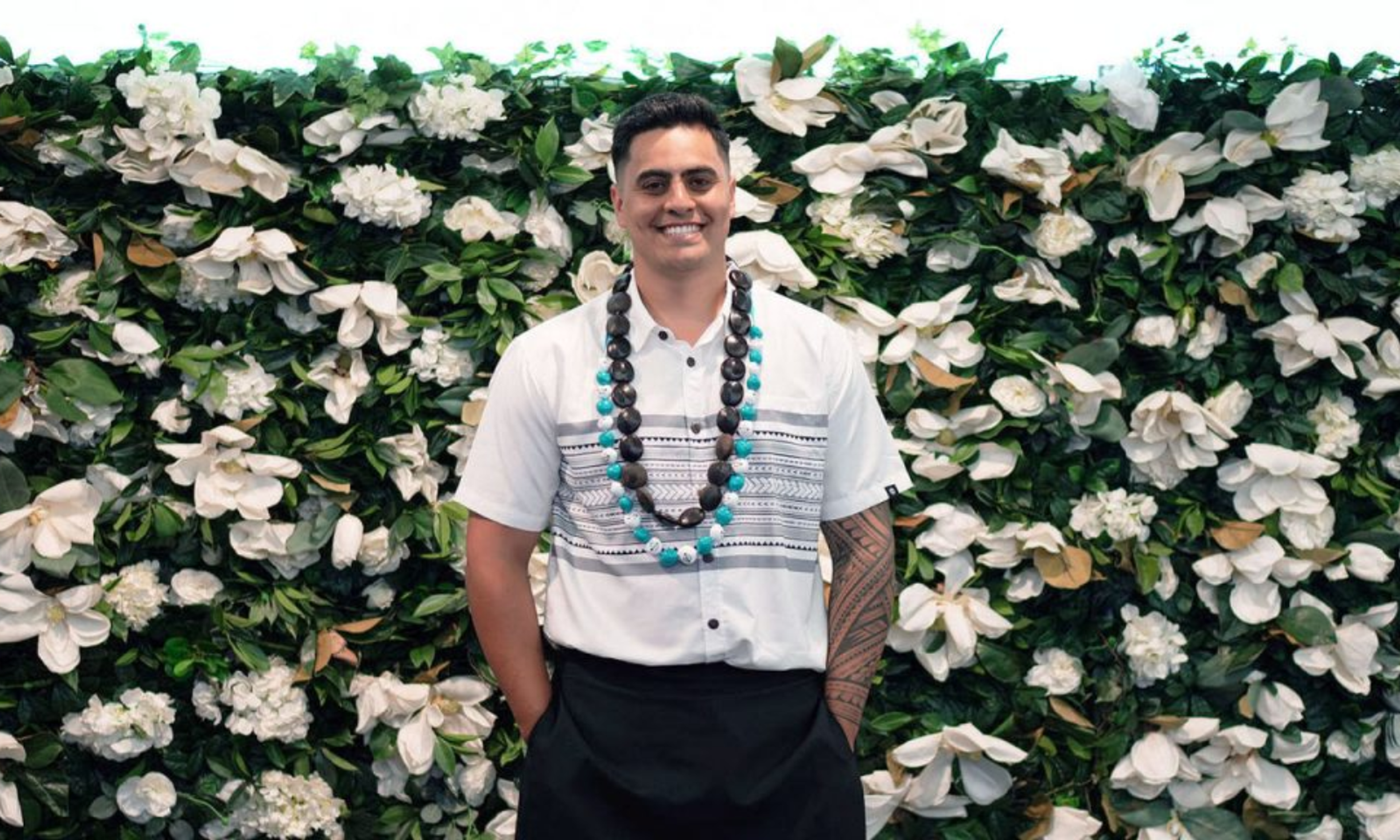
Joseph Johnston graduated from the Faculty of Medical and Health Sciences with a Bachelor of Medicine and Surgery.
Photo/Te Rina Ruka-Triponel
Health
Excellence and possibility: Meet the new face of Pacific medicine in Aotearoa
Sāmoan-Italian graduate Joseph Johnston brings a "superpower" of cultural connection to a health system in need of change.

Atutahi Potaka-Dewes
Published
18 December 2025, 2:51pm
Share
Copy Link
Top stories
PNG Chiefs win first round against New Zealand Rugby
Christine RovoiSat, 17 Oct
Pacific families must work four days to afford basic food: World Vision
Thomas Tarurongo WynneFri, 16 Oct

Sāmoa demolish France in record-breaking 78-4 RL World Cup opener
Christine RovoiFri, 16 Oct
Top stories
PNG Chiefs win first round against New Zealand Rugby
Christine RovoiSat, 17 Oct
Pacific families must work four days to afford basic food: World Vision
Thomas Tarurongo WynneFri, 16 Oct
Sāmoa demolish France in record-breaking 78-4 RL World Cup opener
Christine RovoiFri, 16 Oct
In a health system grappling with inequity, newly graduated doctor Joseph Johnston represents more than academic excellence, he represents possibility.
Johnston, a Sāmoan-Italian from the villages of Safotu and Lalo Vaea, graduated with a Bachelor of Medicine and Surgery (MBChB) from the University of Auckland. The day before, he took part in the Māori and Pacific Admission Scheme (MAPAS) Completion Ceremony.
He left university with two of its highest medical honours: the Academic Excellence Award for exceptional performance throughout his studies and the JDK North Prize in Clinical Medicine, awarded for the highest marks.
Speaking on Pacific Mornings, Johnston recalled his graduation moment. “I was super nervous. I could literally hear my heart beating out of my chest. As soon as they read it out, I just felt on top of the world.”
But for Johnston, the achievement isn’t just personal. It comes with the responsibility to better health outcomes, access, and understanding for Pacific communities.
“Now realising actually, I am a doctor and I have a massive responsibility to not only the patient in front of me, but the community, and also to my people as well. I just can’t wait to actually try and uphold that responsibility and do what I said I would do when I sat my medical school interview.”
Watch Joseph Johnston's full interview below.
A calling rooted in connection
Leadership runs in Johnston’s family. A former head boy at Auckland’s Saint Paul’s College (Te Kura o Hato Paora), he followed in the footsteps of his father and uncles, carrying forward a legacy grounded in education, service, and excellence.
Johnston says his path into medicine was guided by a balance of curiosity and care.
“Early on, I knew that I had a passion for learning, science, and I really valued connections with people. Medicine is one of those careers that marries the two,” Johnston says.
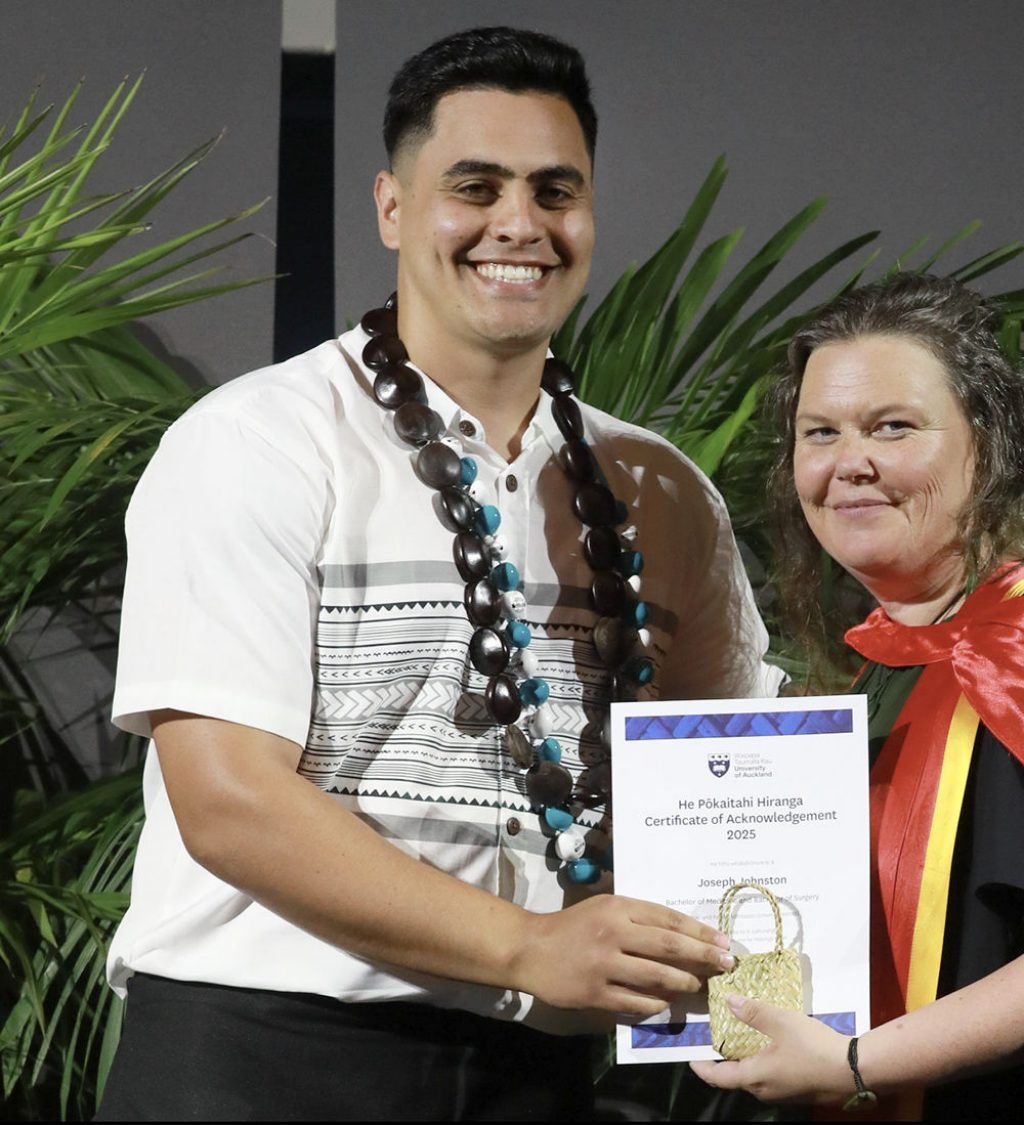
Joseph Johnston at the MAPAS completion ceremony. Photo/Dean Carruthers
That connection, he says, is especially important through a Pacific lens. In New Zealand, health inequities remain entrenched.
The 2024/25 New Zealand Health Survey reveals nearly one in two Pacific children (44.3 per cent) live in households where food often runs out.
Pacific people remain 50 per cent more likely to suffer from poor cardiovascular health, and Pasifika adults are nine per cent less likely to report their health as “good” compared to non-Pacific groups.
“There’s good evidence to show that clinicians spend less time with Māori and Pacific patients,” Johnston says. “There are worse health outcomes for Māori and Pacific patients.
“We have such a superpower in our ability to connect with people and natural-born cultural safety in order to improve those outcomes. If you know what it’s like to be Sāmoan, or Māori, you can make better clinical judgements, that’s just so powerful.”
Seeing inequity on the ground
While health inequities were discussed throughout his studies, Johnston says the reality became unavoidable during clinical placements.
“Seeing patients in front of you who can't access a GP either for financial reasons or for whatever the barriers may be. You speak to patients, you hear the stories, and you see why those inequities exist at such a large scale.
“It can be quite daunting, it can be quite confronting, but I think it's one of those things that you need to come to grips with and it's just part of the job.
The role of MAPAS
Johnson credits the Maori and Pacific Admission Scheme (MAPAS) with shaping both his academic journey and sense of belonging. He says the support from staff and mentors was integral to the students’ success
“To have a group of people who are like-minded, who are like you, who share similar values, similar beliefs, I think is such a massive strength of the Maori Pacific Admissions Scheme.
“All of the student support advisers, they’re like mentors, counsellors. If you’ve got any problem, they sort it out for you. I can’t overstate the importance of that.”
As debates continue nationally around the future of equity-based pathways, Johnston is clear: “We know that they work, we know that they produce amazing graduates, we know that they contribute to the health system and that they play a role, and that if you take those away, there's going to be a huge gap not only in the university but also in the health system.”
Health as a service, not a privilege
Looking ahead, Johnston says improving Pacific health outcomes requires rethinking service delivery. He points to community outreach clinics, recalling a placement at Langimālie Medical Centre, an Auckland-based Tongan health provider.
“Health is a service. It’s not a product you go in and buy. We’re here to serve people, regardless of whether they can make it to a GP or not.”
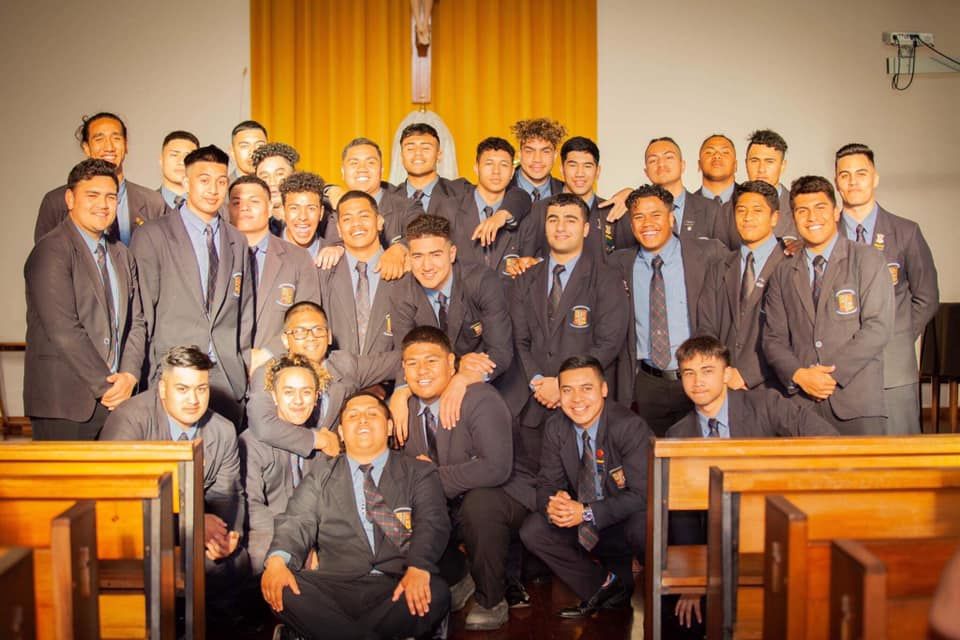
Joseph Johnston (far right) and the Saint Paul's class of 2019. Photo/Facebook
One patient at a time
In 2026, Johnston will begin work as a junior doctor at the North Shore Hospital.
“As a junior doctor, you can feel defeated, like, how am I meant to change the system?” he says. “But if you focus on that one patient, their story, who they are, you can make a real difference.
"When Māori and Pacific patients see a doctor who looks like them, their eyes light up. That’s an opportunity and you have to take it.”
When asked what carried him through six demanding years of study, Johnston doesn’t hesitate: “My why is my nana”.
“She came here in the ‘60s, worked multiple jobs to give her family a better life. I imagine her in that seat, in that bed in the hospital, and thinking about how many other similar stories there are out there for our Pacific people.
“If you’ve got a strong why to get you through, then you’re not going to stop.”