
Hausia leads as Papatoetoe re-run delivers early result
Taelegalolo'u Mary AfemataThu, 09 Apr
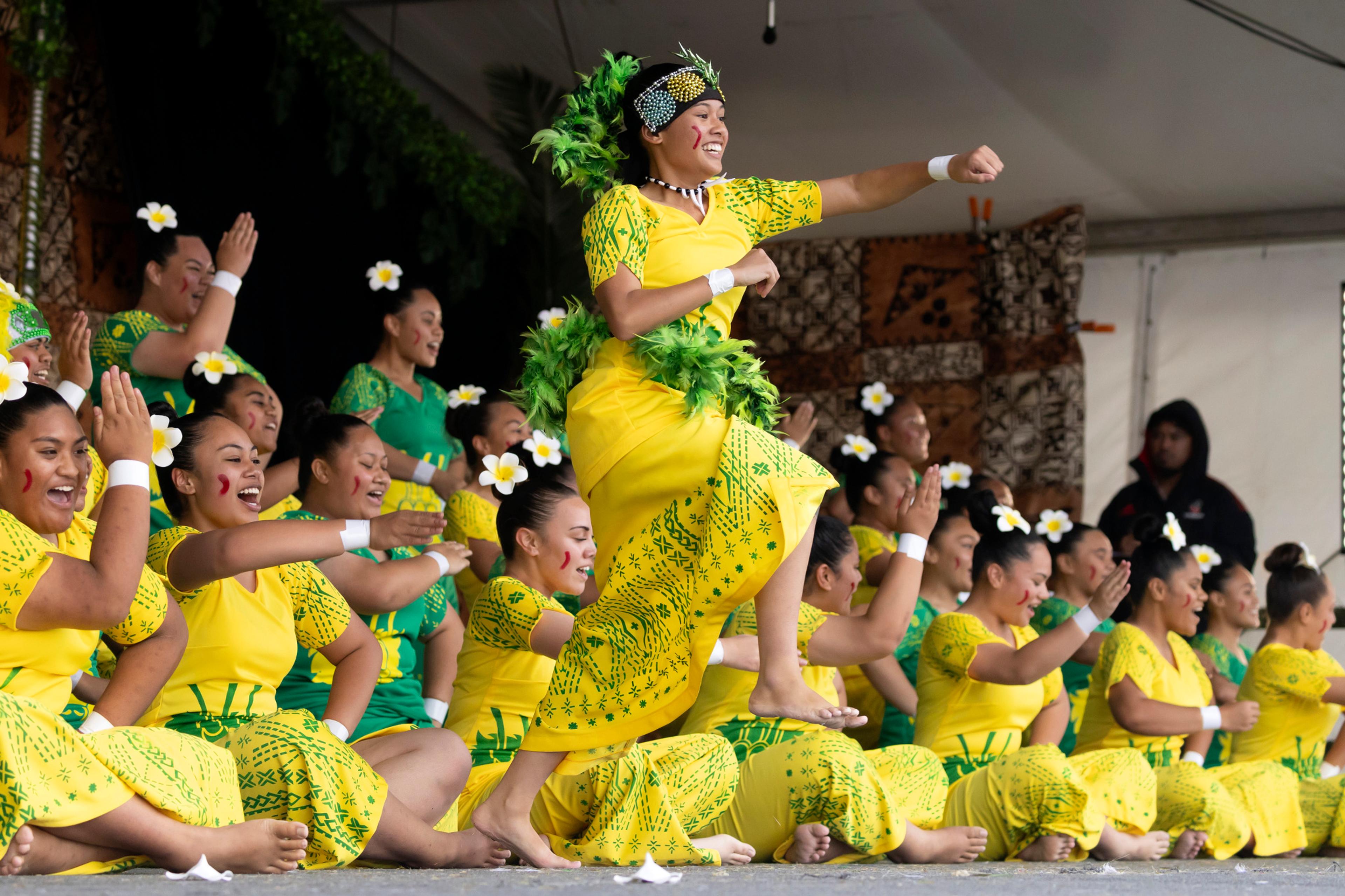
McAuley High School students perform during the Samoan stage at ASB Polyfest, one of the festival’s largest and most anticipated cultural showcases.
Photo/BC Photography
ASB Polyfest brings together thousands of Pacific students each year, with organisers highlighting the scale of the event and the growing pressure to sustain it.



Polyfest has been going for half-a-century, but organisers say the Auckland cultural festival still struggles to secure stable long-term funding.
Festival director Seiuli Terri Leo-Mauu says ASB Polyfest relies on a mix of sponsors, funders and community support to keep it running.
“It is frustrating to have to justify every year why we exist and why we should happen,” Seiuli told Pacific Mornings host William Terite.
“But at the end of the day, our people always show up.”
Now in its 51st year, the festival remains one of the largest cultural events for secondary school students in the country.
This year, 73 schools and 263 groups are taking part, with about 10,000 students expected to perform across the week-long event.
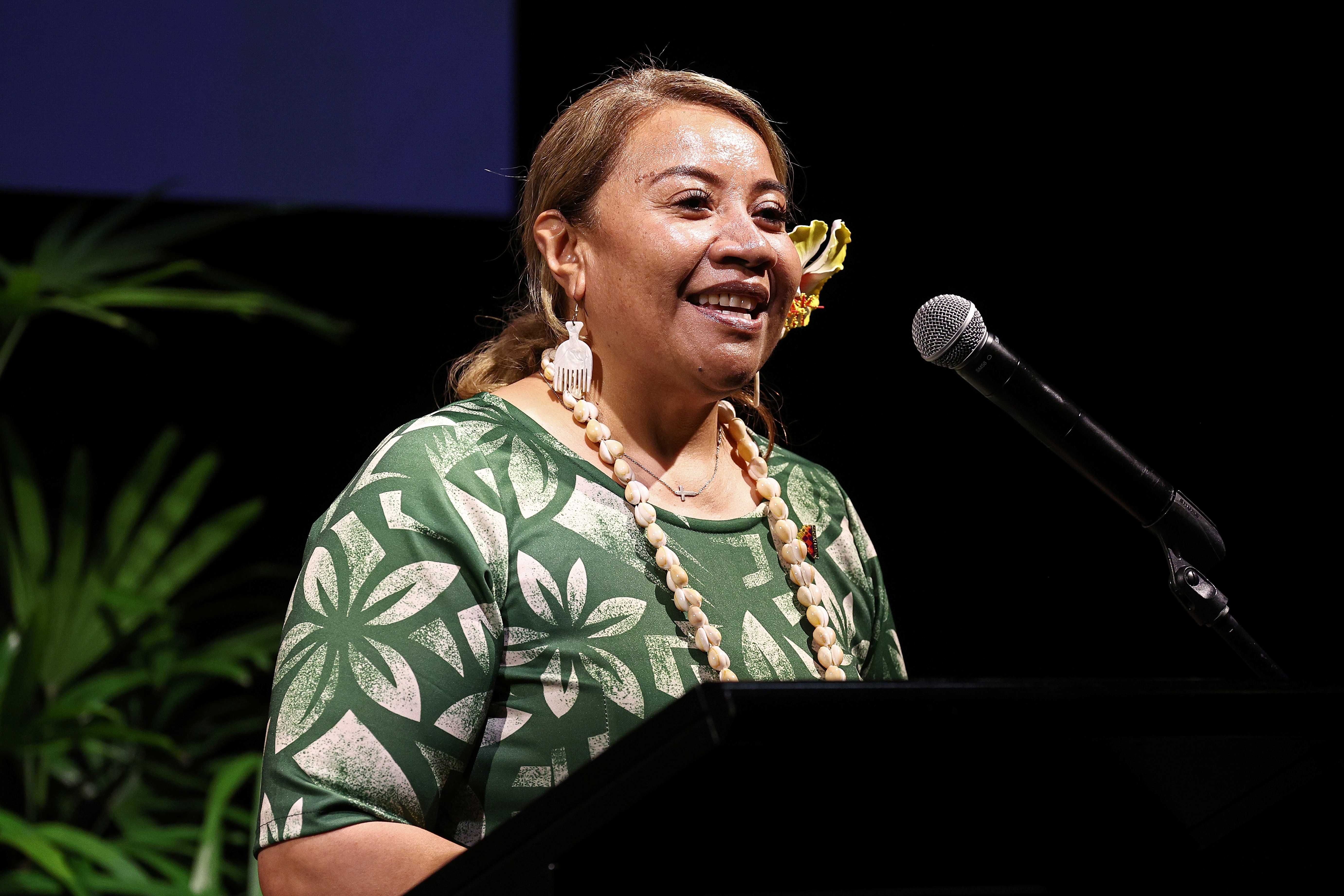
ASB Polyfest director Seiuli Terri Leo-Mauu says the festival continues to rely on community support as it seeks more sustainable funding. Photo/supplied
Seiuli said the scale of the festival is not always visible to those who only see the performances on stage.
“We’re more than a four-day event,” she said.
“We’re a 365 commitment to our young people and their families and what they’re doing in school.”
Polyfest has long been powered by the efforts of teachers, parents and communities who spend months preparing students for the performances, Seiuli said.
“The success of the festival is because of our families and our communities and our funders and sponsors.

A performer from St Pauls College takes part in the Tongan stage at ASB Polyfest. Photo/BC Photography
“So we all get behind our young people.”
Despite its reach and popularity, organisers say securing funding remains a yearly challenge.
“Every year costs go up. And that’s just the reality of it,” Seiuli said.
“When it comes to funding, every year we’re having to talk to funders.”
The outdoor festival, held at the Manukau Sports Bowl since the mid-1990s, also carries additional logistical and weather-related risks which can add to the event costs.
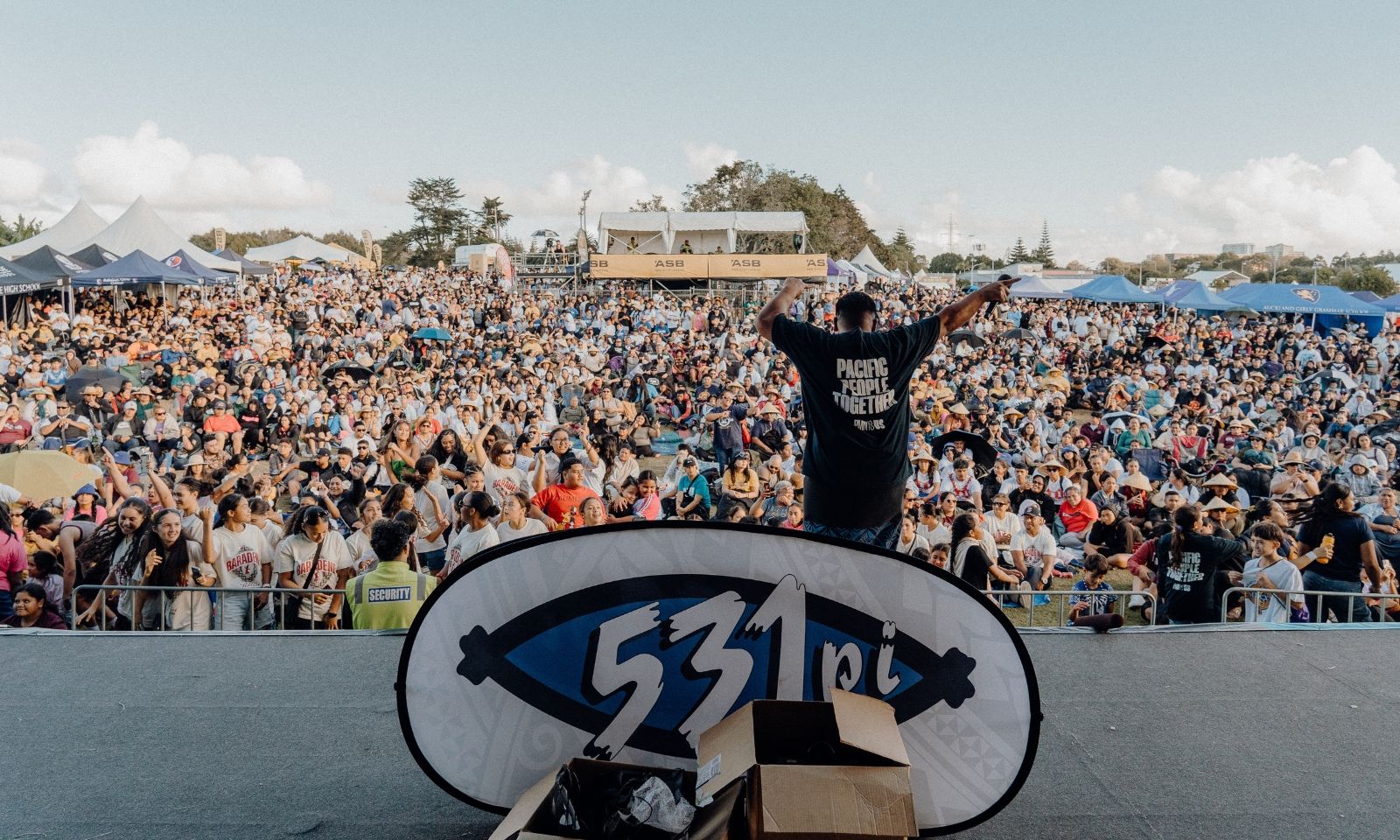
Crowds gather at ASB Polyfest, one of the largest cultural events for secondary school students in Aotearoa. Photo/File.
Seiuli said organisers work with government agencies, philanthropic organisations and sponsors to ensure the festival can continue.
She said a funding strategy is currently being developed with support from the Ministry for Pacific Peoples to explore more sustainable options for the future.
“We’ve been working on a funding strategy over the last year,” she said.
“We’re looking at what that may look like going forward.”
The director also highlighted Polyfest’s growing international reach, with families overseas increasingly watching performances online.
“We know that we also have a massive international appeal,” she said.
Auckland Council is one of the key supporters of the festival, including providing access to the Manukau Sports Bowl venue.
Seiuli said the partnership remains important as the event continues to grow.
“There’s a lot of growth, and we need to prepare for that growth,” she said.
Auckland Council says Polyfest is one of many events competing for limited public funding.
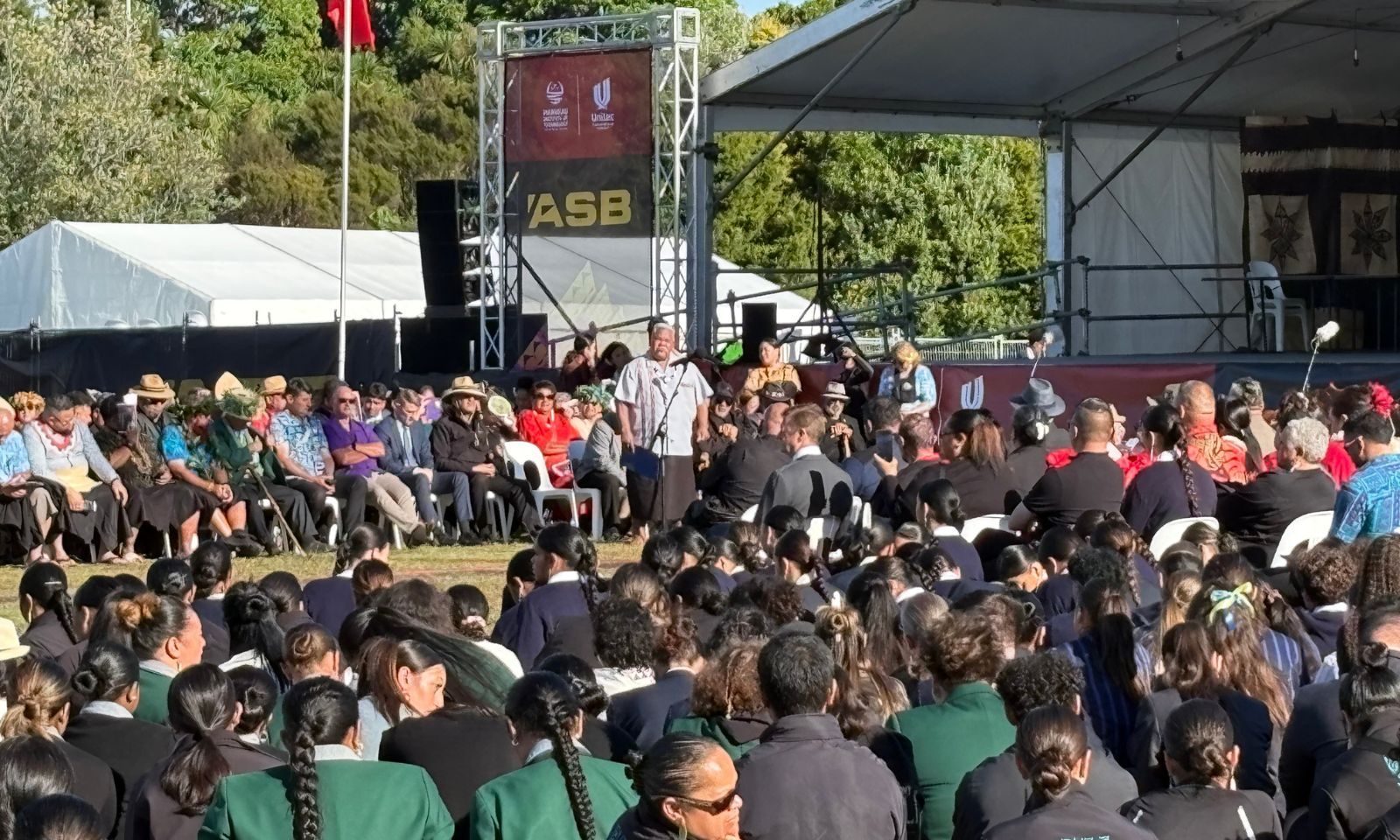
Manukau Ward Councillor Alf Filipaina speaks at the ASB Polyfest opening ceremony last year. Photo/File.
Rachel Kelleher, Director of Community at Auckland Council, said the festival has received consistent support through the council’s regional event grants programme.
“Auckland Council is a long-running supporter of the ASB Polyfest, with funding allocated every year since amalgamation to assist with the festival’s running costs,” Kelleher said.
She said all event funding must be carefully managed to ensure fairness and accountability to ratepayers.
“We have an obligation to ratepayers to ensure accountability as well as to provide all event organisers with equal opportunity for council support.”
Polyfest is one of 27 events funded through the programme in the last financial year and received the largest individual grant of $75,000.
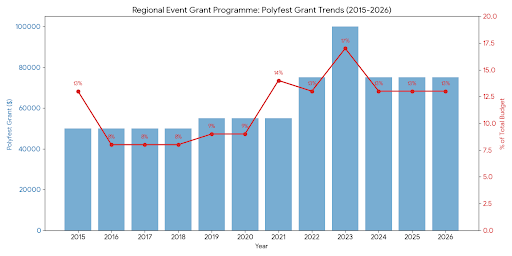
This chart was created by AI tool Gemini Pro.
Council data shows Polyfest funding has generally ranged between $50,000 and $75,000 annually over the past decade, with a peak of $100,000 in 2023 following reduced demand during the Covid pandemic.
Local boards have also contributed to the festival over time, including $64,000 from the Ōtara-Papatoetoe Local Board for Polyfest’s 50th anniversary in 2025.
Seiuli said organisers remain hopeful that a more sustainable funding model can be developed for the future.
LDR is local body journalism co-funded by RNZ and NZ On Air.