
PNG Chiefs win first round against New Zealand Rugby
Christine RovoiSat, 17 Oct

Tonga Prime Minister Lord Fatafehi Fakafānua has backed the Western Pacific Blue Corridors Initiative, calling for regional cooperation to protect the ocean pathways used by whales and other migratory marine species.
Photo/Pacific Islands Forum
Leaders, scientists and advocates want countries to work together to protect the ocean routes used by whales, tuna, turtles and other marine life.


The Pacific is being urged to protect the ocean routes that whales, tuna, turtles and other marine species rely on to travel between countries.
Conservation groups and academics say climate change, shipping, fishing and some whale-watching practices are putting these migration routes under growing pressure.
They want Pacific countries to work together to create protected “blue corridors” or “whale highways” across the region.
A new report from the World Wildlife Fund (WWF), launched ahead of this week’s Pacific Islands Forum, calls for nations to coordinate their efforts to protect the routes that connect marine life, oceans and Pacific communities.
The Western Pacific Blue Corridors Initiative grew from a workshop held in Fiji earlier this year.
It aims to bring countries, projects and partners together around a shared approach to protecting ocean connections.
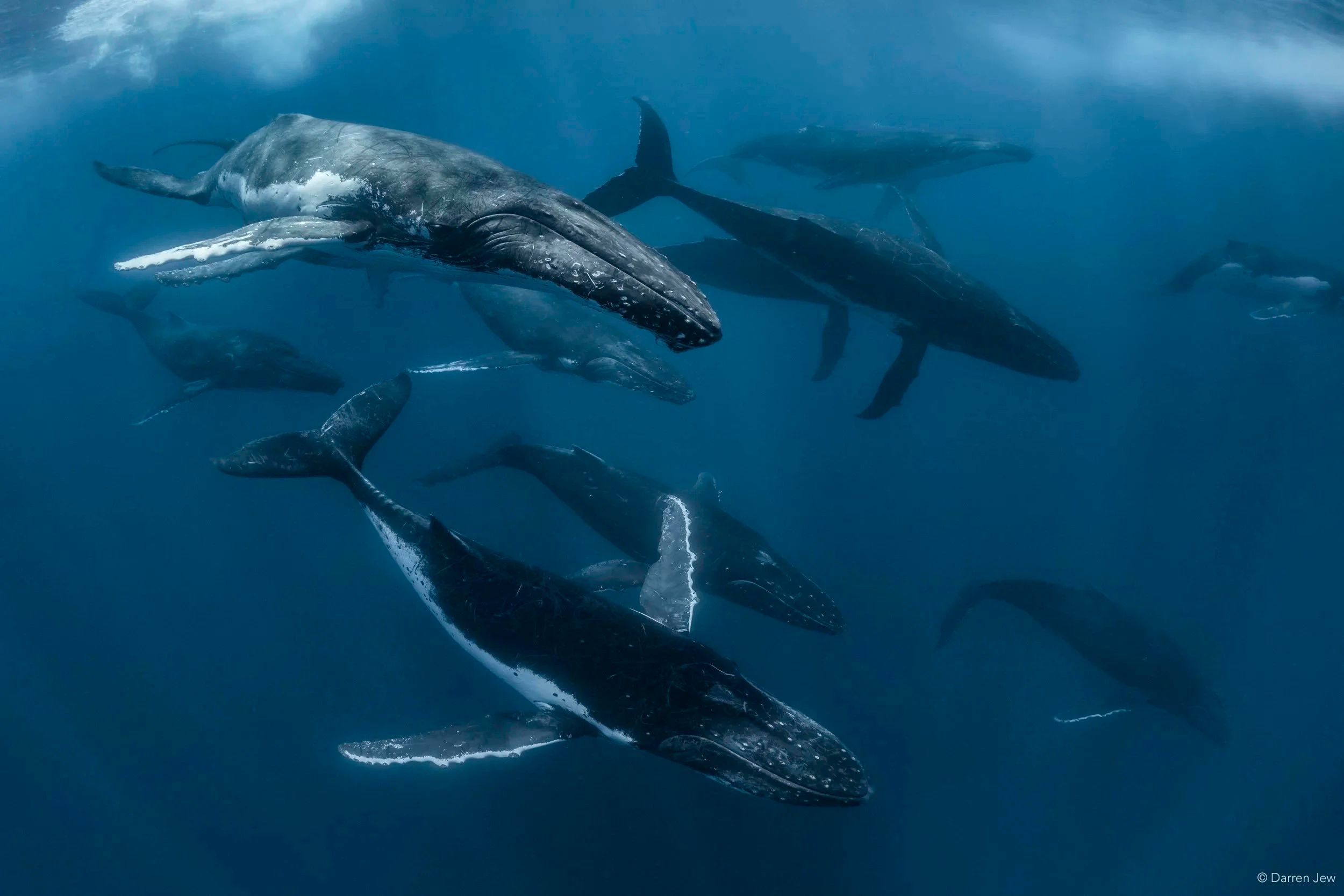
Whales migrate across vast areas of the Pacific, connecting breeding, feeding and resting grounds across national borders. The Blue Corridors Initiative aims to protect these vital ocean pathways from threats including fishing, shipping, pollution and climate change. Photo/WWF
Tonga is backing the push. Tongan Prime Minister Lord Fatafehi Fakafanua, who is currently attending the Forum Leaders Meeting in Palau, says whales play an important role in the health of the initiative.
"They are the great fertilisers of our oceans," Fakafanua says in a statement. “Tonga is committed to advancing the protection of blue corridors nationally and regionally with neighbouring countries.”
Fakafanua estimates each whale is worth NZ$3.34 million to Tonga through tourism and its contribution to healthy seas.
He says the Western Pacific Blue Corridors Initiative will help guide and strengthen Tonga’s ocean commitments for its people and future generations.
Alfred Ralifo, WWF Pacific Conservative Director, says protecting whales is also about protecting a deep connection between Pacific people and the ocean.
“Whales and dolphins are kin, ancestors and guides woven through our cultures. Protecting their blue corridors is an act of stewardship for generations to come,” he says in a statement.
The need for action is clear. New Zealand’s Department of Conservation says fewer than 2000 blue whales are thought to remain, compared with an estimated 250,000 before commercial whaling.
Fin whales are believed to be at less than five per cent of their former numbers, while humpback whales are at 10 to 20 per cent of their former population.
Southern right whales have also suffered major losses, with only a few thousand thought to remain from an estimated 60,000 before large-scale hunting.
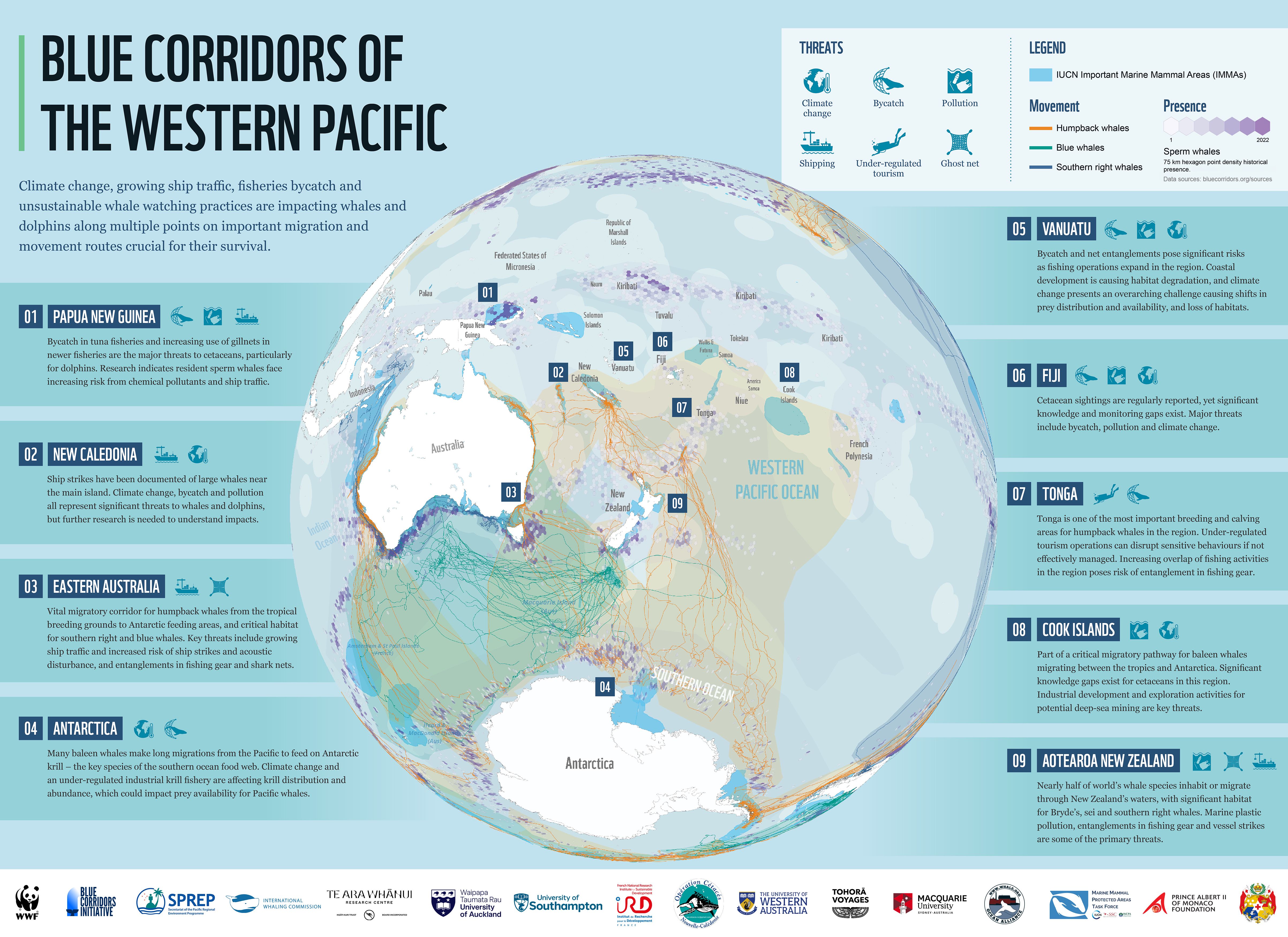
The Western Pacific Blue Corridors Initiative maps important migration pathways and critical habitats across the Pacific, highlighting the need for countries to work together to protect whales, dolphins and other migratory marine life. Photo/Supplied
The issue is also gaining ground in New Zealand’s political debate.
Earlier this year, Green Party MP Teanau Tuiono introduced a bill seeking to recognise whales as legal persons in New Zealand and strengthen protections for them under environmental and conservation laws.
Tuiono told PMN News the idea was shaped by conversations already taking place across the Pacific.
“When I was back in the Cook Islands, this is a conversation that's been happening quite a lot across the Pacific and they’ve got different types of jurisdictions,” he said.
In 2024, indigenous leaders signed a treaty in Rarotonga based on similar principles, with a fund established to support community-led ocean protection.
The Pacific is home to 33 species of whales and dolphins, according to the Secretariat of the Pacific Regional Environment Programme (SPREP). That represents about 40 per cent of the world’s known whale and dolphin species.
Watch Miesa Grobbelaar speaks to Ryan Bridge on Herald NOW about helping to rescue a juvenile female whale after it became entangled in a marine chain.
SPREP and the Convention on Migratory Species (CMS) have been working together since 2006 to protect whales and their habitats, including migration routes.
The CMS says commercial whaling pushed many of the world’s larger whale species towards extinction during the 20th Century.
While an international moratorium protects migratory marine species from commercial whaling, many remain endangered or vulnerable.
Pacific countries are being urged to take the next step, working across borders to protect the ocean highways these species need to survive.
Cedric Tausinga, a journalism student at AUT, is currently completing a two-week internship at PMN News.