
Online vault aims to return Pacific research to the community
Aui'a Vaimaila Leatinu'uWed, 21 Oct
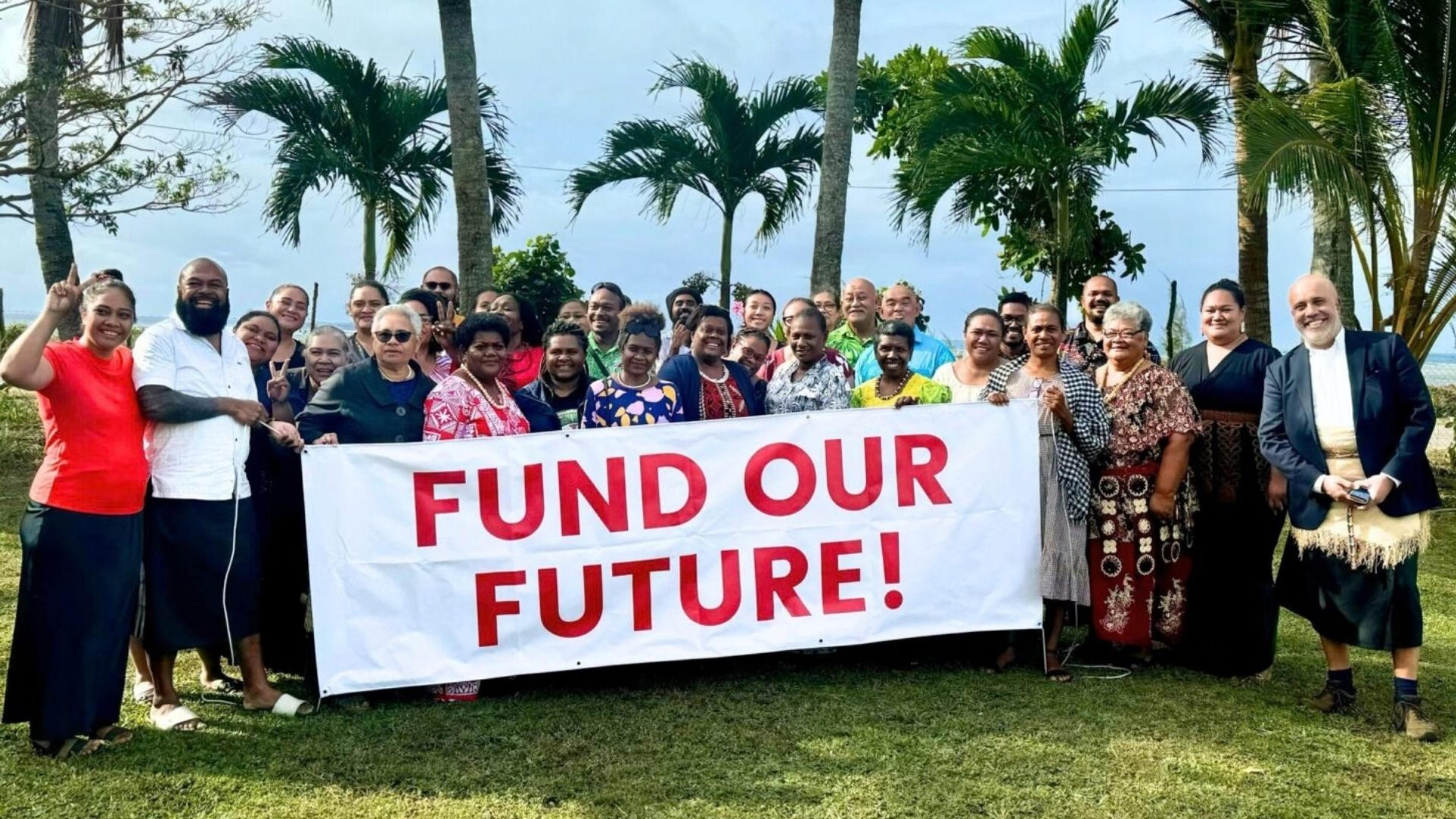
Pacific countries are facing growing debt pressures as climate impacts increase the cost of adaptation and access to grant finance remains a challenge.
Photo/Edmund Rice Centre for Justice and Community Education
New analysis reveals governments face billions of dollars in annual climate adaptation needs as grants remain limited and debt pressures grow.




Pacific Island countries need billions more each year to adapt to climate change. But new analysis shows current financing is falling well short of what is required.
The International Monetary Fund estimates Pacific countries need about US$3.3 billion (NZ$5.87 billion) a year for climate adaptation while current finance commitments cover only about a third of those needs. Based on actual disbursements, the coverage falls to 26 per cent.
The figures come as Pacific governments face growing pressure on their public finances while climate disasters add to existing debt and shrinking fiscal space.
Adam Wolfenden, PANG's Deputy Coordinator, says the problem is being made harder by a global shift away from grants towards lending.
“The geopolitical competition in the Pacific has not necessarily led to greater access to resources for the region; rather, there is a global shrinking in the grants available, shifting more countries into lending financing," he told a media briefing.
The World Bank's 2026 Pacific Economic Update found average public debt-to-GDP ratios fell slightly in 2025 but projects debt to rise across the region in 2026 and 2027 as fiscal deficits widen and growth slows.

Pacific Network on Globalisation Deputy Coordinator Adam Wolfenden says shrinking grant finance is pushing more Pacific countries towards lending, adding pressure to their economies. Photo/PANG
Fiji's public debt was about 79 per cent of GDP in 2025 while Solomon Islands' debt reached 30 per cent.
Tonga faces another layer of pressure from climate disasters. The PANG analysis says annual climate-related losses in the kingdom average about TOP178 million (NZ$130.8 million) or 18.2 per cent of GDP.
PANG Coordinator Joey Tau says the region needs to consider how countries can recover from these shocks without falling deeper into debt.

Pacific Network on Globalisation Coordinator, Joey Tau, says Pacific debt pressures must be understood in the context of the region’s history and development needs. Photo/Supplied
“As the region continues to go through climate-induced impacts on infrastructure, what is the regional approach around ensuring that the Pacific doesn’t get into a debt spiral?” Tau said in a statement.
The IMF research also shows why the type of finance matters. It found grants made up 84 per cent of adaptation finance commitments to Pacific countries between 2011 and 2023.
It also found that grant funding is particularly important for countries with weak capacity to carry debt.
“Current financing levels fall well short of projected needs,” an IMF report said.
Fiji's Permanent Secretary for Environment and Climate Change, Dr Sivendra Michael, says the issue is now about getting finance to Pacific countries on terms that allow projects to move forward.
“What we need now is finance at the scale, speed and on the terms required to deliver results,” Michael said at the 2026 Standing Committee on Finance Forum in Sydney.

Fiji’s Permanent Secretary for Environment and Climate Change, Dr Sivendra Michael, says Pacific countries need climate finance delivered at the scale, speed and terms required to protect communities and natural resources. Photo/Ministry of Environment and Climate Change, Fiji
The Secretariat of the Pacific Regional Environment Programme has also backed grant-based financing for Pacific adaptation. SPREP's Director of Climate Change Resilience, Tagaloa Cooper, said Pacific countries face high debt burdens and limited fiscal space.
“For Pacific SIDS, adaptation is central. Our countries face high debt burdens and shrinking fiscal space,” Cooper said in SPREP report, “SPREP echoes Pacific call for grant-based adaptation finance to address climate change impacts at COP30, which was released last November.
“In such contexts, adaptation finance must be grant-based.”
SPREP says Pacific countries also face barriers accessing climate finance and these include limited capacity and difficulties turning national priorities into projects that can attract investment.
PANG says borrowing can still play a role in building infrastructure needed for economic growth. But it warns excessive debt can leave governments with less money for health, education, and other public services.
For Pacific countries already facing rising climate costs, the challenge is increasingly about how to finance resilience without creating another financial burden.
The IMF says strengthening institutions and making climate finance easier to access will be important as Pacific adaptation needs continue to grow.