El Niño tightens grip on Pacific as authorities warn of drought and extreme weather
Lachlan EddieFri, 23 Oct
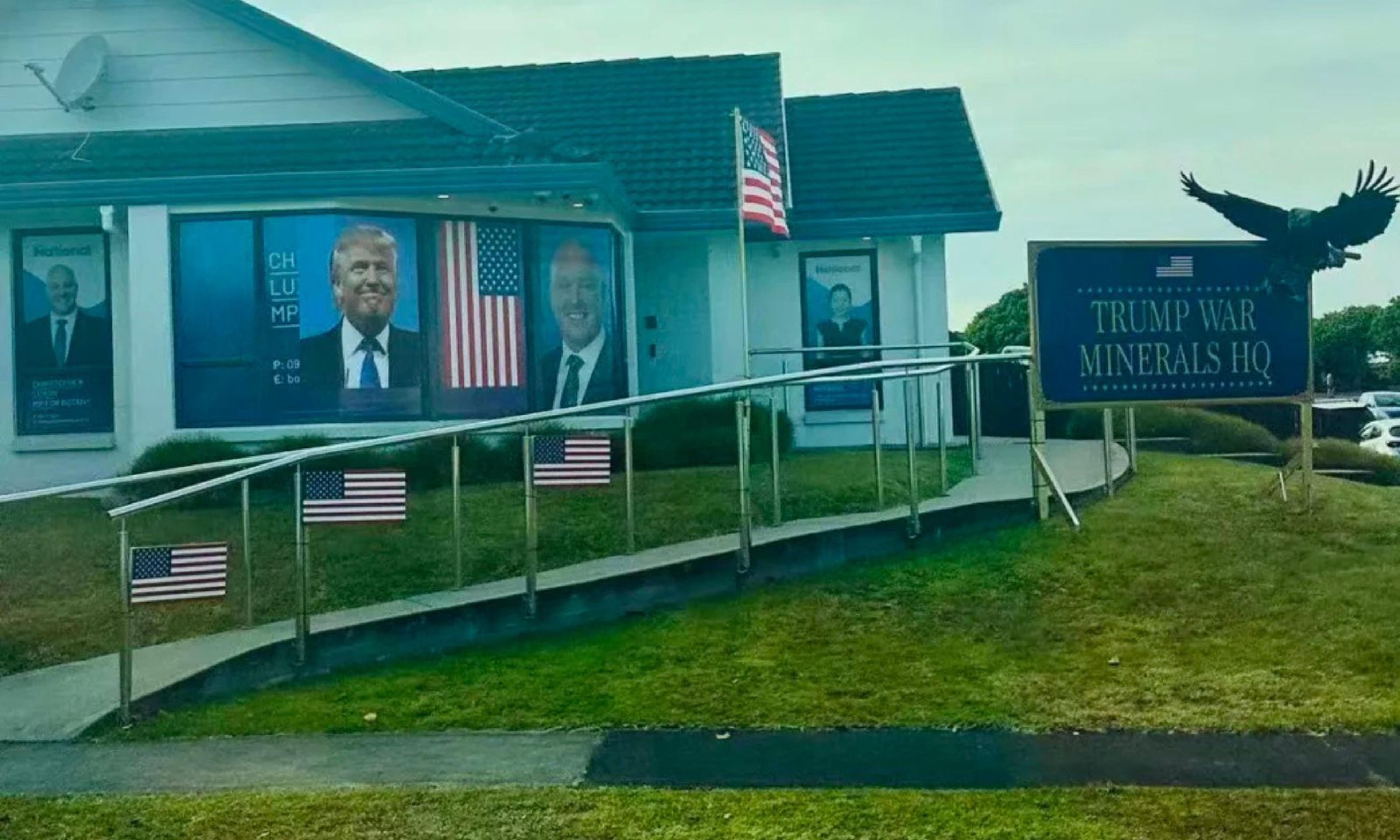
Photos of US President Donald Trump and US flags displayed on Prime Minister Christopher Luxon’s Auckland electorate office during a Greenpeace protest against a potential minerals deal with the United States.
Photo/Supplied
Activists and leaders in the region warn Aotearoa risks environmental harm and deeper military ties as talks continue over supplying “critical minerals” to the United States.


Greenpeace activists have staged a protest at Prime Minister Christopher Luxon’s electorate office in Auckland, raising concerns about a possible deal to supply New Zealand minerals to the United States.
Images of US President Donald Trump and American flags were placed around the office in Botany, alongside a sign reading “Trump War Minerals HQ”.
The group says the action reflects fears that Aotearoa could be drawn into supporting US military activity through mining.
The protest comes after reports the government has been considering a deal to provide the US with so-called “critical minerals”, some of which are used in military equipment.
Luxon has previously said New Zealand is one of more than 40 countries in discussions with the US, and no Cabinet decisions have been made.
Juressa Lee, Greenpeace Aotearoa campaigner, says the proposal raises serious concerns for both the environment and the region.
"The Luxon government must not sign Aotearoa away to fuel the United States’ illegal wars," Lee said in a statement.
"New Zealand should have no part in this, and that includes giving Trump access to the resources he needs to keep dropping bombs."
Many of the minerals identified by the US have military uses. For example, vanadium found off the coast of Taranaki is used in jet engines, missiles, and other defence technology.
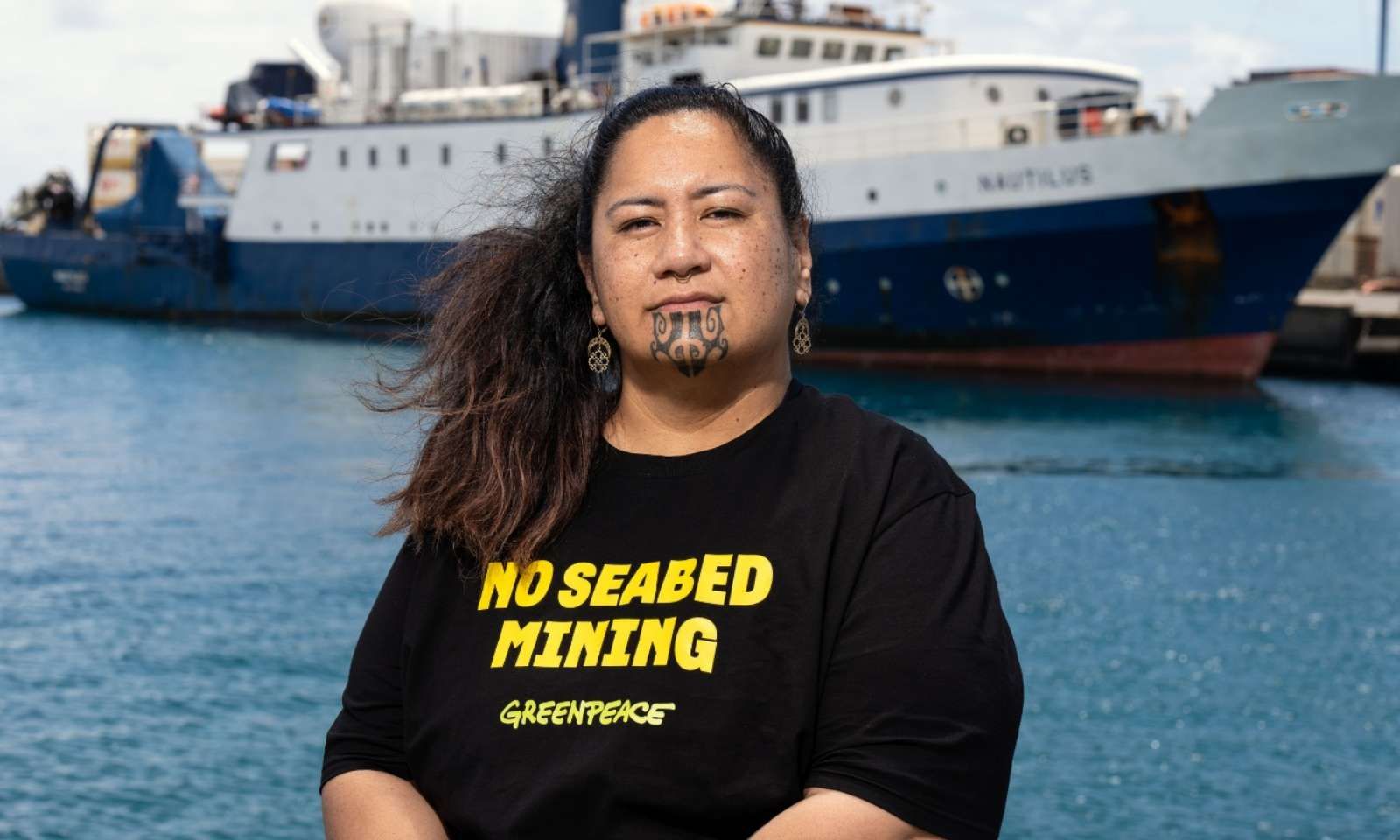
Campaigner Juressa Lee from Greenpeace Aotearoa warns that supplying critical minerals to the US could lead to environmental destruction and make New Zealand complicit in military conflicts abroad. Photo/Greenpeace Aotearoa
Lee says expanding mining to meet overseas demand could cause lasting damage to land and sea.
"We know a minerals deal would be bad for the land and sea of Aotearoa," she said. "But since the United States and Israeli governments launched a military attack on Iran in clear breach of international law, the stakes are even higher."
The protest also highlights wider concerns across the Pacific about growing military influence in the region.
Pacific leaders and advocates have also raised their concerns about global militarisation and its impact on the region.
Speaking on Globalisation at the PANG 2025 State of the Ocean webinar, Joey Tau from the Pacific Network said they are worried about the links between critical minerals and militarisation.
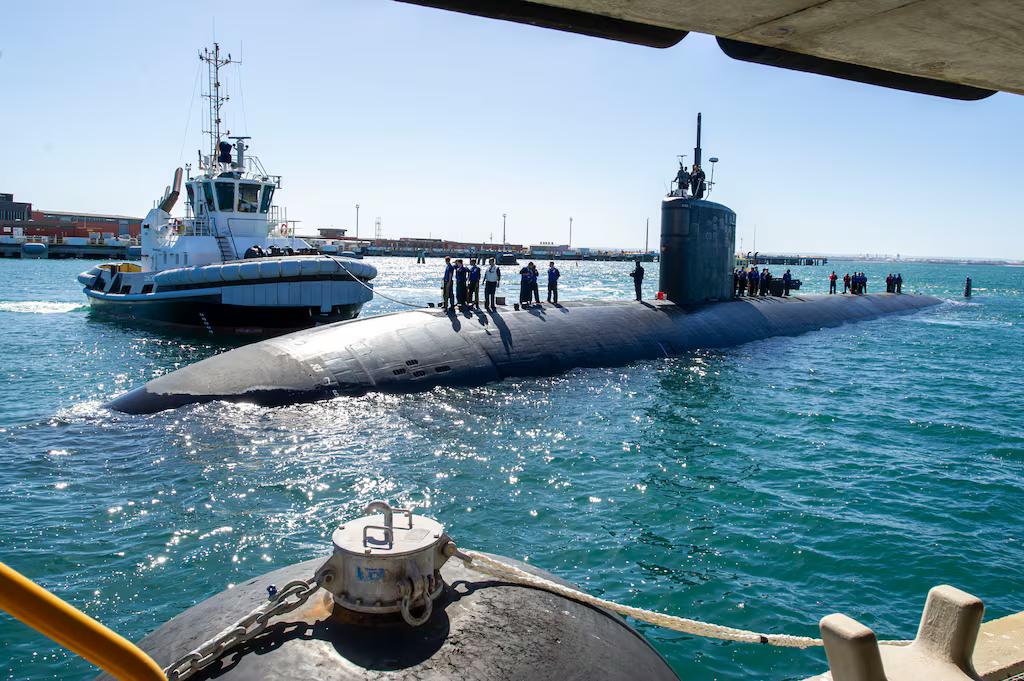
Concerns over New Zealand’s role in supplying critical minerals come amid broader Pacific unease about the AUKUS security pact, with activists warning it could deepen regional militarisation. Photo/Defense News
“They're deemed extremely vital for the defence industrial base, enabling the production of military platforms such as fighter aircraft, tanks, missiles, submarines,” Tau said.
Speaking at the UN General Assembly, under the theme 'global military spending vs climate action', Solomon Islands Foreign Minister Peter Shanel Agovaka warned global priorities are shifting away from the Pacific’s needs.
“The rich and powerful are spending some $2.4 trillion on arms that could have been best used in the 2030 agenda and fighting the biggest enemy of humanity, climate change,” Agovaka, who resigned this week, said.
At the time of AUKUS' launch, the Pacific Elders’ Voice (former Pacific leaders) said: “AUKUS signals greater militarisation by joining Australia to the networks of the US military bases in the northern Pacific and it is triggering an arms race, by bringing war much closer to home.”
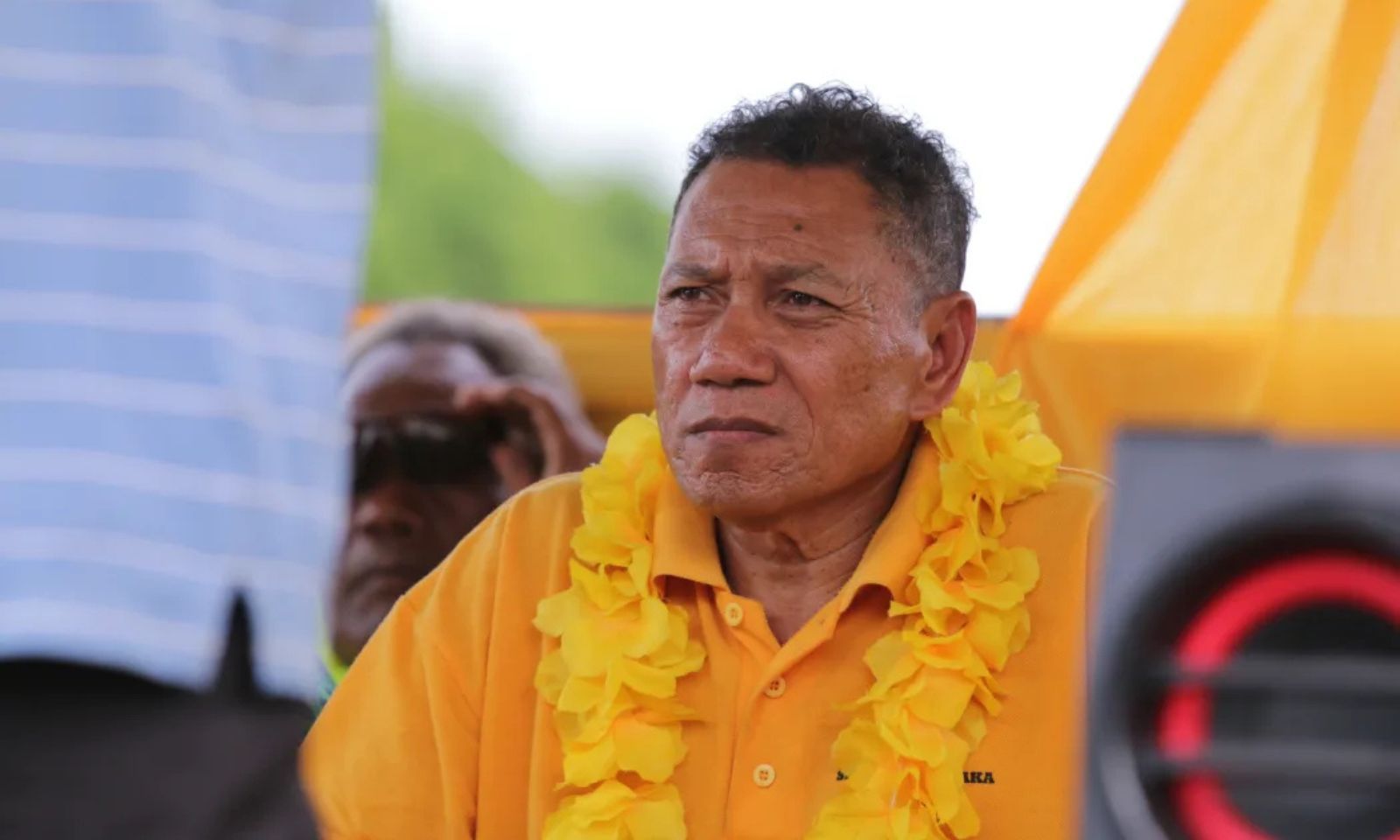
Outgoing Solomon Islands foreign minister Shanel Agovaka joins Pacific leaders to raise concerns about militarisation in the region, emphasising the need to protect Aotearoa’s land, sea, and people from external military pressures. Photo/
Lee says the issue is not just about mining, but about Aotearoa’s role in the Pacific.
"Our message to Luxon is clear. Aotearoa is not a US outpost," she said. "We must not allow the US to dictate widespread mining that could cause irreversible harm to the whenua, moana and people here in Aotearoa."
The United States has been increasing its focus on the Pacific, with officials highlighting both defence and economic interests in the region, including access to critical minerals.
The New Zealand government has also signalled support for developing the minerals sector, including an $80 million fund to boost exploration. Greenpeace says more than 13,000 people have signed a petition calling on the Prime Minister to reject any deal.
"We're calling on Luxon to say no to a minerals deal with Trump. We're also inviting the public to show their strong opposition to this deal if they're concerned about complicity in warmongering and the exploitation of our environment for military aggression."
Lee also pointed to the Pacific’s history of resisting militarisation. "This is not the first time the US has tried to disrupt a free and peaceful Pacific, the history of nuclear testing proves this.
"Aotearoa and the Pacific were united over stopping the region being a nuclear testing ground then and now we must do it again, and not be complicit in providing the materials for war."
Many in the region see the debate going beyond economics: raising questions about sovereignty, environmental protection, and the Pacific’s long-standing commitment to peace.
As discussions continue, the issue is likely to remain a flashpoint both in Aotearoa and across the wider Pacific.