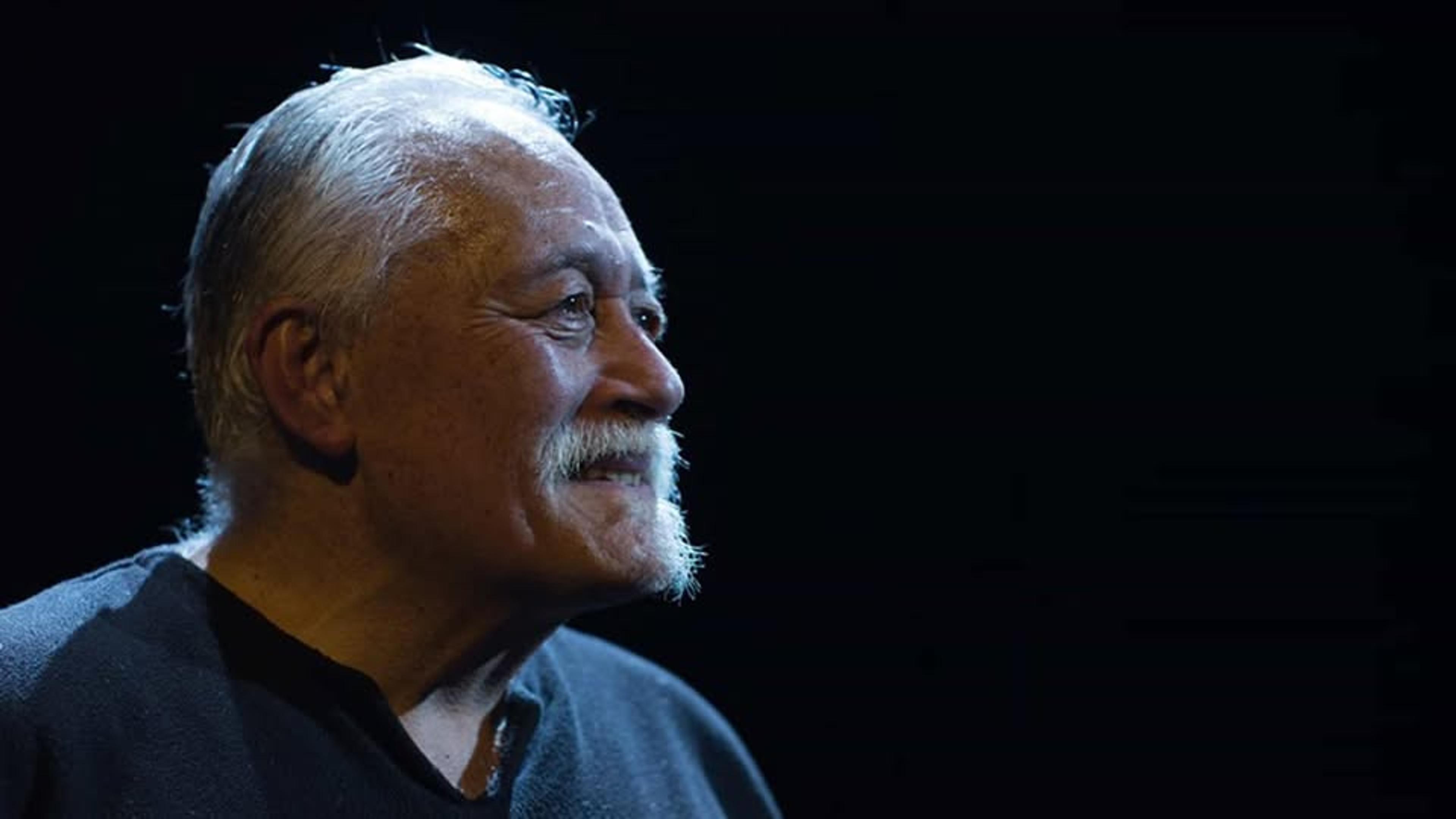
Dilworth Karaka, the 'rock and foundation' of Herbs has passed away. Photo/Family Facebook
Entertainment
Herbs frontman and protest music pioneer Dilworth Karaka dies
A key figure in Māori and Pacific protest music, Karaka led the influential band Herbs and helped define a uniquely Aotearoa sound.

PMN News
Published
08 March 2026, 5:36am
Share
Copy Link
Top stories
Cook Islands opposition looks to unite as Mark Brown’s party takes general election lead
Khalia StrongFri, 14 Aug
Tuilaepa charged over comments about PM Laauli as Sāmoa's political feud deepens
Kaya Selby, RNZ Pacific journalistFri, 14 Aug
Rangatahi given the final say on $120,000 in Auckland funding
Taelegalolo'u Mary AfemataThu, 13 Aug
Top stories
Cook Islands opposition looks to unite as Mark Brown’s party takes general election lead
Khalia StrongFri, 14 Aug
Tuilaepa charged over comments about PM Laauli as Sāmoa's political feud deepens
Kaya Selby, RNZ Pacific journalistFri, 14 Aug
Rangatahi given the final say on $120,000 in Auckland funding
Taelegalolo'u Mary AfemataThu, 13 Aug
Dilworth Karaka, a founding member and longtime frontman of the influential New Zealand reggae band Herbs, has died.
For more than four decades, Karaka helped shape a distinctly Aotearoa sound, blending reggae with Polynesian influences and creating protest songs about the issues facing Māori and Pacific communities.
Karaka, who was born in 1950, formed Herbs in Auckland in 1979 with Toni Fonoti, Spencer Fusimalohi and Fred Faleauto, and remained the band’s guitarist and lead singer through its many lineup changes.
While dozens of musicians passed through the group over the years, he was the band’s constant presence.
Herbs would go on to become one of the most influential bands in New Zealand music, first known for songs reflecting the social and political climate of the 1970s and '80s.
Co-founder Toni Fonoti, who left the group in 1981, once described Karaka as the driving force behind the band’s legacy.
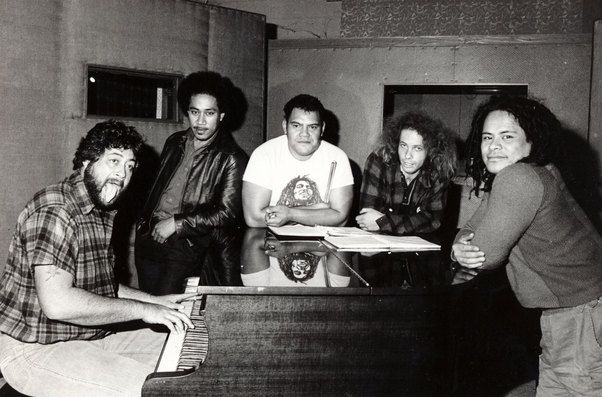
Herbs in Mascot Studios during the early 1980s. From left, Dilworth Karaka, Spencer Fusimalohi, Fred Faleauto, Phil Toms, Toni Fonoti. Photo/AudioCulture.
Fonoti said Karaka was “the rock and foundation of Herbs”, carrying the band’s name and kaupapa for decades.
Karaka was of Waikato-Tainui descent and grew up in Auckland.
Before becoming a musician, Karaka was a talented rugby league player in Auckland’s club competition. His sporting career ended after a serious injury at Carlaw Park led to the amputation of his left leg below the knee.
Fonoti, now aged 72, recalled first seeing Karaka while working casual jobs on the Auckland waterfront as a teenager.
Watch Karaka reflect on the formation of Herbs following Bob Marley’s visit to Aotearoa.
The young workers, known as “seagulls”, would wait for spare work after permanent wharfies had taken their shifts. Karaka worked on the cranes while the teenagers loaded pallets onto the docks.
Fonoti said the pair later crossed paths through Auckland’s music scene. Karaka was already performing with the Papa Band when Fonoti began writing songs about Pacific life in Aotearoa and forming what would become Herbs.
Karaka joined the group after being introduced by Polynesian Panthers leader Will ‘Ilolahia. The band went on to record demos at Mascot Studios that became their landmark debut release, What’s Be Happen?.
That EP is widely regarded as a landmark New Zealand recording, tackling issues such as the Dawn Raids, when Pacific communities were disproportionately targeted in immigration crackdowns on overstayers.
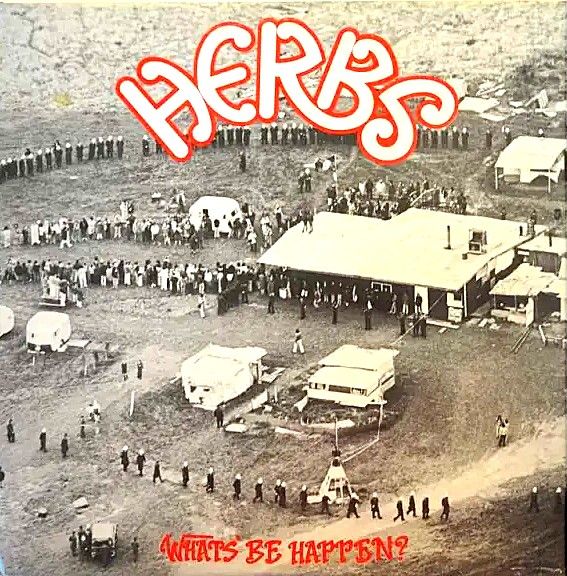
The What’s Be Happen? debut EP is widely regarded as a landmark New Zealand recording. Photo/Album Cover
Karaka told E-Tangata he and his young family also spent time at the Bastion Point occupation during the 1977–78 protest over Māori land rights.
He was there for the 506-day stand-off that eventually saw 600 police and military personnel remove protesters from the land, an experience that left a lasting impression on him.
“It was up at Bastion Point that I learned the power of music,” Karaka later said in a documentary interview reflecting on the protest movement that inspired many of Herbs’ songs.
Herbs followed with albums including Light of the Pacific in 1982, featuring the anti-nuclear song "French Letter."
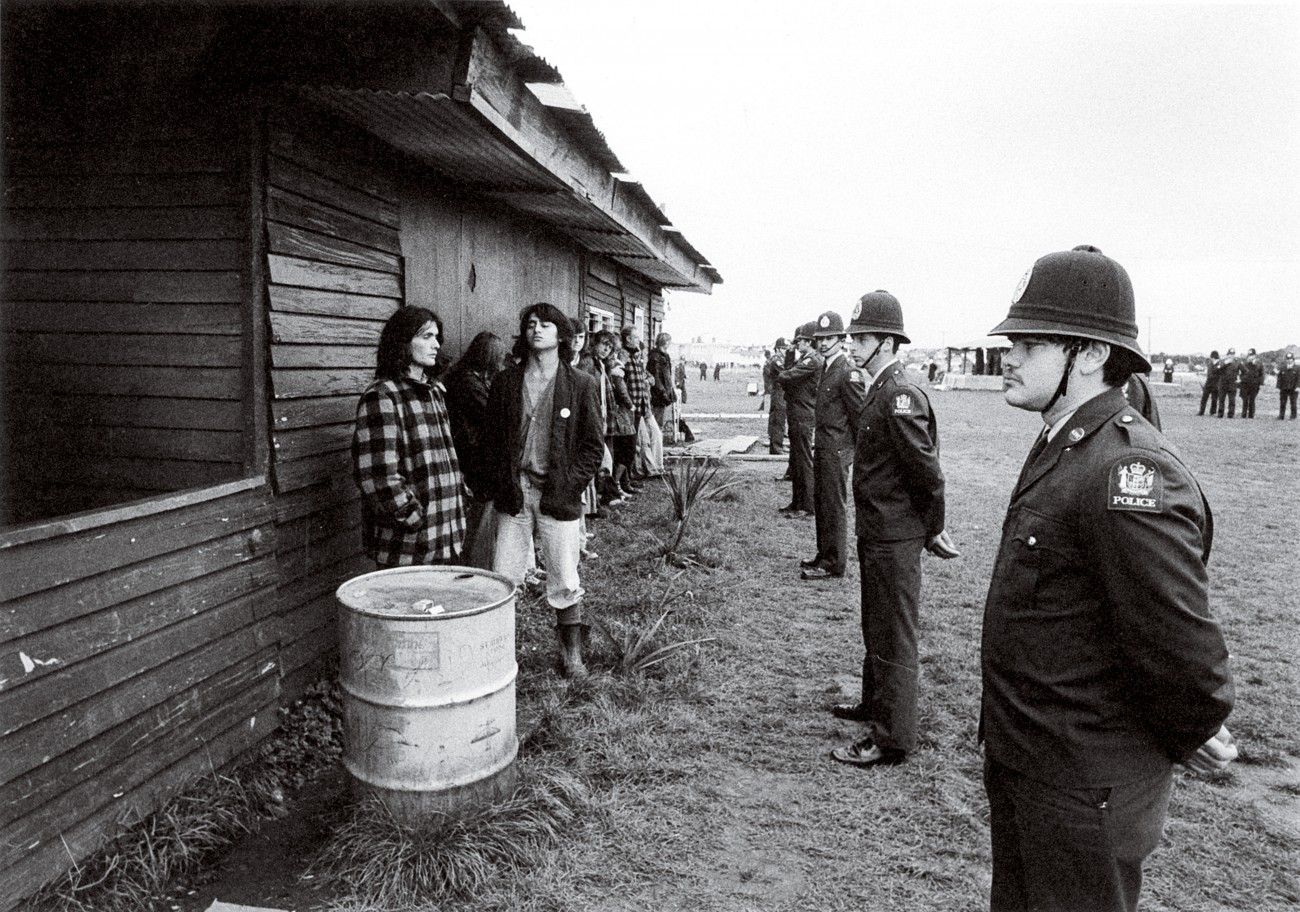
Police face protesters during the eviction of Bastion Point in Auckland in May 1978, ending a 506-day occupation over Māori land rights. Photo/Auckland Museum
At the time, France was conducting about 10 to 12 nuclear tests a year at Mururoa Atoll. Despite limited radio airplay, with some stations refusing to broadcast it because of its political message, the track spent 11 weeks in the charts and became a rallying cry for the anti-nuclear movement.
The band reached a wider audience with the 1987 album Sensitive to a Smile, whose title track remains one of the most enduring songs in New Zealand music.
Karaka also appeared on several high-profile collaborations, including Dave Dobbyn’s chart-topping hit "Slice of Heaven" for the Footrot Flats film soundtrack in 1986. The song spent eight consecutive weeks at number one, cementing the band's place in the mainstream.
Cook Islands singer Annie Crummer collaborated with Herbs on the song “See What Love Can Do”, which was released as the lead single from her 1992 debut album Language.
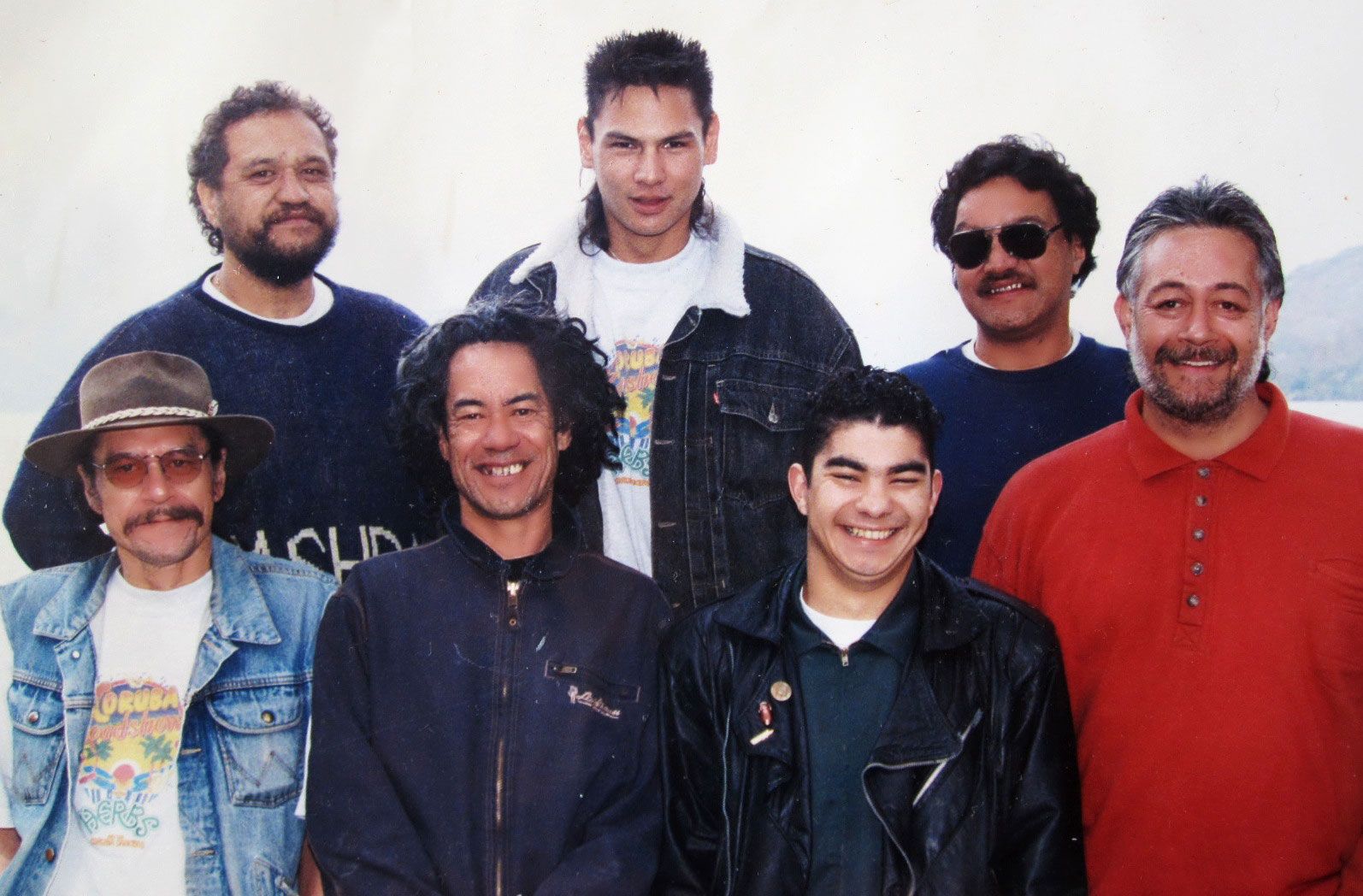
Members of the band Herbs in 1993. Front row from left: Tama Lundon, Charlie Tumahai, Kristen Hapi and Dilworth Karaka. Back row from left: Tama Renata, Juanito Muzzio and Morrie Watene. Photo/AudioCulture
The track reached No. 3 on the New Zealand singles chart and became one of the country’s best-selling songs that year.
Over the decades, Herbs collected numerous honours. The group won several Aotearoa Music Awards in the 1980s and was inducted into the New Zealand Music Hall of Fame in 2012.
What’s Be Happen? later received the Taite Music Prize Classic Record award in 2015, while the band also received the Pacific Music Awards Lifetime Achievement Award the same year.
Karaka often reflected on the role Herbs played during a period of political activism in Aotearoa, saying: “We were the voice for a lot of people that just weren’t getting heard.”
Karaka’s whānau confirmed his passing in a statement shared on social media. Karaka will be taken to Ōrākei Marae on Monday, 9 March, where he will lie in state for one night before being taken to Whaatapaka Marae, where he will lie for two further nights. His burial will also take place there.
The whānau say further details regarding times and service arrangements will be shared once confirmed. Whānau, friends and members of the public will be welcome to attend and support the whānau pani during the tangihanga.