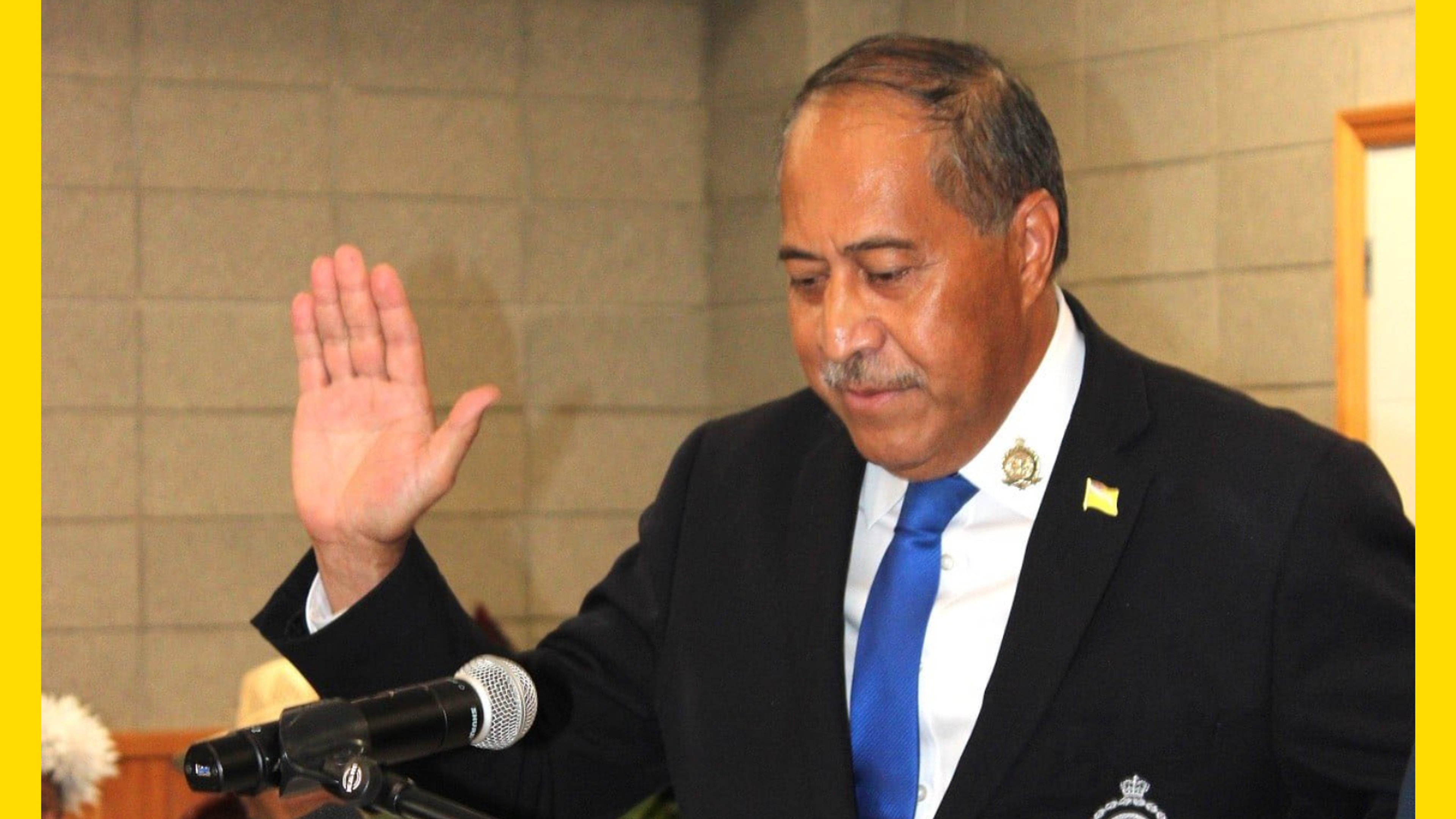
Dalton Tagelagi has been confirmed by the 19th Assembly of Niue as Prime Minister. This is his third term in office.
Photo/Office of the Secretary of Government NIUE
Election
Tagelagi secures third term as Niue PM after tight Assembly vote
The 57-year-old returns after a narrow 11-9 leadership vote, with the new Assembly divided and focus turns to how the government will function.
Renate Rivers
Published
14 May 2026, 5:00pm
Share
Copy Link
Top stories

Tonga community partnership wins global environmental award
Khalia StrongFri, 09 Oct
From cleaning a home to the Kiwis: Laban’s World Cup call-up
Christine RovoiSat, 10 Oct
Top stories
Tonga community partnership wins global environmental award
Khalia StrongFri, 09 Oct
From cleaning a home to the Kiwis: Laban’s World Cup call-up
Christine RovoiSat, 10 Oct
Dalton Tagelagi has secured a third term as Prime Minister of Niue after winning a close vote in the 19th Legislative Assembly on Thursday.
The 57-year-old defeated Emani Fakaotimavana Lui 11 votes to nine.
The result follows Niue’s general election on 2 May and sets up a challenging term ahead.
The result also confirms continuity in leadership but exposes a deeply divided Parliament with MPs split almost evenly between the two leadership nominees.
Niue’s 20-member Assembly is elected every three years, made up of 14 village representatives and six Common Roll MPs elected across the country.
The narrow outcome reflects Tagelagi’s own electorate win in Alofi South, where he held his seat by one vote, securing 111 votes against Alana Fiafia Richmond Rex.
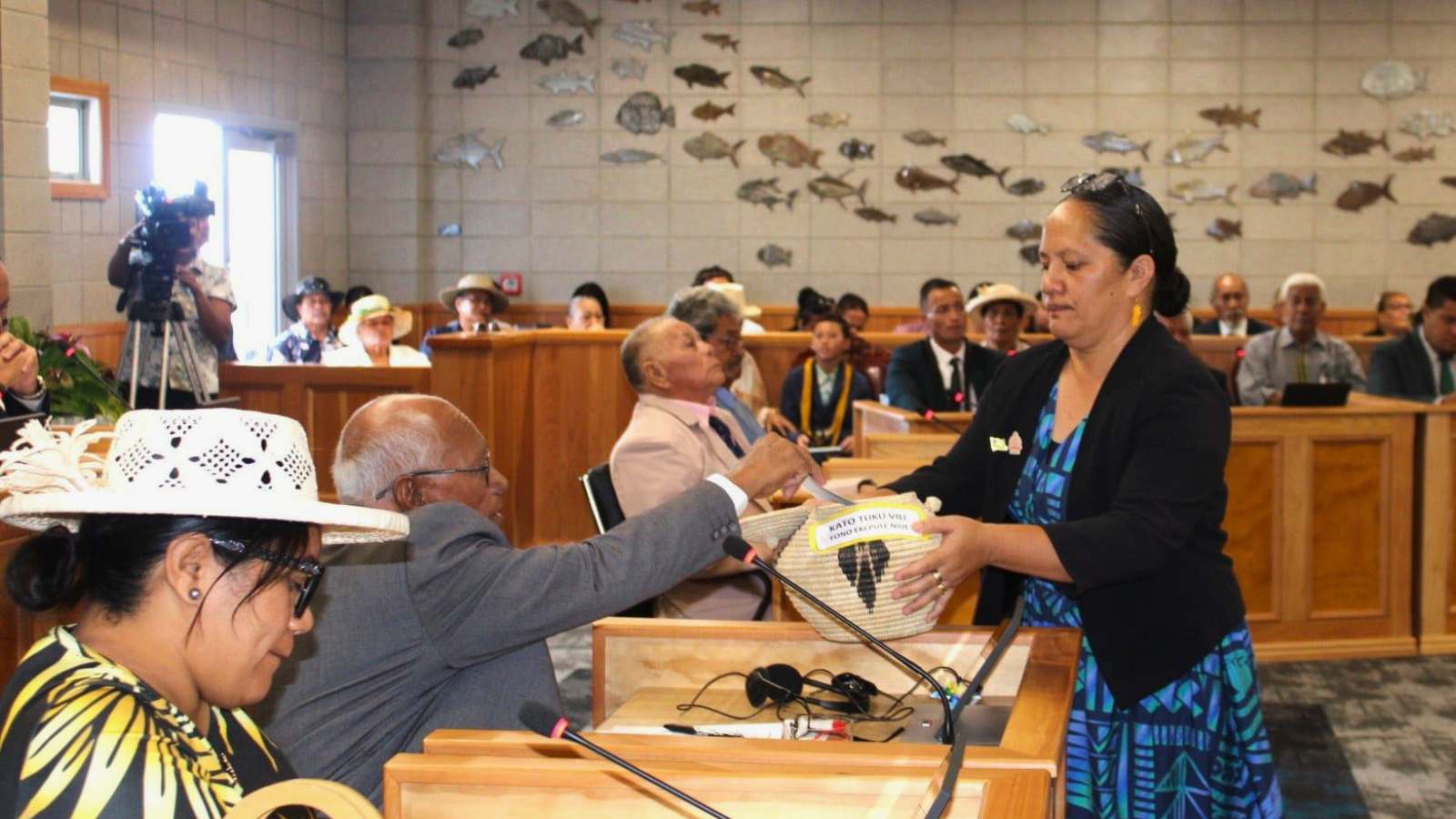
Members of the 19th Assembly of Niue's parliament were sworn in on Thursday. The ceremony included the election of the Prime Minister. Photo/Office of the Secretary of Government NIUE
Addressing parliament after his re-election, Tagelagi called for unity in the new term.
“These are challenging times when we go into elections because we have different perspectives and understanding that sometimes this might divide our families and affect our relationships with one another,” he said.
“I ask you to come together in this Assembly, that we make decisions for the good of the people. I humbly ask you all to work together as we move forward with the 19th Legislative Assembly and government.”
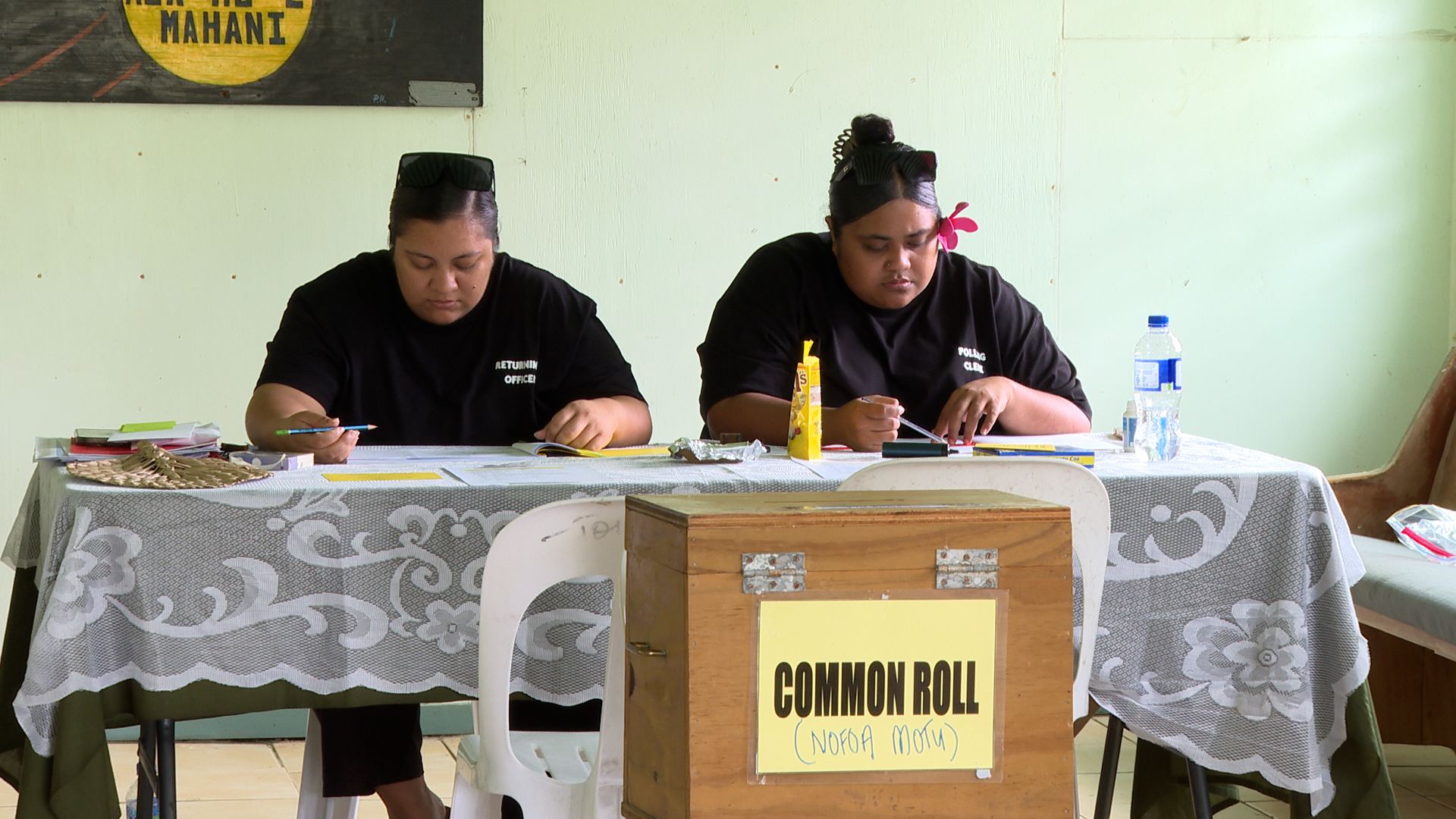
A voting booth during the general elections earlier this month. Photo/Inangaro Vakaafi
He said the focus now needed to be on collective responsibility and future generations, and thanked younger candidates who stood in the election.
“Thank you to our youth for your love for the country that you have put forward your name not only for the village representatives but also the Common Roll seats,” he said.
Lui congratulated his supporters after the vote and accepted the outcome, thanking his family, village, and the MPs who backed his bid.
“To our small team of nine who supported my name, thank you for your confidence in supporting me,” he said. “Despite the outcome, we return it all to Jehovah and give thanks for this day.”
He also pointed to the time taken to form a government after the election, saying the country now needed to move forward, while calling for continued scrutiny of decisions in the new term.
“May we remain steadfast to support the work that needs to be done and continue to question when we see there are things that are wrong,” he said.
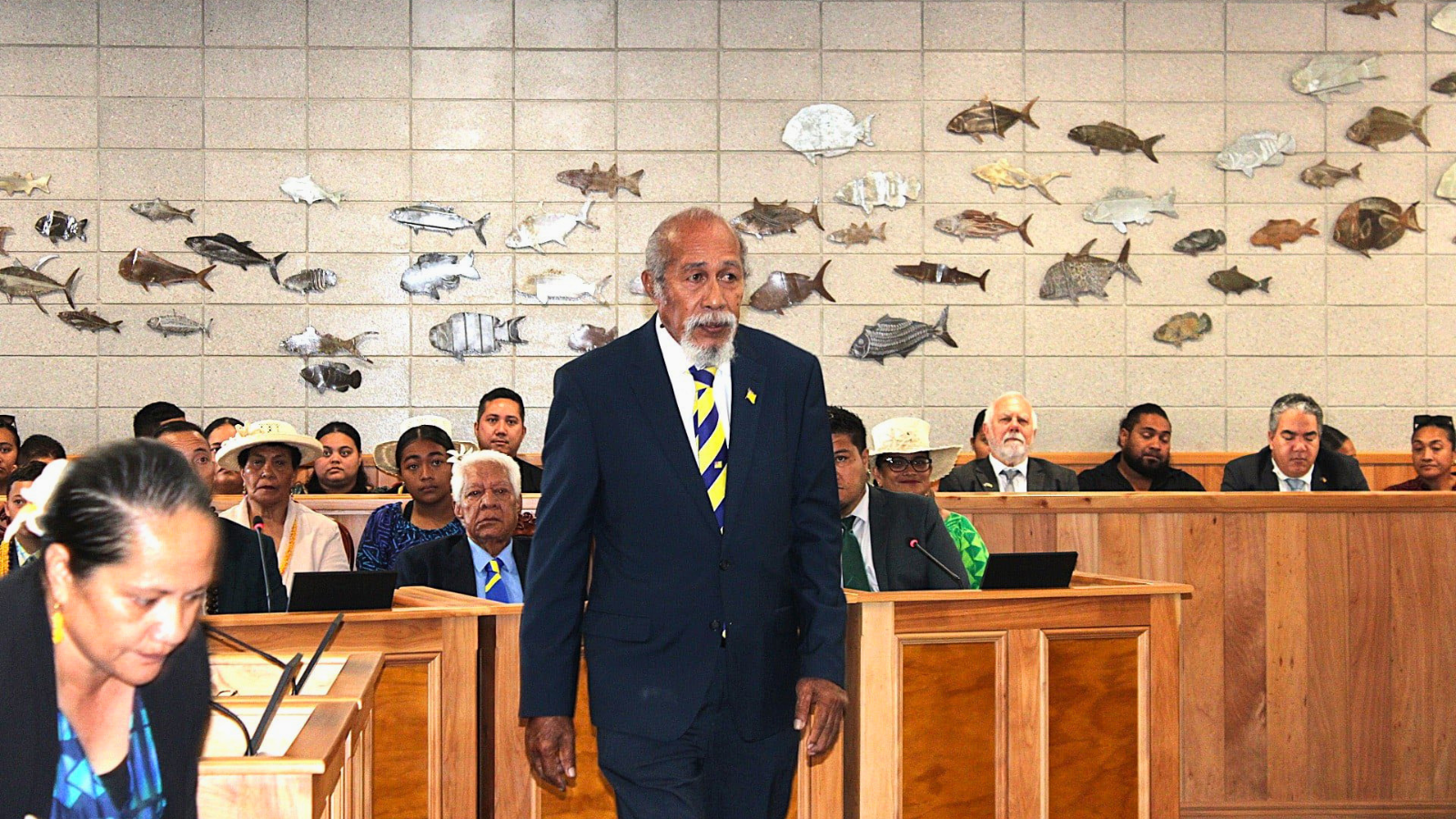
Billy Talagi has been voted in as the Speaker of the Assembly. Photo/Office of the Secretary of Government NIUE
Earlier, MPs elected Billy Talagi as Speaker of the Assembly in a 12–8 vote over Togia Sioneholo. Talagi lost his electorate seat in the 2 May general election but returns to a senior parliamentary role.
The new 19th Legislative Assembly also marks a milestone for women in Niue politics, with a record seven women elected, making up 35 per cent of the House, the highest in the nation’s history.
The result passes the 30 per cent benchmark often used by the United Nations to measure meaningful representation of women in parliament.
The six Common Roll seats went to Robert BJ Rex, Moira Enetama, Richmond Lisimoni-Togahai, Emani Fakaotimanava-Lui, Sonya Talagi and Kahealani Hekau, alongside village representatives, several of whom were elected unopposed.
Robert BJ Rex, who topped the Common Roll vote with 560 ballots, told the Broadcasting Corporation of Niue (BCN) he was honoured by the outcome.
“My life is based in community. Not only my community, but just my presence around any group or any community, I have tried to be there and get involved and support in any way I can."
“I may not have the right answer, but I am just most grateful and honoured,” he said.
Niue’s 20-member Assembly does not operate on a political party system, with the prime minister selected by MPs after each election.
The campaign leading up to the vote was shaped by cost-of-living pressures, fuel prices, and infrastructure concerns despite government reporting signs of post-pandemic recovery.
Attention now turns to Cabinet formation and how the closely divided Assembly will manage its next term.