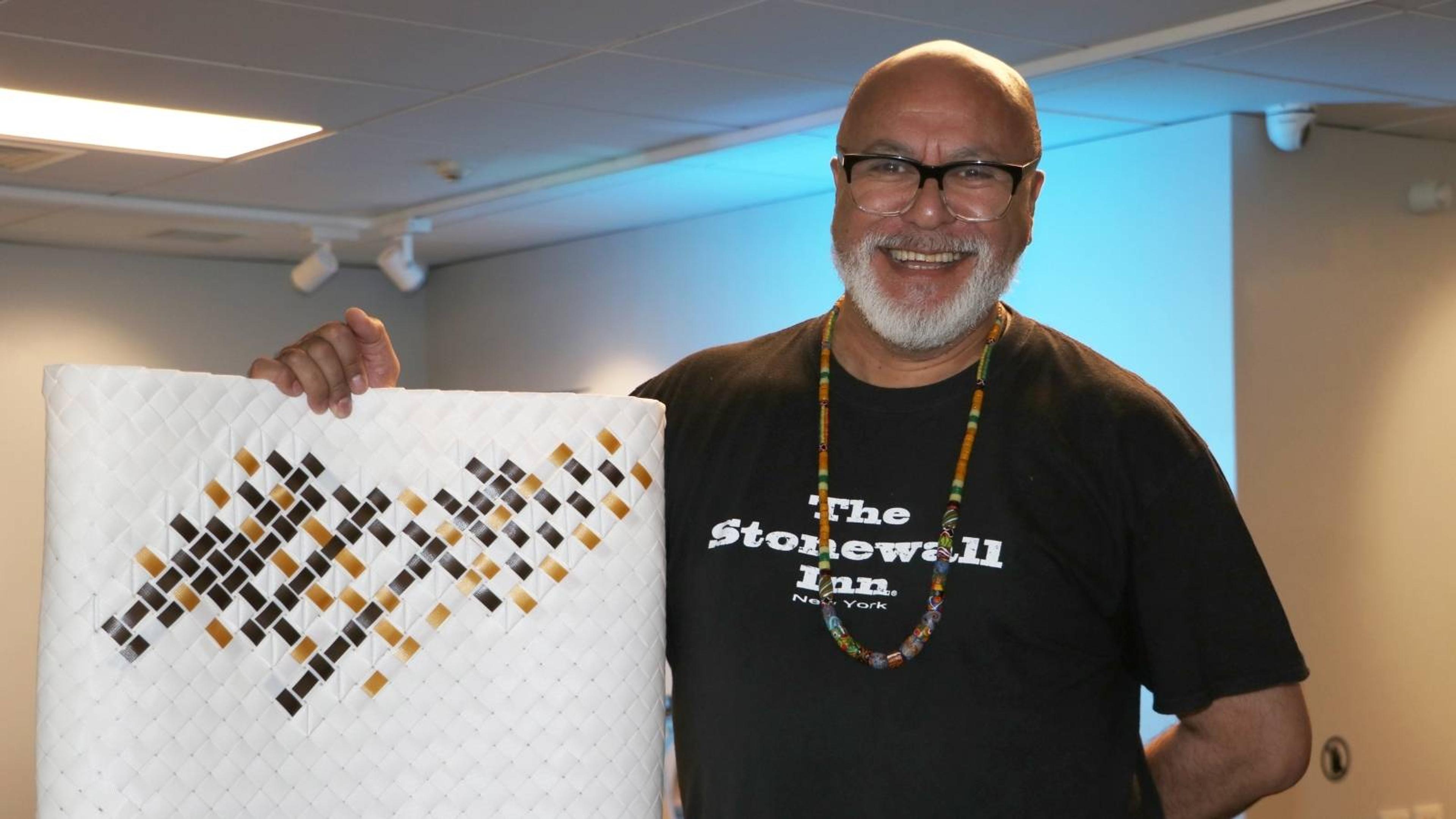
Te’Oko’tā’i Paitai.
Photo/Invercargill City Council
Arts
Artist brings Pacific weaving to New Zealand’s deep south
Te’Okotā’i Paitai, the first Pasifika William Hodges Fellow, uses weaving to reclaim cultural heritage and spark dialogue in Invercargill.

Aui'a Vaimaila Leatinu'u
Published
09 February 2026, 2:04pm
Share
Copy Link
Top stories
PNG Chiefs win first round against New Zealand Rugby
Christine RovoiSat, 17 Oct
Pacific families must work four days to afford basic food: World Vision
Thomas Tarurongo WynneFri, 16 Oct

Sāmoa demolish France in record-breaking 78-4 RL World Cup opener
Christine RovoiFri, 16 Oct
Top stories
PNG Chiefs win first round against New Zealand Rugby
Christine RovoiSat, 17 Oct
Pacific families must work four days to afford basic food: World Vision
Thomas Tarurongo WynneFri, 16 Oct
Sāmoa demolish France in record-breaking 78-4 RL World Cup opener
Christine RovoiFri, 16 Oct
The creative storyteller who made history as the first Pasifika recipient of the prestigious William Hodges Fellowship award is bringing the art of rangaranga (weaving) to New Zealand’s South Island.
Auckland-based artist Te’Oko’tā’i Paitai says weavingis a tool for storytelling, cultural reclamation, and decolonisation.
The fellowship, established in 1996, is a partnership between the Southland Art Foundation, Southern Institute of Technology, and He Waka Tuia. It invites leading visual artists to Murihiku, Invercargill, to respond to the local landscape and community.
Paitai, whose heritage spans Rarotonga, Mangaia, Sāmoa, and Scotland, started a 12-week residency in September last year.
The residency culminates in the Vaka and Tuoro exhibitions at Invercargill’s He Waka Tuia, and is open to the public from 24 January to 1 March 2026.
The showcase explores ancestral movement and the living vitality of reo (language) through the traditional rangaranga.
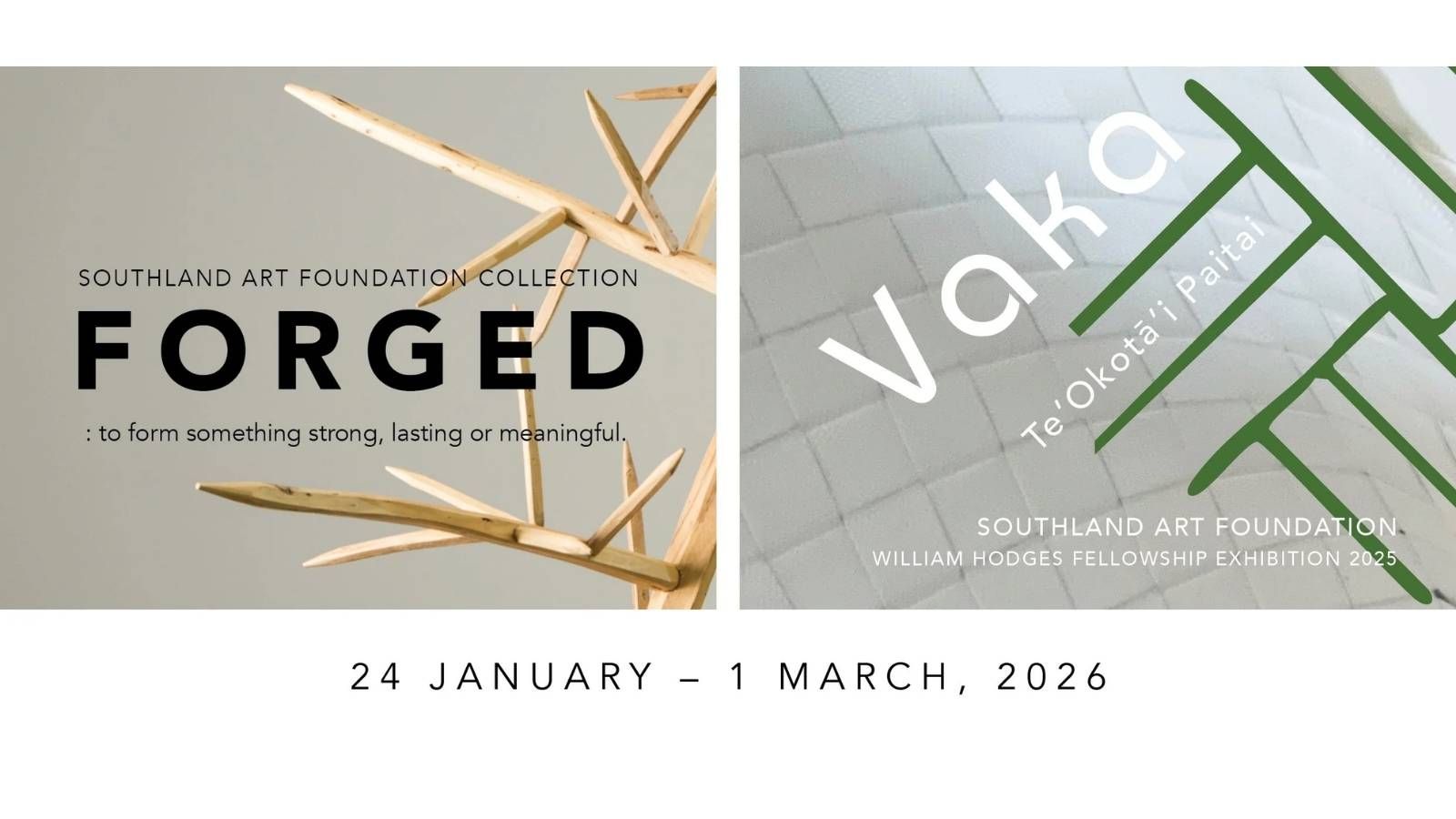
Te’Okotā’i Paitai’s Vaka and Tuoro exhibitions are currently showing at He Waka Tuia in Invercargill, and is open to the public from 24 January to 1 March 2026. Photo/He Waka Tuia
Speaking with Tofiga Fepulea’i on Island Time, Paitai reflected on their journey with rangaranga, which he first picked up in 2019 at a workshop in Grey Lynn, Auckland.
“My practice has seen me go around Aotearoa teaching katu making [weaving flower crowns] with permission from the Tupumaiaga A Niue Trust.
“[It has] also [allowed] me to make kete [basket or bag] as I want to and carry the weaving knowledge forward,” Paitai says.
Watch Te’Okotā’i Paitai’s full interview on Island Time below.
“For me it's a form of decolonisation, for want of a better word, for our people to see the value in what we have in front of us from our pasts.
In a press release, Alison Broad, the Chair of the Southland Art Foundation, says she was drawn to how Paitai blends traditional kete techniques with contemporary storytelling.
In an Invercargill City Council release, Sarah Brown, the Manager of He Waka Tuia, says the exhibitions show the many ways materials can be transformed into something lasting and meaningful.
Brown encourages the community to explore creativity when given space.
The residency also included a collaboration with local artist Anjelina Nikora-Wilson, who used a woven kete as a canvas for her work, Mokopuna.
The exhibitions are anchored by two large installations. The first, Vaka, explores the shared lineage of the Tākitimu vessel, which Paitai says connects his Cook Islands roots with the South Island.
Using their theatre background, Paitai played with light and shadow to trace the ridgeline of the Tākitimu Ranges, highlighting the Moana people’s connection to tangata whenua.
The second work, Tuoro, the Cook Islands reo for "to call", was inspired by the cherry blossom trees in Queens Park.
Paitai says the work challenges society’s values, questioning why imported beauty often receives more attention than indigenous language.
Paitai was thrilled when the Invercargill Public Art Gallery purchased Tuoro for their permanent collection
“I'd like to acknowledge Papa Orometua Ta’a Karena, Mama Orometua Teina Karena and their family, the [Cook Islands Christian Church] in Invercargill,” he said.
“[Also] the wider Cook Island communities and [and] wider Moana communities in Invercargill. Papa OrometuaandMama Orometua gave me the use of a car for the whole time I was there doing the residency.
“I get it, we'll do it back home in the villages, but that just goes to another level. I also want to acknowledge the people that came down to visit.”