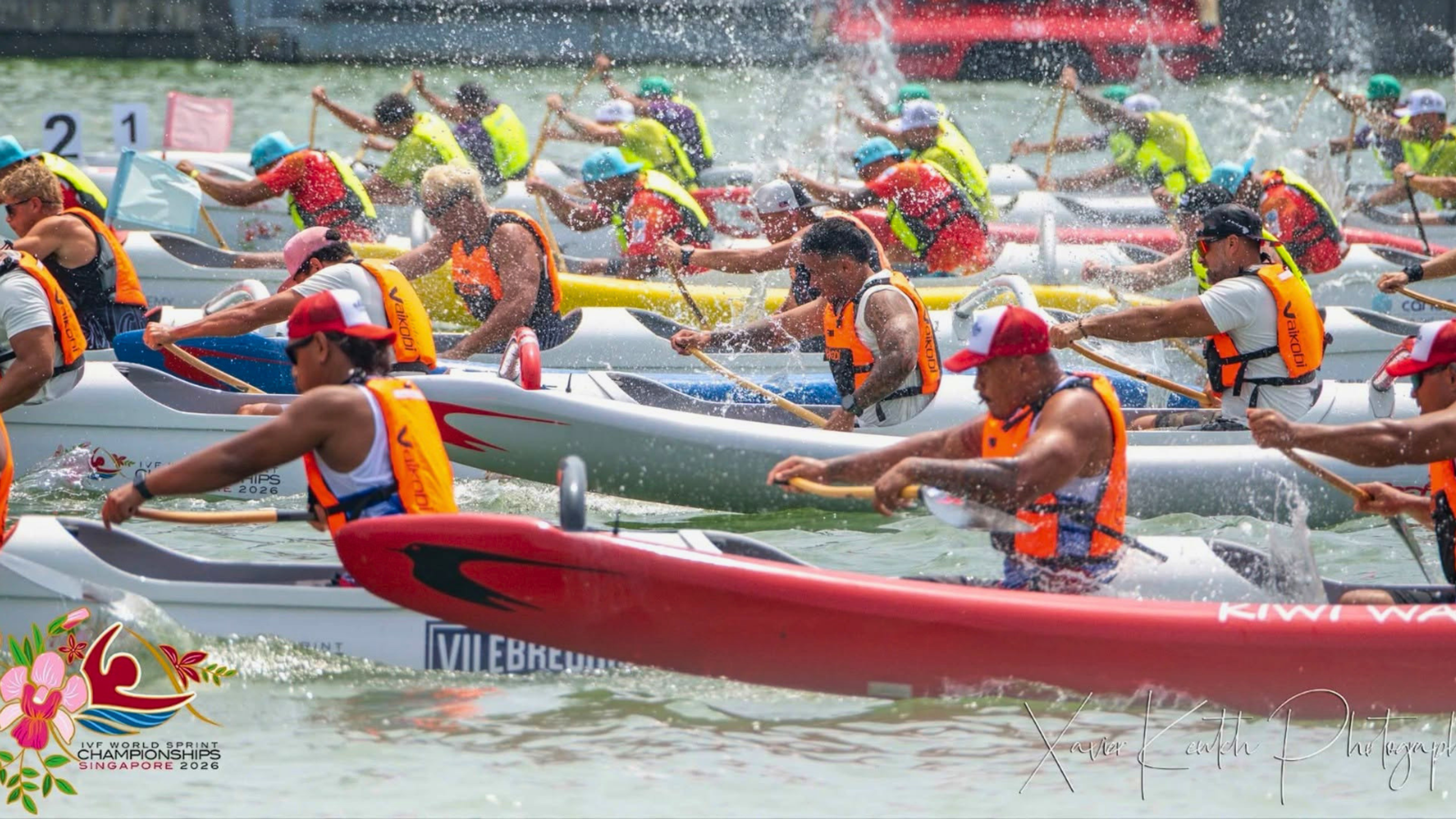
Sāmoa’s elite men’s V6 crew in action at the World Sprints in Singapore, where they reached the 500m world final and finished sixth overall.
Photo/Xavier Keith Photography
Sports
Va’a goes global as Pacific paddlers face rising cost of competing
Pacific teams lead the medal table at the first World Sprints in Singapore, where more than 3100 paddlers from 30 countries are competing.
Renate Rivers
Published
27 August 2026, 1:46pm
Share
Copy Link
Top stories
Tonga community partnership wins global environmental award
Khalia StrongFri, 09 Oct
From cleaning a home to the Kiwis: Laban’s World Cup call-up
Christine RovoiSat, 10 Oct
Top stories
Tonga community partnership wins global environmental award
Khalia StrongFri, 09 Oct
From cleaning a home to the Kiwis: Laban’s World Cup call-up
Christine RovoiSat, 10 Oct
Va‘a has travelled a long way from its Pacific home.
This week, more than 3100 paddlers from 30 countries are racing in Singapore at the first Va‘a World Sprints Championships to be held in Asia.
But while the sport is spreading around the world, the Pacific remains at its heart, and Pasifika are showing why.
Tahiti leads the medal table, followed by Aotearoa New Zealand and Hawai’i, while Sāmoa has brought its biggest-ever team to an International Va’a Federation (IVF) World Championship.
For Pacific nations, though, getting paddlers to the starting line overseas can come at a high cost.
Sāmoa has 32 athletes among a travelling party of 36, with most based at home.
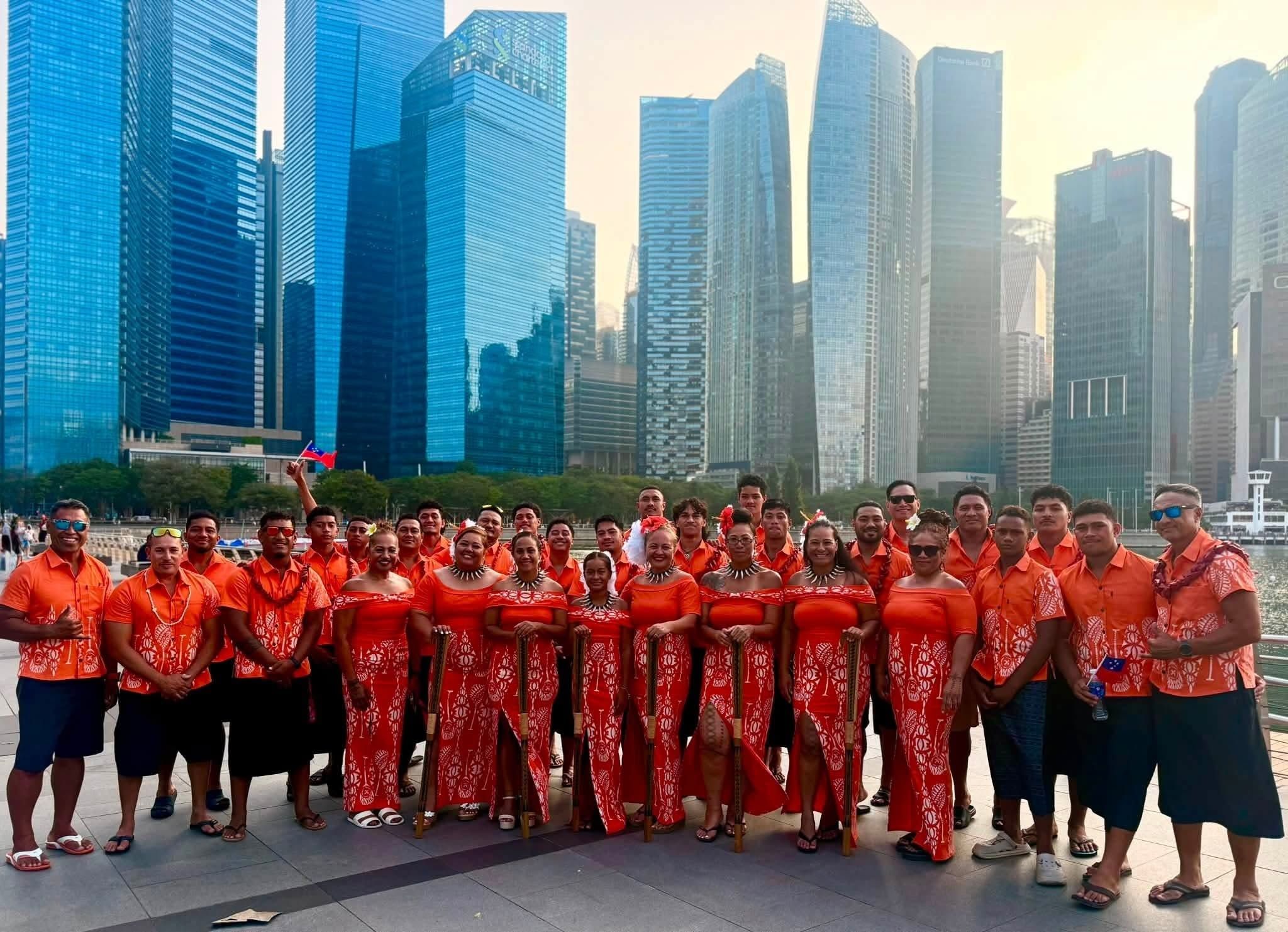
Team Sāmoa has brought its largest-ever contingent to an IVF World Championship, with 32 athletes competing at the World Sprints in Singapore. Photo/Sāmoa Outrigger Canoe Association
Its elite men’s V6 crew reached the 500m world final, finishing sixth, while 13-year-old Handel Tupu Fua, the team’s youngest paddler, reached the J16 men’s V1 500m semifinals.
Auali’itia Leata Mailo, president of the Sāmoa Outrigger Canoe Association (SOCA), says the team’s presence reflects a deliberate push to develop talent at home.
“The talent has always been here. Our young people have the strength, the culture, the connection to the ocean and the natural ability,” Auali’itia told PMN News.
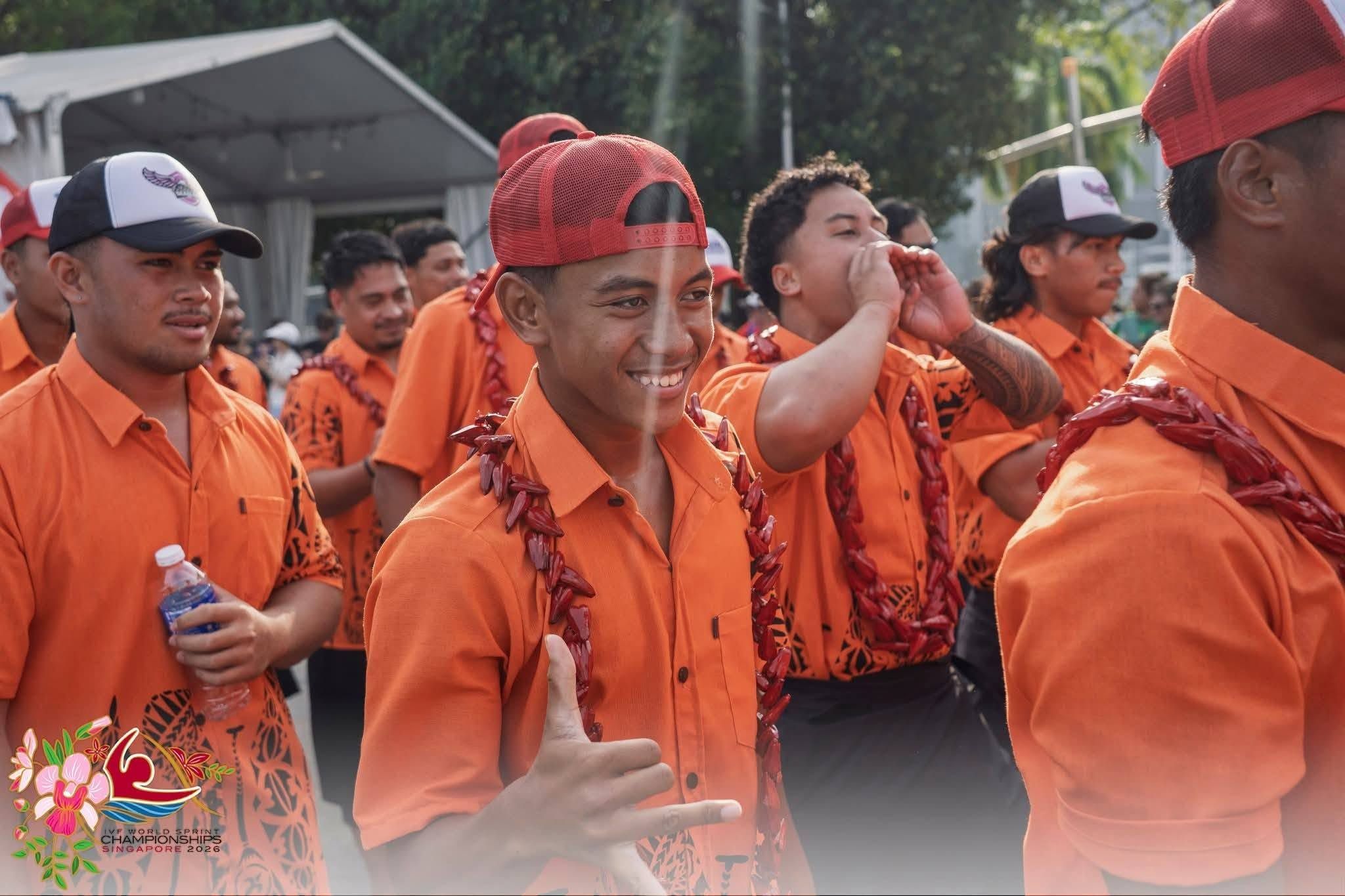
At just 13, Handel Tupu Fua is Team Sāmoa’s youngest paddler and reached the semifinals of the J16 men’s V1 500m at the World Sprints in Singapore. Photo/Sāmoa Outrigger Canoe Association
“What has been needed is opportunity, structure, exposure and belief.”
SOCA has spent recent years strengthening clubs, expanding domestic competition and investing in juniors.
But getting those paddlers onto the international stage is another challenge.
Auali‘itia says funding is the biggest issue facing Pacific va‘a nations.
“For countries like ours, travel alone can consume a significant portion of a sporting budget.”
Sāmoa received government funding and support from the Sāmoa Association of Sports and National Olympic Committee, but Auali’itia says athletes still covered a significant part of their own costs.
Papua New Guinea’s canoeing association has also described its first World Sprints campaign as the result of months of training and sacrifice, backed by families, clubs, sponsors and supporters.
The cost of international competition has sparked talks between va‘a organisations in Tonga, American Sāmoa, Wallis and Futuna, Sāmoa and Fiji about establishing a Va‘a Moana Pacific Cup.
The idea would give Pacific paddlers more regular regional competition without the cost of constantly travelling further afield.
“Pacific nations are stronger when we work together,” Auali’itia says.
Meanwhile, va‘a continues to grow beyond the Pacific.
Singapore has 257 paddlers competing, while first-time participant Malaysia has sent 107 and Germany 57.
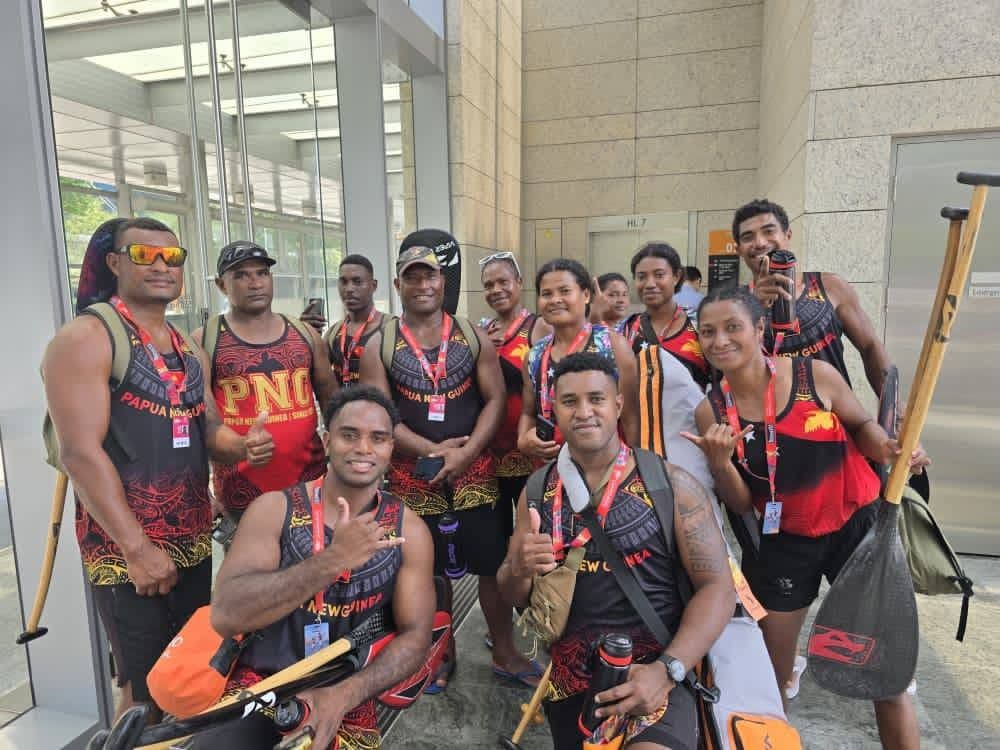
Papua New Guinea paddlers made their first appearance at an IVF World Sprints in Singapore, marking a new milestone for the country’s growing va‘a programme. Photo/Xenia Peni
Lara Collins, IVF president, says South America is seeing the sport’s fastest growth, particularly in Brazil, Peru and Chile.
Yet, the Pacific is still setting the pace.
As of 26 August, Tahiti had 29 gold, 17 silver and 13 bronze, followed by Aotearoa New Zealand with 13 gold, 17 silver and 13 bronze. Hawai’i was third with 10 gold, seven silver and 10 bronze.
Collins says the sport’s global growth does not change where it comes from.
“The sport is from the Pacific, and it will always be from the Pacific,” Collins told PMN News.
She says protecting va‘a culture is part of the federation’s strategy, including blessings of the va‘a and cultural events at its World Championships.
For Auali‘itia, Sāmoa’s presence in Singapore is proof of what Pacific paddlers can do when they get the chance.
“Sāmoa has the talent. What we need is sustained, strategic support to match that talent.”
As va‘a reaches more corners of the world, the challenge for the Pacific nations is ensuring their paddlers can afford to go with it.