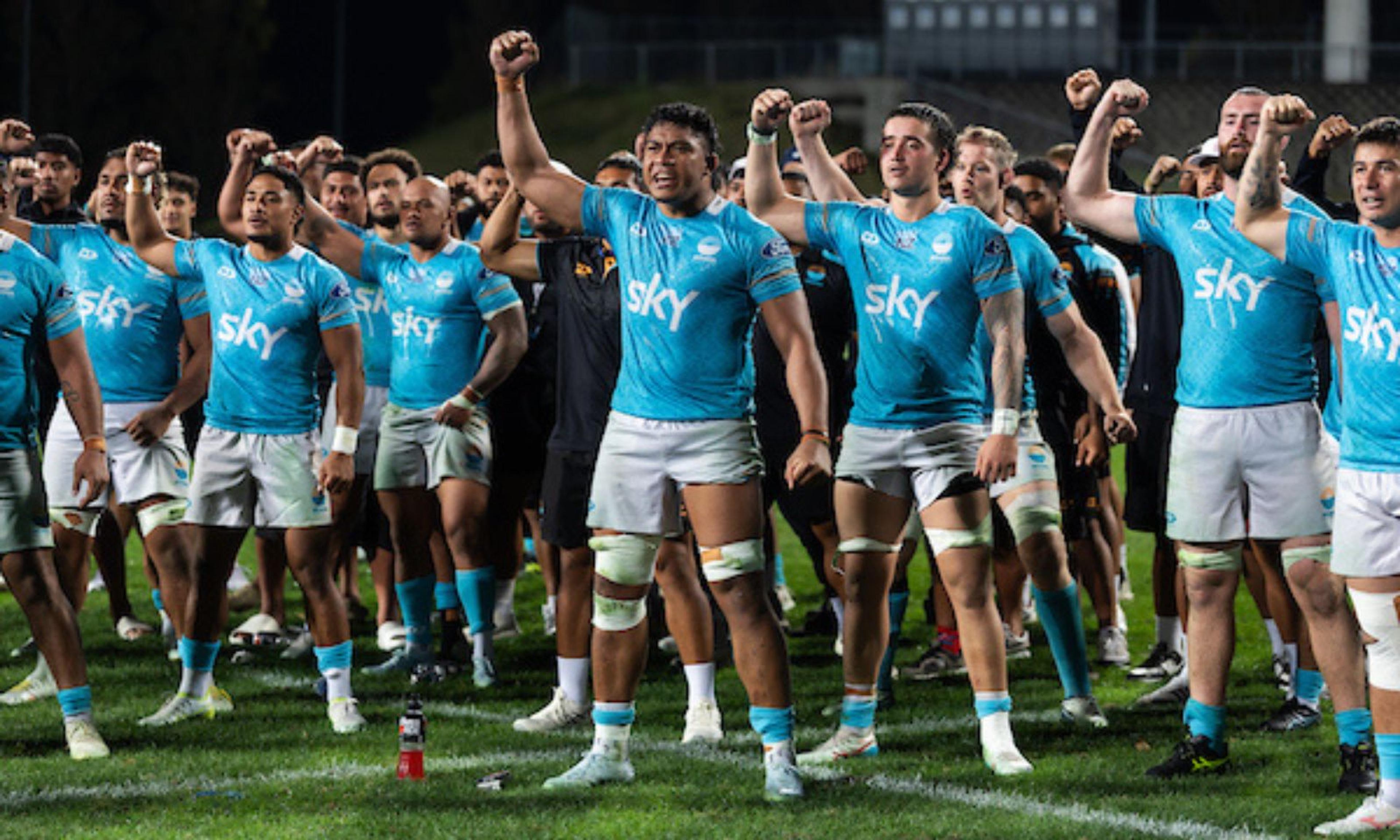
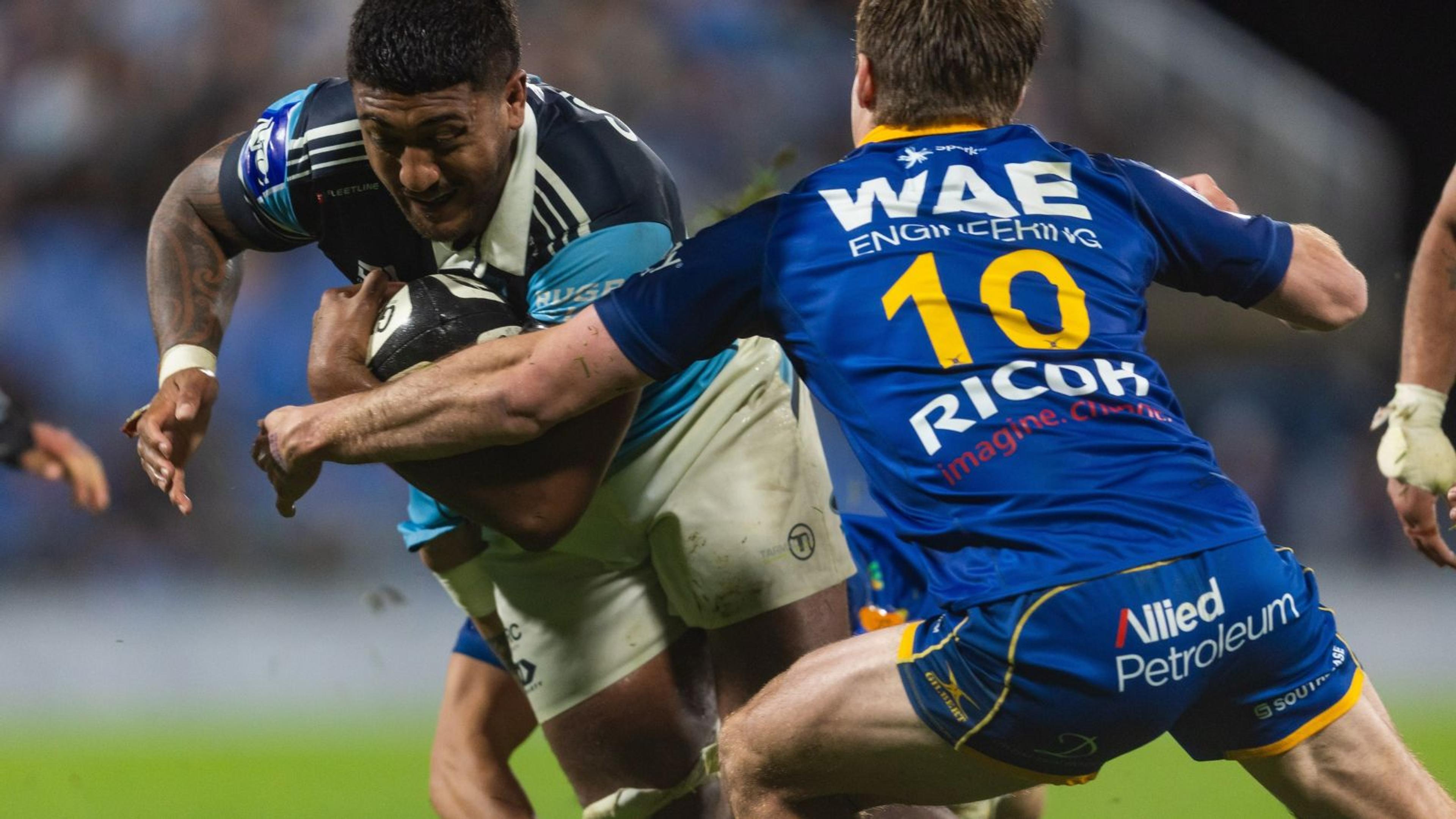
Moana Pasifika players take the field during Super Rugby Pacific, a visible symbol of Pacific talent inside a competition Dr Melani Anae believes is still shaped by external power structures.
Photo/Photosport/Brett Phibbs
Opinion
Opinion: Moana Pasifika expose the cost of inclusion in elite rugby
The club was meant to reshape elite rugby around Pacific identity and belonging but its struggles expose the limits of inclusion, writes Dr Melani Anae.

Lupematasila Misatauveve Dr Melani Anae, University of Auckland
Published
10 May 2026, 12:00pm
Share
Copy Link
Top stories
Top stories
Moana Pasifika’s emergence and ongoing challenges can be read through Epeli Hauʻofa’s critique of the Pacific as an “expert beggar", a condition in which Pacific peoples and institutions are continually being structurally positioned to seek validation, funding, and survival from metropolitan centres.
Conceived as a corrective to the long history of Pacific player extraction in elite rugby, Moana Pasifika promised a model grounded in identity, belonging, and regional representation. Yet from its inception, the franchise was embedded within a professional rugby economy controlled by New Zealand Rugby and World Rugby, where financial viability - not cultural or historical justice - remained the primary measure of success.
In this context, Moana Pasifika was required to perform worthiness on terms not of its own making. Chronic undercapitalisation, reliance on external funding, and the absence of a robust commercial base were not incidental weaknesses but predictable outcomes of a system that centralises wealth and decision-making outside the Pacific. Like the ‘myth of the Pacific overstayer’ constructed during the Dawn Raids era, figured as a burden on the nation despite evidence to the contrary, Moana Pasifika was implicitly framed as a risk within the Super Rugby competition: symbolically embraced, yet materially uncertain. Its ongoing financial and structural precarity is therefore often interpreted as reflecting less a failure of Pacific imagination and more the enduring architecture of dependency Hauʻofa identified.
What Moana Pasifika exposes is the continuity of what many scholars describe as systemic inequities in contemporary sport. Pacific bodies remain central to the global rugby economy, yet Pacific-led institutions struggle to retain value or exercise autonomy. Hauʻofa’s vision of a “sea of islands”, a networked, self-determining Pacific, stands in stark contrast to this reality. Rather than being enabled to operate as an oceanic collective, Moana Pasifika was constrained within a neoliberal framework that demanded profitability over relationality, and market performance over community accountability. In this sense, the franchise did not simply falter; it raises important questions about the limits of inclusion within systems that continue to manage, rather than empower, the Pacific.
Pacific futures will not be secured by simply being included in systems that were never designed for us. As Hauʻofa reminded us, the danger is not that the Pacific lacks capability, but that it is too often positioned as dependent- what he called the “expert beggar.” The challenge, then, is not to ask for a better seat at the table, but to rethink who built the table in the first place.
We have seen this before. During the Dawn Raids, Pacific peoples were cast as overstayers and economic burdens, targeted in their homes at first light. Yet those same communities had been actively recruited to build the nation’s economy. Pacific people were essential but treated as expendable. Visible but not valued. Included but only on conditional terms.
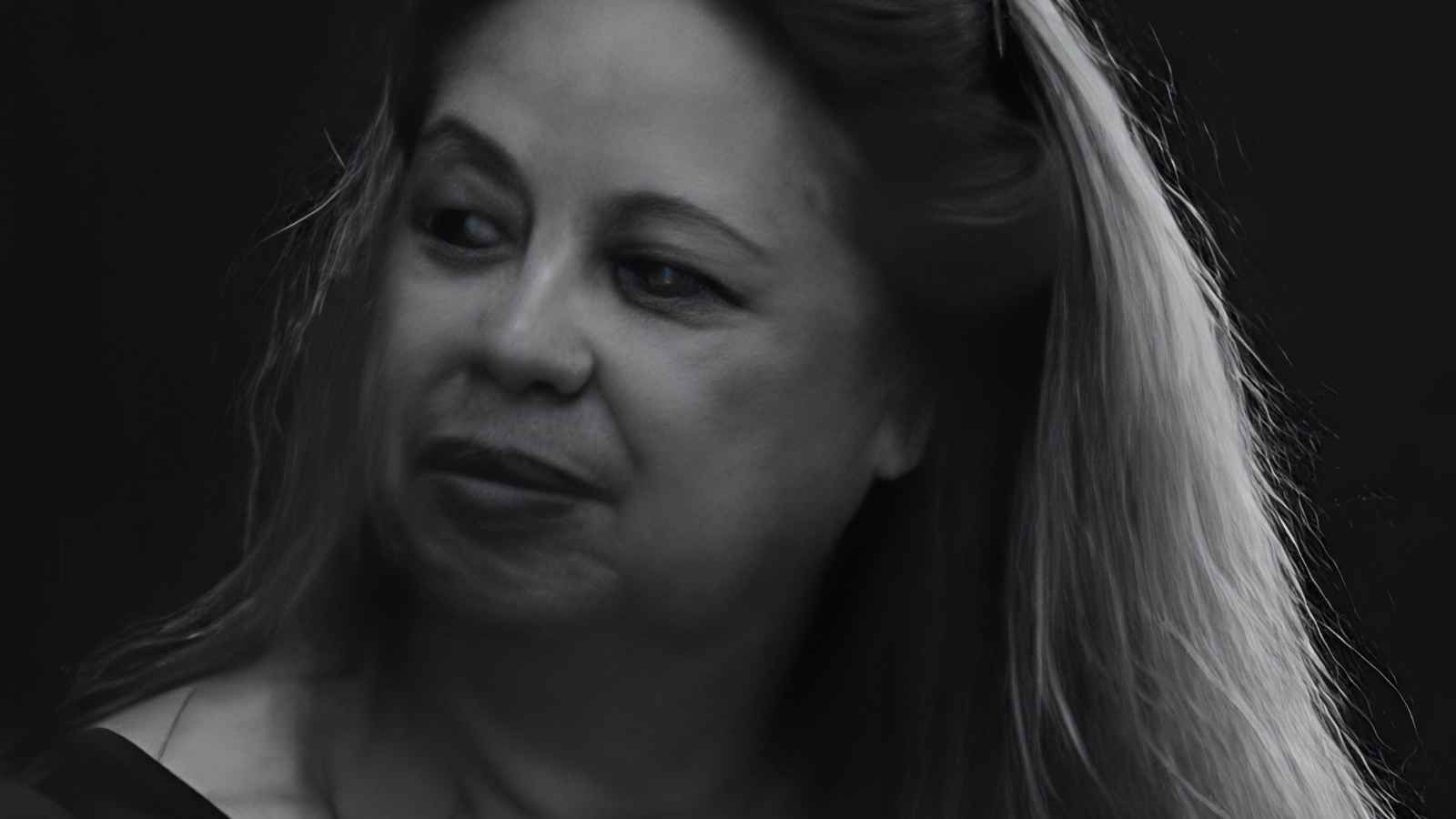
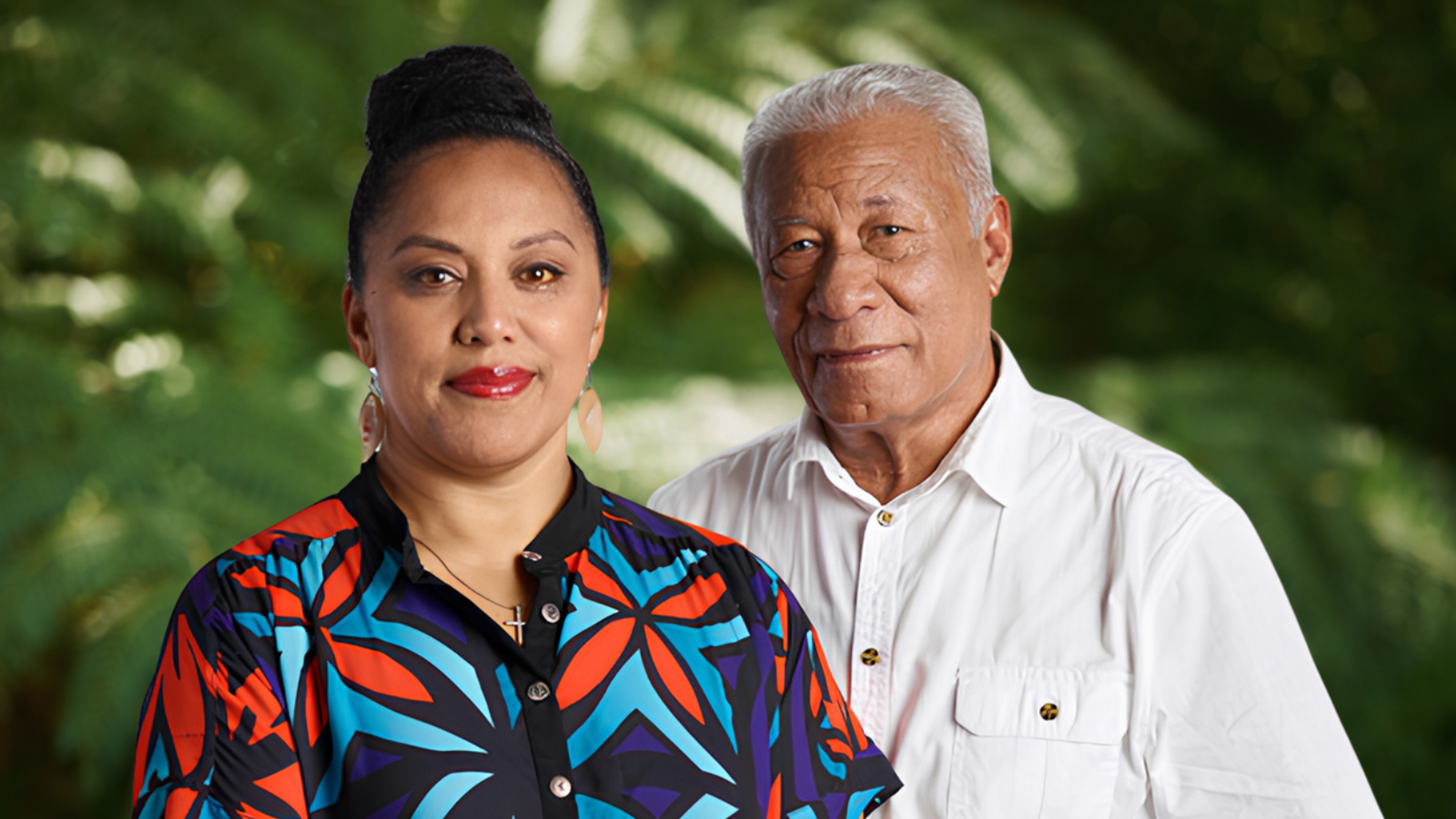
Dr Melani Anae says Moana Pasifika’s struggles reflect deeper structural inequalities in elite rugby. Photo/Auckland Museum
That pattern has not disappeared, it has simply changed form. Decades later, Moana Pasifika emerged as a powerful symbol of Pacific identity and potential. It carried the hopes of a people long central to the game. Yet it, too, was required to prove its worth within a system it did not control, judged by financial metrics, dependent on external backing, and constrained by structural conditions that critics argue reflect longstanding inequities in the sport’s governance and funding models. Celebrated in principle, but precarious in practice.
Across these moments, the story is consistent: Pacific presence is welcomed, but rarely empowered. Real empowerment begins when that pattern is broken. It means Pacific peoples having control over our labour, our resources, our stories, and the value we create. For too long, Pacific talent has flowed outward - enriching others while our own communities carry the cost. Empowerment means building systems where that value stays with us and circulates among our people.
It also means remembering who we are beyond the borders imposed on us. The Pacific is not a scattering of small, isolated places - it is a vast, connected ocean. Our strength lies in those relationships, and our teu le va ethic: the responsibility to care for the social and spiritual spaces between us. When we organise around those relationships, we move from fragmentation toward collective power.
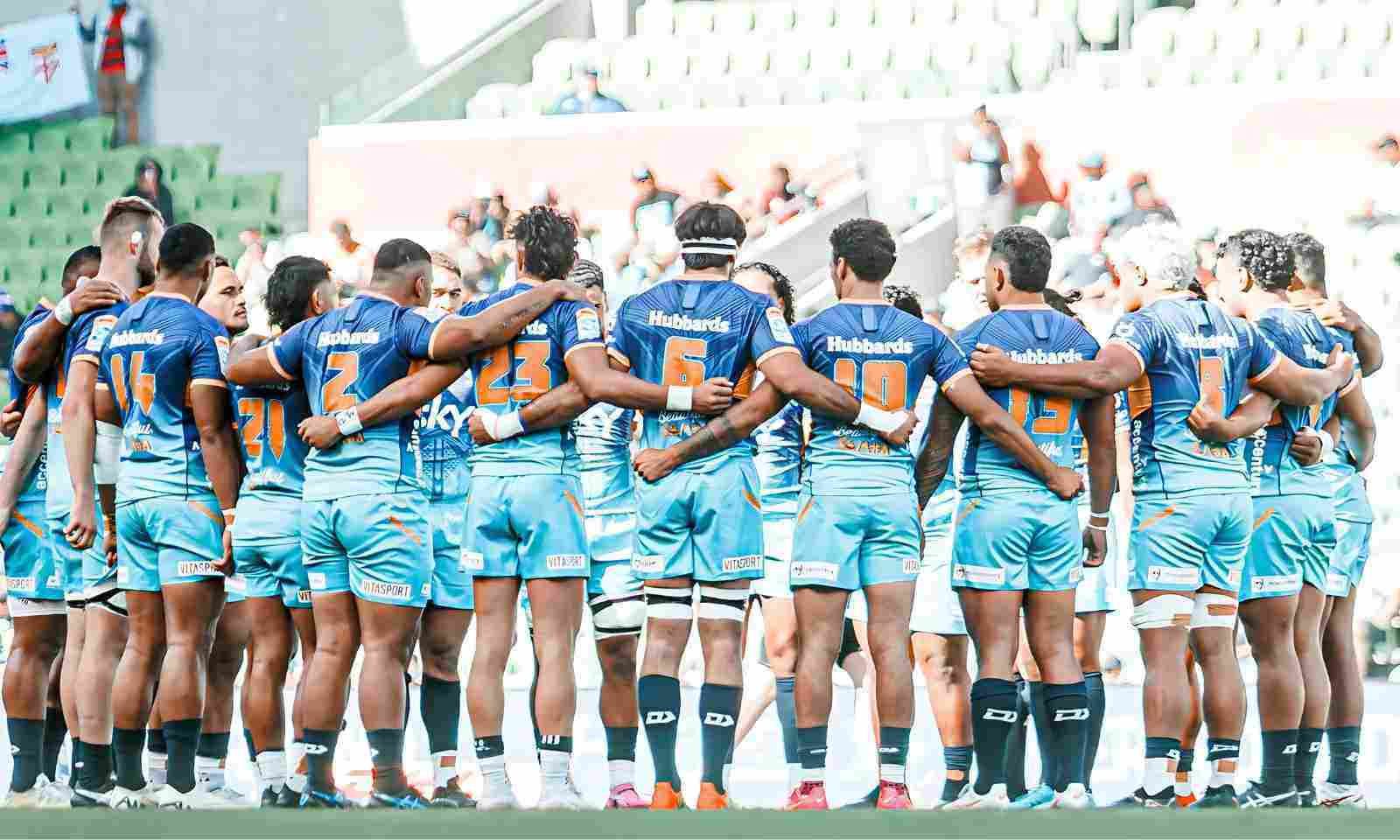
Dr Melani Anae says the franchise’s journey reflects broader debates about Pacific autonomy, inclusion, and control within elite rugby governance. Photo/Moana Pasifika
And it means redefining success. If we measure ourselves only by profit or external approval, we remain trapped in someone else’s framework. But when we centre wellbeing, community, and cultural continuity, we begin to define success on our own terms.
The lesson across generations, from the Dawn Raids to Moana Pasifika, is clear. The issue has never been Pacific potential. It has been the racism and systems that limit it.
Pacific futures are not small, fragile, or dependent. They are expansive, interconnected, and powerful. The task ahead is not to prove our worth, but to claim our position - not as guests in someone else’s system, but as architects of our own ocean.
Dr Melani Anae is Chair of the Polynesian Panther Party Legacy Trust and associate professor in Pacific Studies at the University of Auckland. She is a co-author of Polynesian Panthers: Pacific Protest and Affirmative Action in Aotearoa NZ 1971-1981. The views expressed in this article are her own and do not reflect those of PMN.
Watch Moana Pasifika CEO Debbie Sorensen's full interview on PMN Tonga below.