

Pacific workers are calling for stronger protections and greater employer accountability under Australia and New Zealand’s labour mobility schemes.
Photo/Facebook
Pacific Region
Pacific workers’ complaints put labour mobility protections under scrutiny
Workers in Australia and New Zealand have raised concerns about sexual harassment, restrictive living conditions and employer accountability, putting the spotlight on how Pacific employees are protected.
Renate Rivers
Published
26 August 2026, 3:19pm
Share
Copy Link



Pacific workers are calling for stronger protection and accountability after sharing concerns about sexual harassment, restrictive living conditions and what happens when employers face serious complaints.
The concerns were raised at a Pacific Islands Council of Trade Unions (PICTU) workshop in Port Vila, Vanuatu, focused on labour mobility and strengthening support for workers overseas.
Workers from across the region spoke about their experiences under Australia’s Pacific Australia Labour Mobility (PALM) scheme and New Zealand’s Recognised Seasonal Employer (RSE) scheme.
Talamua Media reported that several women at the meeting said they had faced strict rules at their accommodation, including initially being given just three minutes to shower. After complaining, the time was increased to six minutes.
Workers also questioned what happens to employers after serious complaints are made.
One worker alleged an employer whose company was closed following a complaint later set up another company under a different name and began recruiting Pacific workers again.
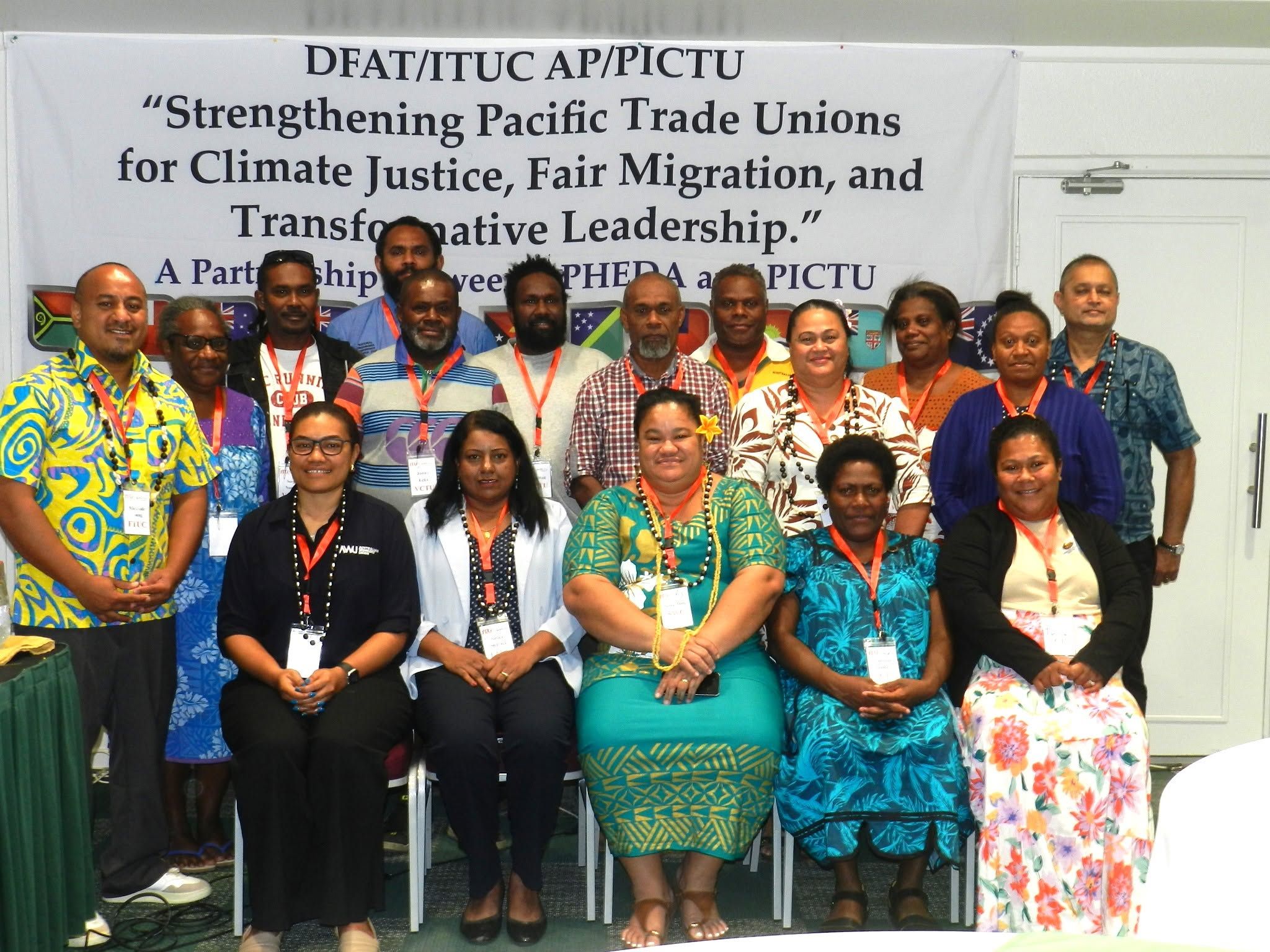
Pacific workers and union representatives gathered in Port Vila, Vanuatu, to discuss labour mobility and strengthening protections for workers overseas. Photo/Talamua Media
Latileta Gaga, Australian Workers Union representative, told Talamua the complaint should have been treated as a criminal matter and said she would look into the concerns.
The accounts have raised questions about how effectively Pacific workers can be protected when they are far from home and dependent on an employer for work and, in some cases, accommodation.
Immigration New Zealand (INZ) says the Ministry of Business, Innovation and Employment (MBIE) received 44 complaints or reports of alleged employment-standard breaches or migrant exploitation involving RSE-accredited employers over the past five financial years.

Pacific seasonal workers have raised concerns about workplace treatment, accommodation and the protections available when problems arise overseas. Photo/File
Twelve resulted in formal investigations. None progressed to the Employment Relations Authority for breaches of minimum employment standards while two resulted in enforceable undertakings and three in employers voluntarily taking steps to comply.
Loua Ward, Immigration NZ’s National Manager Pacific, says the agency is concerned about any reports of mistreatment, harassment or exploitation.
“We take such allegations seriously,” she says in a statement to PMN News.
Immigration NZ says employers can have their RSE accreditation revoked, worker numbers reduced or future recruitment requests declined when breaches are identified.
However, an employer whose accreditation is revoked can reapply after one year and if they meet the requirements for re-entry.
The New Zealand Government announced further RSE changes in July, including improved complaints processes, stronger support for workers experiencing exploitation and more flexibility for some workers to move between accredited employers.
Watch an April interview on Pacific Mornings about seasonal employment with regional security expert Viliame Bovoro.
In Australia, the Department of Employment and Workplace Relations (DEWR) told PMN News it has “zero tolerance” for sexual harassment, exploitation or mistreatment of PALM workers.
It says workers can raise concerns through dedicated grievance channels, Country Liaison Officers and a 24/7 PALM support service without going through their employer.
Workers can also receive support to transfer to another approved employer.
DEWR says non-compliant employers can face corrective action, suspension or termination from the scheme, or referral to Australian enforcement agencies.
As of 1 July 2026, two approved employers had been removed from the PALM scheme for non-compliance.
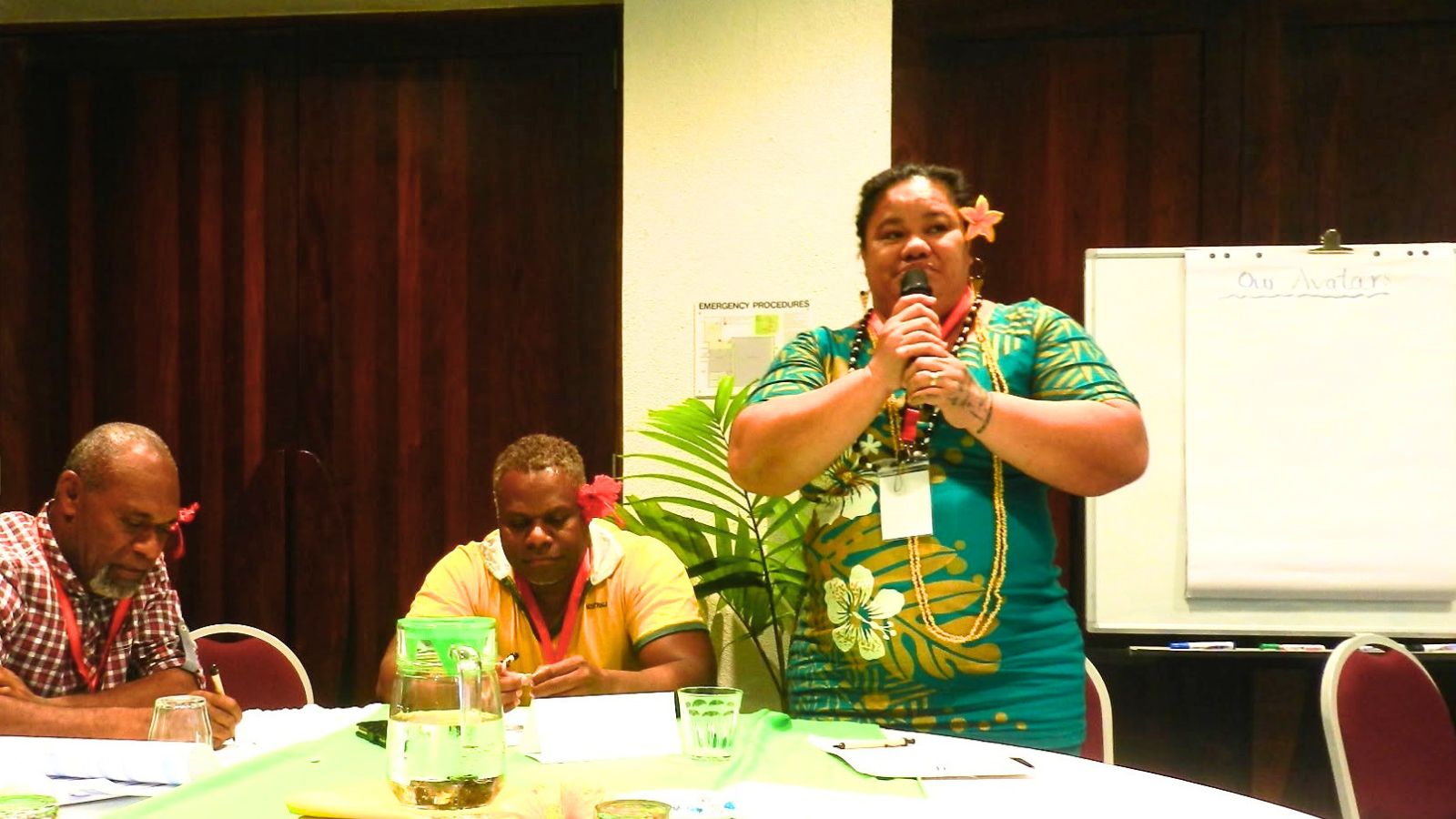
Sāmoa First Union director and PICTU vice-chair Seveaoga Saina Tomi Fetalaiga says hearing directly from workers is helping unions understand the realities they face overseas. Photo/Talamua Media
Seveaoga Saina Tomi Fetalaiga, Sāmoa First Union director and PICTU vice-chair, attended the workshop and said workers’ experiences are helping unions understand what is happening on the ground.
“Their first-hand experiences, challenges and successes are at the heart of the discussions,” she says in a social media post.
PICTU says the accounts shared in Vanuatu will help Pacific unions strengthen how they represent and support labour mobility workers, particularly when problems arise overseas.