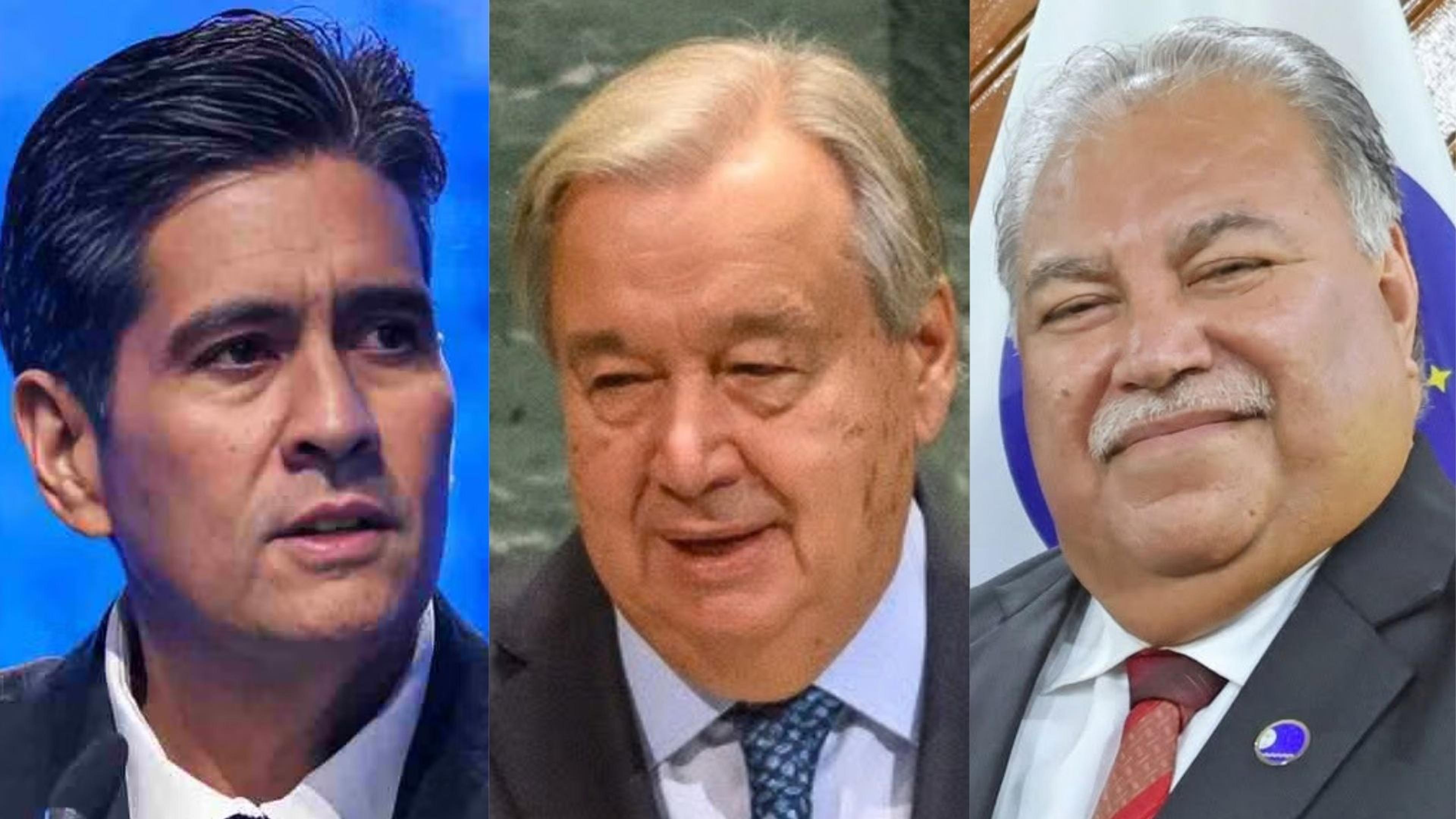
From left: Palau President and PIF Chair Surangel Whipps Jr, UN Secretary-General António Guterres and PIF Secretary-General Baron Divavesi Waqa at the Pacific Islands Forum Leaders’ Dialogue at UN Headquarters in New York.
Photo/Supplied
Environment
Pacific Islands Forum presses UN chief on climate finance and rising seas concerns
Leaders take their climate and statehood concerns directly to United Nations Secretary-General António Guterres as the Pacific region pushes for funding that does not add to debt.

Christine Rovoi
Published
28 September 2026, 4:00am
Share
Copy Link
Top stories
PNG Chiefs win first round against New Zealand Rugby
Christine RovoiSat, 17 Oct
Pacific families must work four days to afford basic food: World Vision
Thomas Tarurongo WynneFri, 16 Oct

Sāmoa demolish France in record-breaking 78-4 RL World Cup opener
Christine RovoiFri, 16 Oct
Top stories
PNG Chiefs win first round against New Zealand Rugby
Christine RovoiSat, 17 Oct
Pacific families must work four days to afford basic food: World Vision
Thomas Tarurongo WynneFri, 16 Oct
Sāmoa demolish France in record-breaking 78-4 RL World Cup opener
Christine RovoiFri, 16 Oct
Pacific leaders have taken their fight for climate finance and protection of their maritime rights directly to United Nations Secretary-General António Guterres in New York.
The Pacific Islands Forum's annual Leaders' Dialogue with Guterres was held on Friday during the 81st session of the UN General Assembly.
PIF Chair and Palau President Surangel Whipps Jr led the meeting with Forum Secretary-General Baron Divavesi Waqa and other Pacific leaders.
A major focus was the Pacific Resilience Facility (PRF) as leaders push international partners to help the region reach its US$500 million (NZ$882.71 million) funding target by the end of 2026.
The Pacific-led facility is designed to help countries and communities prepare for climate change and disasters with the longer-term goal of raising US$1.5 billion (NZ$2.65 billion).
Waqa told Guterres the Pacific wanted to see promises turn into action.
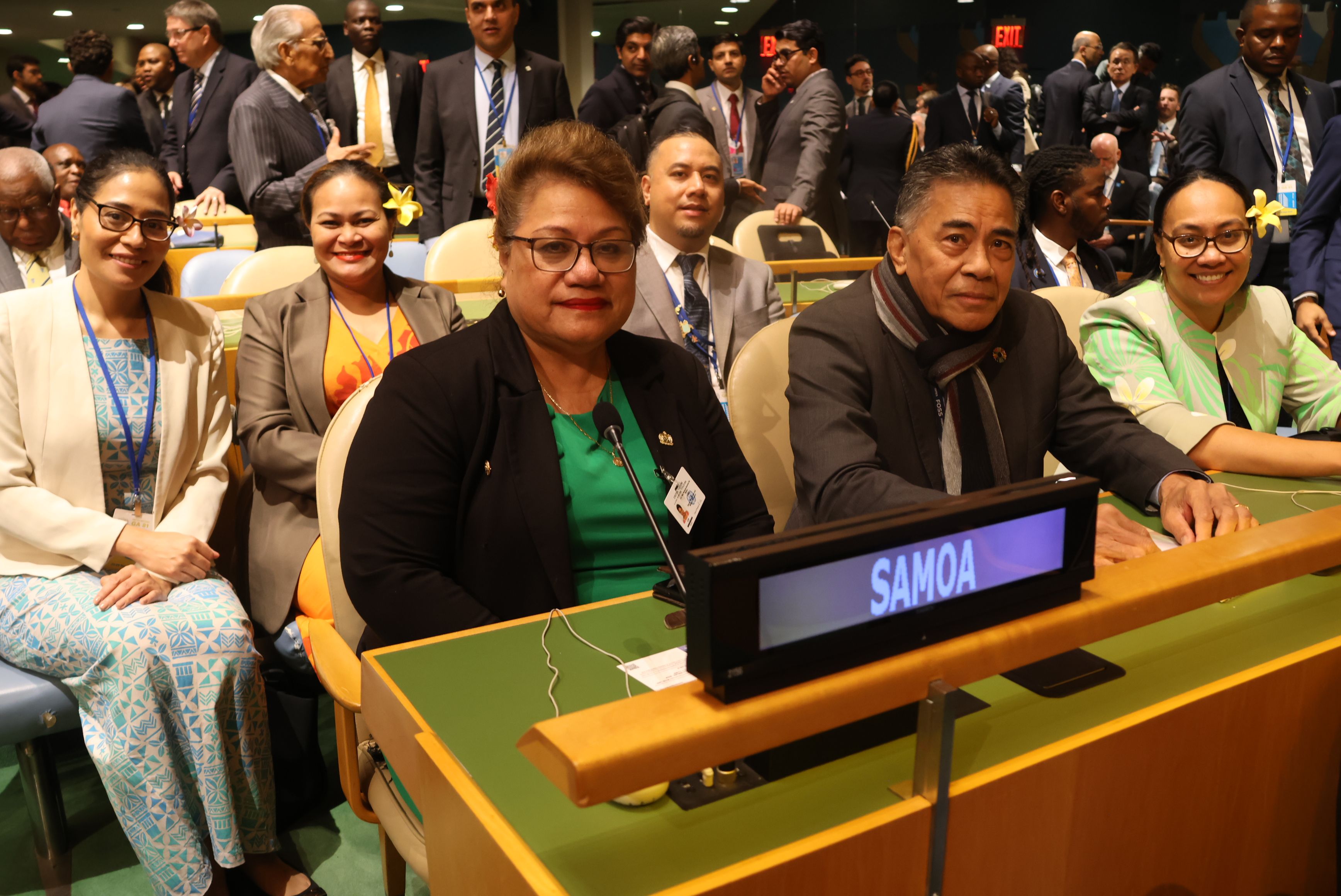
Sāmoa's delegates gather at the 81st session of the United Nations General Assembly in New York, where the region is pushing its priorities on climate change, development finance, ocean governance and rising sea levels. Photo/Pacific Islands Forum
"The Pacific Islands Forum brings to the United Nations a clear and unambiguous message: the challenges facing our region are inseparable from the global challenges before us," Waqa said.
"We must move from commitments to implementation, from vulnerability to resilience and from fragmented responses to stronger, more coherent international partnerships that deliver for our peoples."
Tonga's Prime Minister Lord Fakafanua also used his UN General Assembly address to call for greater investment in Pacific-led climate resilience.
Watch Lord Fakafanua's address at the UN General Assembly below.
He said the Pacific Resilience Facility, which is based in Tonga, needs another US$328m (NZ$573.88m) in pledges to reach its initial US$500m capitalisation target.
"We call on all our partners to invest in these Pacific-designed and Pacific-owned solutions," Fakafanua said.
He also called for greater access to climate finance, including through the Loss and Damage Fund, and urged international financial institutions to recognise the wider vulnerabilities faced by small island states.
"We are not asking for charity. We will do our part. We will simply ask that others do theirs," Fakafanua said.
The push comes as Pacific countries continue to face rising seas, coastal erosion and other impacts of climate change.
Guterres has warned that the Pacific is facing a growing climate threat after scientists said an unusually strong El Niño is expected to intensify in the coming months.
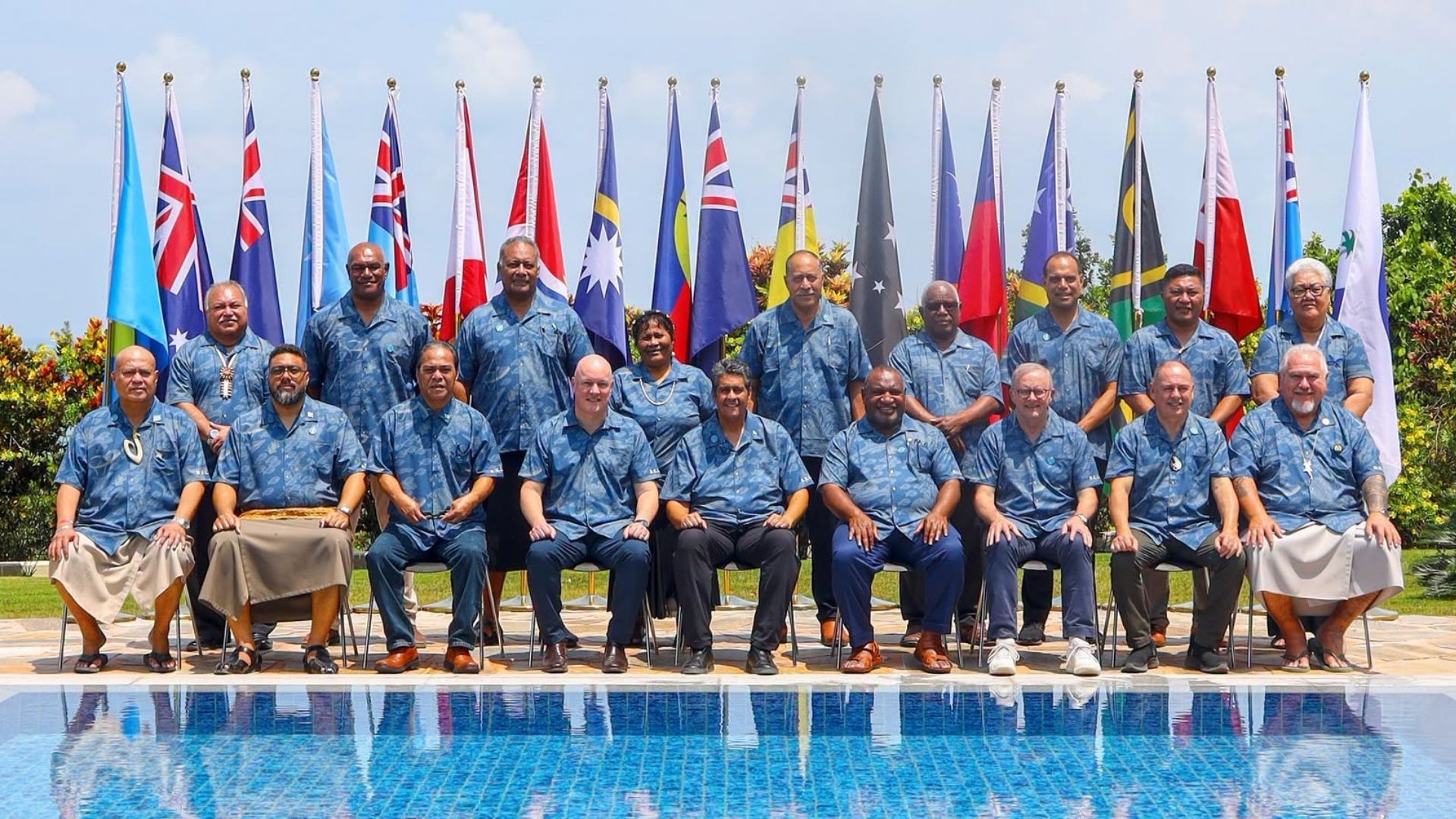
Pacific Islands Forum leaders at their 55th meeting in Palau earlier this month, where they agreed on regional priorities later taken to the United Nations General Assembly. Photo/Pacific Islands Forum
“El Niño is being supersized before our eyes. The science leaves no room for doubt: the planet is in uncharted waters, and those waters are heating up,” Guterres said.
Whipps said the latest climate science made it even more urgent for governments to deliver on their promises.
“This reality must strengthen our resolve to deliver what we have promised, prepare our communities for the impacts science tells us are inevitable,” he said.
Whipps also raised the region's position that rising seas should not threaten the legal status of Pacific countries or the maritime zones they have established.
That position was reaffirmed by Pacific leaders at their meeting in Palau earlier this month including support for protecting sovereign rights and jurisdictions as sea levels rise.
The leaders also stressed that climate-vulnerable countries should not have to take on more debt to pay for basic protection from climate impacts.
Their discussions included calls for easier access to the Loss and Damage Fund and greater recognition of the Multidimensional Vulnerability Index when international finance decisions are made.
The index is designed to take into account the wider vulnerabilities faced by small island states instead of relying mainly on measures such as GDP.
The meeting also comes ahead of the Pacific's next major climate push, with Fiji and Tuvalu preparing to host Pre-COP31 talks in October before COP31 in Türkiye in November.
The Forum had already identified climate change, development finance, ocean governance and sea-level rise as key priorities for its UNGA81 engagement.
For Pacific countries, the message now is about what happens after the high-level meetings: turning international commitments into funding and action that reaches communities.
The high-level week and General Debate of the 81st session of the United Nations General Assembly (UNGA 81) in New York ends on Tuesday, 29 September, NZ time.