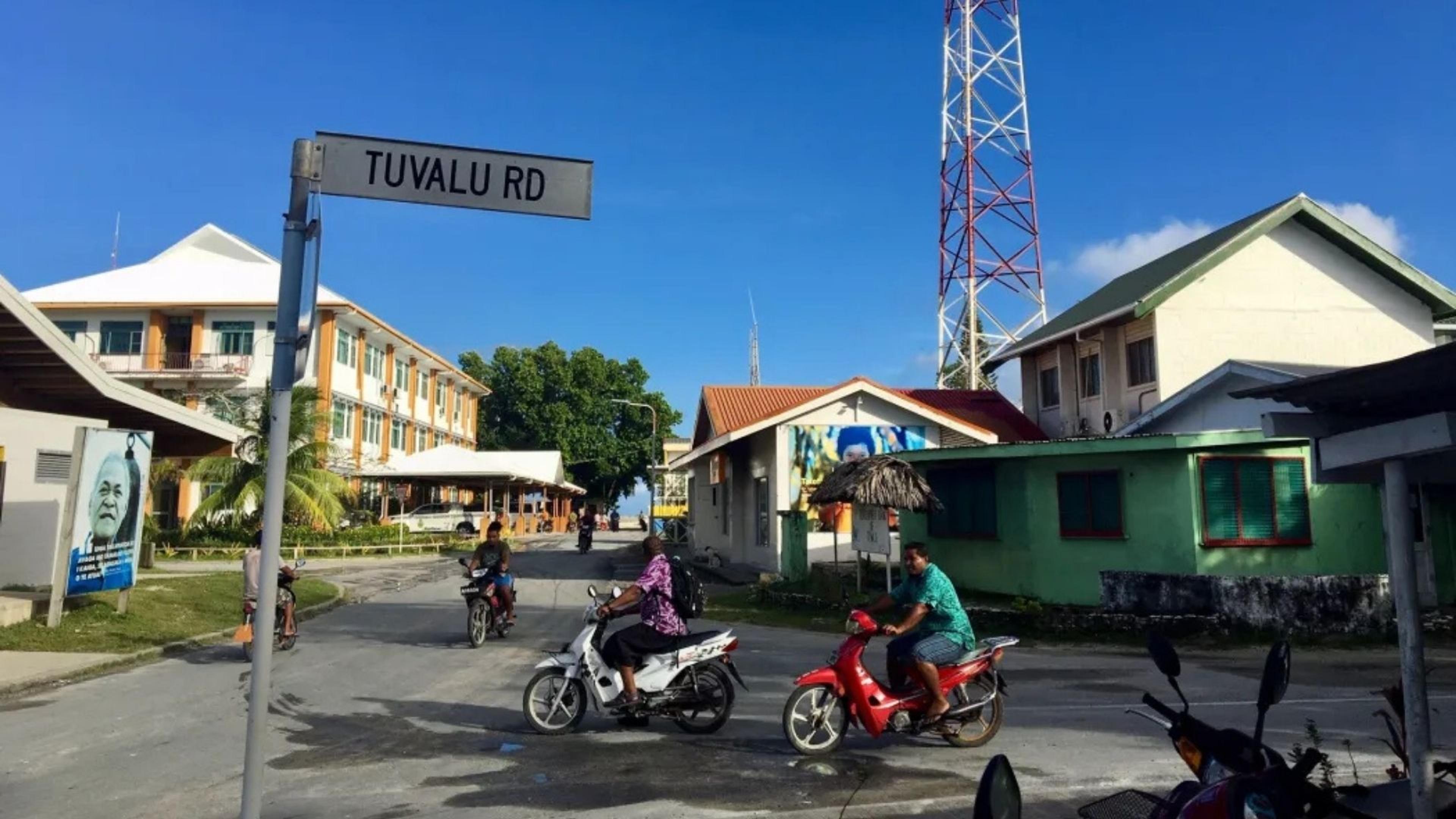
Families in Tuvalu have become the first to receive automatic payouts under the country's new high-tide insurance scheme, with support released after flooding thresholds were reached in March.
Photo/RNZ Pacific/Sally Round/file
Environment
No forms, no waiting: Tuvalu households receive instant climate payouts after flooding
More than 400 families have received automatic cash payments after high-tide flooding, in a Pacific-first test of a new insurance system designed to get help to households faster.

Christine Rovoi
Published
16 June 2026, 11:55am
Share
Copy Link
Top stories
World Vision warns children will pay for aid cuts beyond the Pacific
Thomas Tarurongo WynneMon, 12 Oct

Mate Ma’a Tonga’s 40-year legacy lives on through generations
Elton Lonaratha JnrMon, 12 Oct

David Seymour wants tougher welfare rule as Labour targets hidden costs in 2026 election
Thomas Tarurongo WynneFri, 09 Oct
Top stories
World Vision warns children will pay for aid cuts beyond the Pacific
Thomas Tarurongo WynneMon, 12 Oct
Mate Ma’a Tonga’s 40-year legacy lives on through generations
Elton Lonaratha JnrMon, 12 Oct
David Seymour wants tougher welfare rule as Labour targets hidden costs in 2026 election
Thomas Tarurongo WynneFri, 09 Oct
When high tides flooded parts of Tuvalu in March, affected families did not have to fill out forms, wait for inspectors or spend months chasing support.
Instead, the money arrived automatically.
In what officials are calling a major step forward for climate resilience in the Pacific, Tuvalu has completed the first payouts under its new High Tide Parametric Insurance Product, delivering a total of A$30,675 (NZ$37,128) to 409 households.
Each family received A$75 (NZ$91) through the Development Bank of Tuvalu after the country recorded three separate high-tide flooding events that triggered the scheme.
Unlike traditional insurance, the system does not rely on people lodging claims or proving damage.
Instead, payments are triggered automatically when pre-agreed weather or flooding thresholds are reached.

Tuvalu's Permanent Secretary for Finance and Economic Development, Nuausala Nuausala, says the successful rollout of the new insurance scheme gives the country confidence to expand innovative climate protection measures in the future. Photo/Ministry of Finance and Economic Development - Tuvalu
For a region that regularly faces climate-related disasters, supporters say speed is one of the programme's biggest strengths.
Permanent Secretary for Finance and Economic Development, Nuausala Nuausala, said the successful rollout showed the model could work for Tuvalu.
“Today’s payout is the beginning, not the end," Nuausala said in a statement. "It gives us confidence that innovative financial protection can work in Tuvalu and gives us a stronger foundation to build from.”
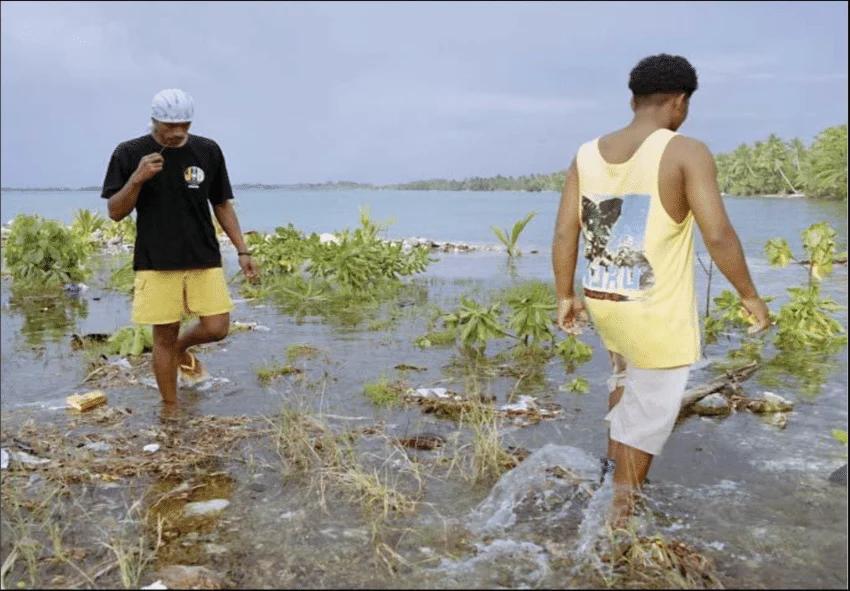
Low-lying parts of Tuvalu face growing risk from rising sea levels, with communities increasingly affected by coastal flooding and erosion. Photo/Oxfam/Jocelyn Carlin
The scheme only launched in February this year, making the March payout an early test of whether it could deliver support quickly when communities needed it.
Temukisa Pesega Siale, general manager of the Development Bank of Tuvalu, said the process worked exactly as intended.
“The most important message today is that the product has worked as promised,” Siale's statement read.
“No household had to submit a claim, no physical damage assessment was required, and no family had to wait for a very long verification process before the payout was calculated.”
The programme arrives as Pacific nations continue searching for faster and more reliable ways to respond to the growing impacts of climate change.
While the payouts were small, supporters say the significance of the scheme goes beyond the money itself.

Development Bank of Tuvalu General Manager Temukisa Pesega Siale says the insurance payout system worked as intended, allowing affected households to receive support without filing claims or waiting for lengthy assessments. Photo/Development Bank of Tuvalu
The programme is being closely watched as Pacific countries look for faster and more practical ways to get climate support to communities on the front line of rising seas and coastal flooding.
Emma Sale, a climate policy consultant and University of Canterbury PhD candidate, says solutions in the Pacific must reflect the realities of local communities.
“Our country is also very significantly in size and geography from large volcanic islands to small and low-lying fragile atolls,” she said on Pacific Days.
“And because of this diversity, the challenges we face and our development needs differ widely, as do our capacities to respond.
"Recognising these differences is essential and it's very important to us as development workers. It ensures that the support we provide needs to be contextualized and relevant and tailored to each country's unique situation.”
Sale, who has worked across Tuvalu, Fiji, Palau and Vanuatu, said strong family and community networks remain central to how Pacific communities respond to challenges.
Watch Emma Sale's full interview below.
“One of the biggest lessons from my upbringing is the power of strong family networks,” she said.
“They've played a central role in shaping my values and my identity as a Fijian and Sāmoan. That's also why I'm intentional about nurturing those relationships with my whanau, with my buwale, with my aiga.
"Preserving them is important to me, and it's really important that I carry forward in every stage of my life.”
The insurance scheme forms part of Tuvalu's wider efforts to prepare for rising sea levels and coastal flooding.
It was developed through the Pacific Insurance and Climate Adaptation Programme (PICAP), a partnership involving international agencies, the Government of Tuvalu, local financial institutions and regional insurance providers, with support from New Zealand and Australia.
For Tuvalu, the message is simple: when disaster strikes, people should not have to wait months for help. This time, support arrived automatically.