Pacific visa access has become an election battleground as NZ First challenges Labour
Thomas Tarurongo WynneTue, 22 Sep
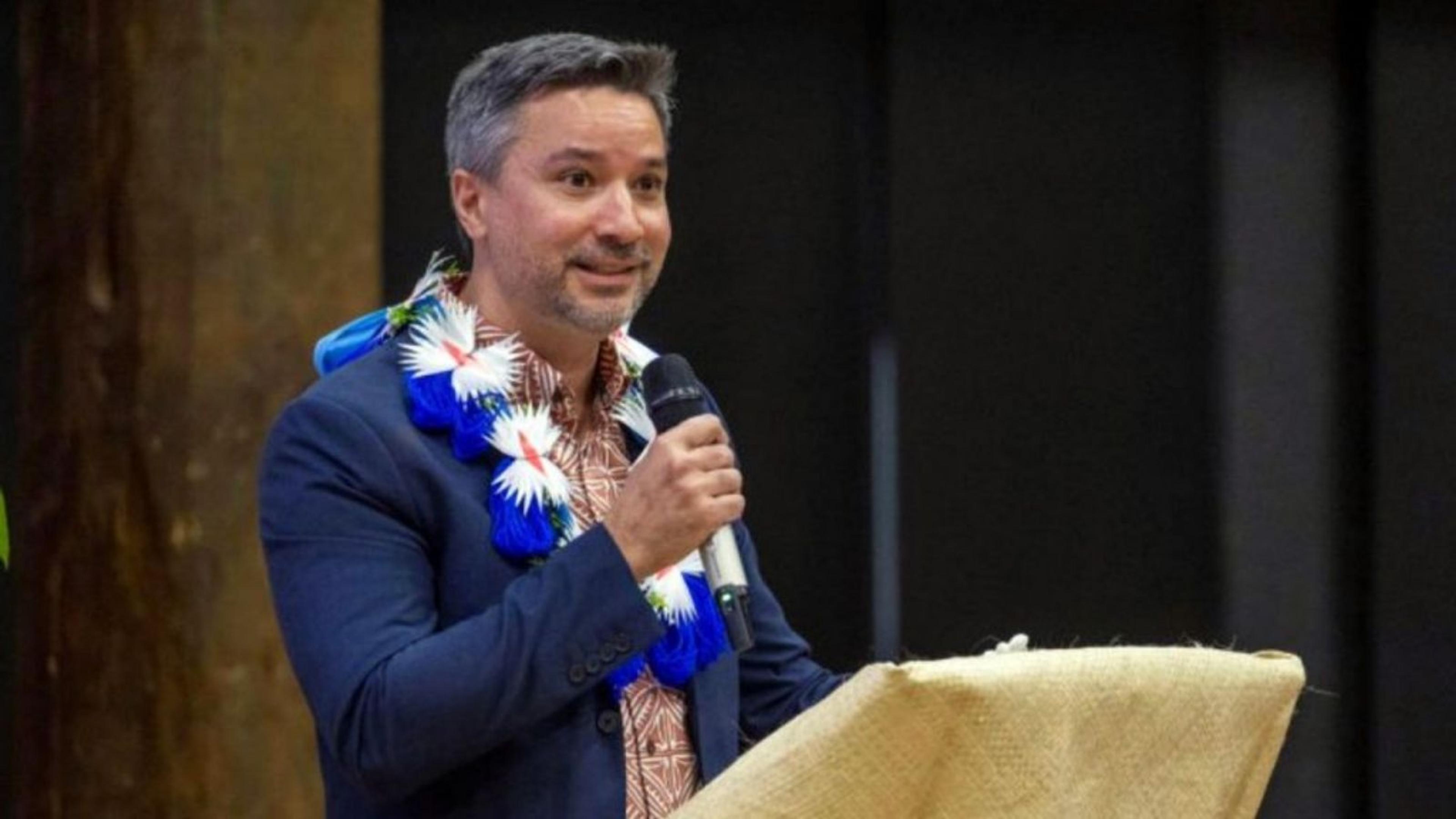
Professor Sinclair was instrumental in establishing the University's inaugural Pacific Law Week launched last year.
Photo/University of Auckland
Dr Guy Fiti Sinclair shares how feeling like a foreigner in his own lecture theatres eventually turned into a historic career of service, leading to his landmark appointment at the University of Auckland.

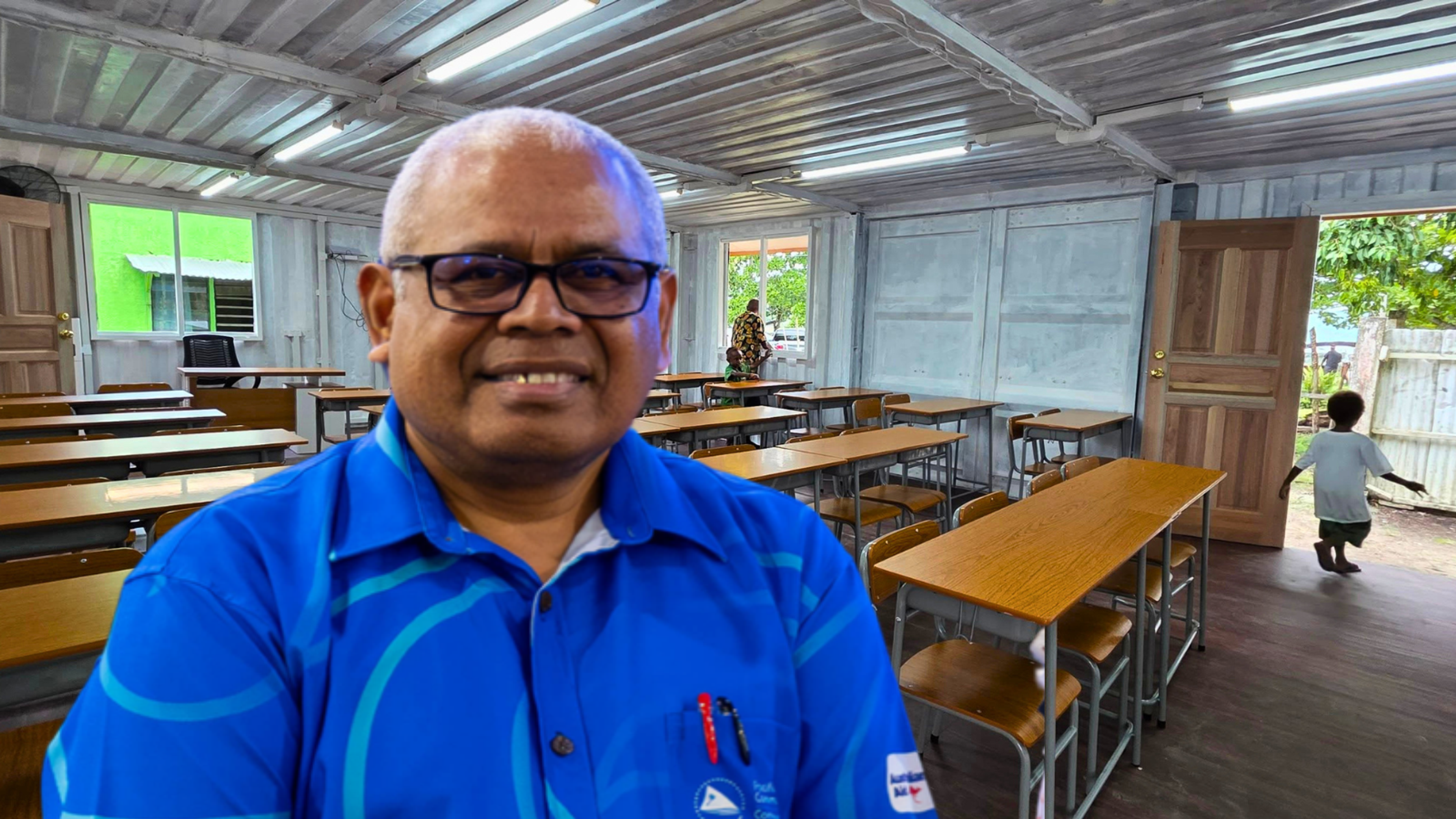
Auckland Law School’s first Professor of Pacific heritage says his upbringing as “a kid from the islands” in Papua New Guinea built his drive for academic excellence, leading him to a historic milestone last December.
Dr Guy Fiti Sinclair (Satalo, Sapapali’i - Sāmoa), Associate Dean Moana Oceania and Manupiri Te Moananui-a-Kiwa at the University of Auckland, previously served as an associate professor and holds a Doctor of Juridical Science from New York University School of Law.
“It’s an amazing feeling,” he says of the appointment and is humbled by the experience. Sinclair credits his academic journey to growing up on the University of Papua New Guinea campus, where his mother, Ruta Fiti Sinclair, lectured in history.
His mother came to New Zealand in the 1960s as a scholarship student to finish high school at Hamilton Girls High. She stayed to complete teacher training before returning to Sāmoa to teach at Sāmoa College, where she met Sinclair’s father.
“They moved to Papua New Guinea as school teachers first and then my father worked at the university, my mother studied further at the university and then lectured in history. So I was surrounded by that sense of striving for academic excellence,” Sinclair says.
“But I never imagined that I could be a professor at Auckland Law School. I studied at Auckland Law School and at some points I thought, ‘it'd be nice to be a lecturer there’, but maybe I didn't think I'd be around for so long.”
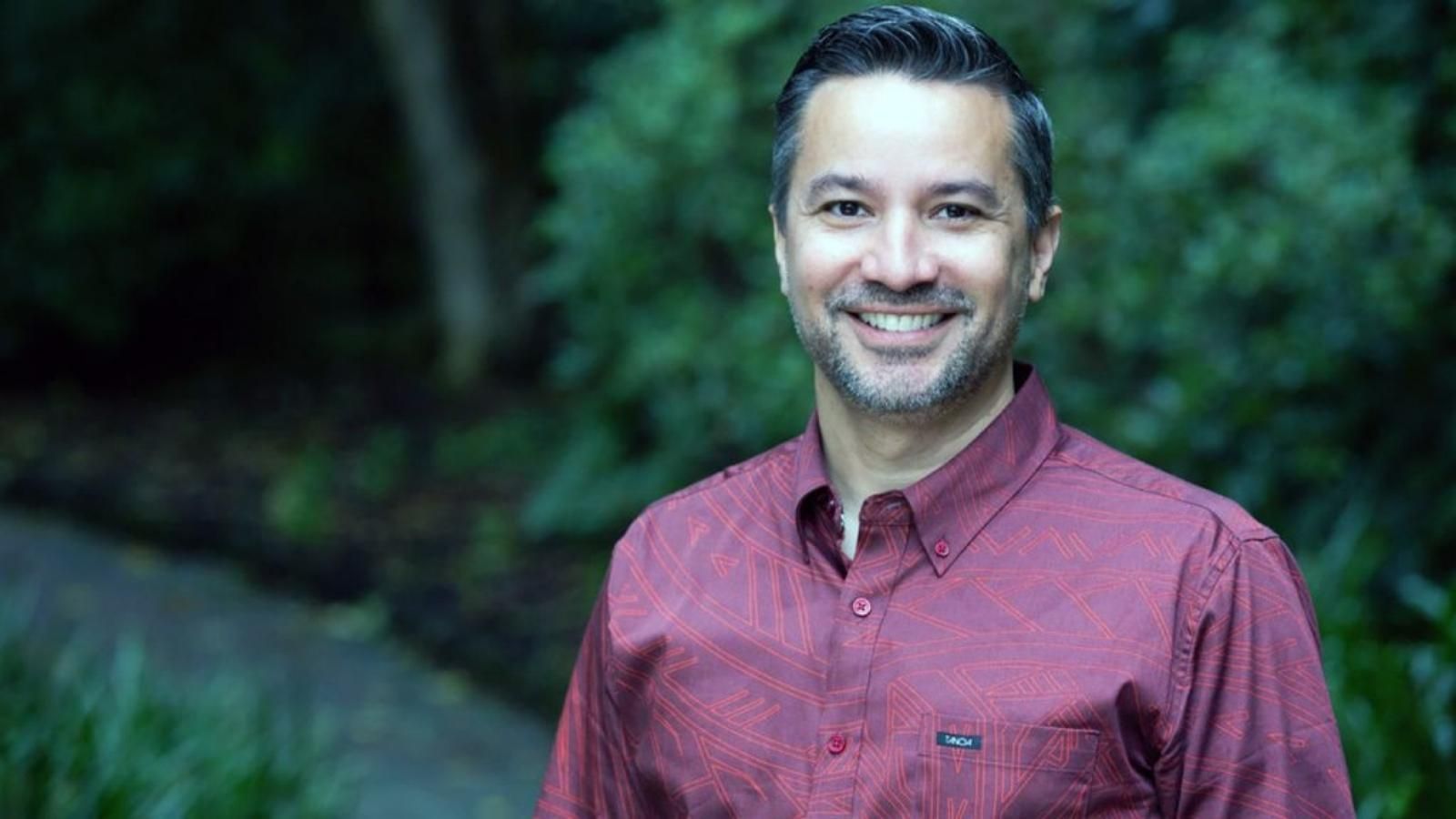
The path to academia began almost immediately for Professor Guy Fiti Sinclair, growing up around the University of Papua New Guinea campus in Port Moresby. Photo/University of Auckland
Growing up in Port Moresby, Sinclair was immersed in academia from an early age. Yet, moving to Auckland for his law studies brought its own challenges. He says he felt like “a kid from the islands”, where he observed that his peers during lectures understood the lesson better.
“They all [understood] what [was] going on but I [didn’t] get it. They were talking about all sorts of things that I had no idea of in those days: Rogernomics, the political system, and even the Treaty of Waitangi. I never studied that in Papua New Guinea.
“So I always felt I didn't know what was going on. and I tell the students, ‘maybe you're feeling that and maybe 90 per cent of the people in the room are feeling that now. So don't feel alone, we're all in this together. You might end up doing amazing things with your career’.”
Before academia, Sinclair spent over 10 years as a corporate and commercial lawyer in London and New Zealand. He later shifted to public international law, winning the European Society of International Law Book Prize in 2018 for To Reform the World: International Organizations and the Making of Modern States.
Sinclair’s current research, supported by a NZ$800,000 Rutherford Discovery Fellowship, explores the intersection of international law and Pacific governance. He emphasises that his appointment is part of a broader shift at the university to place Pacific knowledge at the centre of legal education.
“I feel so privileged to be in the position that I'm in. And I don't mean as a professor, I mean as somebody who's engaged with education, working with young people, with our young Pasifika students.
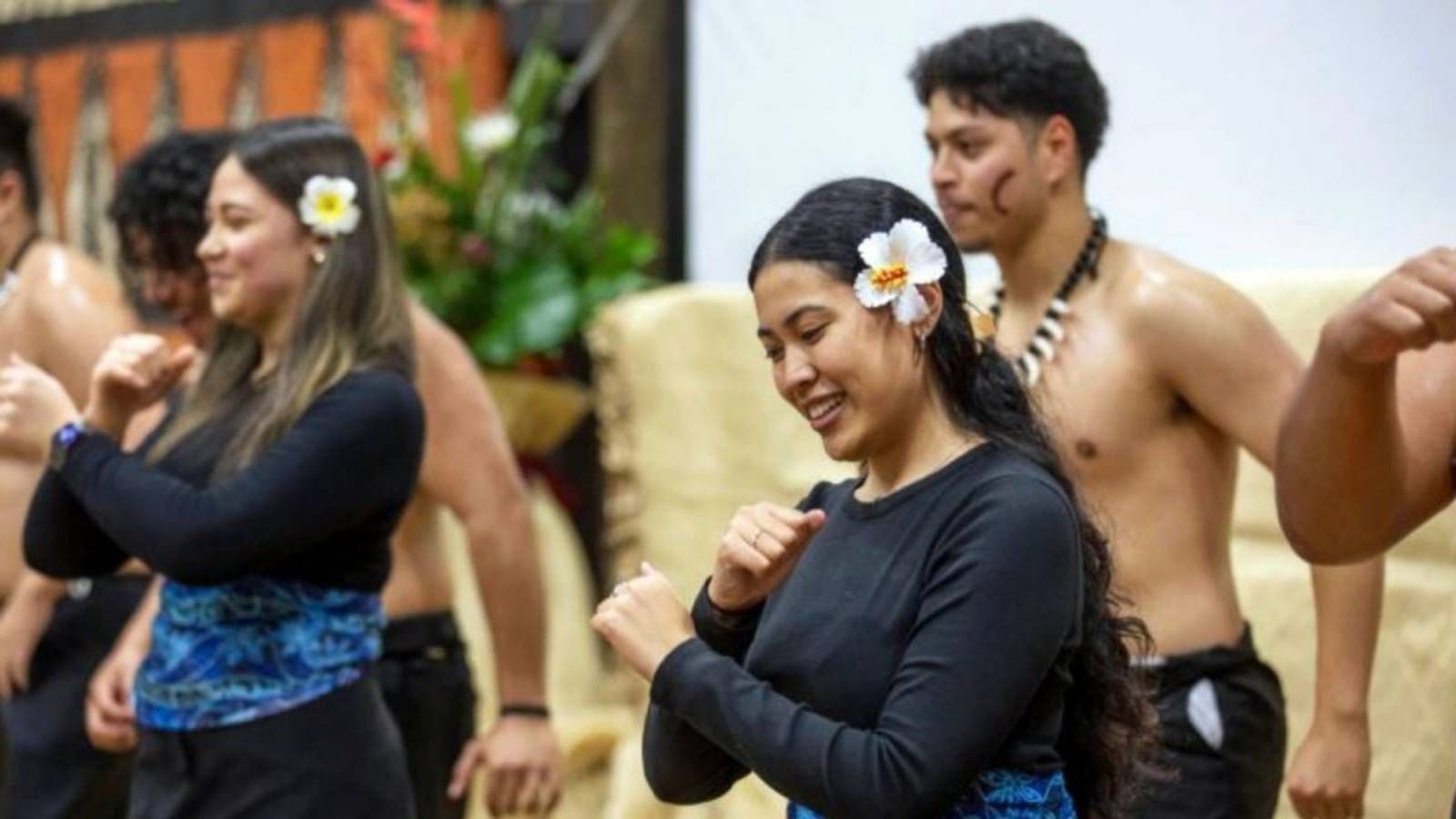
Pacific students performing during the inaugural Pacific Law Week at Fale Pasifika. Photo/University of Auckland
“And then the opportunity to research and delve into those topics, which are so important to people across the Pacific region. Questions of climate change and development, self-determination and security.
“All of those vital questions have legal elements. That's what keeps me interested. I feel like it's a privilege to be an academic and we try to be of service.”