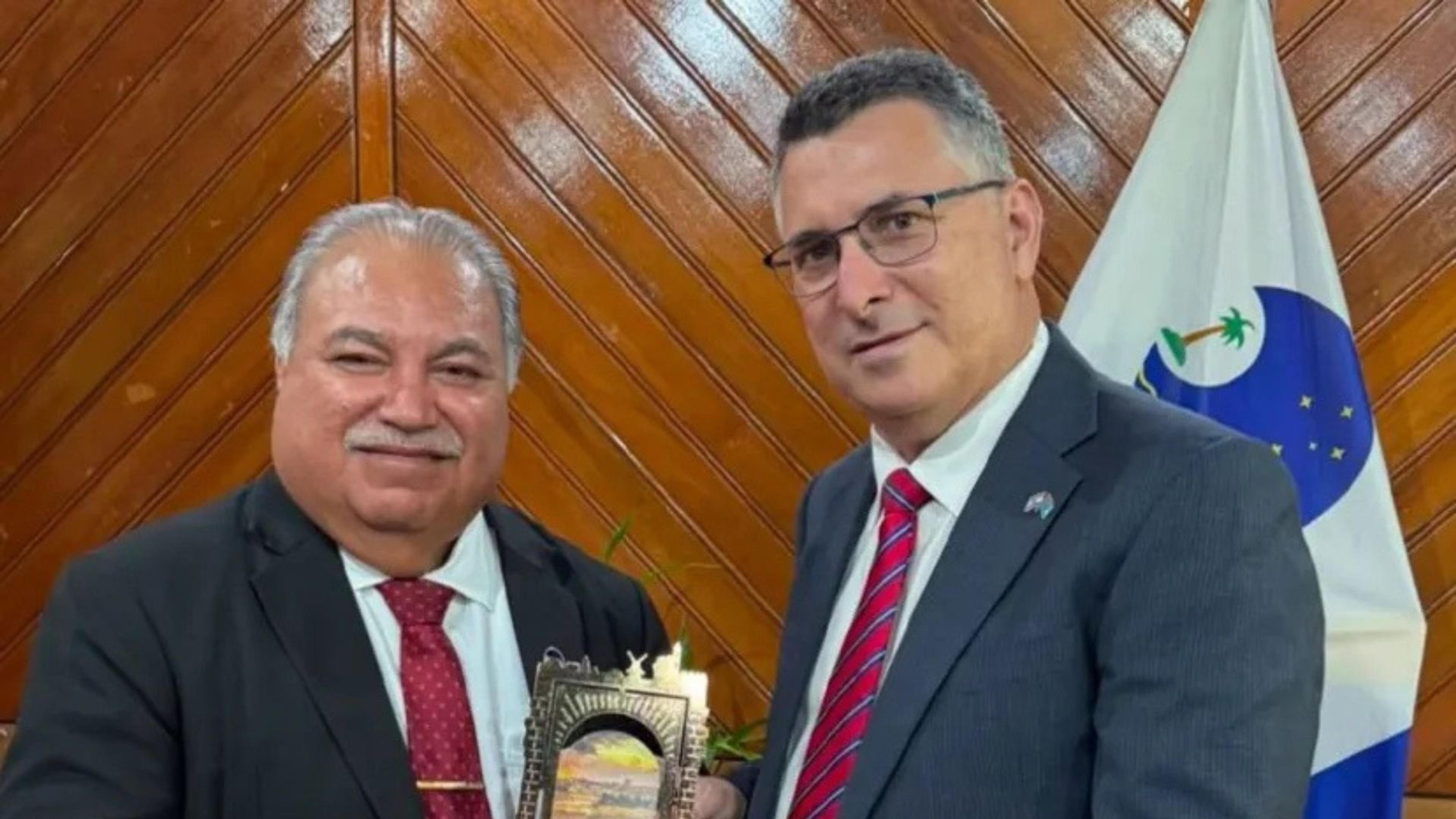
Israel’s Pacific Forum breakthrough triggers political backlash in NZ
Kaya Selby, RNZ Pacific journalistWed, 21 Oct

With streaming an ongoing priority for TVNZ, CEO Jodi O’Donnell says Pacific content will remain whether TVNZ is a TV or streaming-first provider.
Photo/PMN Composite
Pacific producers say multi-year funding would improve planning and give staff greater security.



Television New Zealand (TVNZ) says it supports calls for greater funding certainty for Pasifika programming in Aotearoa as streaming takes top priority in the broadcaster’s future strategy.
Speaking with William Terite on Pacific Mornings, TVNZ chief executive Jodi O’Donnell backed funding certainty for programmes such as Tagata Pasifika, saying Pacific stories remain an important part of reflecting Aotearoa New Zealand.
"It's really important that we showcase all New Zealanders, and we're really committed, particularly in that Pasifika space,” she said.
"We're always really, really conscious [when] we're casting for our local shows, whether it's Shortland Street or Celebrity Treasure Island, that we are reflecting New Zealand and all of New Zealand,” she said.
O’Donnell said funding certainty would help the industry develop future talent and strengthen skills.
“There really needs to be, to make sure there’s that long term commitment so that we can develop and learn the skills in the industry, I think is really important,” she said.
Listen to Jodi O'Donnell's full interview below.
Tagata Pasifika is funded primarily through NZ On Air, which receives its annual budget allocation through the Ministry for Culture and Heritage.
Tagata Pasifika lost a third of its funding in 2024, dropping from $1.91 million to $1.25 million in 2025. The cut reduced the show’s output from 51 episodes a year to 30.
Multi-year funding models like those used in Australia give broadcasters more certainty and clarity over future planning.

Photo/RNZ
Since 2024, the Australian government has provided funding certainty over five years for broadcasters including the ABC and SBS.
John Utanga, Editor and Producer of Tagata Pasifika, told PMN News that while multi-year funding would make a major difference, it remains a long way from becoming reality in New Zealand.
“We've learned to adapt. I think any producer would love to have multi-year funding, the benefits are obvious,” he said.
Utanga said multi-year funding would allow programmes to plan better, commit to bigger projects and give staff greater security.
“The biggest uncertainty of course, is whether we all have a job and even a business next year,” he said.
“To say it is unnerving is an understatement but you learn to live with it and plan accordingly. It's not ideal, those are the cards we've been dealt.”

Tagata Pasifika hosts Marama T-Pole and John Pulu. Photo/Tagata Pasifika
Papali’i Lisa Taouma, executive producer at The Coconet TV, said multi-year funding would provide more stability for Pacific productions and their workforce.
“For platforms like the Coconet that receive no platform support at all, we rely on bunny hopping from contract to contract to survive,” she said.
“The gift of public funding to the industry means that we are bound to government allocations of funding to the ministries.
“NZ On Air has always had to operate on the highly contestable project funding model,” she said.
PMN News contacted the Ministry for Culture and Heritage for comment on multi-year funding. The ministry referred the query to NZ On Air.
While Pacific producers continue to push for more certainty, TVNZ is focused on a digital-first through its TVNZ+ platform.

The Coconet TV has many popular films and TV shows featuring household names of the Pasifika film industry. Photo/Supplied
O'Donnell's comments came during a wider discussion about TVNZ's streaming strategy following the success of its pay-to-view coverage of the 2026 FIFA World Cup and its securing of rights for the 2030 tournament to be hosted across six countries in South America.
But the broadcaster continues to face financial pressure.
In March, TVNZ reported revenue of $134 million for the previous six months, down 12 per cent on the same period a year earlier due to weaker advertising income and asset write-downs.
The broadcaster has forecast a net loss of $48.8m over two years as it invests in its Digital+ 2030 strategy.
For Pacific producers, the question remains whether longer future funding timelines can provide the certainty needed to keep telling Pacific stories and building the next generation of storytellers.