
‘Our little nations should be compensated fairly’: Spencer Leniu challenges rugby league
Latonya LoleTue, 10 Nov
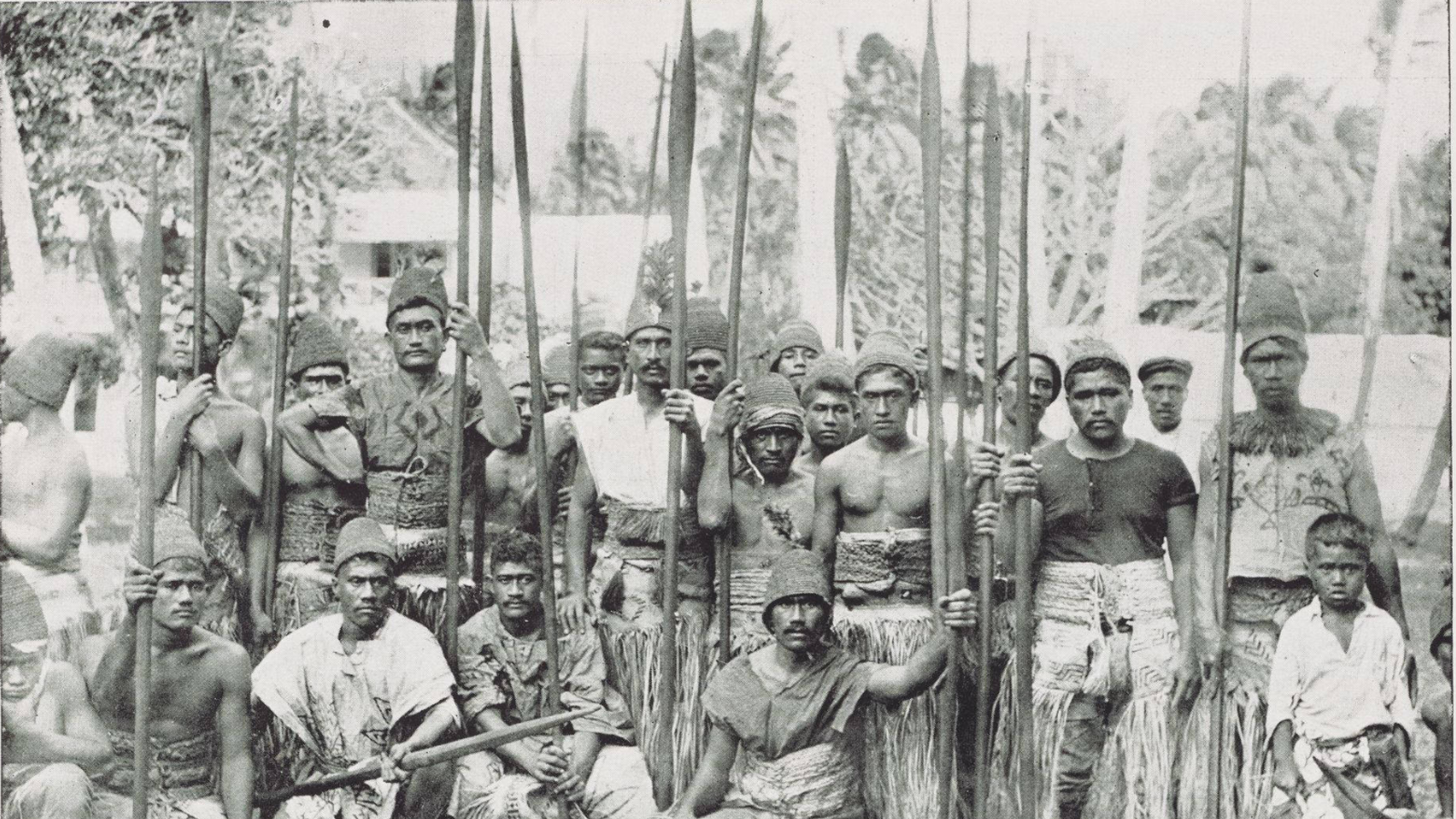
A group of Atiu Warriors from the village of Ngatiarua, at the Taurekareka or dance festival on Rarotonga in 1904.
Photo/Auckland Libraries Heritage Collections/ NZG-19070810-0005-01
Parties won and lost seats on Saturday. The real question is where their political power flows from.



In 279 BC, King Pyrrhus of Epirus defeated the Romans at Asculum but lost so many men that, according to the Greek historian Plutarch, he declared: “If we are victorious in one more battle with the Romans, we shall be utterly ruined.”
Rome, however, could replenish its ranks Plutarch wrote, “as if from a fountain gushing forth indoors”. It had a source that Pyrrhus could neither reach nor exhaust. That is a Pyrrhic victory: winning the battle at such cost that you lose the war.
Across the Pacific, we might call that indoor fountain or spring a puna.
On Saturday, National won 42 of 64 general electorates, yet its party vote fell to 29.2 per cent, from 38 per cent in 2023. Labour, on 29.4 per cent, gained only about two and a half points. The Greens reached 13.3 per cent, ACT 10.9 per cent, NZ First 9.8 per cent, and nearly 145,000 people gave their party vote to Opportunity.
These are preliminary results, but they leave us with a question: Did the major parties win their battles while something else was bubbling beneath them? And if so, whose victory was Pyrrhic?
Mt Roskill community worker, coach and mentor Nick Tuialii, who has worked with families for 40 years, has his own answer.
Listen to Nick Tuialii's full interview below.
“It doesn't matter what government's in there, because we've got to save ourselves first,” he told PMN News.
Claudius Ruaporo Iusitini, community leader and head of New Zealand Tag Football, sees another reality.
“If you don't have local MP support, it's going to be a struggle securing grounds, getting local businesses to get behind you. At the end of the day, you've got to play the game.”
Listen to Claudius Ruaporo Iusitini's full interview below.
One says communities must save themselves. The other says political relationships are a necessity.
But are they disagreeing, or seeing the same thing from different ends?
Political parties were movements once. In 1908, coal miners in Blackball on the West Coast went on strike over their working conditions. Their struggle helped strengthen the organised labour movement that eventually contributed to the formation of the Labour Party in 1916.
What happens when a movement becomes a political party? Does it remain connected to its source, the people who gave it life, or does the pursuit of political power gradually weaken that connection?
We saw the power of movements in November 2024 when an estimated 42,000 people marched to Parliament in the Hīkoi mō te Tiriti. ACT's Treaty Principles Bill was defeated 112 votes to 11 in April 2025. The coalition's position had already limited the bill's future, but the movement had become the public face of its opposition.
The Greens and Te Pāti Māori also draw strength from kaupapa and organising beyond Parliament. Their electoral fortunes are not identical, but both raise questions about the relationship between a political party and the people behind it.
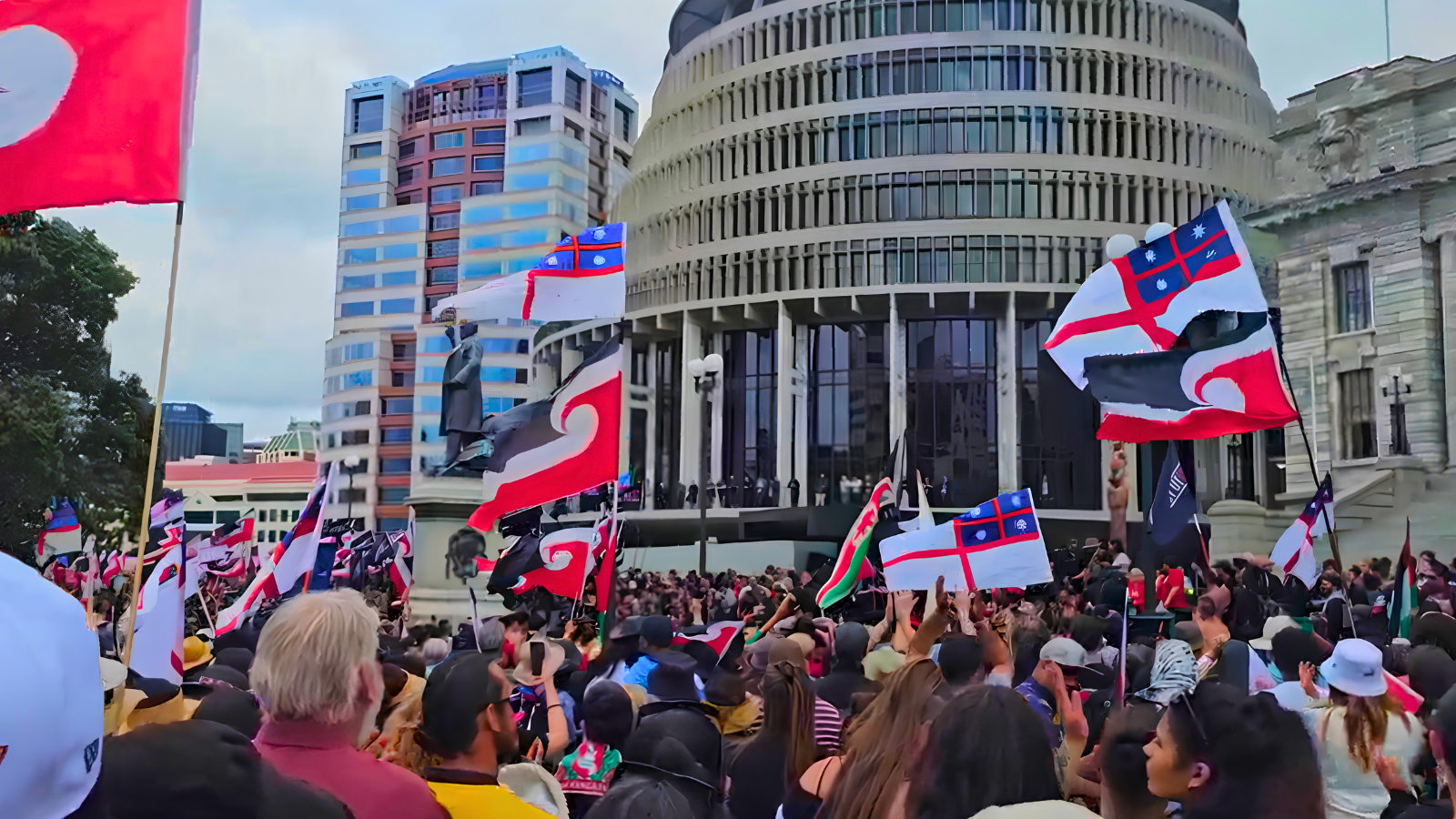
42,000 people marched to Parliament in the Hīkoi mō te Tiriti. ACT's Treaty Principles Bill was defeated 112 votes to 11 in April 2025. The coalition's position had already limited the bill's future, but the movement had become the public face of its opposition. Photo/PMN News/Thomas Tarurongo Wynne
Green co-leader Chlöe Swarbrick told members at the party's July AGM that building connection and trust was essential to growing their movement.
ACT leader David Seymour similarly declared after the defeat of his Treaty Principles Bill that his party had planted the seeds of a movement that would not go away.
Different politics, different kaupapa, but the same claim to something deeper than a parliamentary seat.
So how do we measure a movement? By the votes it attracts, the legislation it changes, or whether its people remain connected after the election posters have come down?
Tuialii sees that tension in his own community.
“I just didn't want to vote, but I had to have a say somewhere. The blue and the red, they're the same coin with two different faces.”

Community leader Nick Tuialii said, “I just didn't want to vote, but I had to have a say somewhere. The blue and the red, they're the same coin with two different faces.” Photo/RNZ/TVNZ
Yet movements cannot simply replace governments. Communities still need jobs, housing, healthcare and education. They need institutions that work for them.
Iusitini calls the cost of living “a crisis at the moment”. Tuialii sees it in the classroom.
“Kids come into school carrying more, and the cost of living hasn't helped.”
Perhaps the question is not whether we need political parties, but whether parties have become too distant from the movements and communities they were established to serve.
Tuialii's mother was a cleaner her whole life. She told him he had to do better.
“That's what I see when I look at my grandchildren. My mother's efforts, and hopefully some of her dream coming true.”

The "To-Sua" Ocean Trench in Samoa. Photo/Facebook/Samoa Tourisim
There is something enduring in that aspiration, as Pacific people we know its mantra. It began before this election and will continue long after the next.
The movement is the puna. The political party is merely the cup, ipu or kapu that draws from it.
And when the cup is dry, is it because the ipu is broken or, of more concern, because the well-spring or puna is empty?