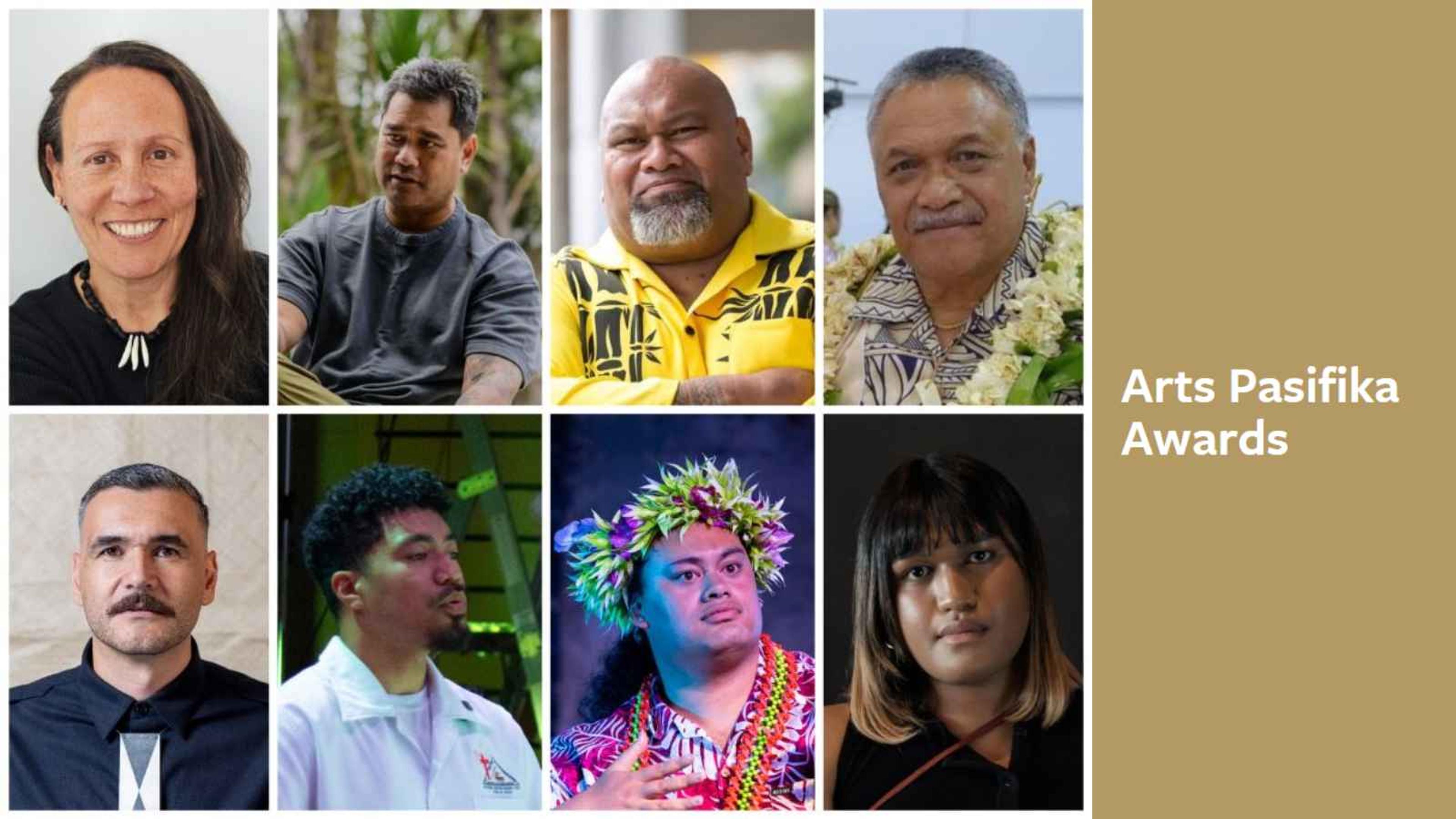
Tofiga Fepulea’i brings the laughs while taking top honours at Arts Pasifika Awards
Aui'a Vaimaila Leatinu'uFri, 23 Oct
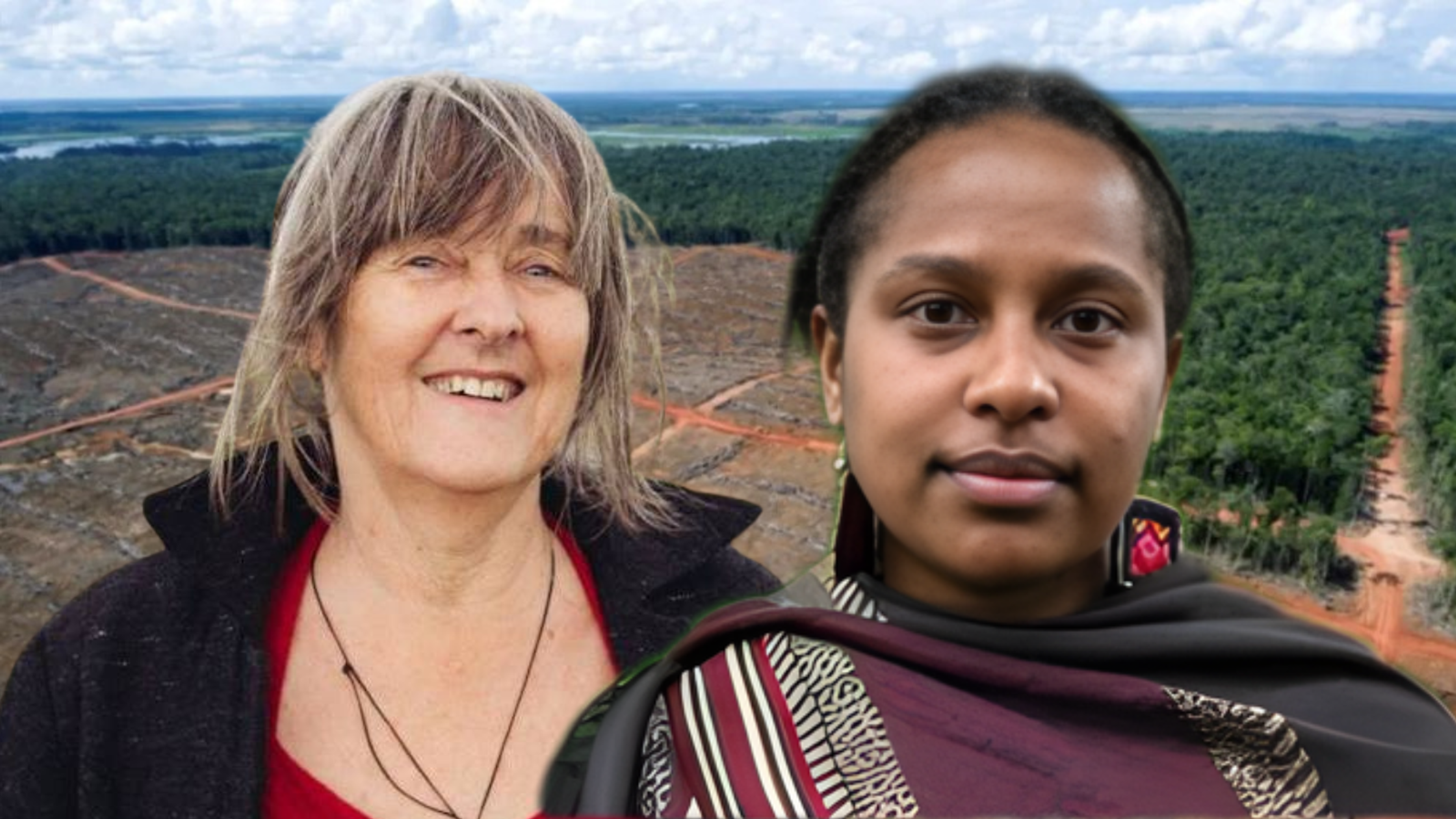
West Papua advocates Catherine Delahunty and Dorthea Wabiser.
Photo/Composite
A two -day forum in Auckland will discuss the issues facing West Papuans who face mass displacement, environmental destruction, and militarisation. The forum aims to amplify their voices and build Pacific solidarity.

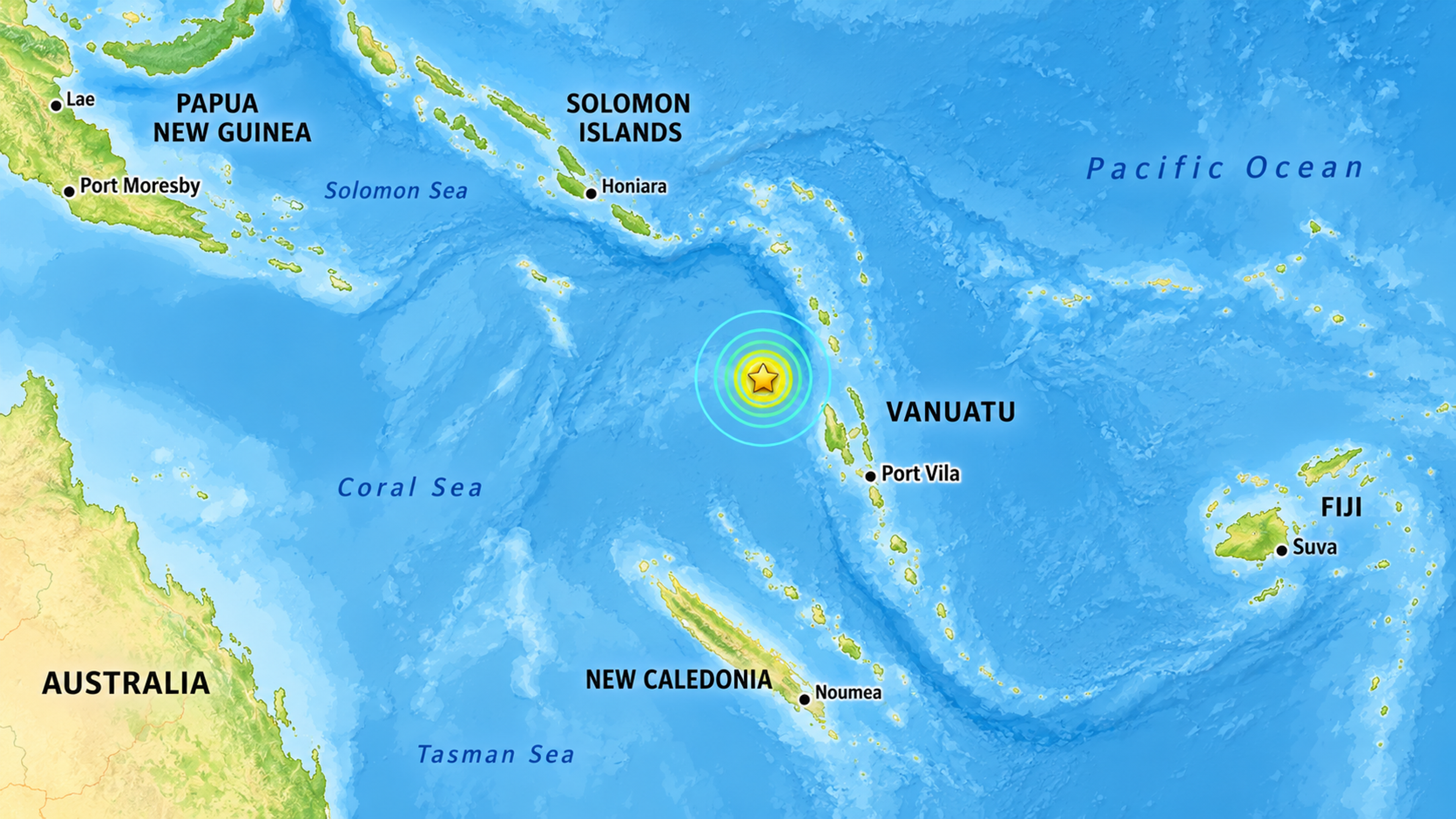

Indigenous communities in West Papua are losing land, food systems, and cultural heritage as armed conflict forces tens of thousands from their homes.
The Melanesian nation has faced decades of militarisation and exploitation since being annexed by Indonesia in the 1960s, following the controversial transfer of the region by the United Nations.
Dorothea Wabiser, a West Papuan advocate, calls the situation “slow-motion genocide.” Speaking on Pacific Mornings, she says families in the Porgera highlands are desperately seeking safety.
“There are currently more than 100,000 IDPs [internally displaced persons] in Papua leaving their homes, because of the conflict between the military, who want to own the gold deposits within the highlands,” Wabiser says.
Another crisis is the government’s National Strategic Project, repurposing two million hectares of forest for sugarcane plantations and rice fields. Wabiser says this is impacting their surroundings and forcibly changing their eating habits.
“Because they cut down all of our indigenous food, the sago tree…diet patterns within the communities are changing. Our body characteristics are changing because we now depend on other food instead of our own indigenous food.”
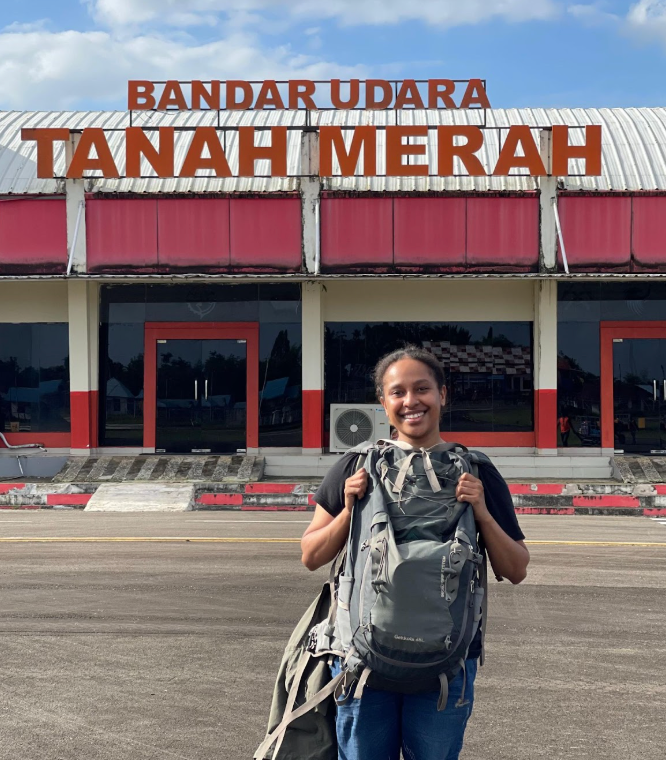
Dorthea Wabiser is a researcher at Yayasan Pusaka Bentala Rakyat (PUSAKA). Photo/United Rising Association
Wabiser says international attention is limited by media restrictions and political interests, with journalists often blocked from reporting. She stresses the role of solidarity: “The government will listen to you if a lot of people talk about it… it will become a pressure to our government to say something about it.”
Catherine Delahunty, a West Papua advocate and former Green Party MP, is passionate about the nation’s plight.
“Ever since the 1960s…human rights abuses, military occupation, destruction of the environment, abuse of the people based on very racist ideology…this is what we call a structural genocide,” she tells Pacific Mornings.
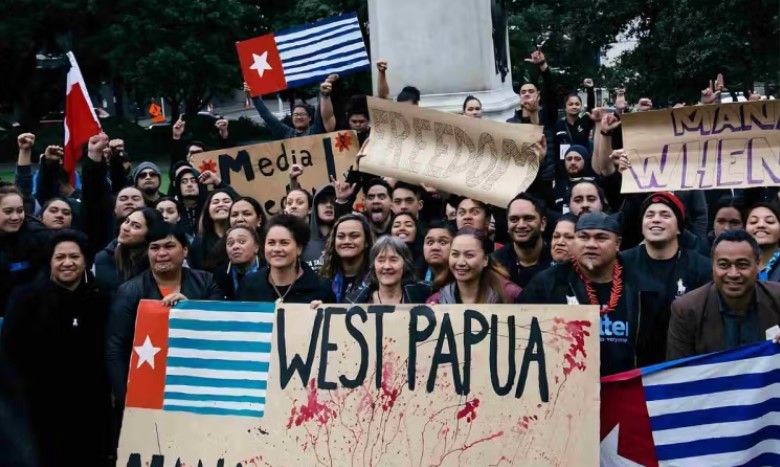
A Māori students’ protest for West Papua outside parliament in 2016. Former foreign minister Nanaia Mahuta is pictured behind the protest placard bearing the West Papuan Morning Star flag, alongside Labour MP Louisa Wall, Catherine Delahunty (then a Green Party MP), Marama Davidson (Greens co-leader), boxing legend David Tua, and others. Photo/Supplied
Delahunty is calling for greater awareness and support, highlighting that Pacific and Māori communities respond with a shared lens of colonisation.
“Tangata whenua and tangata Pasifika people, immediately they're like, ‘Right, what can we do to help?’ Some other people, politicians, are pretty indifferent. But we still need to keep the people who don’t even know where West Papua is on the map aware.”
An opportunity to connect
The two-day West Papua Solidarity Forum in Auckland this weekend offers the public a chance to learn and act. The forum begins today with panels on militarisation, environmental destruction, community organising, and human rights abuses.
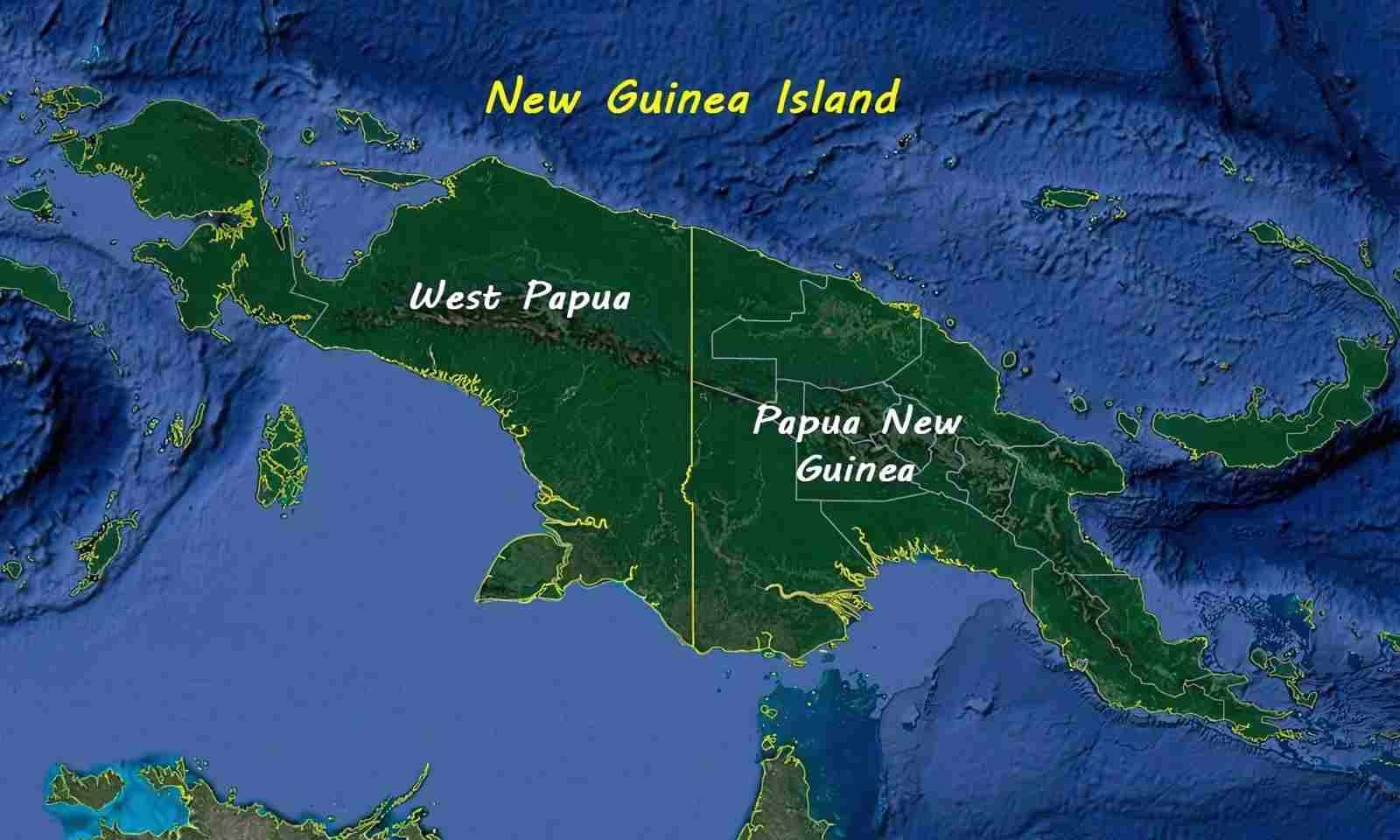
Image/Indopacificimages.com
It continues on Saturday, March 8, at The Taro Patch in Papatoetoe from 9-4pm, with workshops, cultural discussions, and relationship-building.
The weekend also includes a mini-film screening on Friday evening, introduced by Indonesian journalist Victor Mambor.
The film documents local resistance to the Strategic National Project. “People there, they resist, and they try to fight the project and the people who operate the project. And it's still going on now. We're trying to capture the situation there. This is the biggest deforestation in the world,” Mambor says.
Watch Dorthea Wabiser and Catherine Delahunty's full interview below.
Wabiser says sharing these stories is vital for future generations.
“It is not an empty land. These forests have our history, sacred places and culture. There is music, games, and sports within these forests, and we want to keep it. We want to maintain it. We have a responsibility for my generation and future generations,” she says.
Delahunty adds that solidarity requires both awareness and action. “Victor and Dorothea go out every day trying to defend a forest which protects our climate, and we need to recognise that what they do for their own country, they also do for us. We are not separate…We need to get together with our voices to support free West Papua.”