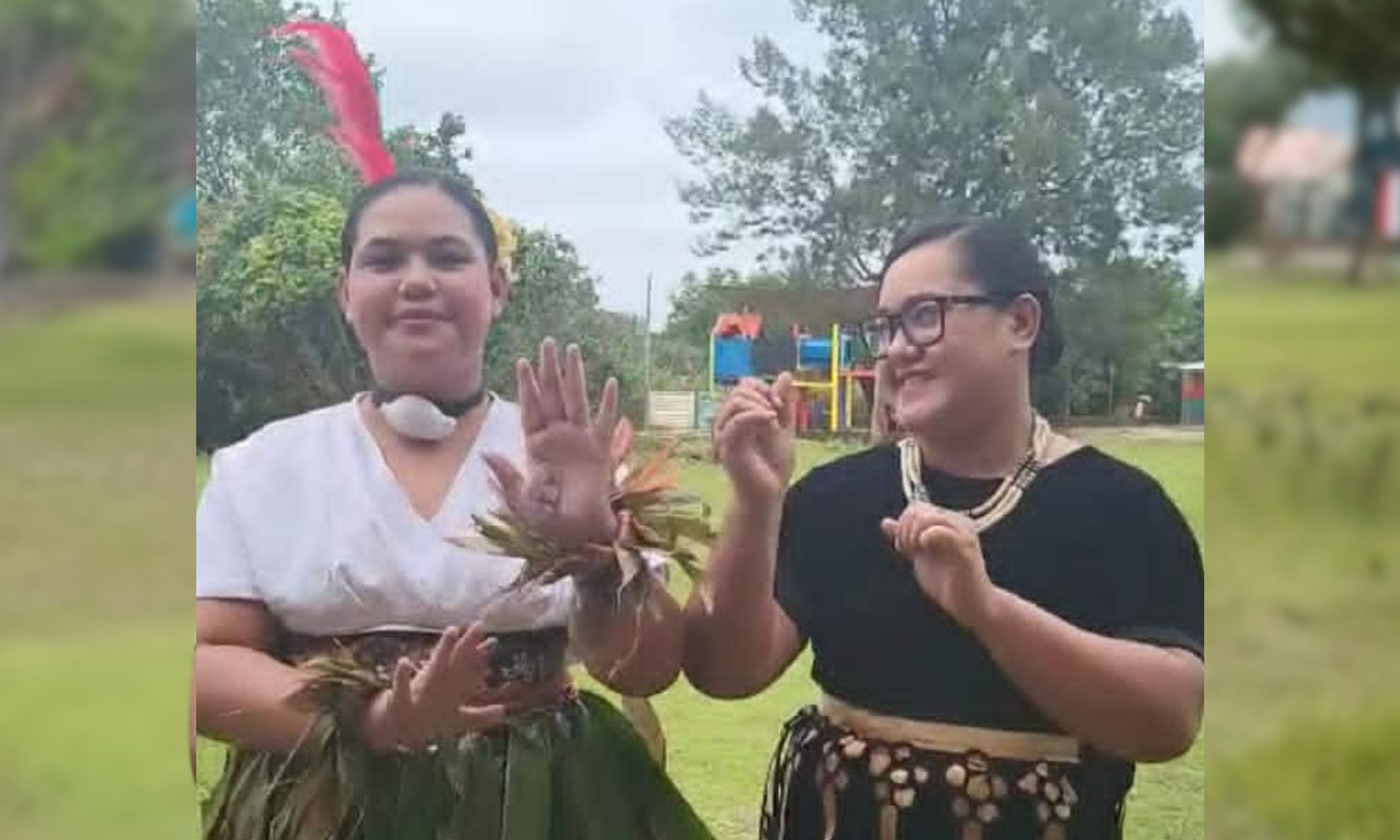
Lupe Punaivaha and her daughter Faith demonstrating sign language.
Photo/Supplied
Pacific Region
Tongan mother turns to sign language to rebuild life with deaf daughter
As NZ Sign Language marks 20 years, Lupe Punaivaha says learning to sign helped her reconnect with her daughter after meningitis.

Khalia Strong
Published
08 May 2026, 12:30pm
Share
Copy Link
Top stories
Fiji's army chief warns the gun must never overrule the ballot
Christine RovoiMon, 12 Oct

Two to three weeks after leaving the hospital, Lupe Punaivaha noticed her daughter Faith was no longer responding when she sang or called to her.
Before meningitis, Faith had been an active, vocal toddler who already recognised words and loved clapping games with her mother.
“I would tell her, ‘pasipasi, Faith’, and she would clap,” Punaivaha tells PMN News. “But after that, she was not responding to it.”
Punaivaha says that was the moment she realised something had changed. “She was so confused [abou]t what was happening because everything just went quiet.”
Faith, now 12, lost her hearing after contracting meningitis at about one year old.
At the time, Punaivaha says there was no formal support system in Tonga for deaf children or their families, and no clear guidance for parents trying to communicate.
“There was no organisation that was directed for the deaf community and for us parents in how to deal with our deaf children,” she says. “So everything was self-taught and a lot of praying.”
She began searching online for ways to communicate, learning American Sign Language through YouTube before later moving to Auslan (Australian Sign Language), which is closely linked to New Zealand Sign Language.
Over time, signing became part of everyday life. All seven siblings now communicate with Faith using sign language, a shared practice throughout the house.
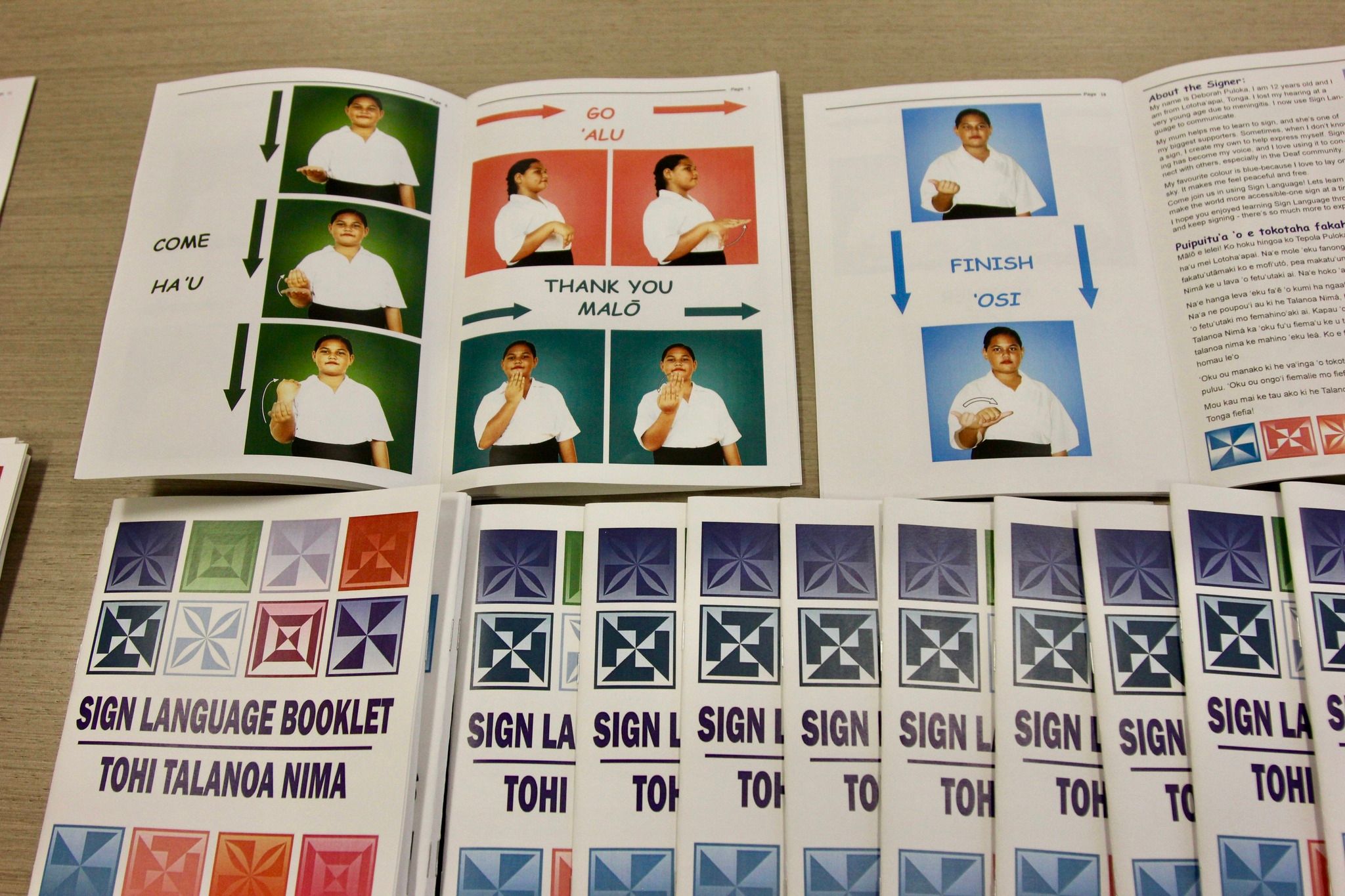
The Tohi Talanoa Nima booklet shows examples of common words in sign languages. Photo/Australians in Tonga Facebook
Punaivaha later helped create Tohi Talanoa Nima, a basic sign language booklet for families and beginners, with everyday signs such as “thank you”, “eat”, and “drink”.
She describes it as “a bridge from the hearing world towards the deaf community”.
Faith now attends Acts Community School in Nuku’alofa, a mainstream school where she learns alongside three other deaf students.
Punaivaha says the school has slowly adapted, introducing posters, a dedicated support teacher, and “sign of the day” activities.
“I would go and pick her up and see kids spelling their names or asking Faith what their sign name is. That’s a very big thing for Tonga, especially because sign language is not normalised here.”
Outside school, she says challenges remain. “In church there is no interpreter. At the shop she has to point or sign, and people sometimes don’t understand and become impatient. They don’t realise she is trying to communicate.”
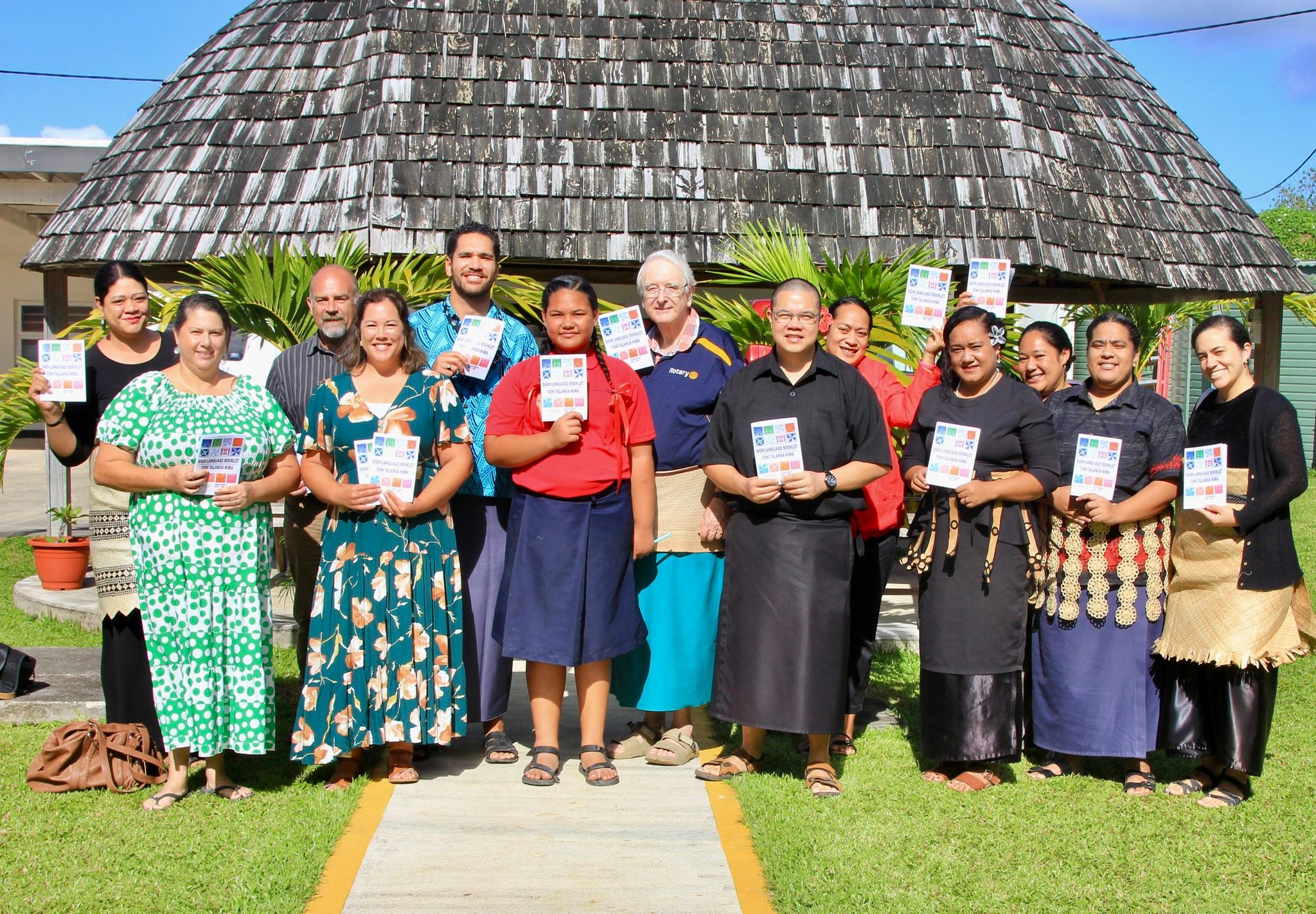
Faith (centre), and her mother, Lupe Punaivaha, launced the Tohi Talanoa Nima booklet in Tonga, 2025. Photo/Facebook
As New Zealand Sign Language Week is marked in Aotearoa, data shows Pacific children experience hearing difficulties at higher rates than others.
Census data shows 5520 Pacific people aged five and over reported at least “a lot of difficulty” hearing, including 624 children.
Tofa Suafole Gush, Whaikaha Chief Adviser Pacific Peoples, says work is underway to improve access for Deaf Pacific communities through interpreter pathways, better representation, and culturally responsive resources.
“We want to profile Deaf Pacific role models and share Deaf Pacific stories so people can see themselves represented,” he says in a statement.
Back in Tonga, Punaivaha is also part of the Tonga National Deaf Association, which supports about 100 members in Tongatapu.
At home, she and Faith continue their “sign of the day” routine, often learning new words together and sharing them with family online.
Sometimes, she says, Faith is the teacher. “She’ll remind us, ‘Hey, this is the sign for that,’ and then she’ll spell it out for us.”
For Punaivaha, the journey has not been about communication but connection. She hopes and prays that her daughter will graduate from high school, and perhaps become a businesswoman who will contribute to Tongan society.
“Our deaf children are very capable,” she says. “They just need access, understanding, and support.”
But in the quiet moments at home, it is something simpler that stands out most: a mother and daughter who, through sign language, finally found a way to speak to each other again.