
'Don't count yourself out': Porirua by-election candidate’s push for voter participation
Taelegalolo'u Mary AfemataFri, 09 Oct
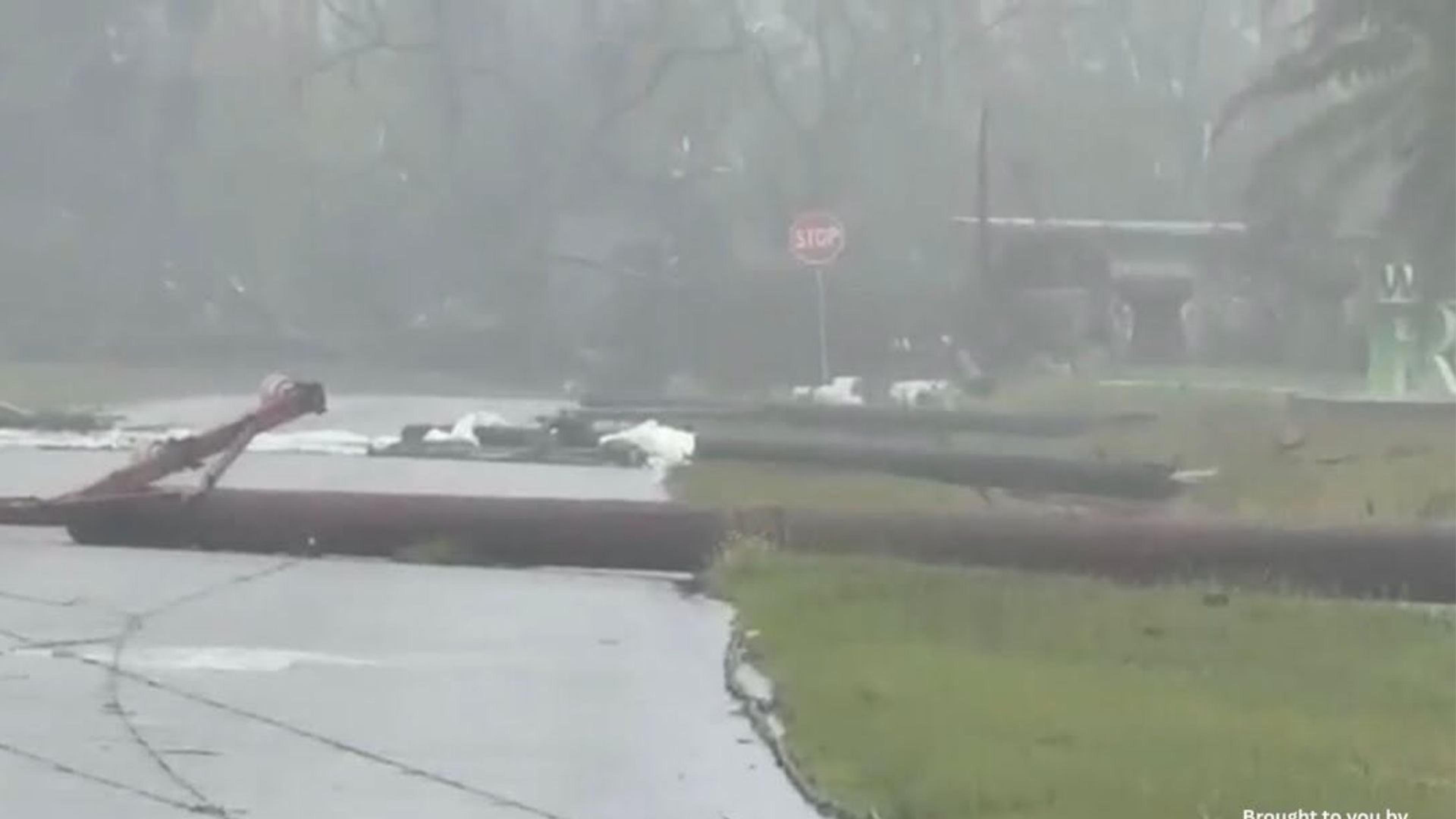
Super Typhoon Bavi brought destructive winds, heavy rain and flooding across the Marianas, with Rota, Tinian, Saipan and Guam among the islands impacted by one of the region’s strongest storms.
Photo/Facebook/Mariana Press
A storm batters the Marianas, Tonga records its coldest temperature ever and PNG communities worry after frost destroys food gardens.




The Pacific is being hit by a series of extreme weather events this week with communities facing destructive winds, record cold and growing pressure on food supplies.
In Aotearoa New Zealand, severe weather has also brought heavy rain, flooding and disruption across parts of the country, adding to a week of challenging conditions across the wider Pacific region.
From the Marianas in the north to Tonga and Papua New Guinea in the south, people are dealing with weather conditions that are testing emergency services, homes and livelihoods.
Super Typhoon Bavi tore through the Marianas on Monday, bringing destructive winds, heavy rain and flooding across Rota, Tinian, Saipan and Guam.
The Category 5 storm reached maximum sustained winds of 290kmh with gusts reaching 346kmh, making it one of the strongest systems ever recorded in the region.
"Bavi is among the strongest super typhoons to pass through the Marianas," Landon Aydlett, a warning coordination meteorologist with the National Weather Service in Guam, told the Pacific Island Times.
The storm's eye passed directly over Rota where officials reported major damage including flooding and destruction to parts of the island's government offices.
Rota Mayor Aubrey Hocog said the Mayor's Office suffered major damage as the strongest winds moved across the island.
"Yes, major damage. The expanded offices are destroyed," Hocog told the Times.
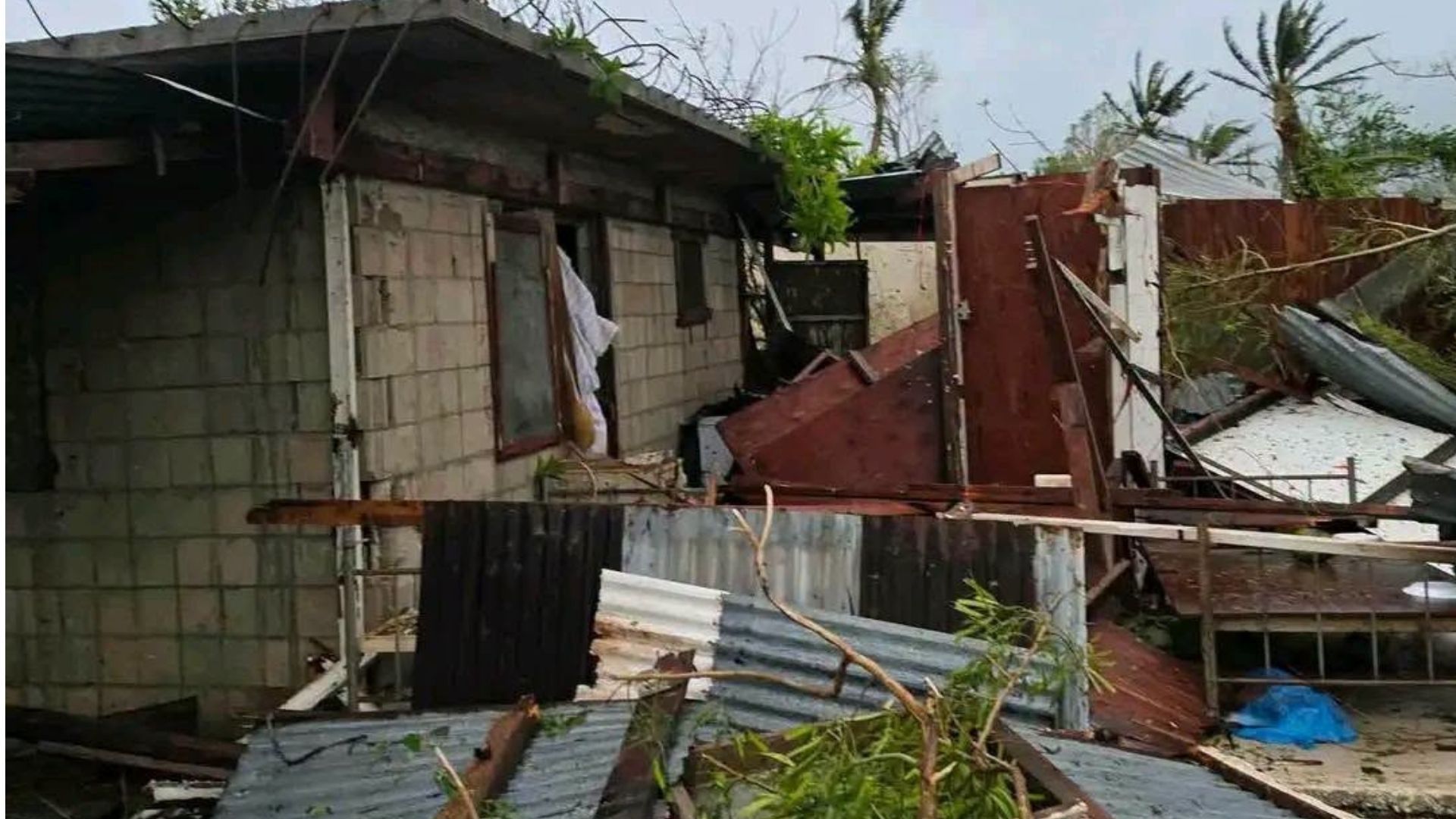
Residents and emergency teams have begun assessing damage on Rota after Super Typhoon Bavi’s eye passed directly over the island, leaving flooding and widespread destruction in its path. Photo/Facebook
Despite the scale of the storm, authorities reported no deaths or injuries.
More than 500 people across the Northern Mariana Islands remained in emergency shelters as officials waited for dangerous conditions to ease before beginning full damage assessments and recovery work.
On Guam, fallen trees, debris and damaged roads affected communities while power and water services were disrupted in some areas.
While the northern Pacific was dealing with one of the region's strongest storms, parts of the southern Pacific were experiencing a very different extreme.
Tonga has recorded its coldest temperature ever with the Tonga Meteorological Service confirming a minimum temperature of 8.6°C at the Hango Automatic Weather Station in 'Eua early on Monday morning.
The new record breaks the previous national low of 8.7°C, recorded at Fua'amotu in 1994.
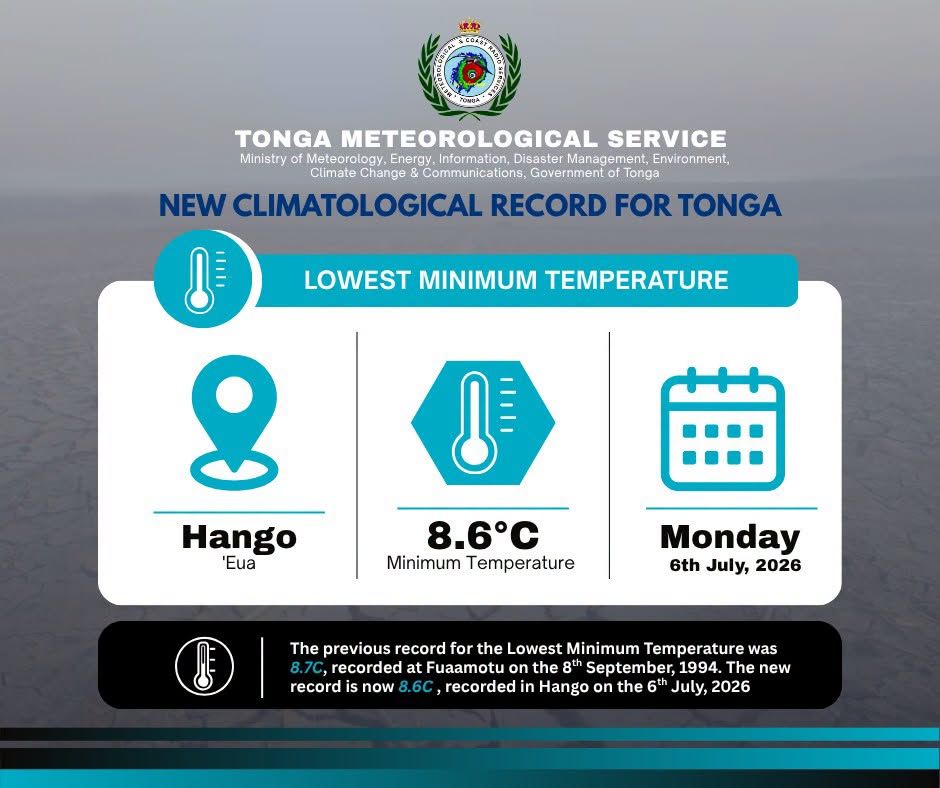
Tonga has recorded its coldest temperature ever, with the Hango Automatic Weather Station in 'Eua recording a minimum of 8.6°C as cooler conditions continue across the Kingdom. Photo/Tonga Meteorological Service
The Tonga metservice said the unusually cold conditions are linked to the current El Niño event with stronger southeast trade winds bringing cooler air from southern regions into Tonga during the dry season.
The metservice has advised people, particularly older residents, young children and those with existing health conditions, to take extra care during the colder conditions.
Tonga Meteorological Service says cooler weather is continuing, with showers, stronger winds and rough seas affecting parts of the Kingdom. Small boat warnings remain in place for some coastal areas as conditions remain unsettled.
Farmers have also been urged to monitor crops and livestock that may be affected by the unusual temperatures.
In Papua New Guinea's highlands, the impact is being felt through food gardens and water supplies.
More than 1000 people in Kosipe village in Goilala, Central Province, have been affected by frost and a prolonged dry spell that has damaged hundreds of gardens.
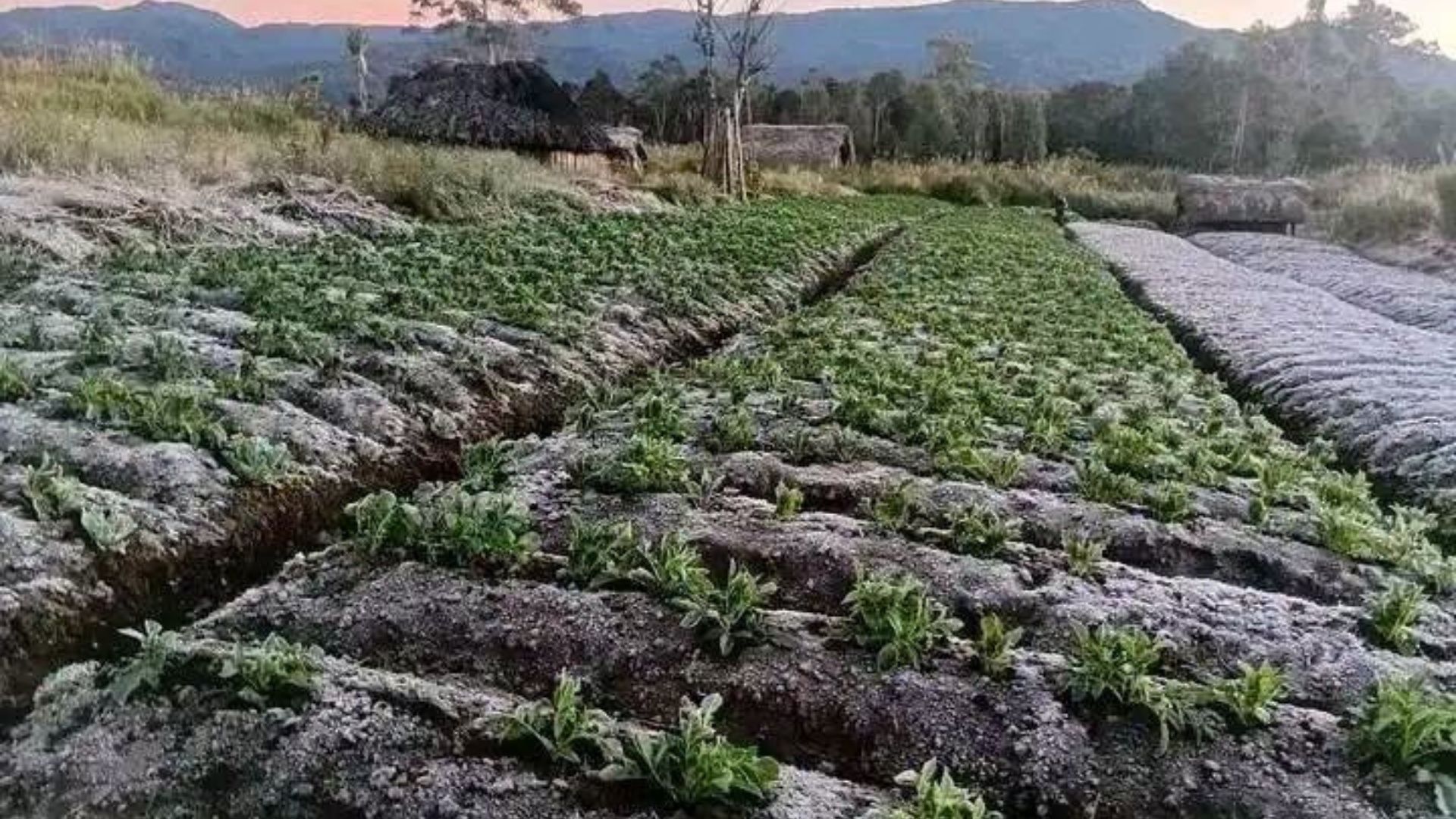
Frost has damaged hundreds of food gardens in Kosipe village, Goilala, Papua New Guinea, threatening crops and raising concerns over food supplies for more than 1000 people affected. Photo/Facebook/Moses Lem Pamenda
Local resident Anthony Morant said the area has not received rain since April with frost destroying staple crops including taro, sweet potato (kaukau), yam and vegetables, according to The National.
"About 500 food gardens composed of broccoli, taro, sweet potato, yam and other vegetables had their leaves burnt," he said.
Morant said the damage was putting pressure on food supplies and household incomes. He warned some communities could soon face shortages if conditions continue.
"The food crops also provide a source of income for us to meet other basic needs. If the dry spell continues, other food crops we are relying on for survival will also be affected and we will be left with nothing," he said.
Water supplies are also becoming a concern with small wells and creeks drying up.
Morant said the conditions were raising fears of a repeat of past El Niño impacts including the severe drought experienced in 1997.
Across the Pacific, officials say the latest events show how different communities are facing different sides of a changing climate: from powerful storms in island nations to cold temperatures and drought affecting food security.
While each event has its own cause, communities across the Pacific are facing the same challenge: adapting to weather extremes that are increasingly affecting homes, livelihoods and everyday life.